


Border crossings closed for one year, creating an Afghan dilemma


The major border crossings between Afghanistan and Pakistan have been closed for one year as of October 2026. Khan Jan Alokozay, chairman of the Pakistan-Afghanistan Joint Chamber of Commerce and Industry, said that shipping a container from Karachi, Pakistan, to Afghanistan used to cost about $2,000 and take 10 days. But now, traders have to use alternative routes, and it can cost up to $10,000 and take up to two months to finish the same shipping. Pakistani statistics show that trade with Afghanistan fell by more than 74% in fiscal year 2025-26, to about $350 million.
Afghanistan lies at the junction of South Asia, Central Asia and West Asia, and the country has long been called the "crossroads" of civilizations. But the meeting point on the map is no longer a trading hub. As a landlocked country, Afghanistan has few options for developing international trade corridors. When cross-border transport is affected by regional tensions, the "crossroads" can turn from a geographic advantage into a trade bottleneck.
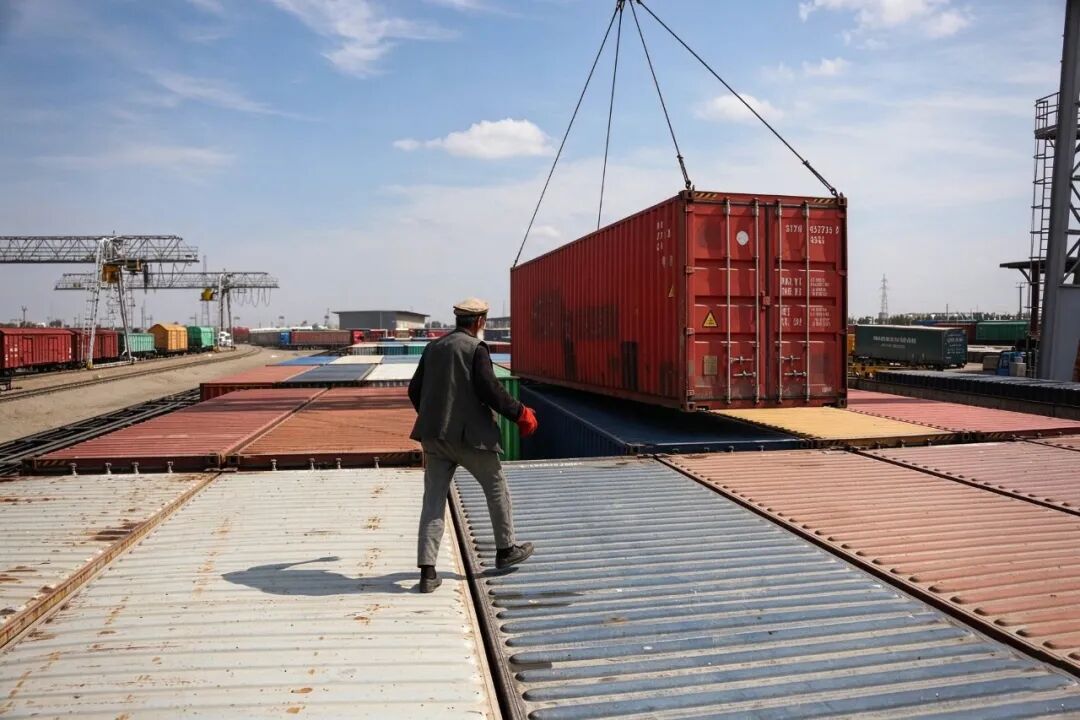
A container of Afghanistan is being shipped.
Southward Corridor Becomes Most Fragile Lifeline
For Afghanistan, the international trade must pass through neighboring countries. The Torkham-Peshawar-Karachi trading route has long been a southward corridor with the lowest cost. But the fragility of this corridor did not begin last October. Data from Pakistan's Dawn show that the number of Afghan containers transiting through Pakistan fell from 102,886 in fiscal year 2022-2023 to 54,114 in 2023-2024 and 42,959 in 2024-2025, and the figure further dropped to 11,592 in 2025-2026. The value of Afghan exports transshipped through Pakistan to third countries also fell from $454 million in 2024-2025 to $7 million in 2025-2026. Analysts believe the border closure accelerated the decline, but it was not the start. Kabul's attempts to decrease its dependence on Pakistan had already begun.
The trade falls are first seen in perishable goods and daily life. A report by the Assessment Capacities Project (ACAPS) states that by June 2026, cross-border trade and labor flows between the two countries had fallen by more than 90%. Exports of fresh and dried fruit such as grapes, pomegranates, and raisins were significantly affected, and cement shortages halted some construction projects. Monitoring data show that by May 2026, prices of rice, potatoes and white sugar in Afghanistan remained more than 30% higher than before the closure, though this also overlapped with the impact of Middle East conflicts. On the Pakistani side, daily-wage workers, truck drivers, transport companies, and customs brokers also lost income, and exports to Afghanistan of cement, medicine, flour, rice, and other goods were also damaged.
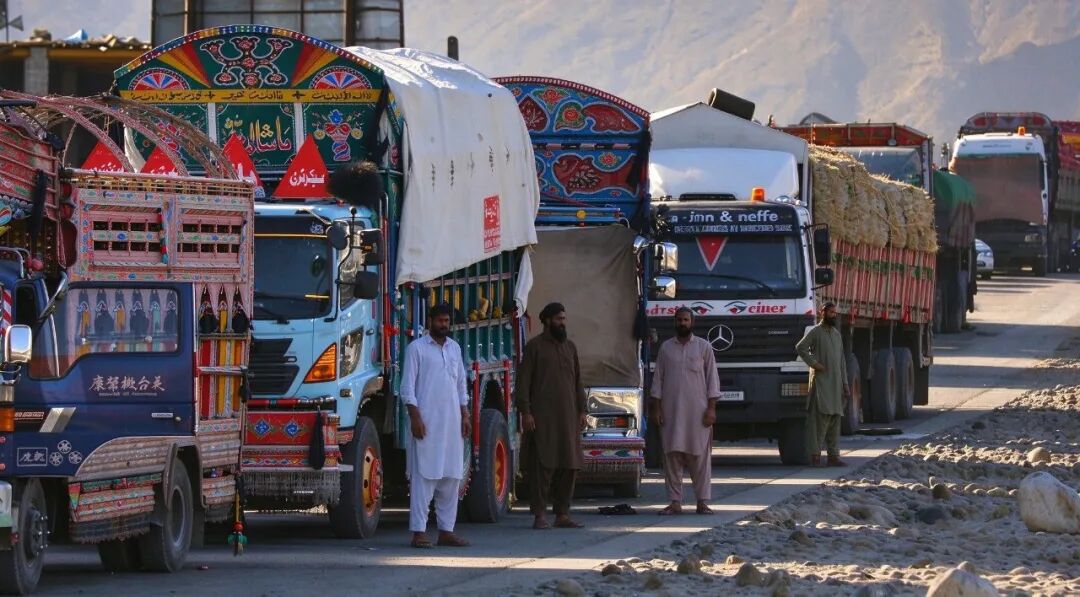
Trucks wait in line at an Afghan border crossing.
Difficulties Remain despite Detours, Alternatives
Additional trading routes have eased the pressure from the blocked traditional corridor, but they have not truly eliminated new dependencies. The World Bank's May 2026 Afghanistan Economic Monitor shows that in that month, direct imports via Iran and transit imports combined accounted for 56% of Afghanistan's total imports, while imports via Central Asian routes accounted for about 41%. This shows that although trade rerouting has maintained part of supply, it has also left imports in a small number of regional corridors.
Alternative corridors are constrained not only by infrastructure and transport capacity but are also vulnerable to regional conflicts, changes in border policies, and financial restrictions. Adding new routes does not necessarily mean that the supply chain's resilience to shocks has strengthened in tandem. The ACAPS notes that sanctions on Iran's Chabahar Port and related financial networks may increase transaction costs, restrict financing, and prolong the delivery time.
The northern route is also under strain. In the third quarter of 2025, the Hairatan border crossing handled 985,000 tons of imports and 62,000 tons of exports, up 62% and 40% respectively from the previous quarter. The figures show that this corridor is absorbing diverted cargo flows. But the ACAPS pointed out that insufficient railway capacity, limited cold-storage facilities, and a low degree of digitalization in customs procedures constrain Hairatan's growth in the future.
A June 2026 assessment by the World Food Programme (WFP) shows that after switching to alternative transport corridors, its humanitarian aid transport costs to Afghanistan rose to 2.5-5 times the original, and the delivery time increased by up to 65 days. Although air freight can meet the transport needs of some high-value goods, it is difficult to replace land and sea transport on a large scale.
Future projects still need to shorten the period from planning to operation. Uzbekistan estimates that the Trans-Afghan Railway project may require investment exceeding $7 billion, with a feasibility study expected to be completed by the end of 2026. On October 4, 2026, the Afghan side announced the opening of a roughly 121-kilometer Wakhan road toward the Chinese border. However, due to security concerns, China has always kept the border strictly closed.
However, the railway is still at the preliminary research stage, and the opening of a road does not mean that an international border crossing is open. For Afghanistan, the real bottleneck is not merely a lack of routes, but how to connect infrastructure, cross-border rules, and security expectations so that alternative corridors can carry trade sustainably.
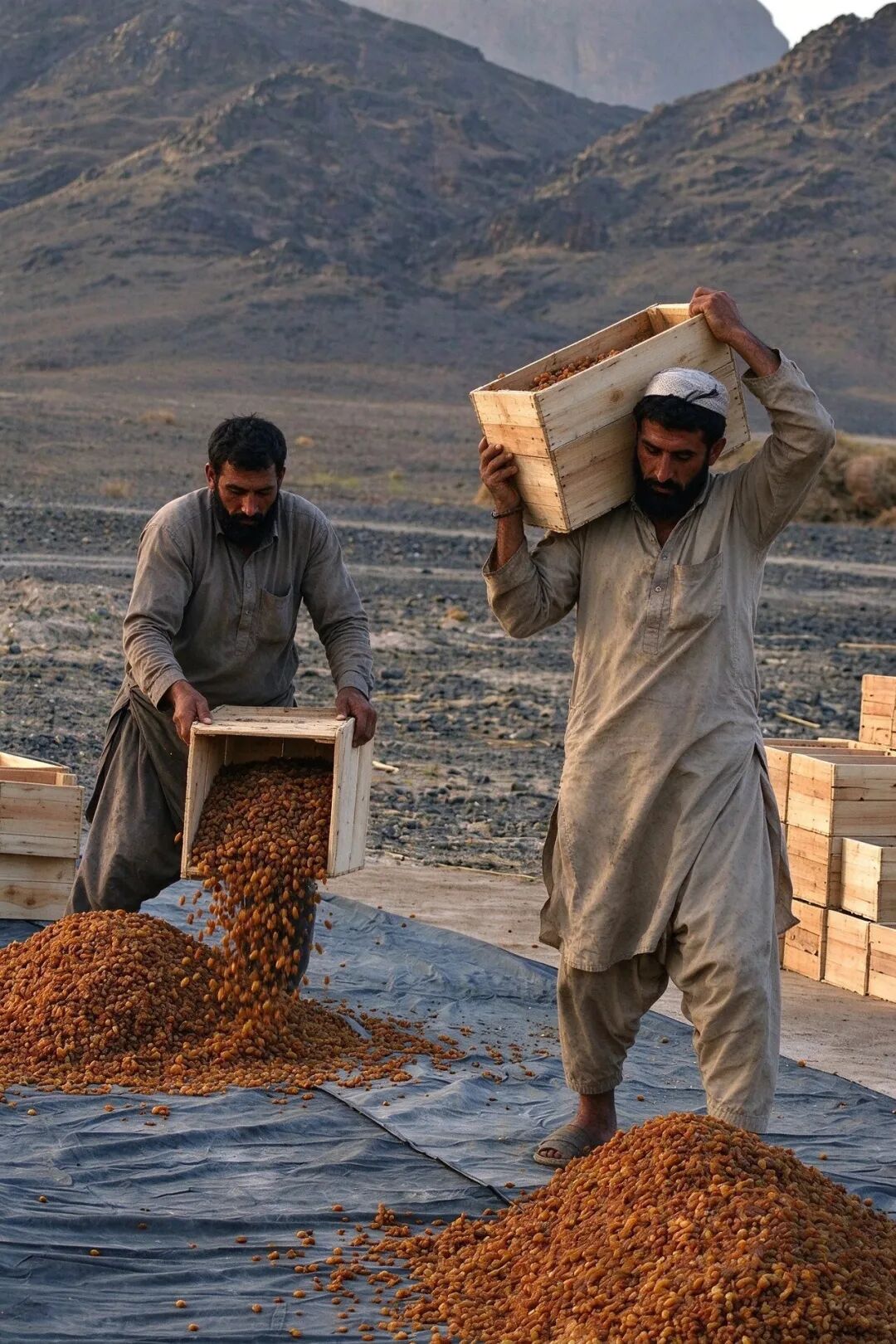
Afghans build new trading routes.
The Key Lies in Rules, Afghanistan’s Own Capabilities
The Afghan way out first lies in a diversified and complementary set of corridors, rather than seeking a single "ultimate corridor." The trade corridor via Pakistan still has the advantage of ports and an existing transport network, while the routes via Iran, Central Asia and Wakhan can meet transport demand to varying degrees. The World Bank analysis shows that although alternative routes have helped maintain part of Afghan imports, they come with higher transport costs and longer delivery time. This indicates that corridor diversification also requires transport capacity and other supporting facilities. Stability on the northern route is also inseparable from regional coordination. While advancing the construction of the Qosh Tepa canal, Afghanistan still needs to strengthen water resource communication with downstream countries such as Uzbekistan to avoid water resource disputes that could affect broader regional cooperation.
Second, trade arrangements need to be coordinated with security disputes to avoid, as far as possible, repeated shocks to normal transport. In April 2026, China hosted informal Afghanistan-Pakistan talks in Urumqi, where all parties emphasized resolving differences through dialogue and pledged to avoid actions that could escalate or complicate the situation. In October 2026, the transport authorities of Kazakhstan, Uzbekistan, and the United Arab Emirates signed a memorandum of cooperation to conduct a techno-economic study on a railway corridor connecting Central Asia, Afghanistan, and Pakistan. These developments show that regional dialogue and transport cooperation can create conditions for corridor construction, but their actual effectiveness still depends on whether executable transit arrangements, cross-border conflict resolution, customs coordination mechanisms, and relatively stable cross-border rules can be formed.
A better way out lies in Afghanistan itself. The World Bank points out that Afghanistan's export structure is vulnerable to regional tensions in politics and fluctuations in agricultural output. If the cold chains, grading and packaging, agricultural processing and quality standards cannot be improved in tandem, the rising freight costs and transport delays may still erode the profits of farmers and exporters even if new transport routes are added. The trade corridors allow Afghan goods to be shipped out, while the industrial capacity determines whether the goods can be sold stably, with resilience against external shocks strengthened.
In conclusion, Afghanistan's geographic location may bring the advantage of connecting regional markets, but it may also become a constraint on development if the trading rules are unstable, and relations between regional countries fluctuate.
Building trade routes is just the first step. Only when a multi-directional transport network, cross-border rules, logistics services and export capacity are advanced in coordination, can the Afghan geographic advantage be transformed into stable economic ties. Otherwise, even if new routes are added, the potential of the "crossroads" of civilizations may remain only on the map.
Writing by Mujtaba Naaseri (a PhD Candidate at the School of Politics and International Relations, East China Normal University); Trans-editing by Wang Shixue and Han Chengyuan
