


Why forest fires in Southeast Asia can't be put out


The ASEAN Specialised Meteorological Centre (ASMC) issued a Level 3 alert—the highest level—for the southern ASEAN region on August 26. This means the region faces a high risk of severe transboundary haze for more than two consecutive days. Indonesia is experiencing its worst forest fire season in a decade, and toxic haze is crossing national borders, blanketing Malaysia, Singapore, and Timor-Leste.
This is not the first time such a level of alert has been issued this year. According to ASMC records, the southern ASEAN region has seen multiple upgrades of haze alert levels this year. The repeated occurrence of the highest alert itself indicates that the disaster has not been alleviated but is instead continuously deteriorating. This also raises a long-unresolved question: Why are these forest fires so difficult to eradicate?
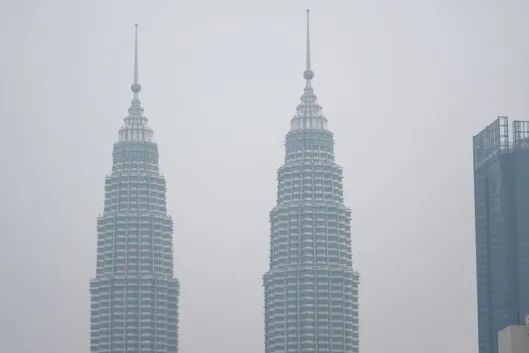
A hazy view of the twin tower in Kuala Lumpur
Transboundary Haze Triggers the Highest-Level Warning
The severity of this pollution can be seen from monitoring data. Data from the independent forest monitoring platform Nusantara Atlas shows that in the peatlands of Sumatra and Kalimantan—the areas where fires are most concentrated in Indonesia—the total burned area had exceeded 1.9 million hectares from January to the end of September 2026, an estimate 38% higher than the same period in 2019. In the real-time pollution rankings of the air quality monitoring agency IQAir between 7 a.m. and 8 a.m. on October 22, Kuala Lumpur ranked first among major Southeast Asian cities for the worst pollution, while Singapore ranked third. The readings in both cities were at the "extremely harmful" level.
Because haze does not remain confined within the borders of the country where fires originate, it spreads outward with prevailing winds and affects densely populated urban areas. The affected areas are not limited to major cities such as Singapore and Kuala Lumpur. Dili, the capital of Timor-Leste, was also exposed to air quality exceeding standards for an extended period, forcing local schools to suspend classes. The cross-border spread of fires and haze gives this alert a clear character of a regional public crisis.
Peat Smoldering and the Economic Logic of Slash-and-Burn
To understand the root causes of recurring forest fires, it is necessary to recognize the nature of the fire source itself. Many fires in Southeast Asia occur in peatlands rather than ordinary forest land. Peat is a carbon-rich soil layer formed over thousands of years from accumulated plant residues under anaerobic conditions. When saturated with water, it is not easily ignited, but once drained or deliberately set alight, the dehydrated peat shifts into underground "smoldering." Smoldering is a low-temperature, slow oxidation process that can last for weeks or even months, and it is far more difficult to extinguish than surface flames. Even if flames on the land surface are put out, smoldering hotspots deep in the soil may reignite and set the surface alight again.
As a tradition to clear the farm land by burning, the slash-and-burn method is the main trigger of peatland fires. This method is both a long-established local means of land clearing, and it is deeply embedded in the commercial agricultural system. Growers of cash crops such as palm oil prefer burning to clear the farm land at a low cost. With traditional livelihood needs overlapping with large-scale industrial expansion, the dry season sees a high incidence of fires.
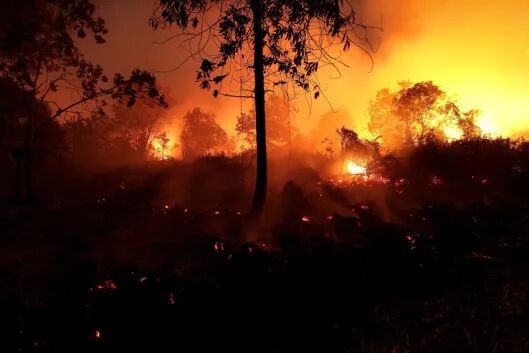
A forest fire breaks out in Indonesia.
Peat Combustion, Climate Warming Exacerbate Fires
The difficulty of eradicating forest fires also lies in the fact that the fires themselves will continuously increase the future fire risk. Peat is a massive terrestrial carbon pool, and combustion rapidly releases the carbon sequestered over millennia into the atmosphere. The accumulation of greenhouse gases drives regional warming, prolongs the dry season, further lowers the moisture content of peatlands, and continuously increases flammability. The probability of ignition and the intensity of burning in the next fire season rise accordingly, forming a gradually reinforcing cycle.
Extinguishing surface flames is not technically difficult, but as long as the linkage among drought trends, climate warming, and peatland degradation persists, fires will recur over longer cycles. What Southeast Asia needs to address is not only individual seasonal fire events but a long-term risk jointly shaped by land development and climate change.
A Regional Public Crisis and the Cost to Livelihoods
The negative consequences of forest fires are borne by the entire region. For months, the polluted air has caused school closures across Indonesia, Malaysia, Singapore, and Timor-Leste. A marked increase in hospital visits for respiratory diseases was seen in the countries, and the outdoor group activities were suspended. Facing rising indicators in air pollution, local governments have launched emergency responses. Indonesia's National Agency for Disaster Management dispatched aircraft to areas affected by haze in southern Sumatra to seed dry ice in an attempt to reduce pollution.
Haze naturally knows no national borders, and the boundary between the country of origin and victim countries therefore becomes blurred. Many affected areas did not themselves directly generate the fire source, yet ordinary people's daily travel and production order have been disrupted, and those working outdoors for long periods face higher health risks. Beyond public health impact, the reduced visibility disrupts aviation scheduling, tourism and offline consumption contract, and the regional economy bears persistent losses that are difficult to quantify. Residents in some affected areas have expressed dissatisfaction with this externally introduced pollution, because they must bear the dual pressure of health damage and income loss. Behind such sentiment lies the real contradiction of imbalanced responsibility allocation in cross-border public harm scenarios.
Why Transboundary Haze Can't Be Managed
In the face of transboundary haze, the ASEAN has some institutional arrangements at the regional level. The transboundary haze governance agreement has been in place for many years, and the ASEAN Specialised Meteorological Centre serves as the hub for information aggregation, warning dissemination, and coordinated response. However, cross-border environmental governance is essentially the provision of regional public goods, and advancing such cooperation often requires member states to delegate part of their governance authority. Regional governance goals and national governance priorities can easily come into conflict.
Past practice shows that existing mechanisms remain mostly at the level of information exchange and policy exhortation, but strong measures and supervisory accountability have been absent. This shortcoming is rooted in ASEAN's long-standing principles of non-interference in internal affairs and consensus-based decision-making. Agreement implementation relies heavily on the voluntary will of member states and lacks unified rules for accountability for violations and cost-sharing, making it easy to fall into a situation where a framework exists but is difficult to implement. Asymmetry of rights and responsibilities further amplifies the contradiction: The fire source may be generated within the territory of a certain country, but pollution damage spills over to multiple countries. The cost of pollution is often paid by the entire region.
Victim countries lack effective constraining means, while the country of fire origin weighs between local livelihoods, industrial returns and environmental control, often prioritizing demands for domestic governance. Singapore once proposed investigating the Indonesian companies involved as a warning and took action through the Transboundary Haze Pollution Act. But such unilateral measures can hardly form stable constraints. The persistent tension between national interests and regional interests is precisely the reason why transboundary haze governance has long failed to make a breakthrough.
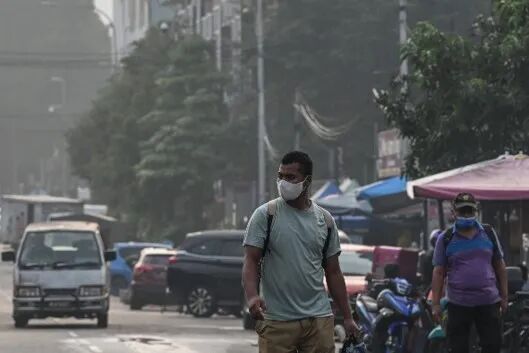
Local residents in an ASEAN city wear masks amid haze.
In conclusion, the lasting forest fires show that short-term firefighting alone is no longer enough. In terms of the development model, ASEAN needs to think about how to make a balance between grassroots livelihoods and destructive land cultivation? In terms of the transnational mechanism, how can paper agreements be given "teeth" to resolve the misalignment of rights and responsibilities in which "the country of fire origin is not anxious while victim countries are anxious"? In terms of the broader climate picture, how can the region's overall ecological resilience be enhanced?
The transboundary haze has been included on the agenda of recent high-level regional meetings. Only by facing structural contradictions and shifting the focus of governance from "post-hoc firefighting" to "pre-emptive fire prevention" can Southeast Asia truly see the dawn of relief amid the years-long haze crisis.
Writing by Kong Chengjianxiong (Research Assistant at the Center for China’s Neighbor Diplomacy Studies, Yunnan University); Trans-editing by Wang Shixue and Han Chengyuan
