


Japan fails to meet Bangladesh strategic needs despite 50-year engagement


Bangladeshi Prime Minister Tarique Rahman visited Japan from October 26 to 29, when he and Japanese Prime Minister Sanae Takaichi jointly announced the upgrading of the Bay of Bengal Industrial Growth Belt (BIG-B) cooperation initiative. The two sides also agreed to cooperate on infrastructure, industrial investment, and maritime security.
Japan has long been Bangladesh's largest source of development assistance. However, the political and economic conditions underpinning the development of Bangladesh-Japan relations are changing. On the one hand, it is difficult for Japan to meet Bangladesh's most important strategic needs, as Bangladesh falls into a diplomatic confrontation with India. On the other hand, Japan's advantage in development financing is continuously declining, the Japanese scale of private industrial investment gets limited, and Japan has also failed to become a major export market for Bangladesh.
Overall, the economic cooperation stock between Bangladesh and Japan is large, but it is very difficult for Japan to further transform its long-accumulated economic influence into regional strategic influence over Bangladesh.
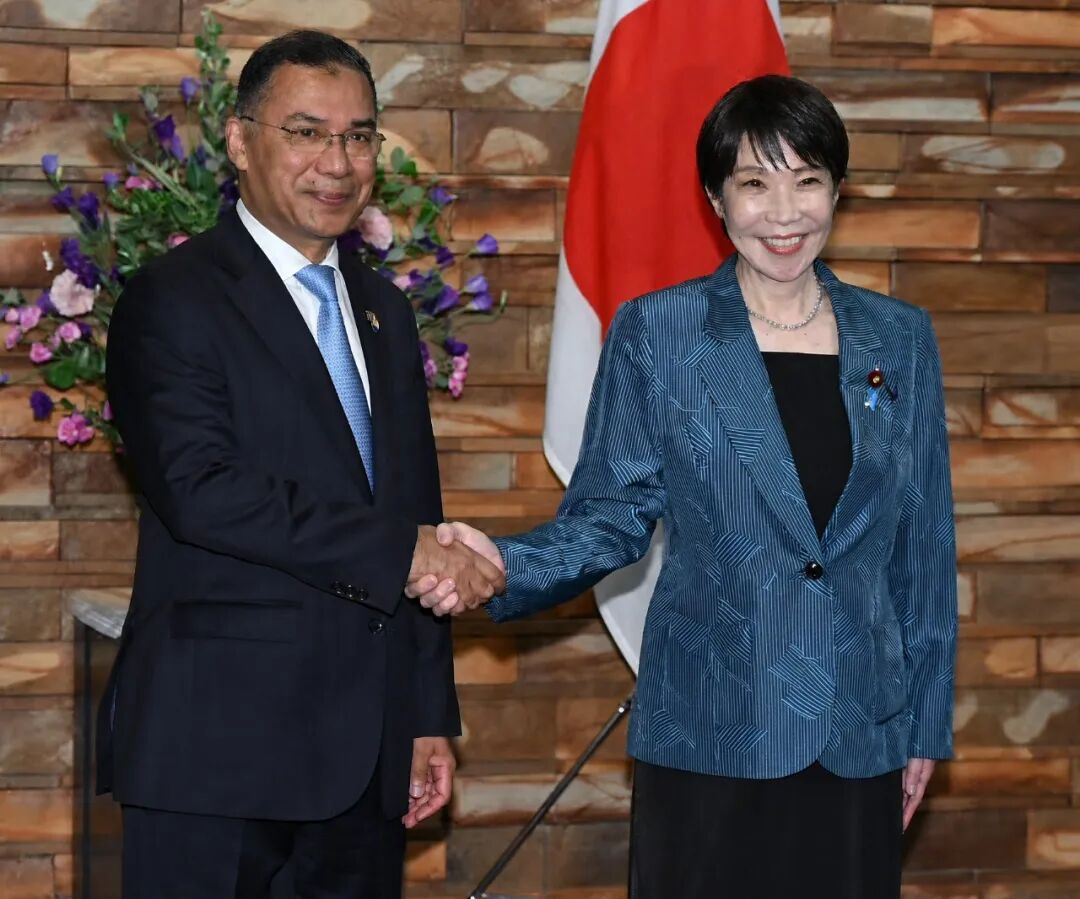
Bangladeshi Prime Minister Tarique Rahman shakes hands with Japanese Prime Minister Sanae Takaichi.
Japan has been Bangladesh's largest source in development aid
In terms of development assistance, Japan has been deeply engaged in Bangladesh for decades. After Bangladesh's independence in 1972, Japan began providing assistance to it, and in 1974 it established a Japan International Cooperation Agency (JICA) office in Dhaka. Since then, Japan has continuously participated in the construction of Bangladesh's transportation, energy, agriculture, education, and public health sectors, influential in bridges, highways, subways, power stations and ports.
Data from Bangladesh's Ministry of Finance show that as of June 2025, Japan had disbursed a total of US$23.95 billion in assistance, accounting for 16.8% of the total foreign aid Bangladesh has received since its founding. Second only to the World Bank's International Development Association and the Asian Development Bank, Japan ranked first among the donating countries to Bangladesh. Of the Bangladeshi government's foreign debt, US$13.73 billion came from Japan, accounting for 17.8%.
Japan's ability to maintain this position for a long time results from the economic advantages and to strategic convenience. Economically, Japan has long provided concessional loans with relatively low interest rates and long repayment periods, which are especially suitable for infrastructure projects with large funding needs and long payback periods. Strategically, Japan maintains close relations with India and the United States and is regarded as an important force in hedging against China in development financing. It faces less political resistance on sensitive projects such as deep-water ports and can become an important option for Bangladesh in bringing in external funds.
In addition, Japan's cooperation with Bangladesh can be further extended to surrounding regions. Since 2014, Japan has promoted the BIG-B cooperation initiative, attempting to use Bangladesh's ports and industrial zones to connect India's northeast and surrounding markets. This aligns with Bangladesh's goal of developing manufacturing and expanding regional trade by leveraging its geographical advantage as a link between South Asia and Southeast Asia.
Through long-term development assistance, Japan has accumulated great influence over the Bangladeshi economic planning system. Japan particularly values the training of Bangladeshi technocrats. Through JICA, Japan has trained more than 15,000 Bangladeshi technicians. Since the implementation of the Japanese Grant Aid for Human Resource Development Scholarship (JDS) program in 2002, 623 Bangladeshi civil servants and officials from the central bank and judicial system have been selected to pursue master's and doctoral degrees in Japan. The Bangladeshi talents are mostly involved in economic planning, public finance, investment management, and administrative management.
Japan has also combined talent cultivation with long-term development assistance. Through the Economic Relations Division of Bangladesh's Ministry of Finance, the JICA coordinates the training needs of Bangladeshi departments and carries out technical cooperation around major projects. This has enabled Japan to continuously participate, through personnel exchanges, in Bangladesh's development planning and major project decision-making.
Tarique's visit to Japan this time allows Japan to continue its long-standing cooperation approach of using development financing to promote Bangladesh's infrastructure construction and thereby expand industrial investment. On October 27, Tarique and Japanese Prime Minister Sanae Takaichi agreed to upgrade the Bay of Bengal Industrial Growth Belt cooperation initiative into a "shared prosperity" strategic cooperation initiative. Proposed by the Abe government in 2014, the initiative will advance construction of the Matarbari deep-water port, the Dhaka metro, and industrial facilities.
Japan pledged to provide 46.56 billion yen in loans to improve the investment environment and local governance in Bangladesh. The two sides signed 17 corporate cooperation memoranda, and Japan expects its corporate investment in Bangladesh to reach 1 trillion yen over the next five years, creating about 200,000 jobs. The two sides also agreed to promote the early entry into force of the Economic Partnership Agreement signed in February this year and to expand technical training and industrial cooperation.
At the same time, Japan announced the provision of new maritime patrol vessels, continuing the maritime security cooperation that has gradually expanded in recent years. It can thus be seen that while continuing existing economic cooperation, Japan is also attempting to extend its existing economic influence into regional security.
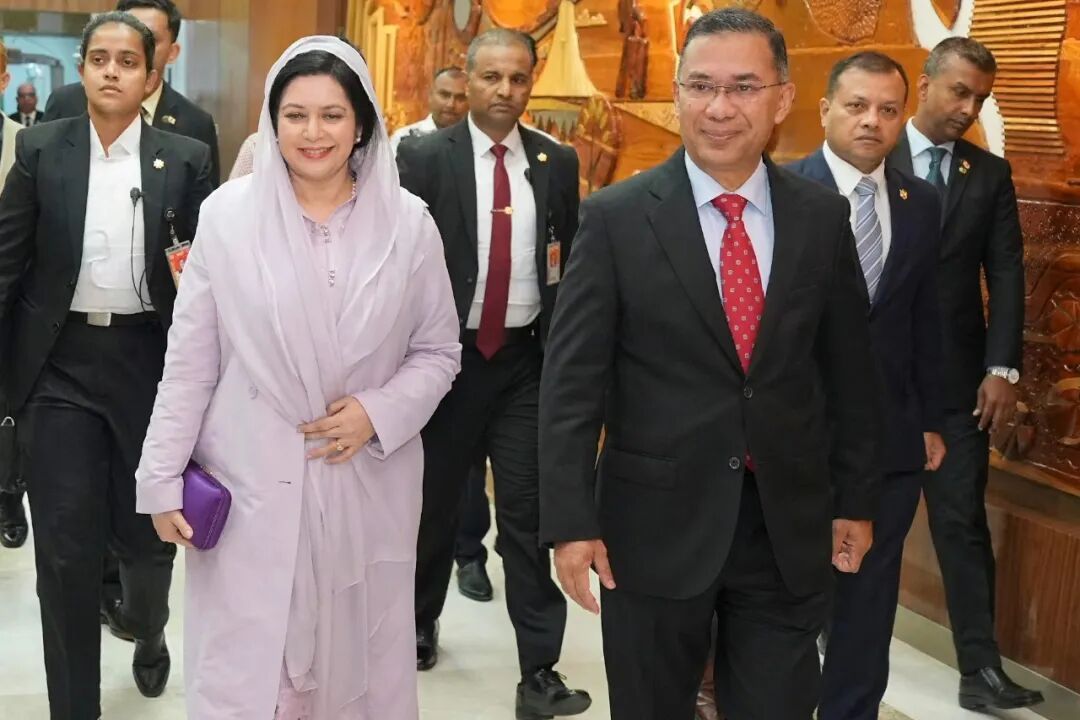
Bangladeshi Prime Minister Tarique Rahman visits Japan from October 26 to 29.
Japan faces strategic constraints in Bangladesh
However, Japan's long-accumulated economic and political advantages are facing multiple constraints brought about by changes in Bangladesh's domestic and international situation.
First, misalignment of security concerns. India is the country Bangladesh fears most, but it is precisely Japan's most valued strategic partner. During the Awami League (AL) government from 2009 to 2024, Bangladesh maintained friendly relations with both India and Japan, and Japan's development assistance to Bangladesh basically aligned with the common interests of the three parties. After the fall of the Awami League government in 2024, however, India has become Bangladesh's primary source of security threats. Japan regards India as one of its most important partners for regional strategy, and the country finds it difficult to provide strong support to Bangladesh when serious disputes arise between Bangladesh and India.
By virtue of the trust of both India and the United States, Japan used to be one of Bangladesh's ideal partners for bringing in external capital. But now, this special status of Japan limits its ability to meet Bangladesh's security needs. For example, Japan hopes to use Matarbari Port to connect India's northeast with the Bay of Bengal region, but with India-Bangladesh relations getting tense, the Tarique government is unwilling to let Japanese investment become a tool to help India expand its regional economic influence. In addition, the Rohingya refugees in Myanmar are another issue. Although Japan has long had substantial investment near Yangon and can reach the Myanmar military and ethnic armed groups through special envoys, it lacks the ability and motivation to change the situation in Myanmar. Japan can assist Bangladesh-Myanmar contacts, but it cannot solve the repatriation of Rohingya refugees and border security issues for Bangladesh.
Second, limited industrial influence. Japan's successful experience in Southeast Asian countries such as Thailand and Vietnam is to improve infrastructure through government development assistance and then encourage its own manufacturing enterprises to enter and form long-term production networks. However, Japan's economic influence on Bangladesh is still concentrated in government development financing and large-scale infrastructure projects, while the private manufacturing investment is nothing big.
Data from Bangladesh's central bank show that as of the end of 2025, Japan's stock of direct investment in Bangladesh was about US$470 million, far less than China's US$1.92 billion. In trade, Japan accounts for only 2.8% of Bangladesh's imports, while China accounts for 27% of Bangladesh's merchandise imports and holds an important position in textile fabrics, industrial machinery, and electrical equipment. Japan is also not an important export market for Bangladesh, accounting for only about 3% of Bangladesh's merchandise exports, and its contribution to remittances is also quite limited. It can be seen that Japan's influence on Bangladesh is highly concentrated in development financing and large project cooperation and has not penetrated into industrial cooperation and trade.
Third, declining financing advantage. The interest rates of Japanese loan have risen, and Bangladesh has begun to bargain. In the past, Japan was able to provide large-scale infrastructure financing to Bangladesh at interest rates of less than 1%, with a 30-year repayment period and a 10-year grace period. But in recent years, Japan has ended its long-standing ultra-low interest rate, and domestic government debt and financing costs continued to rise. As a result, the fixed interest rate on JICA ordinary loans has increased from 0.7% in 2020 to 3.5% in October 2026. Rising Japanese financing costs even caused Bangladesh to suspend signing new loan agreements at one point, and during this visit to Japan Tarique specifically asked Japan to lower the interest rate and extend the repayment period.
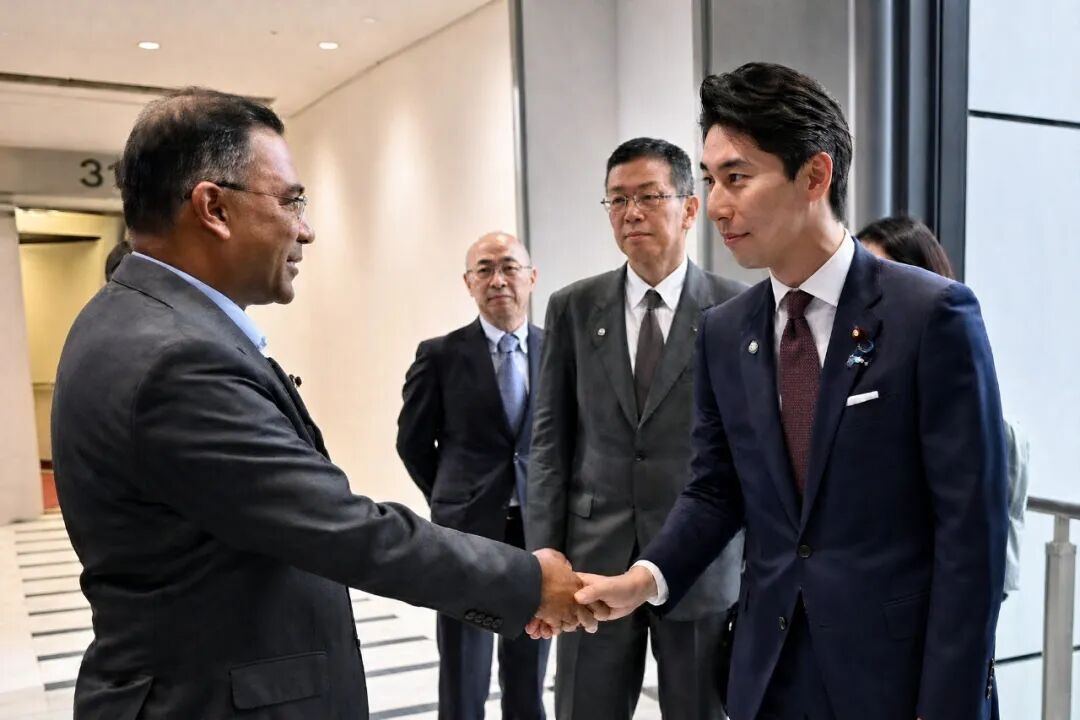
Bangladeshi Prime Minister Tarique Rahman visits Japan from October 26 to 29.
Bangladeshi call for self-reliance makes things harder for Japan
There was a rather interesting detail in Tarique's visit to Japan this time. At the welcome ceremony at the Japanese Prime Minister's Office on October 27, Sanae Takaichi gestured for Tarique to bow to the Japanese national flag, but Tarique only placed his right hand on his chest and nodded in greeting. This scene unexpectedly received praise on Bangladeshi social media, and some even compared it with the image of former Prime Minister Sheikh Hasina bowing during a previous visit to Japan, believing that Tarique upheld national dignity. A protocol detail of just a few seconds was given a clear political significance, reflecting the rising calls for dignity and self-reliance in the Bangladeshi political atmosphere.
When Bangladesh maintained friendly relations with India, the United States and Japan at the same time, Japan was precisely able to make up for the shortcomings of the United States and India in economic influence in Bangladesh, enabling the three parties' strategic influences in Bangladesh to complement each other and form a synergy. After the 2024 regime change in Bangladesh, however, this political foundation no longer exists.
For Bangladesh now, Japan can still play a role as a long-term development partner and provide concessional development loans, but Japan can neither meet Bangladesh's strategic security needs nor provide deep impetus for the upgrading of Bangladesh's industries. It is even less possible for Japan to change Bangladesh's strategic direction.
Writing by Wu Mengke (Executive Deputy Director of the Centre for China Studies at the University of Dhaka and Assistant Research Fellow at the Shanghai Institutes for International Studies); Trans-editing by Wang Shixue and Zu Hongbing
