


Chea Munyrith: The CPC Red Boat always marches on


Editor's note:
From the first Party congress on the Red Boat on South Lake in Zhejiang province to a century-old major party that successfully governs China for decades, what is the source of strength that keeps the Communist Party of China (CPC) forever young and vigorous?
The Fifth Plenary Session of the 20th CPC Central Committee was held in Beijing from October 26 to 29, making important strategic arrangements for persistently advancing full and rigorous Party self-governance. In the eyes of scholars, consuls, teachers and students from South and Southeast Asia, what kind of "China governance" has the CPC's advancement of Party self-governance brought about, and what has the Chinese modernization brought to the world?
Today, we present an article by Chea Munyrith, member of the Executive Committee of the Cambodia-China Friendship Association and President of the Cambodian Chinese Evolution Researchers Association.
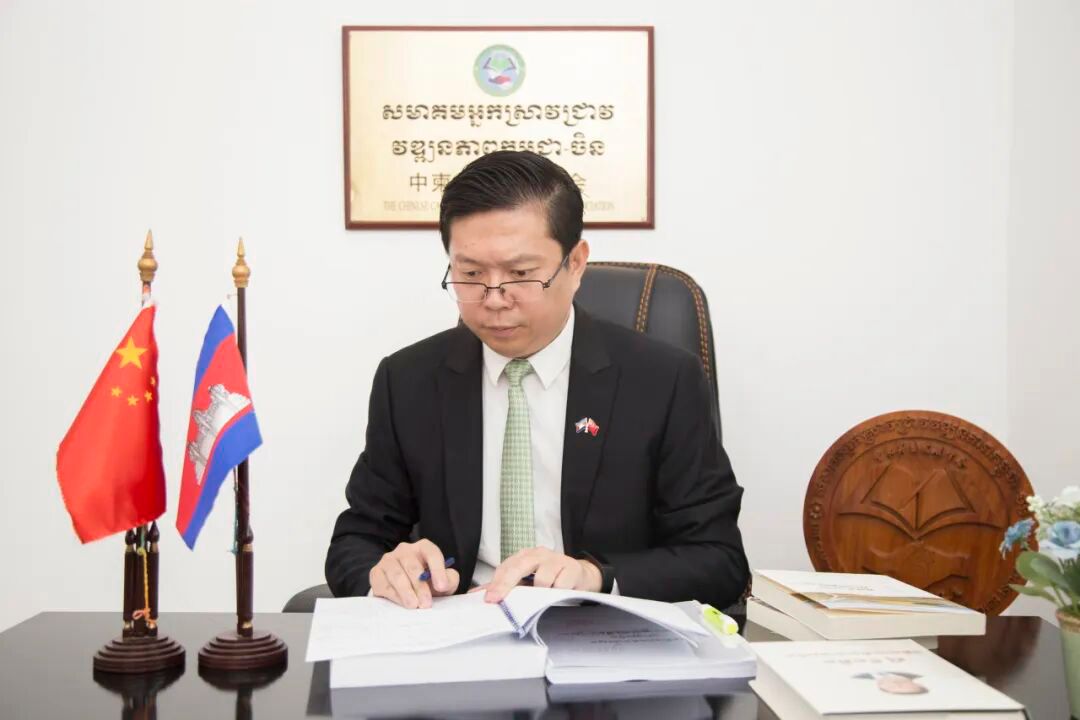
Chea Munyrith
The CPC Red Boat always marches on
The Red Boat on South Lake in Jiaxing, east China’s Zhejiang province, witnessed the birth of the Communist Party of China (CPC) on July 1, 1921. From then on, China's destiny underwent earth-shaking changes for the positive.
From the founding of the People's Republic of China (PRC) on October 1, 1949, to the implementation of the reform and opening-up policy in 1978, and then to the continuous advancement of Chinese modernization since the beginning of the 21st century, the CPC has constantly adjusted its policy priorities according to China’s stage of development in order to improve the country's productive forces, improve the people's living standards, consolidate China’s position in the world economy, and make positive contributions to global development.
The CPC's journey of struggle is both an important line for understanding China's historical evolution and an important subject for understanding the CPC's governance logic and Chinese modernization.
Original Aspiration Kept for 105 Years
Studies on the CPC history shows that national construction and development is a process that requires continuous adjustment and optimization.
After the founding of the PRC in 1949, China established a new system of administrative, economic, and social institutions. In this process, remarkable achievements were made, but some lessons needed to be learned and experiences needed to be summarized for further improvement.
The reform and opening-up initiated in 1978 has become a turning point in China's development, for the initiative improved the Chinese productivity, expanded trade, attracted investment to China, and promoted the application of science and technology. These changes show that a country's modernization cannot cling to old paths, but should be evaluated based on reality, adjust its priorities, and effectively allocate resources.
Chinese modernization has expanded development from economic growth to a model that places equal emphasis on multiple dimensions such as quality improvement, innovation-driven development, scientific and technological development, ecological protection, and improvement of people's livelihood.
China's economy achieved 5% growth in 2025. With the GDP reaching 140.19 trillion yuan (about 20.22 trillion US dollars), the country contributed about 30% to global economic growth. This achievement showed China's enormous production capacity and sustained development results.
From 2026 to 2030, China will continue to promote high-quality development through the implementation of the 15th Five-Year Plan.
The above development goals fully demonstrate that the original aspiration of the CPC's unremitting struggle originates from the "Red Boat Spirit" that dates back to 105 years ago. Today, the Spirit has been endowed with visions and innovative connotations in the new era, inspiring the CPC and the Chinese people to continue creating a better future along the path of Chinese modernization.
Being Strict with Party Members and Putting the People First
From October 26 to 29, 2026, the Fifth Plenary Session of the 20th CPC Central Committee was held in Beijing. The session made arrangements for persistently advancing full and rigorous Party self-governance.
From the perspective of a political party's "self-governance," persistently advancing full and rigorous Party self-governance emphasizes self-examination, self-correction, improving management methods, and strengthening discipline in leading organs. It is an important governance concept. The enforcement of Party discipline is not only punishment for violations of discipline and regulations, but also an institutional arrangement for clarifying responsibilities, managing officials, and standardizing the operation of power. The fight against corruption cannot rely only on short-term actions either; it requires the establishment of a clear supervision system, effective control mechanisms, and clear division of responsibilities.
A key point among these is adhering to the supremacy of the people's interests, which is also the embodiment of the CPC's fundamental purpose of "serving the people wholeheartedly." Through persistent practice, the CPC has enhanced the Chinese people's trust in it, and it is precisely under the guidance of this concept that China has achieved remarkable development results: In 2025, China's average life expectancy was 79.25 years, and the per capita GDP reached 99,665 yuan (about 13,953 US dollars), an increase of 5.1% over 2024.
Injecting Momentum into Regional Cooperation
China's modernization is closely linked with regional development, mainly in areas such as trade, investment, infrastructure connectivity, and scientific and technological exchanges.
For Cambodia, Laos, Myanmar, Thailand, and Vietnam, close cooperation with China can bring important opportunities to expand markets, improve transportation, and develop human resources.
Data released by the Chinese side show that in 2025, trade between China and the five Mekong countries reached 500.9 billion US dollars, an increase of more than 150% over ten years ago. This data reflects the close economic ties between China and the Mekong countries. For Cambodia, cooperation with China helps enhance transportation capacity, expand export markets for agricultural products, promote production investment, and improve the professional capabilities of talents.
Under the Lancang-Mekong Cooperation framework, Cambodia has carried out 108 projects with the support of the Lancang-Mekong Cooperation Special Fund as of 2025, covering areas such as poverty reduction, demining, education, and medical care and health.
Concluding Remarks
Born on the Red Boat in east China’s Zhejiang, the CPC has now grown to be the backbone that unites and leads the Chinese people in continuously advancing the Chinese modernization.
The CPC's journey of struggle clearly demonstrates the deep interconnection between the historical process, institutional reform, and national development policies. China's GDP data, trade with the Mekong countries, and cooperation projects implemented in Cambodia provide important evidence for observing its development goals and regional relations.
The CPC revolution brings institutional change, the Chinese reform enhances the ability to adjust, and the Chinese modernization must ultimately be tested by practical results that benefit society. This is precisely the logical main line that connects China's historical development process with national governance and development concepts in the new era.
Over its 105-year development journey, the CPC has demonstrated a clear vision, a spirit of unity, an attitude of reform and innovation, and a highly responsible sense of duty to the people. By continuing to promote high-quality development and strengthening international cooperation, China can continue to contribute to global development. Countries around the world can join hands with China in building a community with a shared future for mankind.
Trans-editing by Wang Shixue, Shen Yan and Liu Ziyu
