


Panglong deal & peace talks fail to unify Myanmar as a nation


Delegates from the Myanmar National Democratic Alliance Army (MNDAA) and the National Solidarity and Peacemaking Negotiation Committee held direct talks in Naypyidaw on September 24. This was the first formal contact between the organization and the government's peace body since the political change in 2021.
Why is a single round of talks regarded by outside observers as a "tentative reconstruction" of Myanmar's nation-building? To answer this question, one has to a longer look back into history. From the 1947 Panglong Agreement to the 1982 citizenship law, and to today's fragmented political landscape, Myanmar's inquiry into "who we are" has lasted more than seventy years and remains unfinished.
As an “imagined community”, a nation is not the product of natural evolution but a lengthy process of construction, contestation, and redefinition under specific historical conditions. Myanmar's national story is precisely an "unfinished national story."
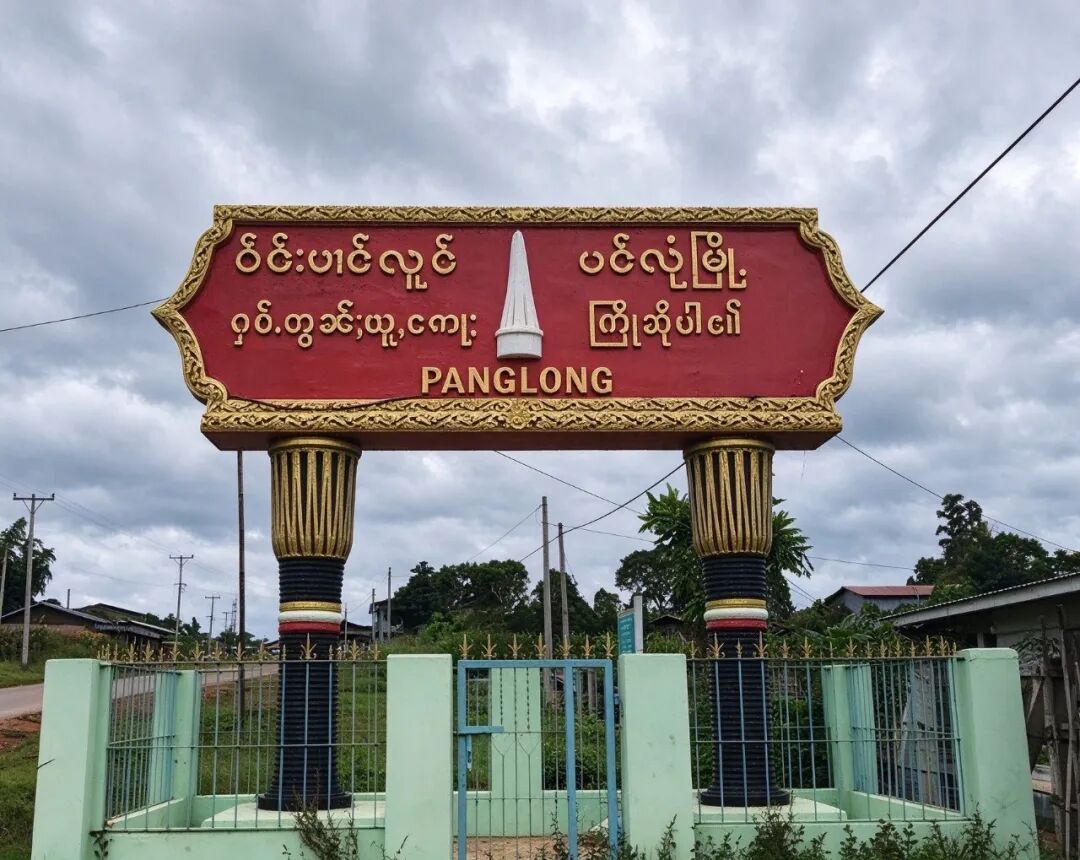
A view of the Panglong town in Myanmar
Panglong Deal: An Unfinished Pact of Nation-Founding
The Panglong Agreement was Myanmar's first attempt at nation-building.
On the eve of independence, General Aung San realized that without unity among all ethnic groups, Myanmar could hardly achieve independence. He sought to construct a national ideology before independence, forming a gradualist logic of nation-founding: First, achieve sovereign independence through cross-ethnic political union. Then, rely on a federal system to advance ethnic integration and national identity. Finally, establish a unified modern nation-state. In the nation-founding vision Aung San formed around 1941 (often cited in academia as the "Blueprint for Burma"), the embryo of this gradualist logic can already be seen.
In February 1947, leaders of the Anti-Fascist People's Freedom League, Shan sawbwas, and representatives of the Chin, Kachin, and British government passed the Panglong Agreement in Panglong, agreeing to establish a Supreme Council of the United Frontier Areas, nominate representatives to participate in the interim government, and basically reach consensus on building a unified sovereign state. The Panglong principles were embodied in the 1947 Constitution of the Union of Burma:
- A federal system was implemented, listing the Burma Proper, Shan State, Kayah State, Kachin Hills, and Chin Hills, among others;
- Differences among ethnic minorities in ethnicity, language, culture, and historical tradition were recognized;
- The rights of ethnic minorities, cultural rights, and the right to send representatives to the legislative council were stipulated;
- The states had the right to secession, but they could not exercise it within ten years of joining the union, and even after ten years, a secession requires the consent of more than two-thirds of the legislators of the state, and a referendum is needed to pass the secession.
However, things changed soon.
After Aung San's assassination, his successor U Nu's nation-building path shifted toward centralization. Based on Buddhist humanism, U Nu believed that all ethnic groups were "sons and daughters of this land," that unity was natural, and that solving the ethnic minority problem lay in connecting the bonds among ethnic groups rather than dismantling the federation. Therefore, although the constitution stipulated a federal system, the constitution implementers adopted a policy of restricting, weakening, and retracting the rights promised to ethnic minority elites before independence.
After the Ne Win government came to power in 1962, it further pursued comprehensive "Burmanization," strengthening Burman dominance in education, language, culture, and other fields. From then on, the centralized governance practice diverged from the federal pluralist framework, and ethnic contradictions and central-local tensions continued to accumulate. Yet the pluralist federal spirit embodied in the Panglong Agreement never died; ethnic minority organizations still use it as their basis of legitimacy, advocating that a future Myanmar should be built on multi-ethnic equality and federal autonomy.
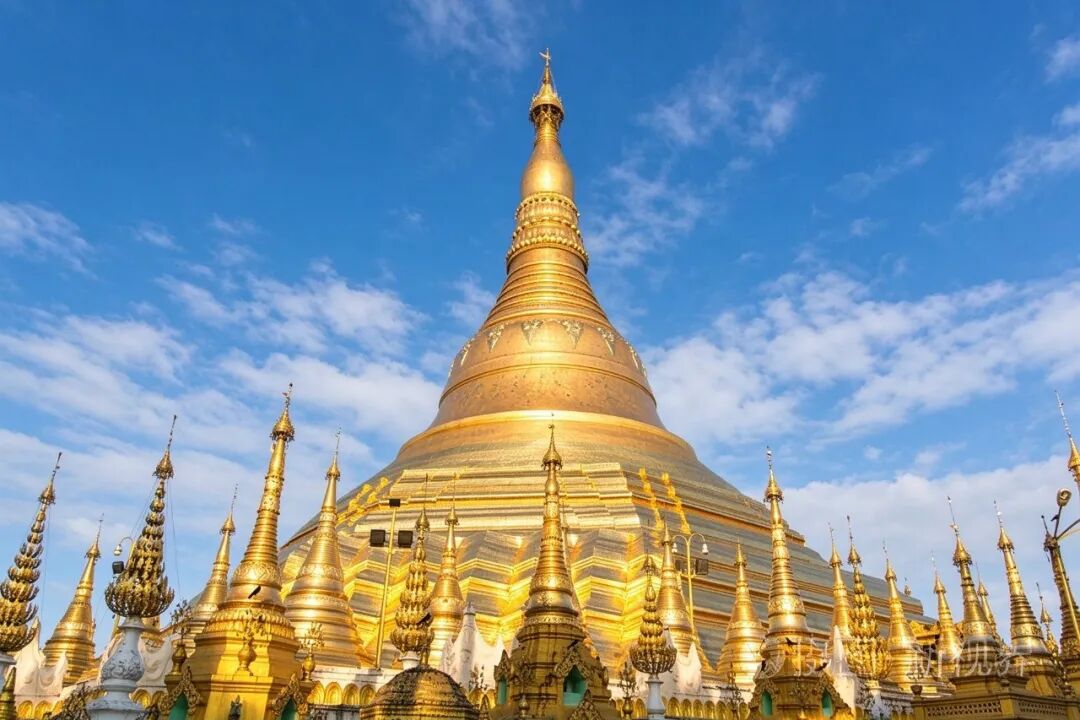
The Shwedagon Pagoda in Myanmar
History Is Written by the Majority
The nation building is also a contest over discursive power.
Whichever group can define national history, shape public memory and dominate cultural narratives, they can grasp the interpretive power over national identity. Myanmar's historical narrative has long centered on the Burman perspective. In 1935, the Dobama Asiayone, or We Burmans Association, adopted the common creeds: "Burma is our country.” “The Burmese script is our script.” “The Burmese language is our language." In schools, Burmese became the main medium of instruction, and the ethnic minority languages were limited. Although the government attempted to translate Burmese textbooks and cultivate more teachers for ethnic minority languages, few results were yielded.
Religion was also incorporated into the national narrative.
On the eve of nation-founding, Aung San had realized the strong embeddedness of Buddhism in Myanmar society and insisted on the separation of church and state. At the January 1946 conference of the Anti-Fascist People's Freedom League, he pointed out that religion concerns personal morality, while politics is a social science. Attention must be paid to freedom of personal belief, but a boundary should be drawn between religion and politics—if the two are mixed together, the spirit of religion is actually harmed.
U Nu, by contrast, valued Buddhism, deeply binding Buddhist ethics with the national community and striving to shape Buddhist faith as a core marker of national identity. During the Ne Win period, the political influence of Buddhist nationalism continued to expand, making religious minorities—especially Muslims—more marginalized in the national imagination. As a result, the stratification of ethnic and religious identities further intensified.
The emergence of new media broke the monopoly on national narrative.
The digital platforms dissolved communication barriers, giving ethnic minorities channels to speak. Karen youth spread their ethnic culture, homeland concepts, and self-determination demands through overseas short-video platforms; Rohingya refugees use video and artistic creation to record their community's experiences and strive for identity recognition in the international public sphere. These grassroots narratives, though unable to directly change the narrative at the national level, have continuously deconstructed the singular national narrative, and they showed that Myanmar's national memory has not yet been unified and the national identity remains in a state of contestation.
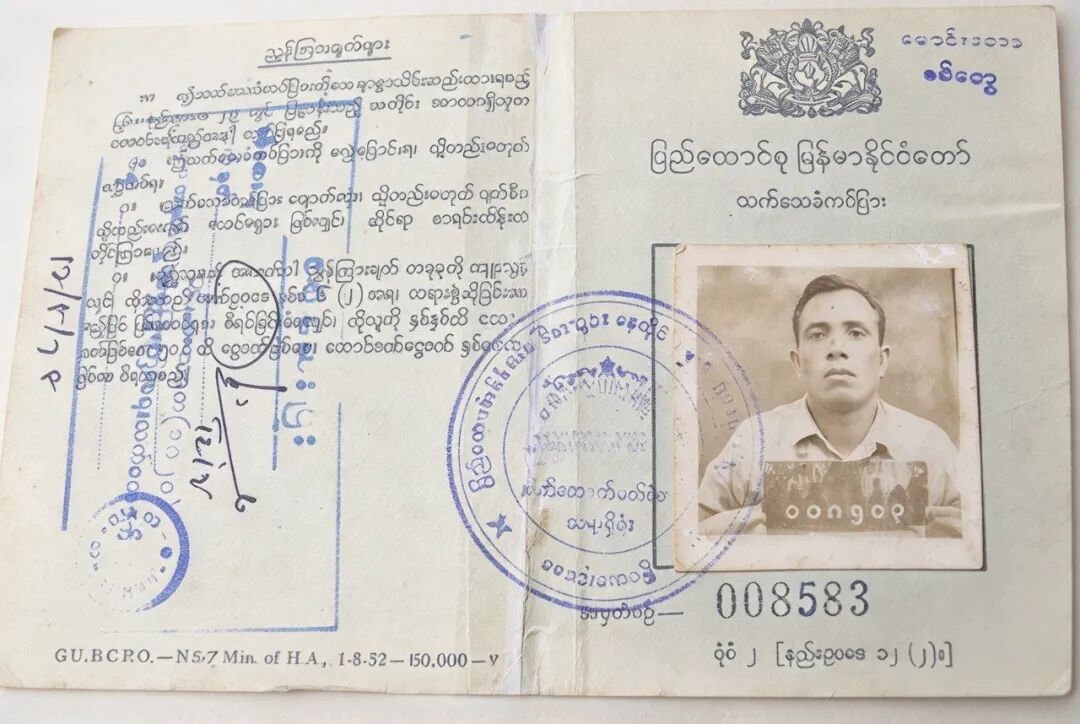
A Myanmar ID card
The ID Card of Three Colors Forms Big Gap
If the historical narrative shapes the identity differences at the spiritual level, then the nationality system transforms ethnic differences into an institutional chasm.
After independence in 1948, Myanmar's immigration and localization policy changed the colonial-era principle centered on birthplace, shifting to a naturalization policy based on descent and birthplace. According to the 1947 Constitution and the accompanying Union Citizenship Act, the Sino-Burmese mixed-race persons and the overseas-born persons of the second-generation immigrants could naturally acquire the Myanmar citizenship. Overseas-born persons whose parents had been naturalized could apply for naturalization. For other first-generation overseas-born persons and the persons born in British colonies, they could apply for naturalization if they had cumulatively resided in Myanmar for more than eight years within the ten years before independence.
The 1982 Myanmar Citizenship Law made a fundamental adjustment to the rules for determining nationality. The law divided citizens into three categories:
All the Kachin, Kayah, Karen, Chin, Burman, Mon, Rakhine, Shan, and other ethnic groups and their sub-groups who settled in Myanmar before Burmese calendar year 1185 (AD 1823) are "Full Citizens". The persons whose father or mother is a Myanmar citizen and who were born in Myanmar are "Associate Citizens". The persons who acquired citizenship under the 1948 Union Citizenship Act but do not belong to the ethnic groups indigenous before 1823 are "Naturalized Citizens."
After the new military government came to power in 1988, it abolished the 1974 Constitution, but the 1982 Citizenship Law remains in use to this day. In 1989, the Myanmar government required all citizens to apply for new ID cards: "Full Citizens" hold pink cards, "Associate Citizens" hold blue cards, "Naturalized Citizens" hold green cards, and foreign resident certificates are white. The ID cards also indicate the cardholder's father's name, ethnicity, religious belief, height, blood type, physical characteristics, residential address, and occupation. This system legalizes and fixes identity differences, constituting the institutional boundary of the national imagination. The modern nationality system has not only failed to promote ethnic unity but has instead become an institutionalized mechanism of exclusion. The ID cards excluded some groups from the national community, creating persistent identity crises and ethnic confrontation.
A New Possibility, or the Old Cycle?
Whether Myanmar's nation-building can escape a closed narrative remains unclear to this day, but internal dynamics have emerged.
After the political changes of 2021, Myanmar has shown a fragmented landscape in which multiple political forces coexist. Civil society organizations and women's groups widely participate in public consultation, laying a social foundation for building an inclusive national identity.
Negotiations with ethnic armed forces also reflect a turn toward institutional consultation. On September 24, a delegation of the Myanmar National Democratic Alliance Army held talks with the National Unity and Peace Negotiation Committee in Naypyidaw—the organization's first formal contact with the government's peace body after the 2021 political changes. The agenda covered local autonomy arrangements, the political status of armed forces, reopening of border crossings, cross-border economic projects, combating transnational crime, party registration and electoral participation, and more. Although the talks were shortened, all parties agreed to maintain continuous communication. These negotiations mark the upgrading of conflict management in northern Shan State from a purely military ceasefire to substantive contestation over institutional issues such as political status, local governance, and benefit distribution, entering a stage of tentative reconstruction.
Benedict Anderson, a Yunnan born political scientist, holds that an imagined community is possible because members, even if they have never met, can each hold in their own minds an "image of the community." Yet Myanmar's image of the "nation" has not truly been jointly accepted by all ethnic groups. When some people are excluded from the "imagination," the community is difficult to truly form.
Horizontally, the nation-building of many post-colonial countries faces the triple contradiction of colonial legacy, ethnic diversity, and national unity. Myanmar's particularity lies in the fact that its nation-building has been accompanied by armed conflict and an inertia of centralization, compressing the imaginative space for pluralistic co-governance. As a late-developing, exogenous-modernization country, Myanmar bears external geopolitical pressure and internal integration pressure, adding difficulty to its constructing of a national identity.
To date, the "imagined community" of Myanmar remains an unfinished story on national identity. Myanmar’s future direction will depend on whether all parties can, on the basis of recognizing diversity, find an institutional arrangement that gives all groups the right to participate in the imagination. The outcome is far from clear, but this exploration itself will shed light on how a multi-ethnic country can construct unity within diversity.
Writing by Ning Wei (Associate Professor at the School of Foreign Languages, National University of Defense Technology in China); Trans-editing by Wang Shixue and Han Chengyuan
