


China-Vietnam legislative cooperation runs at highest level


Tran Thanh Man, Chairman of the National Assembly of Vietnam, led a delegation to visit China and attend the second meeting of the China-Vietnam Joint Committee on Legislative Cooperation from October 11 to 15. What is the significance of this visit? Why is the China-Vietnam legislative cooperation called a top-tier cooperation?
Tran Thanh Man's First Visit for a Special Meeting
Tran Thanh Man's visit to China and his hosting of the second meeting of the Joint Committee of the Vietnamese National Assembly and the Chinese National People's Congress is an important link in the chain of high-level exchanges between China and Vietnam, and the visit has a clear, practical role in promoting the development of bilateral relations.
This is Tran's first official visit to China as Chairman of the Vietnamese National Assembly. The timing coincides with Vietnam's implementation of the resolutions of the 14th National Congress of the Communist Party of Vietnam and the opening of a new term of the 16th National Assembly, while China has entered the opening year of the "15th Five-Year Plan." This visit is a concrete manifestation of the close interactions between China and Vietnam over the past two years, following the high-level consensus reached during the General Secretary Xi Jinping’s visit to Vietnam in April 2025 and the visit to China by To Lam, General Secretary of the Communist Party of Vietnam Central Committee, in April 2026. Vietnam officially defines its relationship with China as "a strategic choice and top priority of its foreign policy," and this visit is precisely the concrete implementation of this position at the legislative level.
The second meeting of the China-Vietnam Joint Committee on Legislative Cooperation, co-chaired by both sides, is the regular advancement of this mechanism following its first meeting in Hanoi in August 2025. Its core role is to translate the consensus reached by the top leaders of the two countries into an implementable legal framework and policy coordination mechanism. The two sides will focus on sharing experience in legislation, oversight, and decision-making on major state affairs, clearing policy and legal obstacles for major cooperation projects such as cross-border railways and industrial parks, and safeguarding the efficiency of cooperation projects from the legislative level. This cooperation model is a distinctive approach to exchanges between China and Vietnam as socialist neighboring countries. Within the "four-track parallel" diplomatic system of party-to-party, state-to-state, parliament-to-parliament, and people-to-people exchanges, the visit further consolidates the institutional foundation of bilateral relations.
In the first eight months of 2026, bilateral trade between China and Vietnam reached US$216.1 billion, up 35.2% year on year. China continues to be Vietnam's largest trading partner, and Vietnam remains China's largest trading partner in ASEAN and fourth-largest trading partner globally.
The visit will further promote the implementation of connectivity projects such as the Lao Cai-Hanoi-Hai Phong standard-gauge railway. At the same time, the legislative coordination will remove the institutional “bottlenecks” that restrict cooperation in digital economy, green energy, and scientific and technological innovation. The two sides will also use the oversight functions of their legislative bodies to safeguard the implementation of projects such as cross-border economic cooperation zones and smart ports, so that the complementary advantages of industrial and supply chains can be translated into tangible development dividends for both countries.
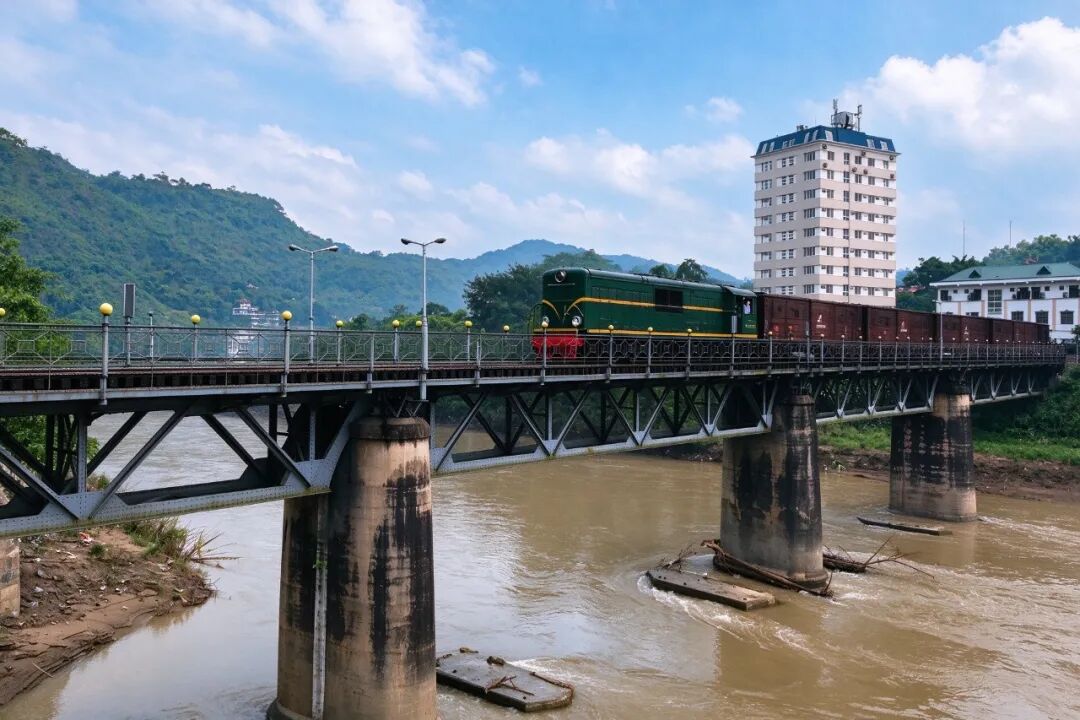
A view of the China-Vietnam border area
Highlights of the China-Vietnam Legislative Cooperation
China-Vietnam legislative cooperation has now entered a new, mature stage characterized by institutionalization, high-level engagement, and service to the building of a community with a shared future for the two countries. Its overall level is in the first tier of legislative exchanges among neighboring countries and serves as an important institutional support for the upgrading of the China-Vietnam comprehensive strategic cooperative partnership. This can be summarized from the following four aspects:
A Top-Level Mechanism Established from Scratch. The two sides formally established the China-Vietnam Joint Committee on Legislative Cooperation in 2025. In just a little more than one year, the meeting was held twice, with Chairman of the Vietnamese National Assembly Tran Thanh Man leading a delegation to the second meeting. The establishment of this dedicated mechanism fills the long-standing gap in which the highest legislative bodies of the two countries lacked a fixed coordinating platform and marks the upgrading of parliamentary cooperation from scattered exchanges to regular, targeted and in-depth engagements.
Cooperation Tied to the Highest Strategic Consensus of the Two Countries. The legislative cooperation is fully anchored in the consensus reached by the top leaders of the two parties in April 2026 on building a China-Vietnam community with a shared future at a higher level, and it is listed as a core component of multi-channel strategic communication between China and Vietnam. The cooperation aims to translate major cooperation directions determined by the two countries' high-level leadership—such as political mutual trust, railway connectivity, economic and trade industrial and supply chains, and maritime cooperation—into institutional arrangements that can be implemented domestically by both sides through legislative procedures, thereby removing legal bottlenecks to policy implementation.
Cooperation Moving Toward Practical Institutional Coordination. The current cooperation is no longer limited to the routine courtesies of parliamentary delegation exchanges but focuses on mutual learning in legislative experience and coordination in law enforcement. The two sides have already signed specialized cooperation documents in areas such as the resolution of border civil and commercial disputes and judicial and administrative collaboration, and in 2026 they updated the 2026-2027 cooperation plan of the Ministries of Justice, providing direct legal support for cross-border cooperation. The legislative engagement also serves the alignment of rules in key practical cooperation areas such as the "3+3" strategic dialogue, railway connectivity, and market access for agricultural products.
High-Level Interaction Forming a 'Closed Loop'. As the highest leaders of their respective legislative bodies, the Chairman of the Chinese National People's Congress Standing Committee and the Chairman of the Vietnamese National Assembly directly lead the Joint Committee meetings, forming a complete cooperation chain of strategic guidance by the top leaders of the two countries, practical advancement by government departments, and statutory transformation by legislative bodies.
Overall, the China-Vietnam legislative cooperation has surpassed the general level of ordinary parliamentary exchanges among neighboring countries, and it has become a unique institutional bond for the two countries. Based on their shared positioning in the socialist cause and deepening the traditional friendship of "comrades plus brothers," the cooperation provides irreplaceable legal safeguards for the long-term stable development of bilateral relations.
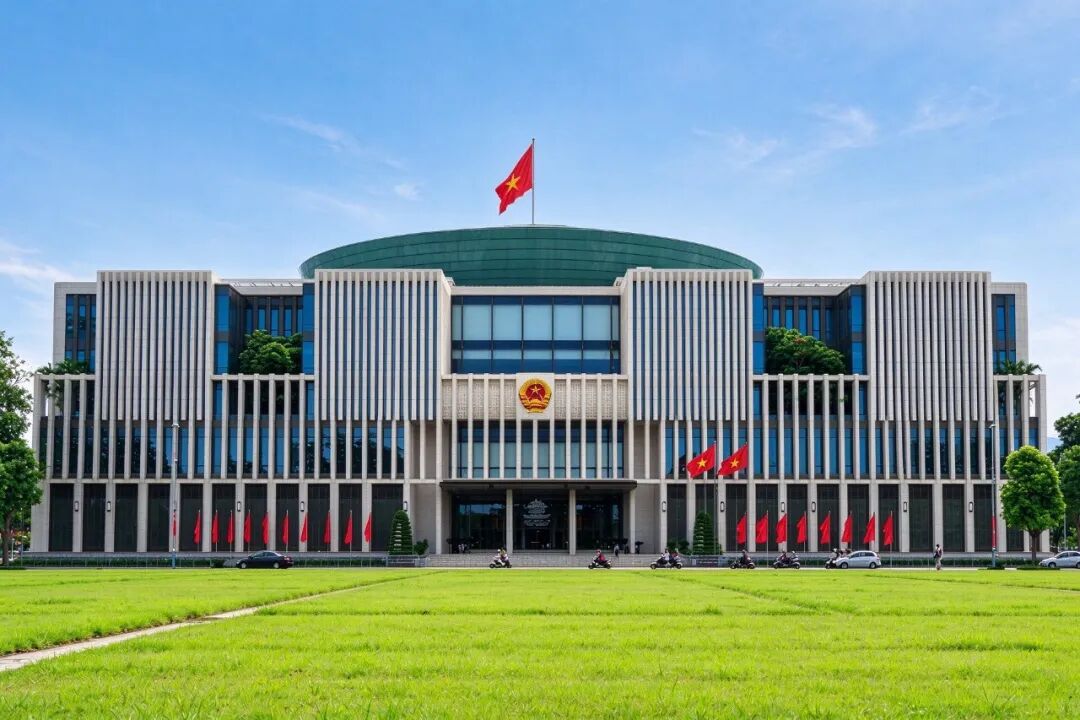
The legislative building of Vietnam
The China-Vietnam Joint Committee on Legislative Cooperation
The second meeting in Beijing marks the formal entry of the China-Vietnam Joint Committee on Legislative Cooperation mechanism into regular operation. The mechanism has shifted from initial establishment to stable operation and will, on the basis of the "Cooperation Agreement between the National Assembly of Vietnam and the National People's Congress of China" signed at the first meeting, further refine the cooperation framework and roll out a number of practical new measures. The first meeting in Hanoi in August 2025 and the second meeting in Beijing in October 2026 were about 14 months apart, fully establishing a fixed rhythm in which the leaders of the two countries' highest legislative bodies host meetings in turn annually.
The authorities of China and Vietnam released the meeting communiqués almost simultaneously on October 8, 2026, finalizing all itineraries and agendas in advance. Vietnamese Ambassador to China Pham Thanh Binh said that the goal of the second meeting is to "promote the regular operation of this mechanism and formulate clearer plans, content, and priorities," which is the official confirmation by both sides of the mechanism's regularization. This is a unique highest-level inter-parliamentary cooperation mechanism between China and Vietnam, with almost no precedent in the two countries' relations with other countries. Regular operation of the cooperation fills the long-standing gap in which the legislative bodies of the two countries lacked a fixed coordinating platform, and the cooperation is thus places at the top tier among China-Vietnam bilateral cooperation mechanisms.
This mechanism will play a substantive role in legislative cooperation between the two countries. First, it will translate the political consensus reached by the top leaders of the two parties into executable legal systems in both countries through legislative engagement, removing legal bottlenecks to the implementation of major projects such as railway connectivity and economic and trade industrial and supply chains. Second, relying on the statutory oversight functions of the legislative bodies, it will regularly review the implementation of bilateral cooperation agreements, promptly identify and remove practical obstacles in policy execution such as approvals and mutual recognition of qualifications, and push cooperation matters from commitments to actual implementation. Third, it will regularly share legislative experience and governance practices and jointly deepen understanding of the laws governing Communist Party governance and socialist construction. Fourth, through regular dialogue at the legislative level, it will convey positions and manage expectations in the flexible manner of rule-of-law consultation, avoiding local differences interfering with the overall China-Vietnam relationship.
On the basis of the "Cooperation Agreement between the National Assembly of Vietnam and the National People's Congress of China" signed at the first meeting, the second meeting is expected to launch detailed arrangements. By implementing a legislative exchange mechanism for border provinces, the second meeting will promote the establishment of regular mutual visit mechanisms between the people's congresses/local assemblies of China's Yunnan and Guangxi and Vietnam's Lao Cai, Lang Son, and other border provinces. It will establish an "annual tracking of the implementation of high-level consensus" system, under which relevant specialized committees of the two legislative bodies will jointly assess the legal safeguarding results of cooperation in key areas each year. In making legal safeguards for practical cooperation more targeted, the second meeting will direct efforts at major projects such as China-Vietnam railway cooperation and cross-border industrial park construction to sort out legal obstacles and form a dedicated list of legislative coordination. Upgrading the coordination mechanism on the international parliamentary stage, the meeting will establish regular position coordination mechanisms in multilateral platforms such as the ASEAN Inter-Parliamentary Assembly and the Inter-Parliamentary Union.
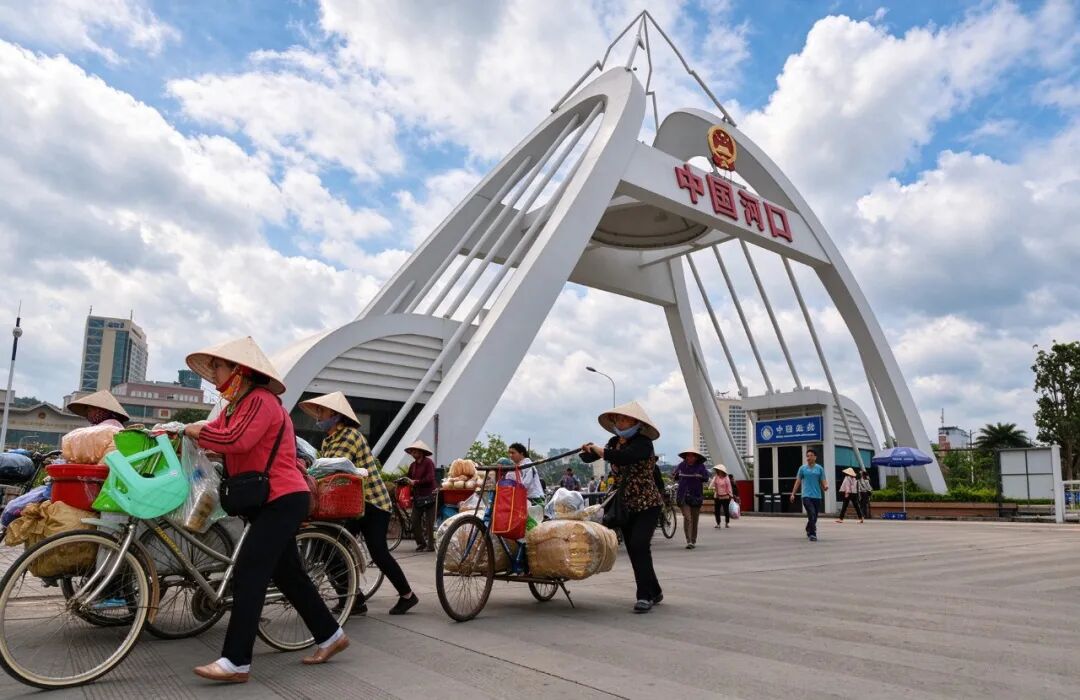
A view of the China-Vietnam border area
How Legislative Bodies can Help in Creating a Favorable Public Opinion
In the process of advancing the shared goals between China and Vietnam, the legislative bodies of the two countries can, by virtue of their functional advantages, play a unique role that government diplomacy cannot replace in achieving the goal of "a more solid public foundation," serving as an example for translating the idea that "the foundation of China-Vietnam friendship lies in the people" from a concept into institutional safeguards.
Elevating people-to-people friendship demands into statutory cooperation arrangements. Through statutory procedures, the legislative bodies of the two countries can translate the people's widely shared expectations regarding cultural exchanges, border resident interactions, and travel facilitation into binding bilateral cooperation agreements and domestic supporting legislation. For example, the activities of the 2025 "Year of People-to-People Exchanges" marking the 75th anniversary of China-Vietnam diplomatic relations and the implementation of the 2026-2027 China-Vietnam Tourism Cooperation Year are both promoted and endorsed by the legislative bodies of the two sides. The legislative bodies turned temporary activities such as red study tours, mutual translation of classic works, and border resident gatherings into long-term, sustainable institutional arrangements.
Opening direct dialogue channels for youth, women, and other groups. Relying on the China-Vietnam legislative cooperation framework, the two sides have opened targeted exchange channels for young parliamentarians, women parliamentarians, and parliamentary friendship groups, and this enabled public opinion representatives among the younger generation and women's groups of the two countries to communicate directly face to face, breaking out of the circle limitations of traditional official diplomacy. These exchanges directly cover the backbone groups of the two societies and, through the intergenerational transmission by young parliamentarians, transform the traditional friendship of "comrades plus brothers" of the older generation into a shared understanding among the youth of the two countries today.
Using local legislative collaboration to resolve bottlenecks in border livelihoods. The local people's congresses/local assemblies of China's Yunnan and Guangxi and Vietnam's Lao Cai, Lang Son, and other border provinces, through regular engagement between legislative bodies, directly respond to the most urgent practical demands of border residents. Through local legislative coordination, the two sides can simplify border resident mutual trade customs clearance procedures, improve protection of cross-border workers' rights and interests, and remove approval barriers to border livelihood infrastructure, so that border residents can directly feel the tangible benefits brought by China-Vietnam cooperation and the border line can be turned from a "geographical dividing line" into a "bond of livelihood cooperation."
The oversight functions can ensure that livelihood cooperation projects deliver results. By virtue of their statutory oversight functions, the legislative bodies of the two countries can regularly track the implementation progress of livelihood cooperation projects such as cross-border tourism cooperation zones, educational exchanges, and scholarships for international students, and promptly identify and remove bottlenecks in policy execution. For example, the smooth trial operation of the Ban Gioc-Detian Falls cross-border tourism cooperation zone, the rapid customs clearance of Vietnamese agricultural products exported to China, and the training of local Chinese-language teachers in Vietnam are all livelihood projects promoted by special oversight by the legislative bodies of both sides, ensuring that cooperation outcomes truly benefit ordinary people.
Using rational dialogues to counter irrational public opinion. In the face of noise from certain external forces that deliberately hypes issues and misleads public perception in the two countries, parliamentarians of the two legislative bodies should convey the true value of China-Vietnam friendship to their respective domestic publics through public statements, joint voices, and field visits. This voice from public opinion representatives can guide the people of the two countries to form a rational and objective understanding of bilateral relations and maintain the mainstream public opinion of China-Vietnam friendship.
Writing by Mi Liang (Professor and Doctoral Supervisor at the School of Law, Beijing Foreign Studies University); Trans-editing by Wang Shixue and Han Chengyuan
