


Yunnan is indispensable for building China-Vietnam community


The China-Vietnam relations have entered a golden implementation period of strategic upgrading following To Lam's visit to China. Overall, the relations are characterized by top-level political mutual trust, quickened practical cooperation, diverse institutional mechanisms, and thriving people-to-people and cultural exchanges. The ties serve as a benchmark model for building a community with a shared future among neighboring socialist countries, having completely broken out of the fluctuation cycle of conventional bilateral relations.
At present, the top-level cooperation between the legislative bodies of China and Vietnam has completed its institutionalization process. If legislative body cooperation is the "institutional skeleton" of China-Vietnam relations, then local cooperation is the "flesh and blood." Yunnan province should take proactive action in building the China-Vietnam community with a shared future, which will help translate top-level consensus into border livelihood dividends.
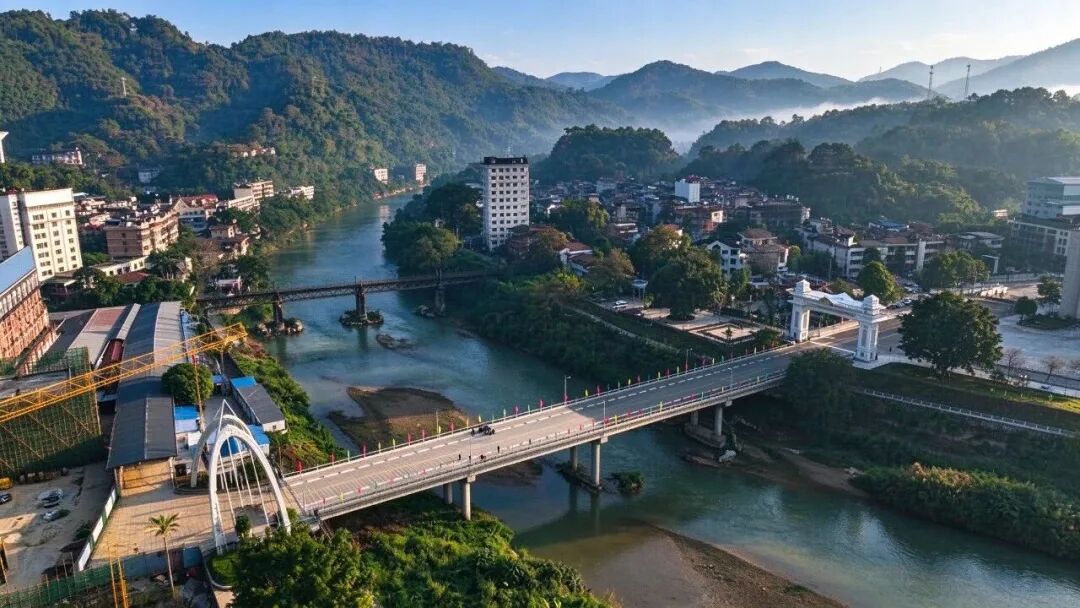
A view of the border area between China's Yunnan and Vietnam
Mechanism for Party secretaries of Yunnan and 4 Vietnamese provinces
Yunnan is China's only province that borders Vietnam, Laos, and Myanmar. The annual meeting mechanism for provincial Party secretaries of Yunnan and Vietnam's four northern provinces (Lai Chau, Lao Cai, Tuyen Quang, and Dien Bien) is the most mature, highest and broadest mechanism in China-Vietnam local cooperation. It is the core for translating national-level strategic consensus into border livelihood dividends. This mechanism plays four roles in China-Vietnam relations.
A local converter of top-level consensus. This mechanism has been incorporated into the official wording of the April 2026 joint statement by the top leaders of the two Parties of China and Vietnam, becoming a local carrier for undertaking national strategy. It can quickly break down the top-level design of a "China-Vietnam community with a shared future at a higher level" into concrete, implementable projects such as cross-border railway advancement, port upgrading, and border resident mutual trade, preventing high-level consensus from remaining on paper.
A joint defense platform for border security and prosperity. Through annual meetings, the provinces can advance joint border patrols, cross-border joint prevention and control of infectious diseases, and border public security coordination. They can also jointly maintain the clarity and stability of the border line. Through activities such as large gatherings of border residents and transnational Spring Festival galas, the provinces can turn the border line from a geographical dividing line into a bond of livelihood cooperation, achieving the border governance goals of "peace, harmony, solidarity, and development."
A cross-border connecting point for regional multilateral coordination. Relying on Yunnan's unique geographical position bordering Vietnam, Laos, and Myanmar, this mechanism for provincial Party secretaries can extend to link the tri-border area of China, Laos and Vietnam, promote the implementation of multilateral projects such as boundary marker landscape platforms at the tri-border junction and cross-border tourism loop routes, and expand China-Vietnam bilateral cooperation into a collaborative demonstration for the Lancang-Mekong subregion.
A grassroots carrier for solidifying public opinion favorable to China-Vietnam friendship. The mechanism directly covers hundreds of thousands of border residents along the border. Through targeted activities such as red study tours, youth exchanges, and joint protection of ethnic cultures, the border residents will become direct participants in and beneficiaries of China-Vietnam friendship, fundamentally strengthening the foremost frontline for a "more solid foundation of public opinion."
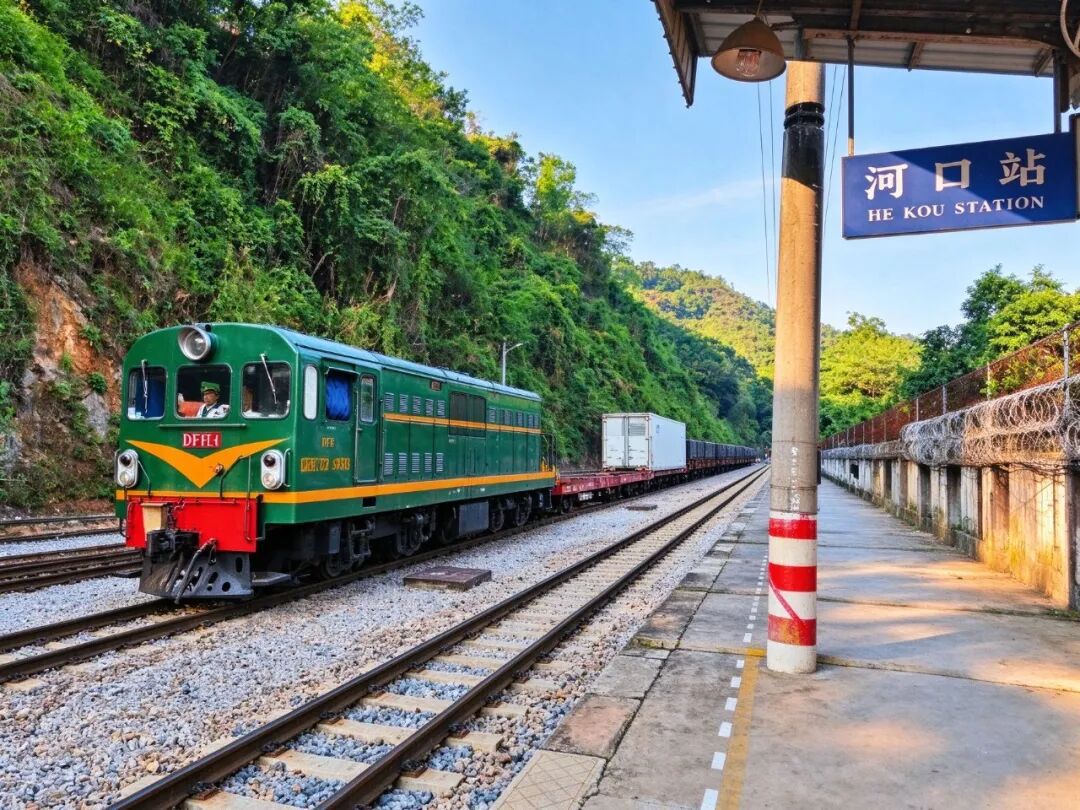
Hekou station of the China-Vietnam railway
Momentums yet to be unleashed in Yunnan-Vietnam cooperation
In custom clearance, the potential for cluster synergy has not been fully activated. Yunnan has multiple national-level ports such as Hekou, Tianbao, Jinshuihe, and Longfu. At present, however, the ports still face problems of homogeneous functional positioning and inconsistent cold-chain logistics support. The cross-regional data interconnection for smart ports has not yet been fully achieved, and there is still room to improve the efficiency of cross-border cold-chain transportation of specialty agricultural products such as Vietnamese durian and seafood. The efficiency can be lifted up by at least 30%.
In cross-border railways, the economic value of the corridor has not yet materialized. Both sides have reached consensus on connecting cross-border standard-gauge railways, but the layout of industrial parks along the railway, the supporting cross-border logistics hubs, and the synergy planning on industrial & supply chain have not yet been fully synchronized. After the railway opens, the corridor advantage of Yunnan-made and Vietnam-made products going global together has not yet been transformed into actual industrial competitiveness.
In Cross-border cultural tourism, the one-day tours still take hold. Both Yunnan and Vietnam possess world-class unique landscapes, red study resources, and border ethnic cultures. However, cross-border tourism routes are still mainly short-distance one-day tours. Cooperations on the China-Laos-Vietnam cross-border tours, the joint protection projects for ethnic cultures, and the direct flight tourist routes are still in their infancy. The traffic dividend of the 2026-2027 "China-Vietnam Tourism Cooperation Year" has not yet been fully transformed into actual growth for the cultural tourism industries of the two places.
In the Red River Basin, the coverage of "7+8" cross-regional synergy is insufficient. Honghe Prefecture has taken the lead in establishing the Red River Basin cooperation mechanism of 7 Chinese prefectures and cities plus 8 Vietnamese provinces and cities. However, the deeper cooperation in upstream and downstream industrial divisions of labor, ecological protection, and joint water resource scheduling has not yet been fully rolled out, and the overall economic and trade synergy potential of the basin is far from being fully tapped.
In agricultural complementarity, the proportion of deep-processing cooperation is relatively low. Yunnan's highland agricultural technology and product processing capacity are highly complementary to the tropical land resources of Vietnam's four northern provinces. However, cooperation currently remains at the level of cross-border trade in agricultural products. The proportion of cooperation in jointly building cross-border agricultural industrial parks, jointly carrying out seed breeding, and deep processing of agricultural products remains relatively low, and the value-added door for the entire industrial chain has not yet been opened up.
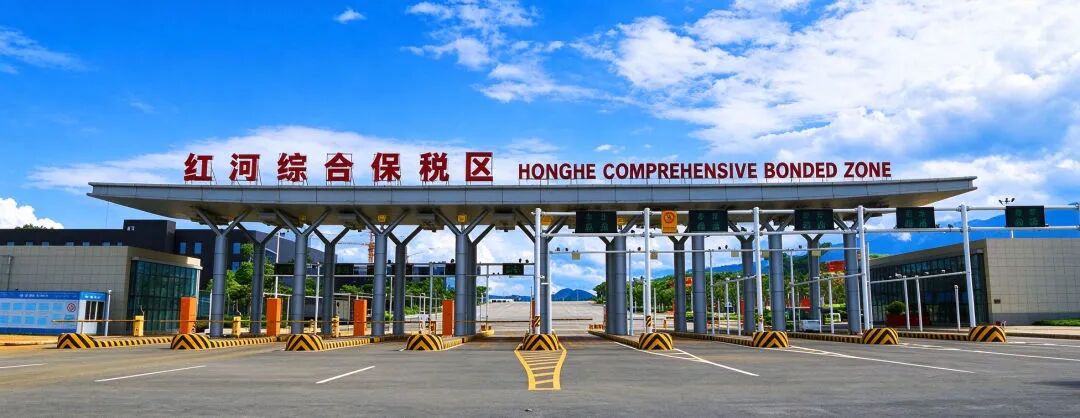
The Honghe free-trade area near the China-Vietnam border
Yunnan can serve as pioneer in China-Vietnam judicial cooperation
From the perspective of local legislative body cooperation, Yunnan and Vietnam's four northern provinces still have a large amount of cooperation that has not been fully activated in three major areas: border rule-of-law construction, legal safeguards for cross-border economic cooperation zones, and resolution of border residents' commercial disputes. Relying on existing mature local cooperation mechanisms, Yunnan fully possesses the conditions to play a pioneering and trial role in China-Vietnam judicial cooperation, and the province is expected to create a benchmark model for cross-border rule-of-law coordination along the border nationwide.
First, the synergy in border rule-of-law construction. Both sides can rely on Yunnan's already implemented practical experience in strengthening border defense and building rule-of-law villages. In border villages along the China-Vietnam border, the two sides can jointly build bilingual rule-of-law publicity positions, exchange grassroots rule-of-law workers for regular exchanges, and target common border-related issues such as cross-border drug control, smuggling cases, and protection of the rights and interests of cross-border marriages. By forming a unified legal publicity list and grassroots governance coordination standards, the two sides can public legal services fully available in the border areas.
At the same time, the local legislative bodies of both sides can jointly carry out coordinated revisions of laws and regulations related to boundary management and, in areas such as joint boundary patrols, cross-border ecological protection, and joint epidemic prevention and control, they can form local-level coordinated legislative consensus, translating the border governance goals of "peace, harmony, solidarity, and development" into implementable institutional arrangements.
Second, the legal safeguards in cross-border economic cooperation zones. Yunnan province has issued a special implementation plan for the high-quality development of cross-border economic cooperation zones, clarifying a full-chain policy system for industrial upgrading and factor guarantees in the zones. On this basis, the Yunnan provincial people's congress can take the lead in connecting with Vietnam's national assembly branches in four northern provinces to jointly customize dedicated legal rules for the Hekou-Lao Cai and Jinshuihe-Ma Lu Thang cooperation zones.
Unified standards for qualification mutual recognition can be designed for enterprises in the zones, together with cross-border taxation rules and protection mechanisms for intellectual properties. The supporting legal procedures should be simplified for cross-border movement of personnel and rapid customs clearance of goods in the zones. By providing a clear legal basis for joint land development and profit distribution models in cross-border industrial parks, the two sides can resolve the core bottleneck of inconsistent rules in current cooperation zones.
Third, the mechanism innovation in resolving border residents' commercial disputes. At present, the small-amount trade disputes between border residents and cross-border labor rights disputes still rely on diplomatic channels for mediation, with relatively low efficiency. The local legislative bodies of both sides can promote the establishment of joint mediation centers for border commercial disputes.
The joint mediation committees can be set up by legal workers from both China and Vietnam and representatives of border residents. Through formulating bilingual simplified mediation procedures for small-amount commercial disputes among border residents, they can achieve "on-site acceptance of disputes, rapid cross-border mediation, and mutual recognition and enforcement of results". If this mechanism is elevated into a local-level normative cooperation document, they will thoroughly resolve the pain points of high cost and long cycles for border residents to have their cross-border rights protected.
Yunnan has unique paths for pioneering trials
Yunnan is fully equipped to make the first breakthrough in China-Vietnam judicial cooperation, with supports coming from three aspects.
Mature institutional foundation. Honghe Prefecture in south Yunnan has established the "7+8" cooperation mechanism of the Red River Basin covering 7 Chinese prefectures and cities plus 8 Vietnamese provinces and cities. Annual Party and government meetings with Vietnam's northern provinces such as Lao Cai and Lai Chau have been running for years, and regular communication channels between local legislative bodies are fully open, with no need to build a cooperation framework from scratch.
Sufficient practical samples. Yunnan has accumulated a large amount of replicable local experience in rule-of-law village construction along the border, port clearance facilitation, and operation of cross-border industrial parks. Years of practice at Hekou Port and the Mohan-Boten Cooperation Zone have provided sufficient experimental scenarios for cross-border legal rule coordination.
Clear national support. At the national level, there is clear support for Yunnan to build itself into a pivot of opening-up facing South and Southeast Asia. This means Yunnan is granted national policy tolerance for pioneering trials in cross-border rule-of-law coordination and cross-border opening institutional innovation, allowing local areas, on the premise of not violating the superior laws of the two countries, to explore customized cross-border judicial cooperation rules.
Going forward, Yunnan can first start its trials with the low-threshold, high-sense-of-gain area of joint mediation of small-amount disputes among border residents, and then the province can gradually extend the trials to areas such as legal safeguards for cross-border parks and border rule-of-law coordination. In forming a replicable sample of cross-border judicial cooperation along the border, Yunnan can provide local practical support for China-Vietnam judicial collaboration at the national level.
Writing by Mi Liang (Professor and Doctoral Supervisor at the School of Law, Beijing Foreign Studies University); Trans-editing by Wang Shixue and Han Chengyuan
