


How far has the building of ASEAN Community gone?


The ASEAN Community consists of three pillars: the Political-Security Community, the Economic Community, and the Socio-Cultural Community. More than a decade has passed since the ASEAN Community was officially established in 2015, and during this time the institutional framework for ASEAN community building has been gradually improved.
In May 2025, the 46th ASEAN Summit was held in Kuala Lumpur, where ASEAN leaders adopted the ASEAN Community Vision 2045. Themed "A Resilient, Innovative, Dynamic and People-Centered ASEAN," the vision covers four major areas—political-security, economy, socio-culture, and connectivity, and it chooses institutional capacity building as an important cross-cutting support. In October of the same year, the 47th ASEAN Summit was held, and Timor-Leste formally joined ASEAN, increasing the number of member states to 11.
The year 2026 marks the first year in which the "ASEAN 2045: Our Common Future" vision and its strategic plans enter the implementation phase, and ASEAN leaders have reaffirmed their commitment to continuously advancing community building. So how are the three pillars progressing, and what are the actual results?
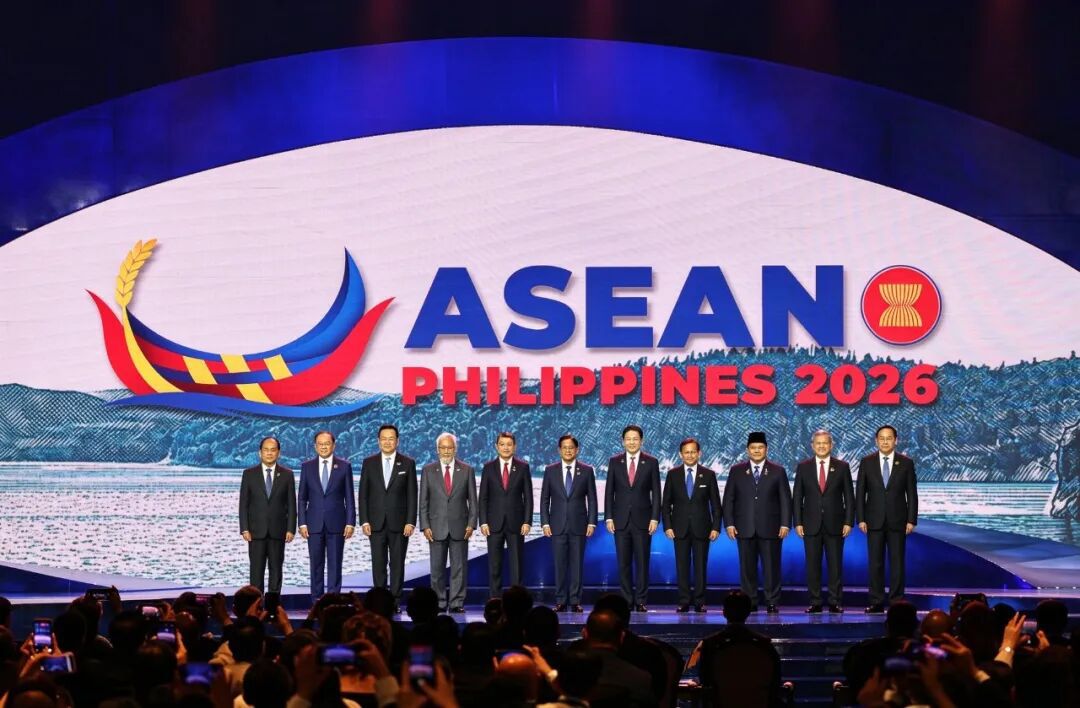
The 47th ASEAN Summit
ASEAN Political-Security Community (APSC): The Most Mature Institutional Framework
As one of the three pillars of the ASEAN Community, the Political-Security Community aims to build a peaceful, stable, and secure Southeast Asia. The APSC takes the ASEAN Charter, the UN Charter, and international law as its basic principles, and it focuses on issues such as the peaceful settlement of disputes, strengthening the rule of law, reinforcing ASEAN centrality, addressing transnational crime and cybersecurity challenges, and maintaining peace and stability in the South China Sea.
The "ASEAN Political-Security Community Strategic Plan" adopted in 2025 sets nine strategic objectives, providing a complete institutional framework for political-security cooperation. Of the 290 action lines in the APSC Blueprint 2025, 289 had seen action taken by the end of 2025, an implementation rate of 99.6%. Mechanisms led by ASEAN, such as the East Asia Summit, the ASEAN Regional Forum, the ASEAN Defence Ministers' Meeting and its expanded meetings, constitute a multi-level network of dialogue and cooperation.
Among them, Strategic Objective 7 specifically addresses the South China Sea issue, explicitly stating the commitment to "building the South China Sea into a sea of peace, stability, prosperity and sustainable development," and it emphasizes the peaceful settlement of disputes in accordance with international law, including the 1982 United Nations Convention on the Law of the Sea.
Overall, the achievements in building the APSC are more reflected in the continuous improvement of the rule system, cooperation mechanisms, and dialogue networks. Therefore, the APSC degree of institutionalization is the highest among the three pillars, but its results are more evident at the level of rules and mechanisms rather than in quantifiable economic data.
ASEAN Economic Community (AEC): Significant Achievements in Integration
The AEC is the area with the most notable progress in ASEAN's integration process.
According to the "ASEAN Economic Community Strategic Plan 2026-2030," the AEC has developed into a highly integrated and cohesive economic community since its establishment in 2015, with the goal of building a unified market and production base and promoting the free flow of goods, services, investment, capital, and skilled labor.
Of the 3,867 activities in the AEC Blueprint 2025, 87% (3,379) had been completed by the end of 2025, while another 11% were still being advanced. Zero tariffs had been achieved on 98.6% of tariff lines, and intra-ASEAN trade continued to account for more than one-fifth of ASEAN's total trade. It is estimated that AEC initiatives have cumulatively generated about US$1.1 trillion in added value, raising ASEAN's cumulative GDP by about 5% and creating about 4 million jobs.
After the COVID-19 pandemic, ASEAN's trade in services recovered strongly, and manufacturing and digitalization accelerated. If the ASEAN Digital Economy Framework Agreement is successfully implemented, the potential of digital economy is expected to double to US$2 trillion by 2030. ASEAN's position in the global economy continues to rise, and it is committed to becoming the world's fourth-largest economy by 2045.
ASEAN Socio-Cultural Community (ASCC): Solid & Fruitful Results
The results of the Economic Community can be measured with data, while the progress of the ASCC is more reflected at the level of institutional implementation.
The ASCC adheres to a people-oriented and people-centered approach. All 109 strategic measures in the ASCC Blueprint 2025 have been addressed, including both completed measures and those still being advanced. The "ASEAN Socio-Cultural Community Strategic Plan" adopted in 2025 sets 12 strategic objectives, covering issues such as a caring community, the demographic dividend, a healthy ASEAN, and a shared identity. The strategic focus has shifted from "building the community" to "maintaining innovation."
In specific areas, ASEAN continues to promote universal health coverage, strengthen the public health emergency response system, and establish the ASEAN Center for Public Health Emergencies and Emerging Diseases. In education, the ASEAN University Network continues to expand, and cooperation in vocational education and skills training continues to deepen. In women and youth issues, the empowerment of women and youth has been mainstreamed into the agenda, and the ASEAN Women Peacekeepers Network is being established. In sports cooperation, the ASEAN Traditional Sports Games and cooperation in the sports industry are steadily carried out. It can be said that the ASCC has made the most solid progress among the three pillars.
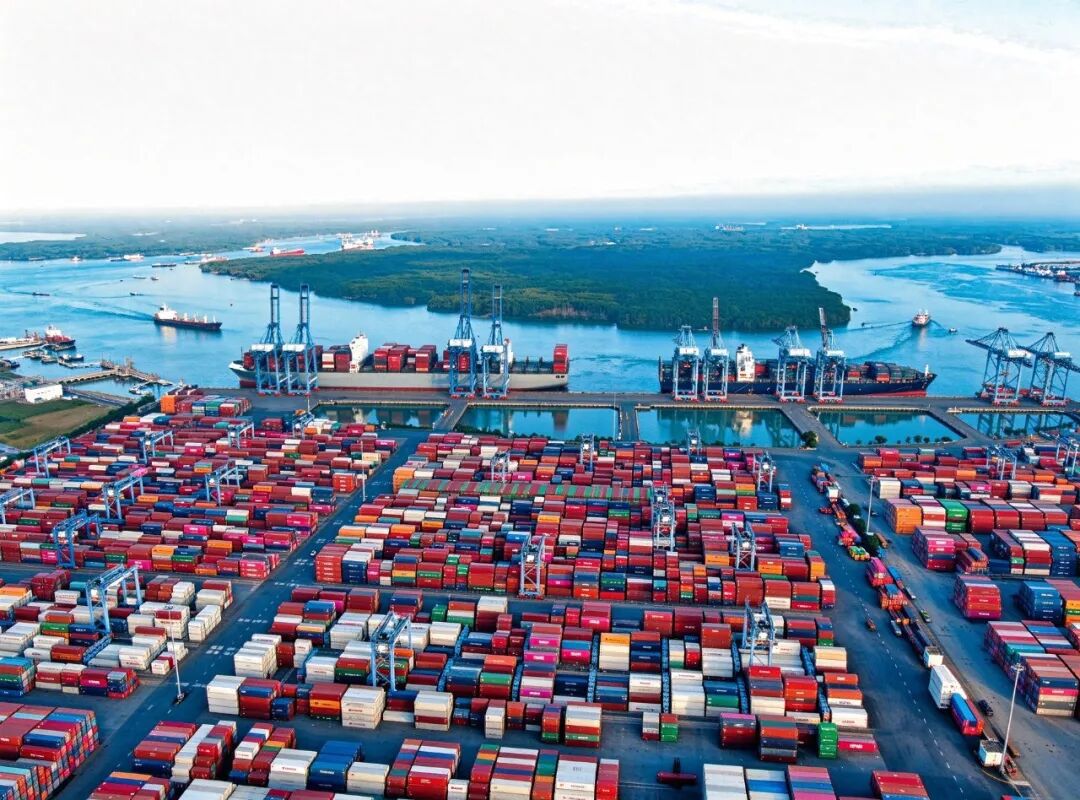
An ASEAN trade hub
Beyond Institutions, Shortcomings Remain in Community Building
The ASEAN Community building has achieved substantive results at the level of institutional construction. However, the completion of the institutional framework does not mean that the actual effects of the community building have met the standards.
First, there is a gap between institutional design and actual implementation.
The statistic of a 99.6% implementation rate of the APSC Blueprint refers to the action lines on which relevant work has been initiated, not the completed objectives. ASEAN's official final review also noted that progress in institutional capacity was assessed by some member states as "limited progress," and that in the face of an increasingly complex regional environment, more agile, better-resourced, and better-coordinated mechanisms are needed.
The principles of non-interference in internal affairs and consensus-based decision-making limit ASEAN's ability to impose substantive constraints on member states, with the Myanmar issue being a typical example. Constrained by these principles and institutional capacity, ASEAN mainly promotes the easing of the problem through political mediation, dialogue and coordination, and humanitarian assistance.
The principles have maintained ASEAN unity, but they have also constrained the deepening of the community. The "ASEAN Political-Security Community Strategic Plan" adopted in 2025 explicitly proposes to "improve the decision-making mechanism" and implement the "Rules of Procedure for the ASEAN Summit Decision-Making Process." ASEAN itself is also aware of the insufficiency in institutional implementation, and it is exploring ways to improve decision-making efficiency without abandoning its basic principles.
Second, internal development gaps have not yet been bridged.
The economic development levels of ASEAN member states are uneven, infrastructure shortcomings exist, and regulatory systems differ considerably. The accession of Timor-Leste has further amplified this challenge.
In October 2025, Timor-Leste formally became ASEAN's 11th member state, ASEAN's first enlargement since 1999. However, Timor-Leste is a least developed country as recognized by the United Nations, with a single economic structure and insufficient risk resilience, and it has a significant development gap with other member states.
The United Nations' 2024 triennial review concluded that Timor-Leste no longer met the criteria for "graduation" from least developed country status, and therefore its "graduation" process was suspended. The enlargement reflects ASEAN's inclusiveness, but it will also test the effectiveness of ASEAN's integration model.
Third, the cultivation of public identity also lags behind.
High implementation rates do not mean that a sense of community has been widely established. The ASEAN Socio-Cultural Community Strategic Plan explicitly proposes to "cultivate a sense of ASEAN identity and enhance the sense of belonging among the peoples of ASEAN countries."
However, surveys show that ASEAN elites pay high attention to community building, while ordinary people, although having relatively high awareness of the ASEAN organization itself, still have limited in-depth understanding of the community and its three pillars.
The community framework at the institutional level has been built, but "ASEAN identity" at the public level is still in the stage of continuous cultivation. Whether "people-centeredness" can move from a visionary commitment to everyday perception depends on whether the community can enable ordinary people to truly feel the changes brought about by institutions.

Flags of the ASEAN member states
In conclusion, the ASEAN institutional frameworks of the three pillars have basically taken shape, and the formal accession of Timor-Leste has enabled ASEAN, in terms of membership composition, to cover all sovereign states in Southeast Asia—another milestone at the level of institutional construction.
In terms of the quality of the ASEAN Community, however, the insufficient institutional implementation of the Political-Security Community, the internal development gaps of the Economic Community, and the lagging public identity of the Socio-Cultural Community remain issues that urgently need to be addressed.
In 2026, the ASEAN Community Vision 2045 enters the first year of its first strategic planning implementation cycle. ASEAN's collective will to advance community building has once again been confirmed. The ASEAN Community does not lack institutions; what it lacks is a path for institutions to be perceived by ordinary people. The prospect of ASEAN Community depends on whether the institutions can be translated from documents into the daily lives of the people.
Writing by Li Jipu (Research Assistant at the Center for China’s Neighbor Diplomacy Studies, Yunnan University) and Luo Shengrong (Researcher at the Institute of International Relations, Yunnan University); Trans-editing by Wang Shixue and Liu Ziyu
