


Why is India's great-power narrative unwelcomed internationally?


Since the Modi government came to power, India has continually raised the volume of its national narrative to the world. The Modi government has entitled itself as "Leader of the Global South," "Mother of Democracy," and "World Teacher" (Vishwaguru). New Delhi seeks to prove to the world that India, with its ancient civilization, huge population, and rapid economic growth, has regained the rightful status in the world. But between self-imposed titles and external recognition, there is a gap that is widening in overseas protests, immigration controversies, and public opinions.
Great-power Narrative Comes out of Self-Perception
India's confidence is not merely in rhetoric on diplomatic occasions. In 2019, the then Indian Vice President Muppavarapu Venkaiah Naidu publicly called on India to "once again become the world teacher and the center of innovation and knowledge." In January 2026, Mohan Bhagwat, the supreme leader of the Rashtriya Swayamsevak Sangh (RSS), articulated India's vision of striving to be the "World Teacher", citing the concept of "Dharma." In the Hindu nationalist narrative, the "World Teacher" is not a slogan that suddenly appeared but a revival of a historical identity. In the eyes of Hindu elites, ancient India was the global center of knowledge and possessed abundant "civilizational capital," but the foreign Islamic rule and the Western colonial rule tarnished Indian civilization. Therefore, everything contemporary India does is merely "restoring its original position."
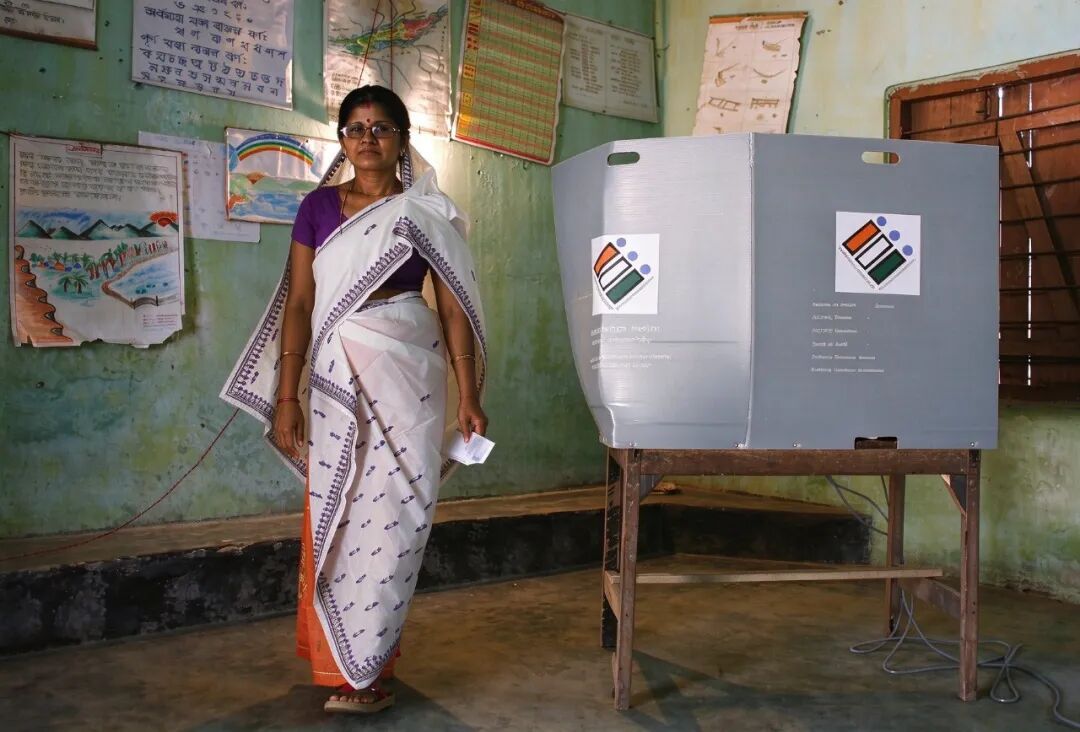
An Indian teacher
The logic of Indian elites' understanding of the "Mother of Democracy" is similar. They believe that India, facing an extremely complex composition of religions, languages, and ethnic groups, has still been able to maintain national unity, and that this "unity in diversity" is itself a great democratic practice. They trace India's democratic tradition to before independence in 1947, attempting to find its roots in earlier social and cultural traditions. During the 2023 G20 Summit, the Indian government set up a special exhibition titled "India: Mother of Democracy" to show participants the "history of Indian democracy" from ancient social traditions to the modern electoral system. Modi also declared at the G20 Summit that India, as the "Mother of Democracy," has held firm to the belief in dialogue and democratic principles since ancient times.
Beyond the democracy narrative, India also believes that its development achievements have already supported the imagination of "Mahashakti", or "great power", and the expression reflects India's hope to join the ranks of the world's major powers. Indian officials claim that "India is becoming an economic superpower," believing that the country's economic scale continues to expand, that it has been the fastest-growing developing economy in the world for many consecutive years, and that it has made achievements are the envy of "Global South" countries. The achievements involve digital payments, infrastructure, pharmaceuticals, and information technology. For example, India is particularly fond of promoting the Unified Payments Interface (UPI) to other developing countries and regards it as an "Indian experience" that can be shared with the Global South. India hopes to prove that it not only has a long civilizational tradition but can also have a greater influence in international affairs.
Thus, the Indian "great power" narrative has a complete logic: the civilizational tradition provides historical legitimacy, the democratic system provides political legitimacy, and the economic growth provides a realistic basis. This makes the self-perception that "India should have a higher status in the world" and that "India is the world teacher" appear logical and natural. In reality, high-profile narratives do not always automatically translate into other countries' recognition of India.
Exports of Civilizational Models, Talents Trigger Controversies
The challenges facing India's international profile are no longer just the public- opinion fluctuations in individual countries. Recent public opinion polls, immigration debates, and protests surrounding Indian politics all show that a huge gap is emerging between the national image India hopes to convey and how it is actually perceived out of India.
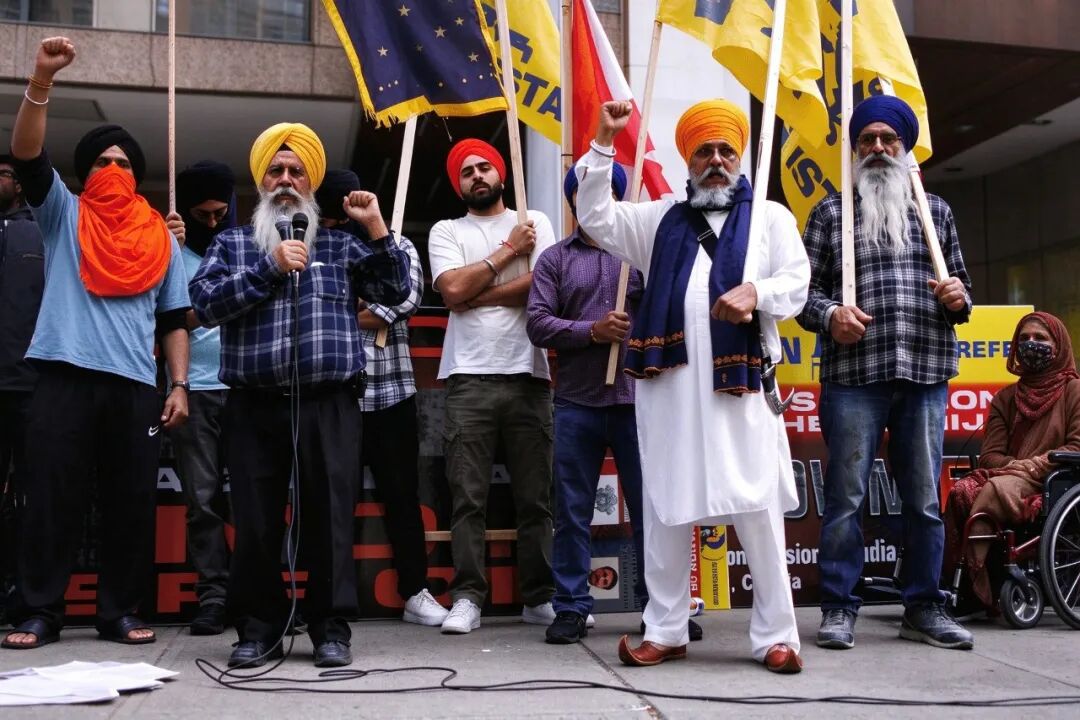
A protest by Indians
A survey released by the US Pew Research Center in August 2026 showed that among 36 countries surveyed, 45% held a positive view of India and 41% held a negative view. Among them, the American public opinion on India has gradually cooled since 2023. Only 45% of American respondents held a favorable view on India in 2026, while 50% held an unfavorable view. More notably, evaluations of India declined in 10 countries, including Turkey, Nigeria, Indonesia, South Africa, Mexico, and Bangladesh. Most of the countries on this list do not fall within the category of "Western media bias" that India criticizes; on the contrary, they are members of the "Global South" that India claims to represent. This directly undermines the persuasiveness of India's narrative as the "spokesperson of the Global South."
The immigration controversy can better show the gap. In Canada, the negative public opinion surrounding Indian immigrants continues to rise. Videos about concentrations of Indian descents have circulated on social media, and they are tagged with emotional labels such as "Canada is being colonized." At the same time, the celebration of traditional Indian festivals in public spaces is interpreted as a "cultural invasion." To cater to this sentiment, other politicians have become more frequent in making policies and statements targeting India or overseas Indians. For example, the H-1B visa policy continued to be tightened during Trump's second term, with review thresholds raised in 2025. In October 2026, the US went further, announcing sanctions on some Indian companies and suspending the eligibility of several companies accused of abusing work visa programs (including major Indian IT companies) to apply for related visas. Clearly, these moves more or less cater to the current "Make America Great Again" orientation of excluding people of Indian descent.
Similar controversies have also appeared in New Zealand and Australia. During Indian Prime Minister Modi's visits to the two countries in July 2026, local protests broke out. In Melbourne, the Anti-Islamophobia Alliance and human rights activists waved placards outside the venue where Modi was attending an event, protesting India's religious discrimination and persecution of minorities. At the same time, anti-immigration figures also shouted, saying that Indians should be expelled from Australia. In Auckland, anti-immigration demonstrators similarly demanded the deportation of Indian immigrants.
India's core project for "civilizational exports" has suffered a setback. In August 2026, RSS leader Bhagwat was invited to New York's Madison Square Garden to attend the "Universal Oneness" celebration and deliver a speech. This was an overseas public diplomacy activity under the framework of the RSS centenary celebration, intended to promote Indian civilizational traditions and Hindu thought to overseas Indians and local society. Unexpectedly, the celebration encountered joint protests by Muslim, Sikh, Christian, and Dalit groups in the United States, and they pointed out that the RSS has an "anti-minority" character, seeing the "Universal Oneness" event as serving India's upper-caste groups only. The United States Commission on International Religious Freedom (USCIRF) at the same time criticized the BJP and RSS for discriminating against religious minorities and accused India of transnational repression against overseas minority groups, including Sikhs, calling for measures against relevant organizations and individuals.
A month later, the same scene was repeated in London. During the RSS chief Bhagwat's visit to the United Kingdom, the South Asia Solidarity Group launched protests, and the Indian Workers' Association and other diaspora and civil society organizations also joined the protests. Amrik Singh, chair of the strategic committee of the Sikh Federation UK, criticized that "the RSS is not an ordinary religious or cultural organization but a movement with political and ideological goals, whose activities exacerbate social division and fuel hostility toward minorities." India hopes to export "civilizational models" and "spiritual wisdom," but people in the host countries directly brand the activities with a political label. More notably, those participating in the protests were not only local social groups but also overseas Sikhs, Muslims, and Dalit Christians. This shows that India's domestic divisions are spreading into overseas political systems through diaspora networks.
In the cultural field, Indian films, cricket, and other cultural products that originally had the ability to transcend political divisions have also been drawn into India's political conflicts with neighboring countries. For example, the film "Dhurandhar" was banned in several Middle Eastern countries because of its distinctly anti-Pakistan and religious-conflict narrative. Cricket has also been drawn into India-Bangladesh diplomatic friction. Once cultural products overly carry nationalism and political confrontation, their international dissemination may instead be limited.
Although these phenomena do not necessarily point to a "fall" of India's international image, they at least illustrate one problem: As India increasingly hopes that countries around the world will recognize its "great power" status, the standards by which the world examines India have also changed.
Demographic, Political Spillovers Hamper Great-Power Narrative
Economic structure, population flows, and diaspora politics are the fundamental points that have led to changes in external evaluations of India's national image. While overseas talent and diaspora networks can become national assets, they may also bring domestic structural pressures onto the international stage.
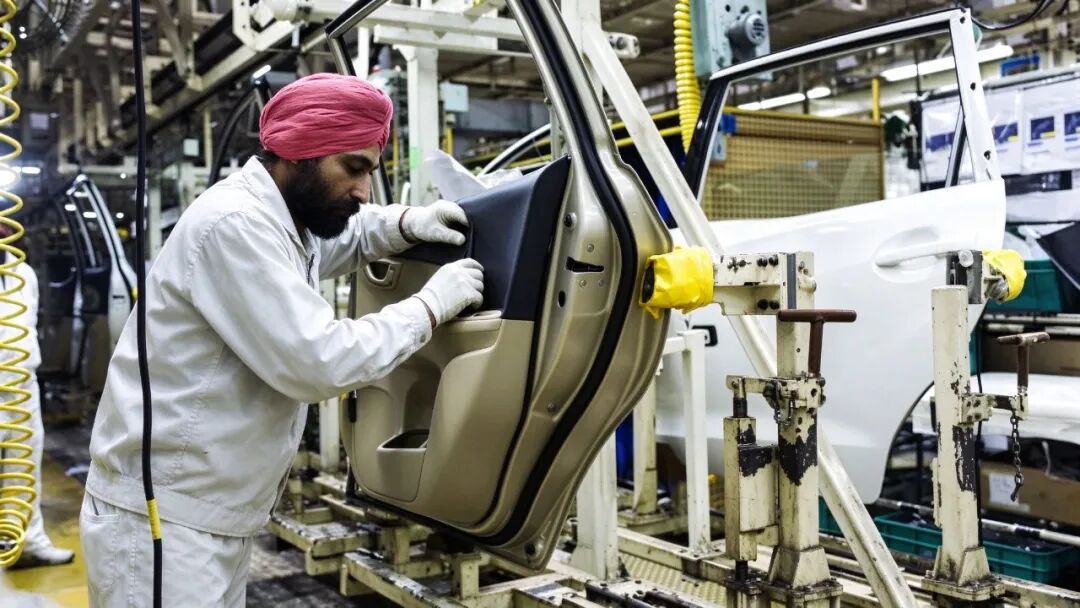
An Indian migrant worker
India does not lack GDP growth figures, but it lacks an industrial structure capable of absorbing large-scale employment. Due to defects in its industrialization structure, the "demographic dividend" is being alienated into "population spillover." An October 2025 report by the National Institution for Transforming India (NITI Aayog) showed that because India has experienced "premature deindustrialization," the manufacturing sector's share of GDP has never exceeded 20% for more than a decade, hovering between 14% and 17%, and the sector has not completed the industrial expansion needed to create large-scale employment. As a result, about 46% of the labor force remains stuck in the inefficient agricultural sector.
Young people are under severe pressure, and they have degrees but no jobs. The Periodic Labour Force Survey (PLFS) shows that the Indian urban youth unemployment rate is about 13.6%, while the unemployment rate among graduates aged 15-25 is estimated by research institutions to be close to 40%. Higher education is expanding rapidly, but high-quality jobs are growing slowly, and education, skills, and existing positions cannot be matched. When the domestic economy cannot create enough jobs, the oversaturated population will continue to spill over in the form of studying abroad, skilled migration, and labor export. India has now become the world's largest source country of international migrants.
Due to domestic pressure, the Indian government is guiding the population outflow. The Modi government sees its huge labor force, including a considerable group of STEM graduates, as a "solution" to the skill shortage and aging of developed economies. Indian External Affairs Minister Jaishankar said that India has signed labor mobility agreements with 26 countries, and similar deals will be signed with other countries. India has long been the world's largest recipient of remittances, and when exchange rate and foreign exchange pressures rise, the diaspora deposit can even become an "emergency fund pool." In the summer of 2026, for example, Indian domestic banks encouraged diaspora members to save their money in India, raising more than US$50 billion and boosting the Indian rupee's exchange rate.
Population spillover has helped the Indian government relieve domestic pressure, and as an increasing number of Indian immigrants are employed in the host countries, Indians has emerged as an issue frequently debated in local politics. It must be made clear that immigration policy controversies cannot be equated with discrimination against a specific ethnic group. The trajectory of Indian-origin immigrants entering various industries through professional competence is itself normal social mobility, but some local groups see it as squeezing the employment opportunities and public service resources of the host country's people. In addition, when India's domestic sectarian politics and nationalist narratives spill over through diaspora networks, they mutually catalyze with right-wing populism in destination countries, making "India" a conspicuous target.
Take the United States as an example. Data from U.S. Citizenship and Immigration Services show that of the 406,000 H-1B visa applications approved in the 2024-25 fiscal year, 284,000 visa holders came from India, accounting for 69.9%. People of Indian descent are prominent in technology, finance, education, and healthcare, and some have entered key positions in corporate management and professional fields, which also means that a considerable proportion of high-quality jobs are held by people of Indian descent. Pew data show that favorability toward India has declined simultaneously among supporters of both U.S. parties.
Another challenge brought by diaspora networks is that the political conflicts and bitter struggles of the mother country may extend to the host country. India and Canada have had serious diplomatic disputes in recent years over Sikh separatist activities and allegations of violence against overseas Sikh figures. The United States has also been drawn into related controversies over the safety of overseas Sikh figures. Such incidents not only affect bilateral relations but also enter the host country's parliamentary debates, judicial proceedings, and media agendas. Overseas Indian communities could originally serve as a bridge connecting India with other countries, but if the Indian diaspora is pulled by the mother country's partisan competition, nationalist mobilization, or security disputes, the diaspora networks may turn from soft power resources into front lines of diplomatic friction.
The activities of the Indian diaspora in host countries also show a highly politicized trend. The political energy of the Indian diaspora acts on two aspects simultaneously: The diaspora promotes India's diplomatic and trade interests in the host country, while participating in politics, supporting political parties and raising funds in India. What is often mobilized together is not only "Indian interests" but also the ideological agenda of Hindu nationalism. For example, the Hindu American Foundation (HAF) lobbies in the United States to weaken California school standards on caste discrimination. The Vishwa Hindu Parishad of America (VHPA) cooperates with some evangelical groups to spread anti-Muslim discourse. As a result, "huddling together" in the public opinion of some host countries is not only understood as cultural cohesion but is also politically interpreted as an extension of the mother country's ideology and "opposition to outsiders."
"World Teacher" Needs to Manage Its Own Classroom First
Admittedly, India has become increasingly active on the international stage in recent years, and the country has attached increasing importance to building its national image. The question is not whether India is qualified to pursue great-power status, but whether the national story it tells can withstand the test of reality. If India can enable its huge and young population to participate more in economic growth, make the stories of overseas Indians focus on "talent and social contribution," and have the promise of "Universal Oneness" truly accommodate different groups, then its great-power narrative will be more likely to gain external recognition. Conversely, if its self-positioning keeps being raised while practical problems remain unresolved for a long time, the gap between narrative and reality will grow wider and wider.
Writing by Yu Wanlin (PhD candidate at the School of International Studies, Sichuan University); Trans-editing by Wang Shixue and Han Chengyuan
