


Under dual pressure, where is Pakistan heading?


Pakistan has seen a stream of major internal and external events.
Domestically, the Pakistani federal government imposed a state of emergency and governor's rule in Khyber Pakhtunkhwa Province in the northwest, arousing strong dissatisfaction from the province's main ruling party, the Pakistan Tehreek-e-Insaf (PTI). Ties between the central and provincial governments are getting tense.
Externally, Pakistan signed the Mecca Joint Defense Agreement with Saudi Arabia and Turkey in August, establishing a defense alliance. Under the agreement, the three countries will assume a mutual defense obligation, and an armed attack on any one of the three will be regarded as an attack on all three.
Now, Saudi Arabia is being repeatedly attacked by Yemen's Houthi armed forces. Whether and how Pakistan and Turkey will fulfill their obligation in joint defense has become a focal point, testing the wisdom of the three countries and even the future of the Mecca Defense Alliance.
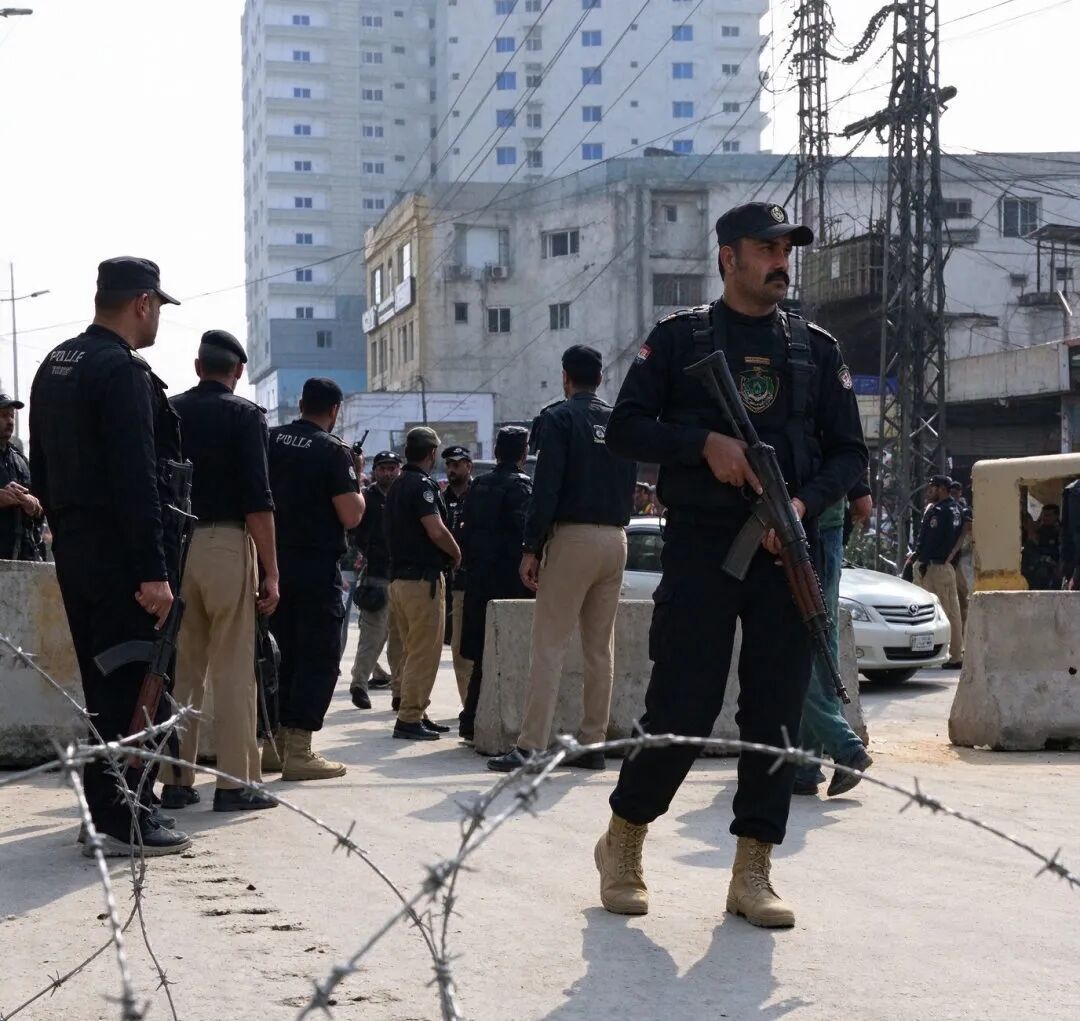
A state of emergency and governor's rule is imposed in Khyber Pakhtunkhwa, Pakistan.
What Lies Behind the Pakistani Central-Provincial Intension?
First, the imposition of a state of emergency and governor's rule fully exposed the contradictions between the Pakistani federal government and the PTI, and the federal government currently still holds the upper hand.
On October 11, Pakistani President Asif Ali Zardari approved the federal cabinet's recommendation to impose a state of emergency and governor's rule in Khyber Pakhtunkhwa Province in accordance with Articles 232 and 234 of the Constitution, suspending the functions of the current provincial government led by the PTI.
The federal government stated that the reason for this move was that the Khyber Pakhtunkhwa provincial government had failed to resolve the province's extremist religious issues. Namely, provincial government had failed to actively cooperate with the federal government's counter-terrorism operations, leading to an increasing deterioration in security situation.
Pakistani Minister of State for Interior Talal Chaudhry said on October 12 that the province's Chief Minister Muhammad Sohail Khan Afridi and some of his cabinet members were detained after the imposition of the state of emergency. The federal government has established an 11-member expert advisory committee to assist the governor in managing provincial affairs, appointed a new provincial chief secretary, and authorized the military to assist in maintaining public order.
The PTI strongly opposes the decision, believing that the federal government undermines provincial autonomy and the constitutional power of an elected government. The PTI said that it will challenge the decision through judicial, parliamentary, and other channels.
On the surface, this is mutual accusations between the federal government and the provincial government over counter-terrorism. The federal government says that the provincial government has failed to implement the "National Action Plan" to combat armed violence, obstructing local counter-terrorism operations and leading to a continuous deterioration of the security situation in the border areas with Afghanistan. The PTI denies any connection with militants, opposes large-scale military operations that may cause civilian casualties and displacement, and advocates formulating counter-terrorism measures through consultation with local communities.
But deepdown, this is the full eruption of contradictions accumulated over the past several years between the federal government and the PTI led by former Prime Minister Imran Khan.
In April 2022, Pakistan's National Assembly passed a no-confidence motion against then Prime Minister Imran Khan, making him the first prime minister in Pakistan's history to be removed by parliament. Afterwards, demonstrations broke out in multiple Pakistani cities to protest Imran's removal.
In 2023, Imran Khan was convicted of "deliberately concealing private gains obtained from the national treasury, with corruption established," and he was subsequently banned from politics for five years by the Election Commission of Pakistan. Since 2024, Imran Khan has also been sentenced to 14 years in prison for "leaking state secrets" and other charges.
The PTI and Imran's supporters accused the government of ensuring Imran Khan's continued detention through cases with obvious political motives, and the supporters have launched demonstrations demanding Imran Khan's release. In early October this year, thousands of his supporters marched toward the capital, Islamabad. Pakistani Prime Minister Shehbaz Sharif urged the PTI to cancel the march and start negotiations, and the federal government stated that for security reasons, it would not agree to the march entering the capital area.
Overall, the Pakistani federal government controls the situation and maintains good relations with the military. At this stage, the PTI is leaderless and mainly relies on the Khyber Pakhtunkhwa Province it governs and its supporters to struggle against the government. Will the federal government's imposition of governor's rule in Khyber Pakhtunkhwa trigger a greater backlash? Will the federal government further suppress the PTI? These are questions that remain to be answered.
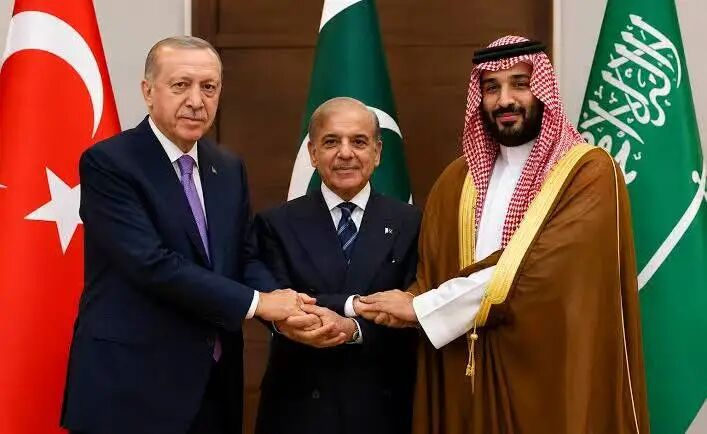
Pakistan forges the Mecca Defense Alliance with Saudi Arabia and Turkey in August.
Will Pakistan Strike the Houthi Armed Forces?
Pakistan, Saudi Arabia and Turkey all intend to make the Mecca Defense Alliance work, but there is considerable flexibility in how to fulfill defense obligations.
Pakistan and Saudi Arabia have a long history of defense cooperation, which certainly did not begin only now, but since 2025 the cooperation has clearly moved toward treaty-based and institutionalized arrangements.
In September 2025, the two countries signed a joint defense agreement, clarifying treaty obligations for common defense. Reuters and other media revealed this year that Pakistan has already deployed about 8,000 troops, a fighter squadron, drone units, and advanced air defense systems in Saudi Arabia.
In response to the conflict between Saudi Arabia and Yemen's Houthi armed forces, Pakistan, Saudi Arabia and Turkey held an emergency meeting of the Strategic Political and Defense Committee of the Mecca Defense Alliance in Riyadh on October 5. They decided to immediately implement the collective defense commitments and take necessary measures to ensure the rapid deployment of military forces in Saudi territory in accordance with approved arrangements and the domestic laws of each member state.
The statement issued by the three sides said that this move aims to enhance combat readiness, the degree of military integration, and the three sides' ability to jointly respond to threats. The statement condemned attacks on Mecca and Medina, as well as on Saudi civilians and economic facilities, and it firmly opposed any threat against Saudi security and territorial integrity.
On October 10, Saudi Arabia's international airport was attacked by missiles and drones. Pakistani Deputy Prime Minister and Foreign Minister Mohammad Ishaq Dar strongly condemned it, saying that strikes against civilians and civilian infrastructure seriously violate international law and pose a huge threat to regional peace. He reiterated that under the Mecca Joint Defense Agreement, Pakistan is firmly committed to safeguarding Saudi Arabia's sovereignty and security and will always stand with Saudi Arabia's leadership and people.
It cannot yet be said that Pakistan has already participated in the conflict between Saudi Arabia and the Houthi armed forces, but the Mecca Defense Alliance has indeed made a clear response. Out of multiple geopolitical and security considerations, Pakistan is clearly more inclined to "defend Saudi Arabia" rather than "strike the Houthi armed forces," and Saudi Arabia has indeed acquired a regional collective defense mechanism that can substantially mobilize military forces.
Pakistan is the only nuclear power in the Muslim world and a top-ranking global military power. With the involvement of Pakistan, the changes in the Middle East will undoubtedly show a trajectory of evolution somewhat different from the past. And as a South Asian country, how Pakistan can maintain proactive external action and engagement, while avoiding multi-front operations and strategic overreach, will continue to test the wisdom of its top leadership.
Writing by Wang Shida (Executive Director and Research Fellow at the South Asia Institute, China Institutes of Contemporary International Relation); Trans-editing by Wang Shixue and Zu Hongbing
