


Myanmar vs ASEAN: Who holds the upper hand?


The Informal Meeting of ASEAN Foreign Ministers was held in Bangkok, Thailand on July 12, 2026. Myanmar's Foreign Minister Tin Maung Swe and other ASEAN foreign ministers met face-to-face for the first time since Myanmar's political change in February 2021. This was a landmark event in the restoration of high-level contact between the two sides.
But three days before the meeting, the Myanmar Parliament passed a resolution to boycott the ASEAN "Five-Point Consensus," saying it undermines Myanmar's equal status and deviates from the principle of non-interference in internal affairs.
Contact has resumed while the consensus has been rejected, exposing the mismatch in the two sides' needs: Myanmar needs ASEAN to confirm its membership for external political legitimacy; ASEAN needs stability in Myanmar for an effective management of regional security. The two sides' needs are not equivalent in nature, urgency, or room for alternatives. So, does Myanmar need ASEAN more, or vice versa?
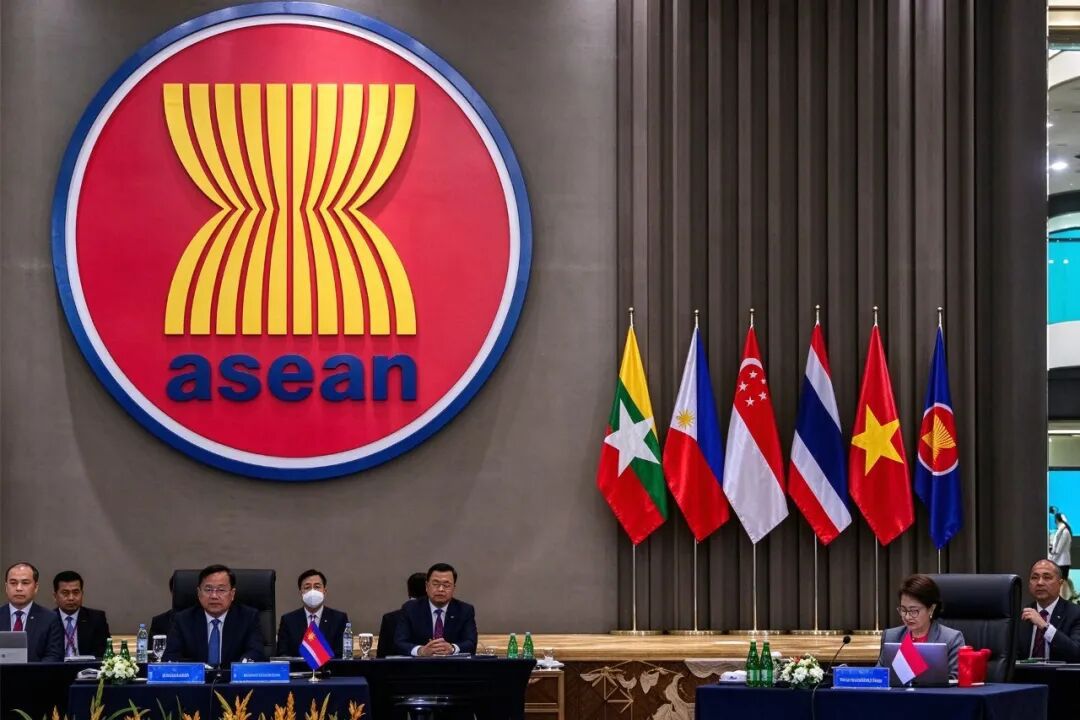
An ASEAN meeting goes on.
Why ASEAN's Recognition Matters for Myanmar
Myanmar's purpose in returning to ASEAN is to obtain external confirmation in political legitimacy, rather than direct economic or security interests. In April 2026, Min Aung Hlaing was elected president of Myanmar and sworn in, and he subsequently visited four ASEAN member states—Laos, Thailand, Vietnam, and Cambodia—showing the priority direction of its diplomacy.
Analysts believe that ASEAN is the Myanmar "foundation for standing" and also an important platform for expanding its international space. Currently, the ASEAN membership is the political resource that the Myanmar new government needs most.
ASEAN controls the pace of admission, but Thailand facilitated the Informal Meeting of ASEAN Foreign Ministers in Bangkok. Thailand and Myanmar have intertwined interests in border security, cross-border trade and energy, so Myanmar’s smooth return to ASEAN suits the Thai interests. Thai Prime Minister Anutin Charnvirakul supports Myanmar's participation in ASEAN affairs and advocates gradually restoring interaction. But consensus has not yet formed within ASEAN. Philippine Foreign Minister Tess Lazaro said that the return of Myanmar leaders to ASEAN high-level meetings is "nowhere in sight" and is unlikely to happen during the Philippine ASEAN chairmanship in 2026 or the Singaporean chairmanship in 2027.
Singaporean Foreign Minister Vivian Balakrishnan was disappointed at implementing the "Five-Point Consensus", and he demanded that Myanmar make verifiable progress in three areas: stopping violence, releasing political prisoners, and allowing humanitarian access. Malaysia was worried that admitting Myanmar too early will weaken the binding force of ASEAN norms, while the Philippines was concerned that Myanmar's situation would have a long-term impact of on the regional security order.
In short, Myanmar's need for ASEAN identity confirmation is urgent, while ASEAN's admission of Myanmar is conditional, and ASEAN holds the dual initiative over both the timing and the manner of admission. Myanmar can only indirectly strive for space through diplomatic goodwill and support from external major powers. But recognition by external forces cannot replace the regional membership granted by ASEAN, and the pattern in which ASEAN dominates the admission process has not changed.
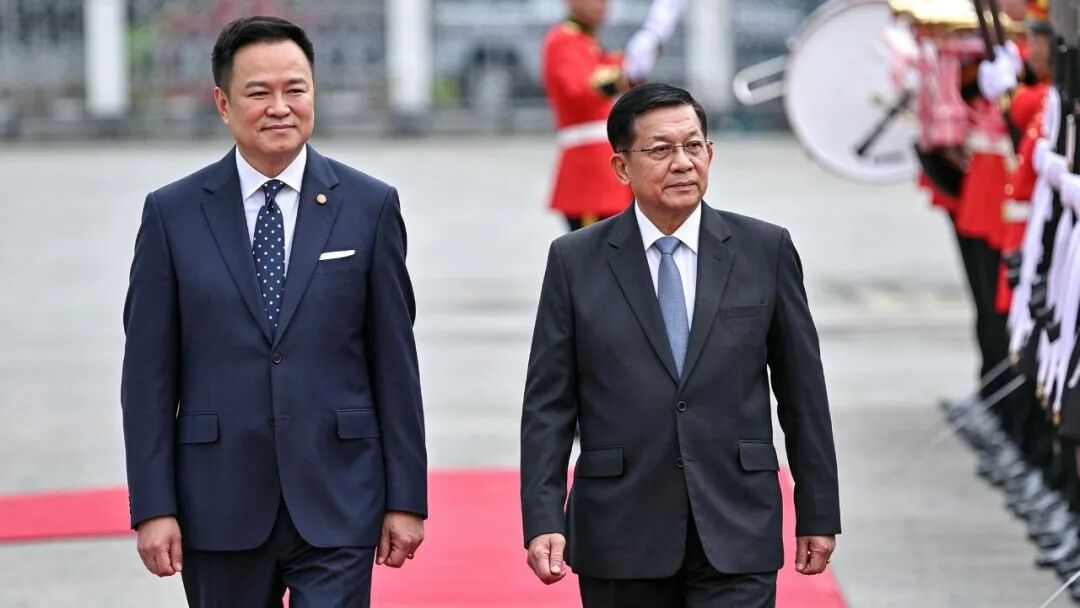
Myanmar president Min Aung Hlaing visits Thailand.
Myanmar Needs ASEAN More in Economy
Myanmar's economic dependence on ASEAN members is reflected both in scale and structure. For example, Thailand is Myanmar's largest source of imports and second-largest export market. Myanmar mainly exports natural gas, minerals, crops, and aquatic products to Thailand, for which there are more alternatives; the Myanmar imports from Thailand are mainly manufactured goods and intermediate products, for which there are fewer alternatives.
Differences in the import and export structure put Myanmar in a weak position. Myanmar has introduced the import restrictions and foreign exchange controls, requiring importers to obtain licenses based on export foreign exchange earnings, and the approval process is cumbersome.
On the surface, the restrictions put pressure on Thailand, but in reality they exposed Myanmar's high dependence on the Myanmar-Thailand border export corridor: Once the corridor is blocked, Myanmar's foreign exchange earnings and material supply will be blocked as well. This self-damaging pressure by Myanmar is a manifestation of asymmetric dependence.
In reality, Myanmar's dependence on ASEAN trade corridors is clearly higher than ASEAN's dependence on the Myanmar market. Myanmar is also using the China-Myanmar Economic Corridor and the economic cooperations with India and Russia to expand alternative channels. But overall, Myanmar needs ASEAN more economically at present. As the Myanmar alternative channels are expanding, however, the ASEAN negotiating leverage will gradually weaken.
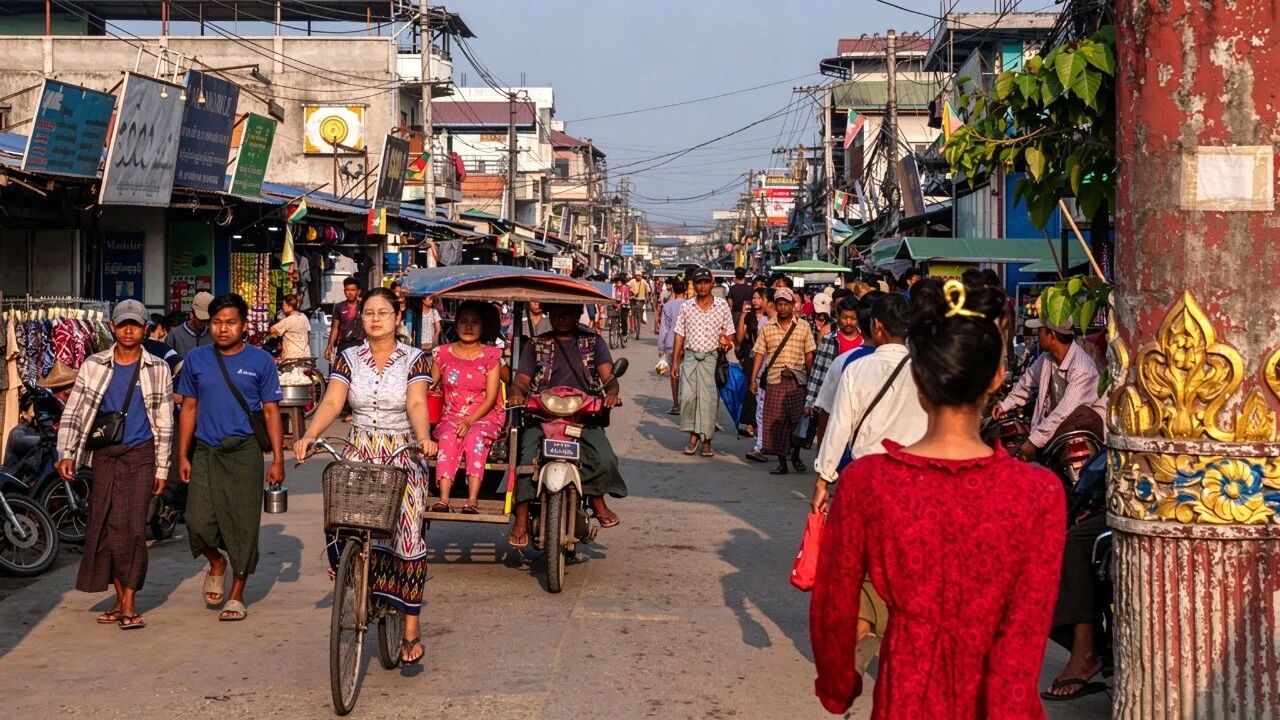
A view of urban Myanmar
Security Cooperation Will Not Lead to Political Breakthrough
The Myanmar-ASEAN needs in security are mismatched. According to Western media reports, Myanmar's civil war has caused more than 100,000 deaths and about 3.6 million people displaced. An illegal economic belt that involves online fraud, human trafficking and drug smuggling is taking shape along the Thailand-Myanmar border.
The spillover of Myanmar's conflict poses a direct threat to Thailand's border. In April 2026, Thailand's Ministry of Interior required Tak Province, Mae Hong Son Province, Chiang Mai Province, and Chiang Rai Province to strengthen vigilance because the escalation of clashes between the Myanmar military and armed ethnic groups caused civilians to leave their homes and flee to areas near the Thailand-Myanmar border. In addition, Malaysia has more than 190,000 registered refugees and asylum seekers, the vast majority from Myanmar.
The spillover directly hit ASEAN member states, but ASEAN's collective security mechanism does not have the capacity or willingness to intervene forcibly. ASEAN's security needs toward Myanmar and Myanmar's security needs toward ASEAN are different in nature. The ASEAN is passive and defensive, with the goal only of controlling the Myanmar spillover rather than resolving the conflict. The current security talks between other ASEAN members and Myanmar mainly focus on functional issues, avoiding political disputes.
During Min Aung Hlaing's visit to Vietnam in September 2026, the two sides reached consensus on expanding non-traditional security cooperation, focusing on online fraud, human trafficking and drug smuggling, and they elevated defense and security cooperation to a "key pillar" in bilateral relations.
By contrast, Myanmar's security needs toward ASEAN are proactive and instrumental, hoping to use pragmatic security cooperation to build political mutual trust. At the Informal Meeting of ASEAN Foreign Ministers held in Bangkok, Myanmar introduced the "100-Day Peace Plan" and its measures to combat transnational crime. The purpose of Myanmar was not simply to respond to ASEAN's security concerns, but to use willingness to cooperate in exchange for political acceptance.
But the ASEAN special envoy changes every year with the rotating chairmanship, and this institutional flaw intensifies the mismatch in security needs. Although ASEAN needs Myanmar's cooperation on security, this is not enough to prompt ASEAN to make substantive political concessions. Myanmar's willingness to cooperate carries a clear intent of trading security for politics, which instead weakens its credibility. Therefore, security cooperation will not automatically translate into a political breakthrough.
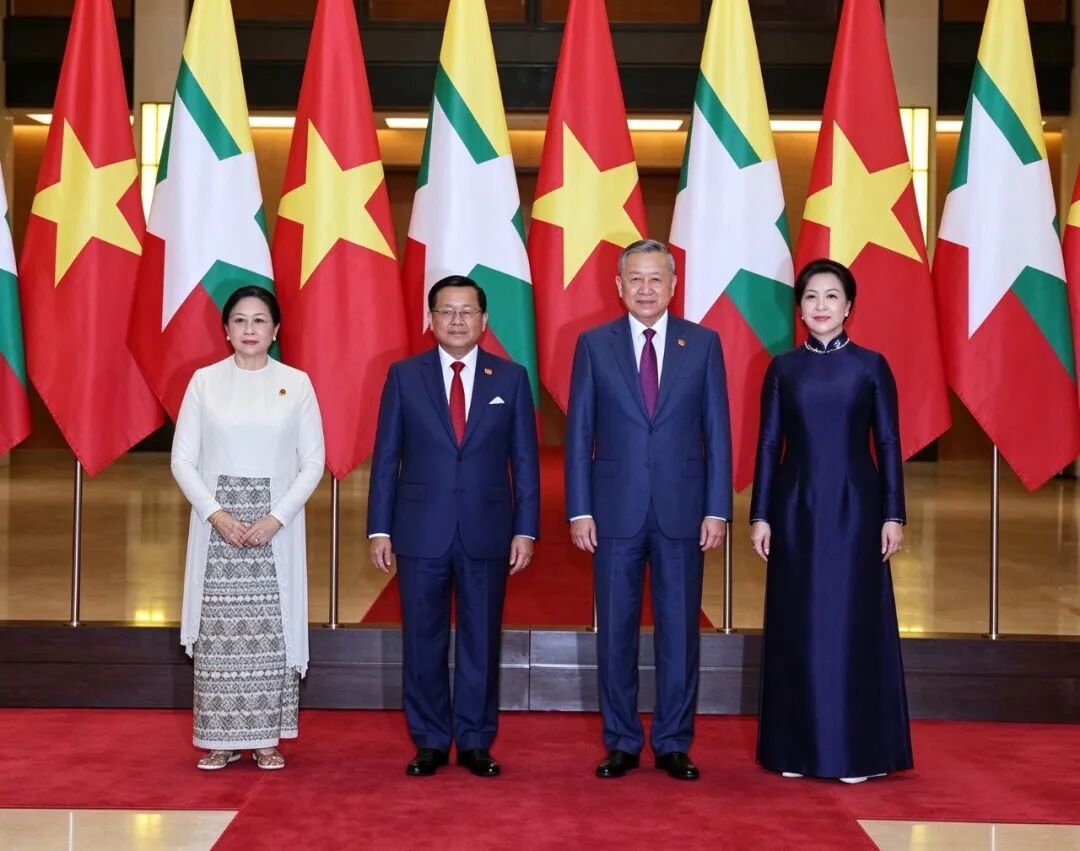
Myanmar president Min Aung Hlaing (2nd from left) visits Vietnam.
Is ASEAN's Leverage in Collective Negotiation Weakened?
Since its adoption in April 2021, the "Five-Point Consensus" has always been the main framework for ASEAN's Myanmar policy. In May 2026, the 48th ASEAN Summit was held in Cebu, Philippines. ASEAN leaders reaffirmed that the five points "remain the primary reference framework for addressing Myanmar's political crisis." The leaders also expressed regret that the progress in implementing the Consensus has been "minimal", urging the parties to immediately stop violence.
After the Bangkok foreign ministers' meeting, ASEAN foreign ministers reaffirmed the guiding role of the "Five-Point Consensus" and called for concrete and measurable steps, including a permanent stop to violence, the release of all political prisoners, and unimpeded humanitarian assistance. But the implementation progress has been still small. On July 9, 2026, Myanmar's Union Parliament passed a motion boycotting the consensus. The motion was co-signed by 30 lawmakers, and no one objected when opinions were solicited.
The logic of the boycott touches on the inherent tension in ASEAN's normative system. The "Five-Point Consensus" is a breakthrough of the principle of non-interference in internal affairs, with ASEAN intervening in a member state's internal affairs in its collective name. Myanmar's parliamentary boycott demands a return to the non-interference principle. This conflict stems from the internal logic of ASEAN institutional design.
Singapore, Malaysia, Indonesia, and Timor-Leste prioritize implementation of the consensus, while Thailand, Laos, Vietnam, and Cambodia hope to restore contact first. Singapore was disappointed at the slow progress in implementing the consensus and stressed constructive dialogue among key stakeholders; Malaysia said Myanmar is not yet ready to return to its seat because "atrocities against its own citizens are still occurring"; Indonesia has become more pragmatic, with Foreign Minister Sugiono saying that full implementation of the consensus takes time.
The implementation deadlock of the "Five-Point Consensus" has lasted five years, and some ASEAN members' need for stability has gradually surpassed their adherence to norms. The "calibrated re-engagement" promoted by Thailand provides a path for Myanmar to gain ASEAN political recognition, but critics believe this may weaken ASEAN's collective negotiating leverage.
The current ASEAN "troika" consists of the Philippines (current ASEAN chair), Singapore (next ASEAN chair), and Malaysia (previous ASEAN chair), all of which are non-traditionally friendly countries toward Myanmar. Under the principle of consensus, any member state with reservations can block the admission process, and Singapore's position as the next chair deserves further observation.
Overall, it is still Myanmar that needs ASEAN more at the time being, especially the ASEAN membership and political recognition, and what ASEAN needs is just stability in Myanmar.
The ASEAN still holds the upper hand in admission, but the Myanmar conflict spillover is raising the ASEAN need for stability, and the expansion of Myanmar's alternative diplomatic space is weakening ASEAN's negotiating leverage. The scale is slowly tilting toward Myanmar, but the turning point has not come. If Myanmar's conflict continues to spill over, the cost of ASEAN avoiding the problem will be borne by the entire Mekong region.
Writing by Li Xiaochun (Research Assistant at the Center for China’s Neighbor Diplomacy Studies, Yunnan University); Trans-editing by Wang Shixue and Zu Hongbing
