


Why Bangkok is repeatedly flooded despite water controls


Starting on September 24, the Thai capital Bangkok has been hit by heavy rainfalls. In some areas, the precipitation approached 300 millimeters within 48 hours. Fifty districts across the city fell into disaster zones, and some 52,000 families have been affected. Mayor Chadchart Sittipunt said it may take two to three weeks to drain the floodwater.
The flood has once again put Bangkok into the center of public debate. In a modern political system, flooding is not merely a meteorological event; it is a test in the governance capacity of and social trust to the government.
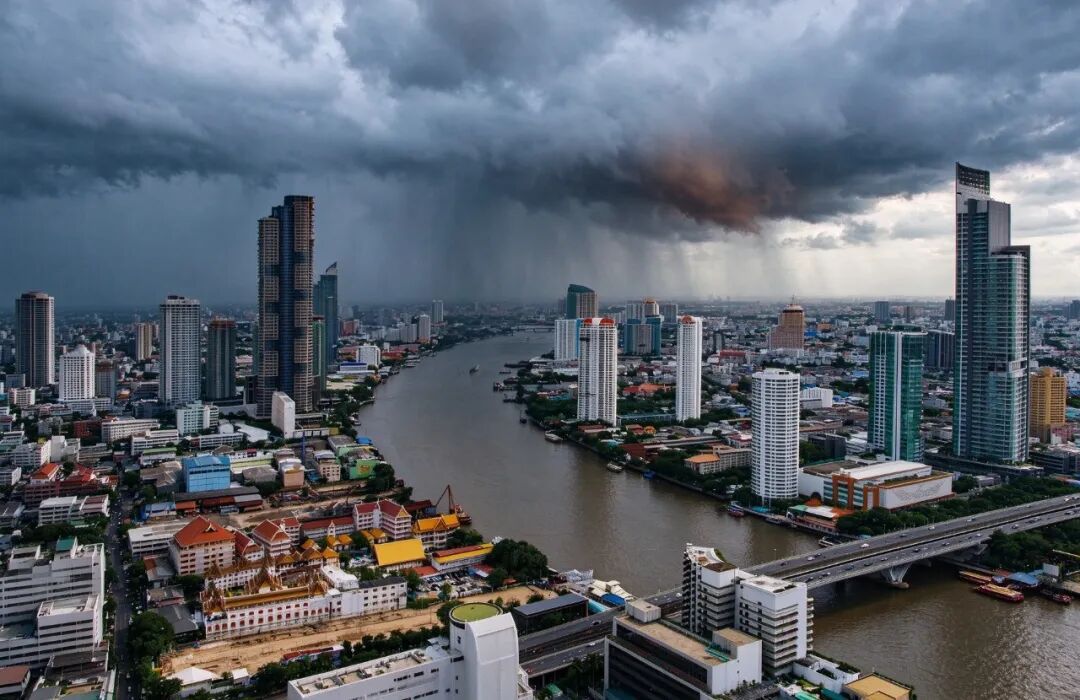
Bangkok is hit by a heavy rainfall.
Flood Disaster Tests Governance Capacity
Bangkok is located in the Chao Phraya River Delta, with an average elevation of only 1.5 to 2 meters. The impervious surface exceeds 80 percent in the city, and the drainage system faces enormous pressure during the rainy season. Over the past decades, rapid urbanization has filled in large areas of wetlands and canals, while the frequency of extreme weather has continued to rise. Natural vulnerability and human-induced pressure have compounded each other.
But flooding itself is not the root cause of public anger. What the public truly asks is: Was the early warning timely? Was the rescue swift? Were drainage facilities maintained in advance? Was the resource overly allocated in the capital rather than its suburban areas? These questions point to a deeper contradiction: Bangkok contributes nearly half of Thailand's GDP and boasts the nation's finest administrative resources. Why, then, does it still frequently fall into governance predicaments?
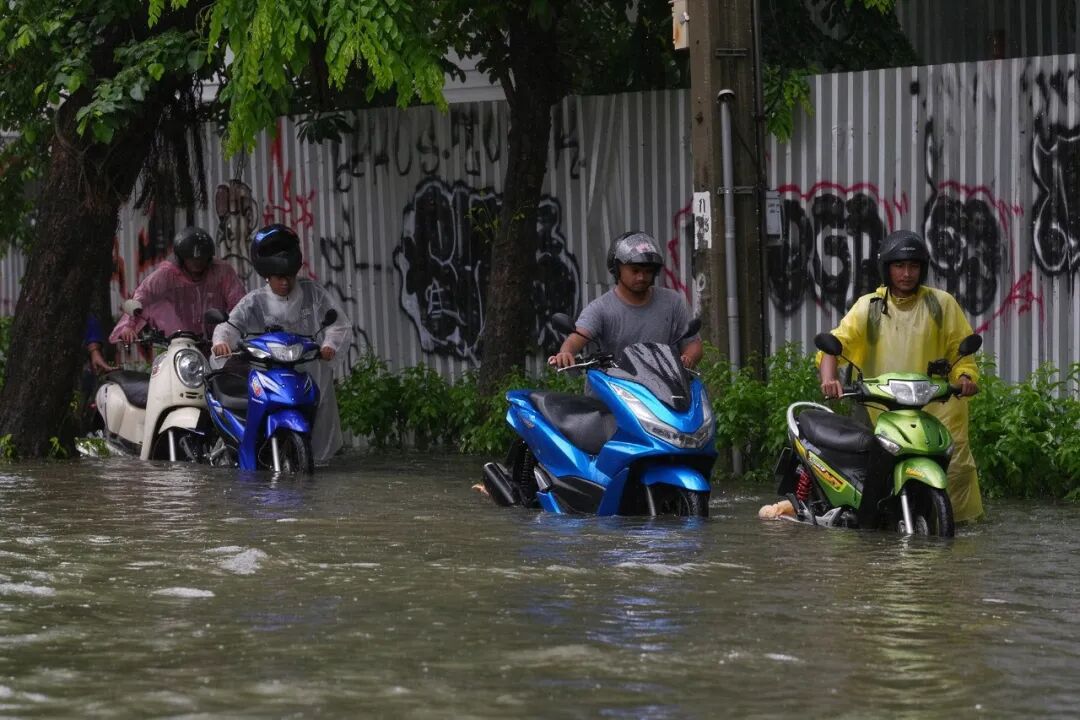
A flood in Bangkok
Floods, Political Crisis Persists for over Two Decades
Since 2000, floods and political crises in Thailand have repeatedly overlapped, forming a cyclical correlation “between flood disaster and political turmoil." Floods are no longer merely natural events; they have become an arena for political contestation. Political turmoil, in turn, weakens the Thai institutional capacity for disaster prevention and mitigation, forming a vicious cycle.
In July 2006, continuous rainfall in northern Thailand triggered the most severe flooding in decades, causing at least 77 deaths and 38 missing persons. The then-Prime Minister Thaksin, amid a political crisis, once announced his resignation. When Thaksin made a comeback, his first public trip was to inspect disaster areas in the north. However, flood relief efforts failed to reverse his political career. On September 19, the military staged a coup and overthrew the Thaksin government. The flood and the coup jointly battered the economy, and Thailand plunged into political turmoil that lasted for years.
A once-in-fifty-years flood struck Thailand again in 2011, coinciding with the early days of the Yingluck government. The flood lasted nearly three months, affecting 63 of Thailand's 77 provinces and causing at least 529 deaths. Bangkok at one point faced the risk of being inundated. The Yingluck government announced the deployment of 10,000 soldiers, 500 military vehicles, and more than 100 boats for disaster relief, yet it still came under fierce criticism from the opposition, citing inadequate response and lack of decisiveness.
In 2014, the political crisis escalated once again. The Yingluck government vigorously promoted a water management plan worth 350 billion bahts, but the plan was halted by a court in June 2013 due to corruption disputes and public protests. In May 2014, the military staged a coup, the parliament was dissolved, and the draft Water Resources Act under deliberation was shelved at Thailand's Law Reform Commission. This act was intended to establish a national water management agency and promote the decentralization of water management, but demise of the law meant that the institutional deficiencies exposed by the 2011 flood disaster were never repaired, and flood risks continued to accumulate.
Chiang Mai and Chiang Rai in 2024 suffered their worst flooding in nearly 30 years. Newly appointed Prime Minister Paetongtarn faced a disaster relief test as soon as she took office. She convened emergency meetings, personally visited disaster areas, and promised to use the central budget to accelerate compensation. However, the Paetongtarn government could not transform disaster relief into an opportunity to enhance governance capacity, and the relief efforts were hampered by the structural constraints of Thai politics.

Cars are flooded in Bangkok.
Why Thai Plans on Flood Control Always Fail?
The failure to implement Bangkok's flood prevention and mitigation plans stems from multiple structural contradictions that compound one another in a layered and progressive relationship. The contradictions are institutional, political, technical and social.
The first is fragmented authority and responsibility. More than 30 agencies in Thailand are involved in water resources management, spanning 13 ministries. The agencies act independently and lack integration. The Bangkok Metropolitan Administration and the Thai Royal Irrigation Department have conflicting objectives. The former pursues a "zero-tolerance on flood" policy but shifts risk to upstream areas. When disasters occur, early warnings are delayed and command fails.
The second is misplaced investment. The Bangkok Drainage and Sewerage Department's budget for fiscal year 2025 is approximately 7.08 billion baht, while 70 percent of the Royal Irrigation Department's budget is consumed by annual maintenance, with only 30 percent going to investment. Funds are mostly consumed in embankment construction, neglecting systemic inputs such as data, technology, and flood simulation.
The third is the impact of political cycles. The Yingluck government's 350-billion-baht national water resources management plan was completely abolished after the 2014 coup. The military government spent nearly 900 billion baht on flood control over nine years in power but failed to resolve systemic problems. Major projects were repeatedly shelved due to political confrontation, and the flood control system long lacked continuity.
The fourth is failure in social coordination. Here, the Phra Khanong Canal drainage tunnel project is a case in point. Of 4,398 illegally constructed houses, only 1,767 were demolished in six years. The compensation for land acquisition was as low as only 25,000 baht per house, and the residents had to bear monthly resettlement housing costs of 3,500 baht, further reducing their willingness to cooperate. The fundamental problem lies in the lack of effective public participation and interest coordination mechanisms in the planning process.

A street in Bangkok is flooded.
How Governance Keeps Pace with Urbanization
From a longer-term perspective, Bangkok's flooding reflects the contradiction between the development model and urban governance. Over the past few decades, Bangkok has experienced rapid economic growth and become a commercial hub in Southeast Asia. But economic growth has also brought more population, land development, traffic pressure, and environmental challenges. If the pace of urban development exceeds the pace of infrastructure renewal, disaster risks will continuously accumulate.
For Thai politics, this means that the importance of governance issues may further rise. In the past, political competition revolved more around identity, institutions, and power structures. In the future, livelihood governance—including flood management, public health, energy security, and environmental policy—may become important factors influencing public evaluation.
At the same time, one of the particularities of Thai politics is that the military has long played an important role in national politics. In disaster relief operations, the military often possesses transportation, personnel organization, and emergency action capabilities, and therefore frequently participates in disaster relief work. This participation, on the one hand, reflects the mobilization capacity of Thai government; on the other hand, it also triggers discussion about the military's role positioning.
Disaster governance is never a one-man show by a single agency. Truly effective governance does not depend on any single institution, but on whether coordination can be formed among institutions.
Reform on Thailand's flood control requires a combination of internal and external efforts. Disaster prevention is not only an engineering issue; it also involves data early warning, community response, and cross-departmental coordination.
External experiences in flood control can be referenced, but the key is to transform technology, funding, and standards into Thailand-led local institutional capacity. Only in this way can floods truly become an opportunity to enhance the Thai capacity in national governance.
Writing by Yu Haiqiu (Director and Researcher at the Thailand Research Institute, Yunnan Academy of Social Sciences); Trans-editing by Wang Shixue and Han Chengyuan
