


Kenya asking Tata to leave: Why does "Make in India" face setbacks?


Kenyan President William Ruto ordered Indian giant Tata Chemicals to pack up and leave on September 3, rebuking it for having built nothing and asking the Kenyan public: "Are we slaves to other people?”
Tata Chemicals operates the Tata Chemicals Magadi Limited (TCML) at the Lake Magadi area in Kenya. As the largest natural soda ash producer in Africa, the TCML describes itself as a "pillar of the Kenyan economy." But behind the Kenyan presidential order lie two questions worth examination: How is resource nationalism making a comeback? And why does "Made in India" keep facing setbacks?
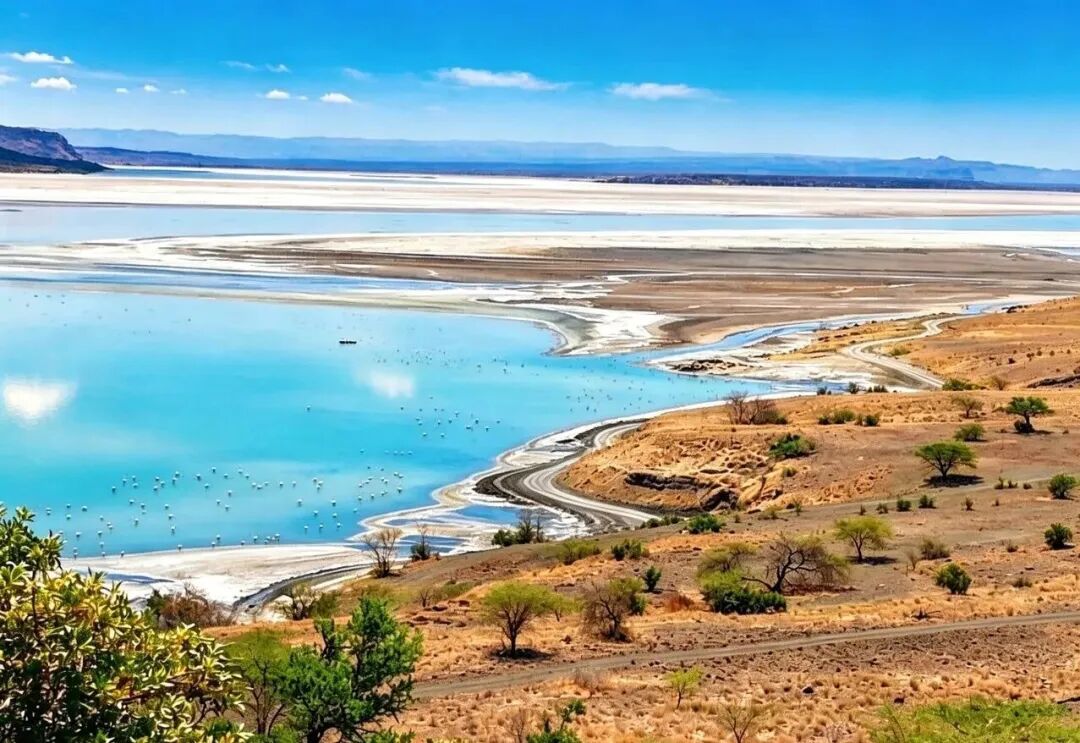
A view of the Lake Magadi area
What is behind the Kenyan order to leave?
Kenya is the world's fourth-largest producer of natural soda ash, accounting for about 1% of global output. Lake Magadi is located in Kajiado County in southern Kenya, about 120 kilometers southwest of the capital, Nairobi. The lake nurtures a resource-rich natural soda ash deposit and is the backbone of Kenya's soda ash production. In 2005, Tata Chemicals acquired the British-owned Brunner Mond Group and took over operation of the Lake Magadi soda ash mine.
However, the Kenyan government and Tata Chemicals have been in frictions over soda ash production at Lake Magadi.
On July 28, Hassan Ali Joho, Kenya's Cabinet Secretary for Mining, Blue Economy, and Maritime Affairs, ordered the TCML to suspend mining and halt soda ash exports under the Mining Act and other regulations. The cabinet listed seven categories of compliance problems unresolved by the TCML, including insufficient employment and skills transfer for Kenyan nationals and failure to meet environmental standards.
Kenyan President William Ruto personally stepped in on September 3 and issued an expulsion order against TCML. Ruto said investors should establish processing bases locally, not merely exploit and export raw materials.
At present, the dispute remains unresolved, but the political signal of this clash is already quite clear. In the Kenyan government's view, foreign companies cannot simply ship resources out of the country; they must also leave enough benefits behind where the resources are originally located.
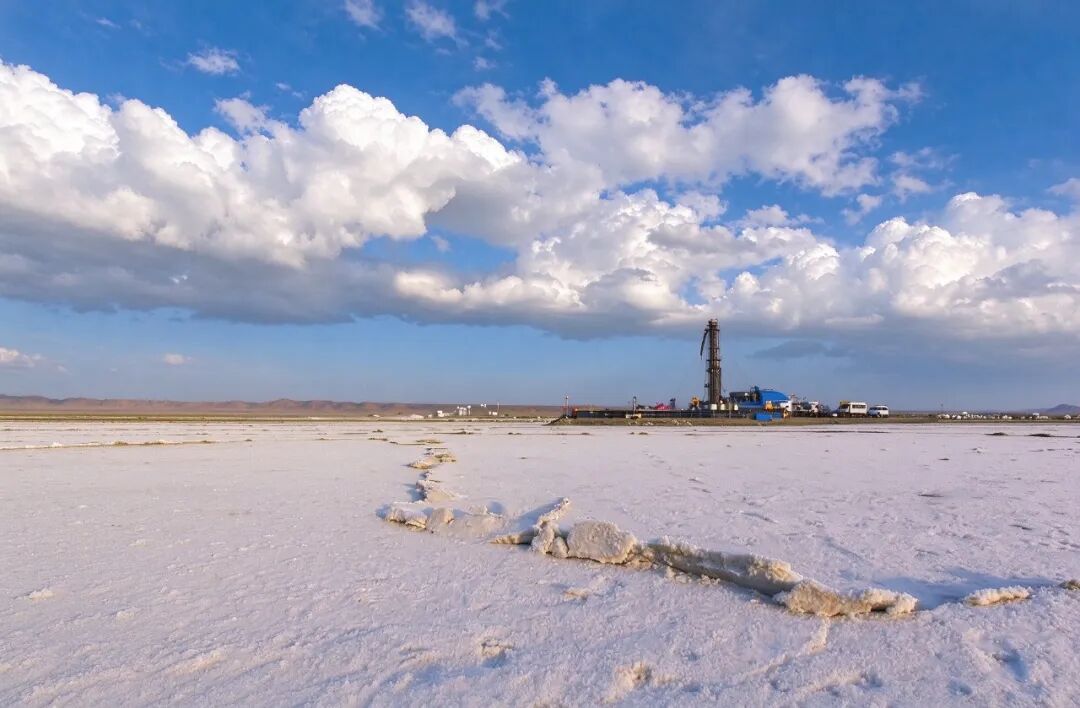
The soda ash mine in the Lake Magadi area
Multinationals fail to drive manufacturing in India
The Kenyan expulsion order against Tata is only the surface of the story. Tata's dilemma in Africa reflects a deeper paradox: Large Indian groups such as Tata, Adani, and Reliance been able to rapidly acquire assets, brands and markets overseas, but they have not converted the same strength into India's domestic manufacturing competitiveness.
Through businesses including Tata Consultancy Services, Jaguar Land Rover, Tata Steel, and Tata Chemicals, the Tata Group has formed a global footprint spanning multiple countries and industries. The Adani Group's overseas layout is more concentrated in energy, ports, logistics, infrastructure, and resources. Reliance Group started from petrochemicals and expanded into telecommunications, retail, energy, and digital platforms. In 2025, Indian companies completed 162 outbound mergers and acquisitions worth $18.2 billion, three times higher than the previous year. News on global M&A by Indian companies has filled the country's media.
The reasons for Indian companies to expand fast overseas are as follows.
First, Indian conglomerates have relatively strong financing and M&A capabilities and are skilled at organizing capital, policy resources, financial instruments, and large projects to form cross-industry, cross-regional asset portfolios. Second, India has a large pool of talent familiar with English, international law, accounting and management, giving it advantages in cross-border negotiations, international financing, global procurement, and M&A integration. Third, Indian domestic market has complex rules and uneven infrastructures, allowing companies to be experienced in cost control, policy coordination, and managing markets. This experience is useful in emerging markets such as Africa, South Asia, and the Middle East.
But capital and management do not mean complete capability in manufacturing.
The brands, craftsmanship and technology owned by Jaguar Land Rover are the result of long-term accumulation in the European automotive industry. Tata Steel's operations in Europe depend on local mature industries and suppliers. Tata Chemicals' mineral project in Kenya also relies on local resources, production facilities, and global sales networks. The acquisition of overseas assets by Indian groups does not mean that the technological systems behind those assets will come to India.
In 2014, the Modi government launched the "Make in India" initiative, aiming to raise manufacturing's share in GDP to 25%. However, the share has not risen but fallen from 16.7% to 15.9%, and the target deadline has been repeatedly postponed.
What constraints India's domestic manufacturing? Logistics and electricity costs are high, land and labor systems are complex, and the SME supply chains of small medium enterprise are fragmented. Moreover, skilled workers are insufficient in India, R&D investment is not sufficient, and high-end equipment and key components still rely on imports. For companies in India, acquiring mature assets overseas is a faster and easier way to make money than building a complete industrial chain from scratch.
Difference in capital returns is another factor. Energy, telecommunications, ports, real estate, finance, infrastructure, and resource projects can bring faster and larger investment returns. Precision manufacturing, basic R&D, and supplier cultivation require long-term investment, with slow returns and high risks. The fact that Indian conglomerates have the ability to invest in manufacturing does not necessarily mean they will direct the most capital into manufacturing.
The corporate goals and the national goals in industrialization are not entirely aligned. The Indian companies care about investment returns, market share, and shareholder value, while the Indian governments care about employment, exports, technology transfer, and the completeness of industrial chains. Acquiring an overseas asset may be beneficial to the company, but it may not improve the supply chains, talent, and technical skills in India.
Therefore, the Indian overseas expansion and domestic manufacturing are two sides of the same coin. Because the domestic foundation is weak, the Indian capital is more inclined to go abroad to acquire ready-made assets. And the more Indian companies rely on overseas acquisitions, the more industrial cultivation within India is neglected.
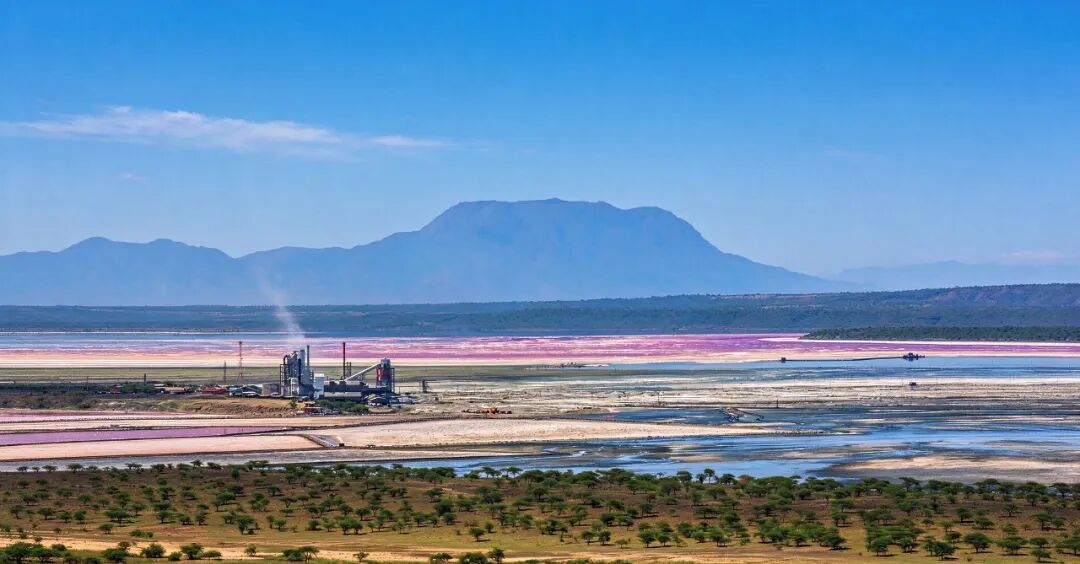
Lake Magadi is located in Kajiado County in southern Kenya.
Has resource-rich Kenya changed its calculation?
The Kenyan expulsion order is not just a trouble to the Indian company Tata Chemicals. It also reflects a profound change in the mentality of resource-rich countries, and the driving force behind this change is resource nationalism. This is the reason why Indian Tata branches overseas find it increasingly difficult to exploit the resource only. They have to help build up local manufacturing.
Resource nationalism is not a new phenomenon. After African and Latin American countries gained independence in the mid-20th century, they set off waves of nationalization; during the globalization in the 1990s, the resource-rich countries reopened to foreign investment. Since the beginning of the 21st century, the countries have seen their bargaining power strengthened by the rising commodity prices. The new trend in this round of resource nationalism is that the African countries now only care about "who owns the resources", but also "where the resources are processed" and "who controls the industrial chain."
Kenya is a microcosm of this trend. The Ruto government has made mineral processing within the country a core economic demand, aiming to raise the mining sector’s share in GDP from about 1% now to at least 10% by 2030. In May 2026, Ruto declared at the Africa Forward Summit that "the model in which Africa only exports raw ore and value-added processing takes place elsewhere belongs to the past". In June, Ruto put forward the "Make it in Kenya" slogan in Brussels.
The driving forces behind this round of resource nationalism can be summarized in four aspects: First, the energy transition and geopolitical competition have made critical minerals a strategic asset; second, developing countries face greater fiscal pressure after the pandemic, and raising taxes and fees and renegotiating contracts have become quick-acting policy tools; third, resource countries seek to climb up on the value chain and turn their mineral endowments into industrialization capital; fourth, local political factor. That president Ruto criticizes foreign capital in a resource-rich area is both a discussion on economic development and a response to local voters.
Ultimately, the concern of resource-rich countries has escalated from "who owns the resources" to "who controls the industrial chain." Kenya's expulsion order against Tata is precisely an expression of this concern.
Concluding remarks
Industrialization in developing countries can not rely overly on foreign capital.
For Kenya, its resources are the start of industrialization, and political slogans and diplomatic demands cannot buy industrial development. For India, overseas expansion can create world-class enterprises, but it cannot create a world-class manufacturing power in India. The acquired brands will find it difficult to take root in the industrial soil of India, and the foreign exchange earned from service exports will not automatically translate into manufacturing capacity in the workshop.
India is a developing economy with 1.4 billion people. If the manufacturing foundation is not solid, the overseas feats by Indian conglomerates will be merely a solo performance by a few enterprises.
Writing by DengXu Qinwei (a master student majoring world history at the School of History, Renmin University of China); Trans-editing by Wang Shixue and Han Chengyuan
