


Coffee facilitates Yunnan’s bond with Vietnam, Cambodia


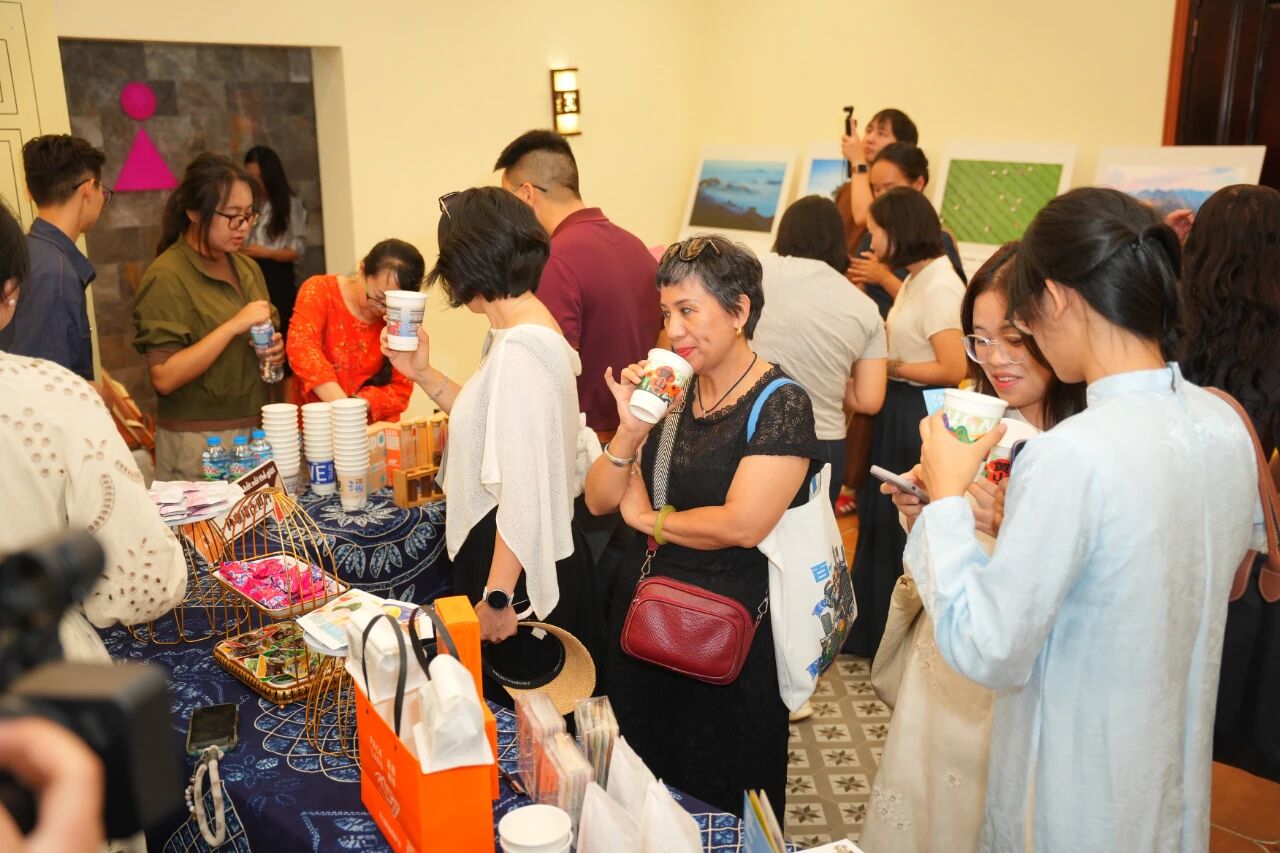
Attendees of the Yunnan-Vietnam coffee event in north Vietnam’s Ninh Binh
As part of the World Heritage Tour Program, a Yunnan-Vietnam coffee event kicked off in north Vietnam’s Ninh Binh province on September 20. Two days later, the "Happiness Villages" Exhibition on Cultural-Ethical Practice opened at the China-Cambodia Cultural Corridor in Siem Reap Angkor International Airport, Cambodia.
The Ninh Binh karst peaks stand in peace near the water bodies, and the air amid the lakes and hills is filled with the mellow China-Vietnam friendship. In the photo exhibition at the Angkor International Airport, stories of 10 happiness villages in China and Cambodia focus on the improvement of rural livelihood and the inheritance of ethnic cultures.
Jointly organized by the Publicity Department of the CPC Yunnan Provincial Committee and the Yunnan International Communication Center for South and Southeast Asia in collaboration with their partners home and abroad, the two events constitute Yunnan's cultural exchanges with Vietnam and Cambodia for the coming the Mid-Autumn Festival. Although the events have different emphases, coffee has undoubtedly become a catalyst for people-to-people connection.

The Tomorrow's Boss and Coffee Shop Owners Dialogue in Vietnam
At the Vietnam event, three major projects were launched for coffee lovers and coffee shop owners. Distinguished guests from Yunnan and Vietnam jointly watered coffee saplings that symbolize hope for farmers. As images of world heritage sites from both Yunnan and Vietnam showed up one after another on the screen, the cultural and tourism cooperation between the two places was boosted.
At the Tomorrow's Boss and Coffee Shop Owners Dialogue in Vietnam, six industrial pioneers from China and Vietnam engaged in exchanges on heritage sites, coffee, lifestyle, and cultural-tourism.
Focusing on coffee economy, Pham S, Vice President of the Global Coffee Alliance (GCA), broke down the logic behind creating viral internet-famous coffee shops; Sun Chenchen, a coffee entrepreneur from Lijiang, shared practical experience in building a nature-themed coffee shop grounded in local culture.
When it came to coffee tourism, Vietnamese coffee practitioner Le Van Phong, drawing on his experience in production and sales, analyzed the new consumer trend of tourists venturing deep into mountain forests to explore coffee origins; Vietnamese coffee researcher Nguyen Thi Thu Trang, from a humanistic perspective, described the cultural value embodied in coffee trees.
Speaking of the upgrading of industry chain, Wang Anjue, a coffee professional from Pu'er, Yunnan, revisited the local cultural-tourism practice of integrating tea into coffee; Nguyen Thi Thu Cuc, founder of a coffee academy in Da Nang, shared immersive practices in Vietnam's coffee tours for students.
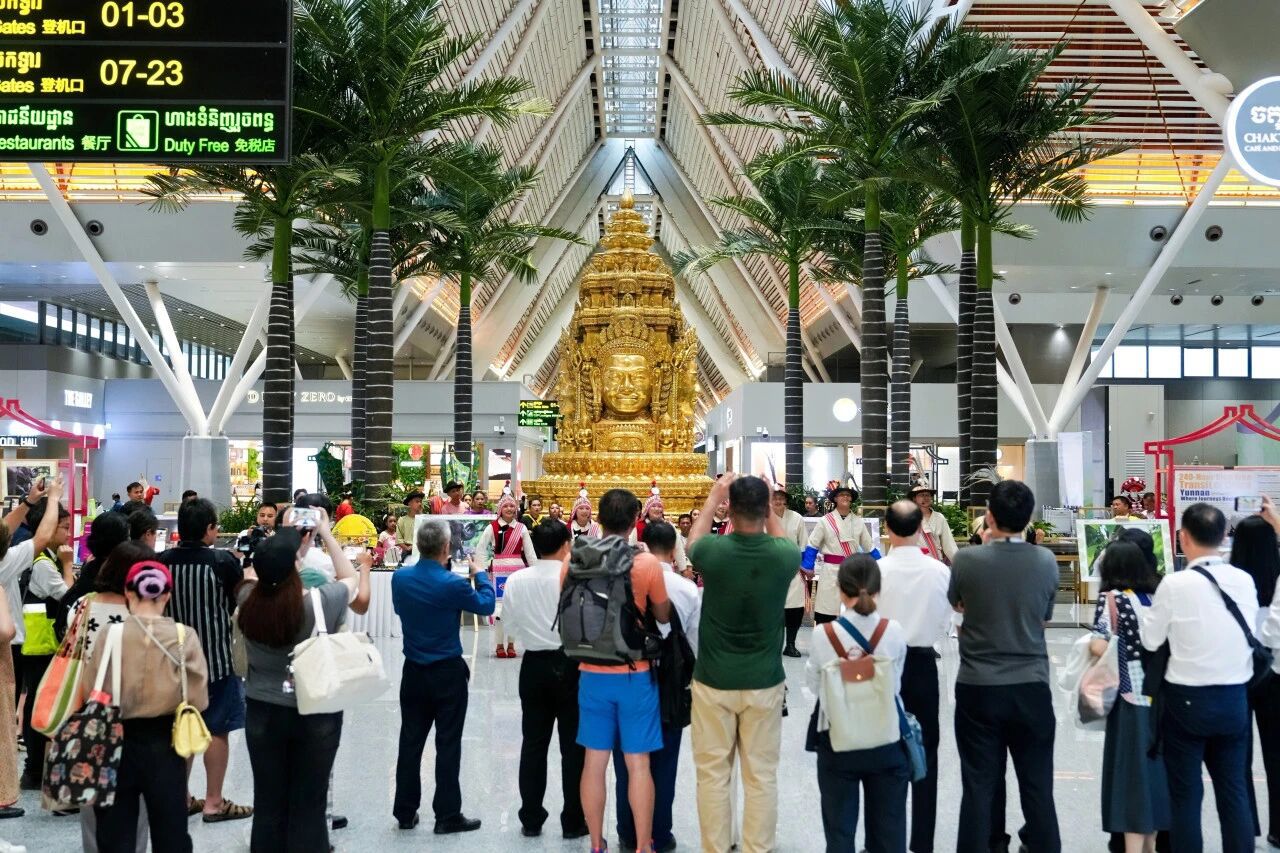
The China-Cambodia Cultural Corridor event takes place at Angkor International Airport.
At the China-Cambodia Cultural Corridor event at Angkor International Airport, a tourist from Sydney, Australia, stopped to learn about the coffee products at a booth and suggested that Yunnan and Cambodia jointly develop coffee-themed cultural products. An Indian tourist looked forward to traveling to China and enjoying the countryside life in Yunnan.
Ros Syhorn, a barista from Cambodia's Pida Coffee Estate, visited Kunming for the first time in August for a coffee-industry exchange. In Yunnan, he talked with peers from different countries about coffee making and coffee beans. Now, his booth has moved to the China-Cambodia Cultural Corridor, displaying both Cambodian beans and Yunnan Arabica.
“A single bean contains not only flavor, but also the land, water, and human warmth behind it. Coffee does not speak, but it makes us more willing to listen to what the other has to say,” observed Ros. Civilizations enlighten each other through exchange, while a cup of coffee facilitates the exchange.
In the departure hall, Ms. Fan and Ms. Cheng from Shanghai were drawn to the elegant Cambodian coconut shell dance and the infectious Yunnan Lisu dance. Spanish travelers Carlos and his wife drank Pu'er tea at the Yunnan booth and watched a performance by tea artists. They said they hope to visit the Jingmai Mountain in Pu'er.
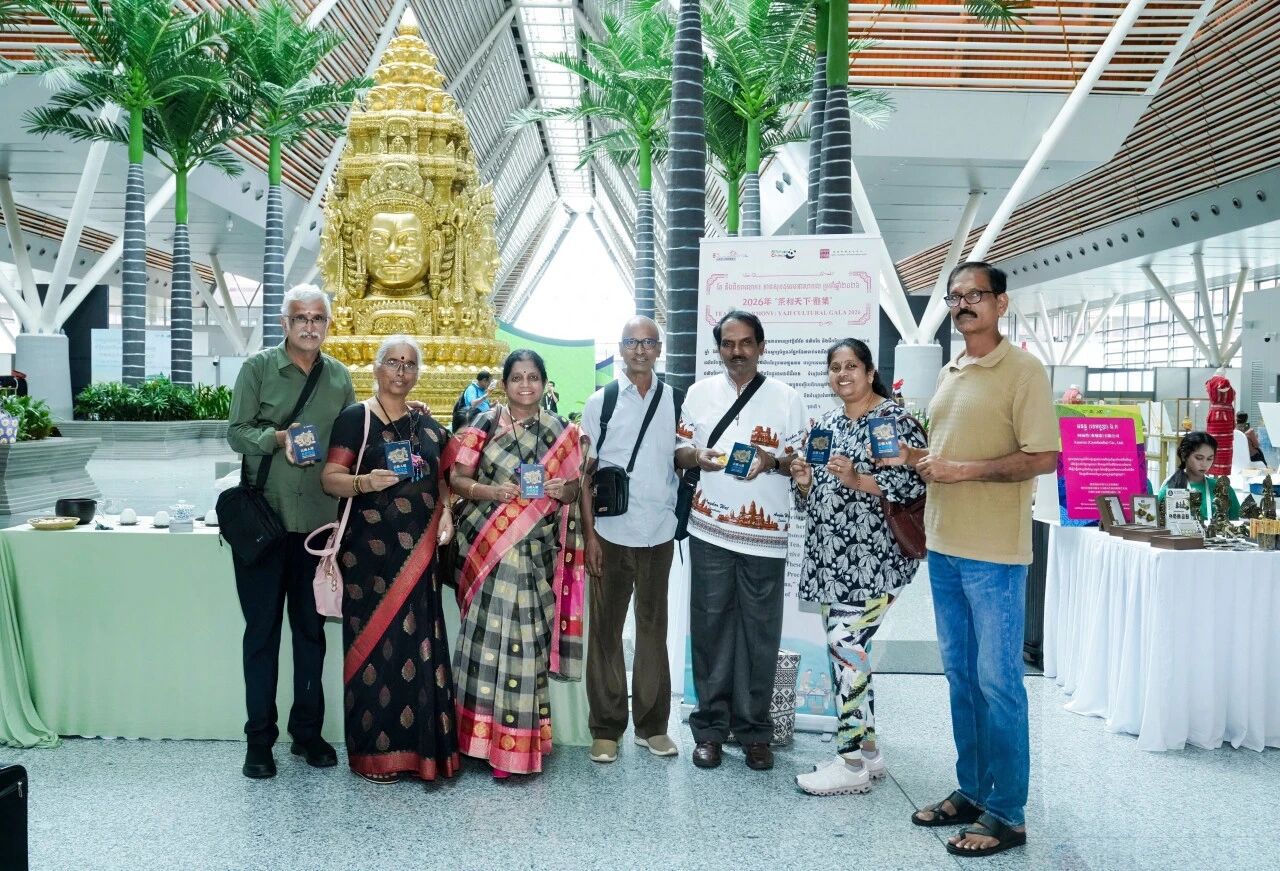
Air passengers pose for a photo at the China-Cambodia Cultural Corridor.
Writing by Wang Huan, Chen Chen, Liu Ziyu, Li Zha, Zhang Ruogu, Chang Yuan and Peng Xiran; Trans-editing by Wang Shixue
