


Railside World Heritage sites can learn from each other


The Cultural Landscape of Old Tea Forests of the Jingmai Mountain in southwest Yunnan’s Pu'er city was listed as a World Heritage in 2023, becoming the world's first tea-themed World Cultural Heritage site. September 17 of this year marks the third anniversary of its successful World Heritage listing.
Meanwhile, the Laos-China Railway will celebrate its fifth anniversary of operation on December 3, 2026. This railway crosses both Laos and China, becoming a transportation artery connecting China and ASEAN. It carries both cargos and passengers, linking up the Yunnan old tea forests of Jingmai Mountain and the Lao World Heritage site of Luang Prabang.
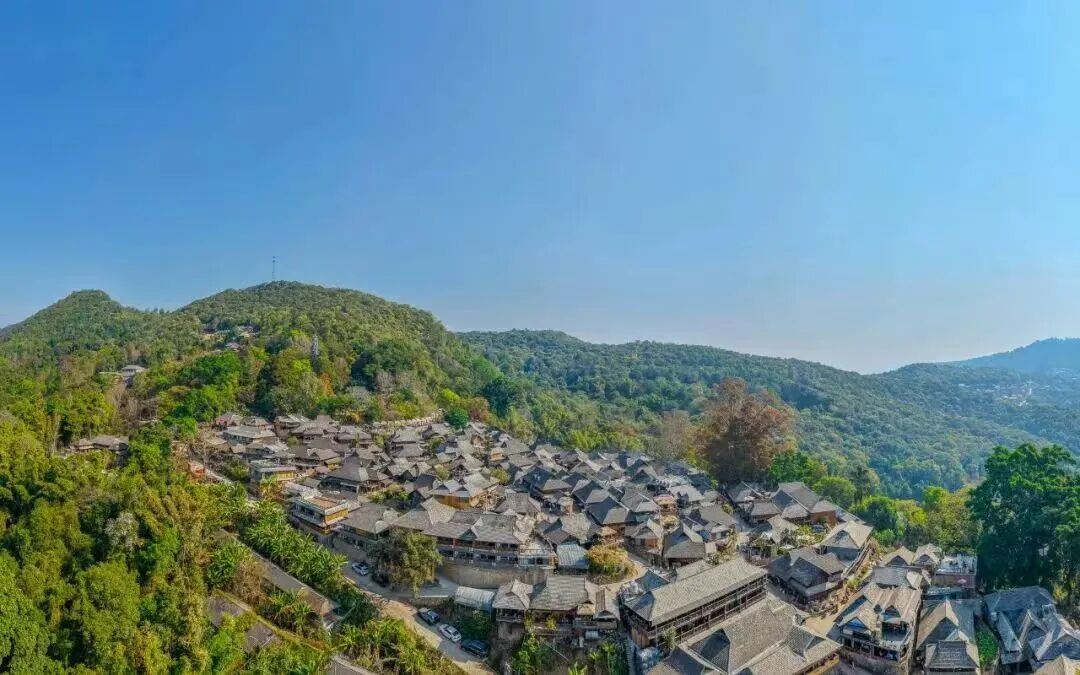
The World Heritage site of Jingmai Mountain
What Conserving Practice Does Jingmai Offer?
Pu'er adheres to the principle of "protection first, moderate utilization, and sustainable inheritance." At the institutional level, the local government implements regulations such as the "Regulations on the Protection of the Cultural Landscape of Old Tea Forests of the Jingmai Mountain in Pu'er," forming a protection framework that combines Party committee and government leadership with villagers’ self-governance.
At the technical level, an intelligent monitoring and early warning platform has been established in the Jingmai Mountain. Combining satellite remote sensing with manual patrols, they achieved regular protection of the World Heritage site.
The ecological wisdom is seen in protection details on the Jingmai Mountain. Between the old tea forests and villages are protective forest belts locally called "bei." The main tree species, Schima superba, has high water content and low oil content, making it difficult to burn when exposed to fire and effectively blocking the spread of flames. In traditional stilt-style dwellings, smoke from cooking fires stains wooden pillars, forming a natural protective layer that resists insect damage. When buildings are rebuilt, old wood becomes firewood, and the ashes are spread on the land to nourish crops.
These unique ecological protection systems and recycling methods embody the wisdom of harmonious coexistence between humanity and nature. The homestay inns and tea culture experience centers for tourists are built up at the foot of the mountain, effectively protecting the vegetations on the mountain. Thus, local tourism development has achieved a balance between protection and development.
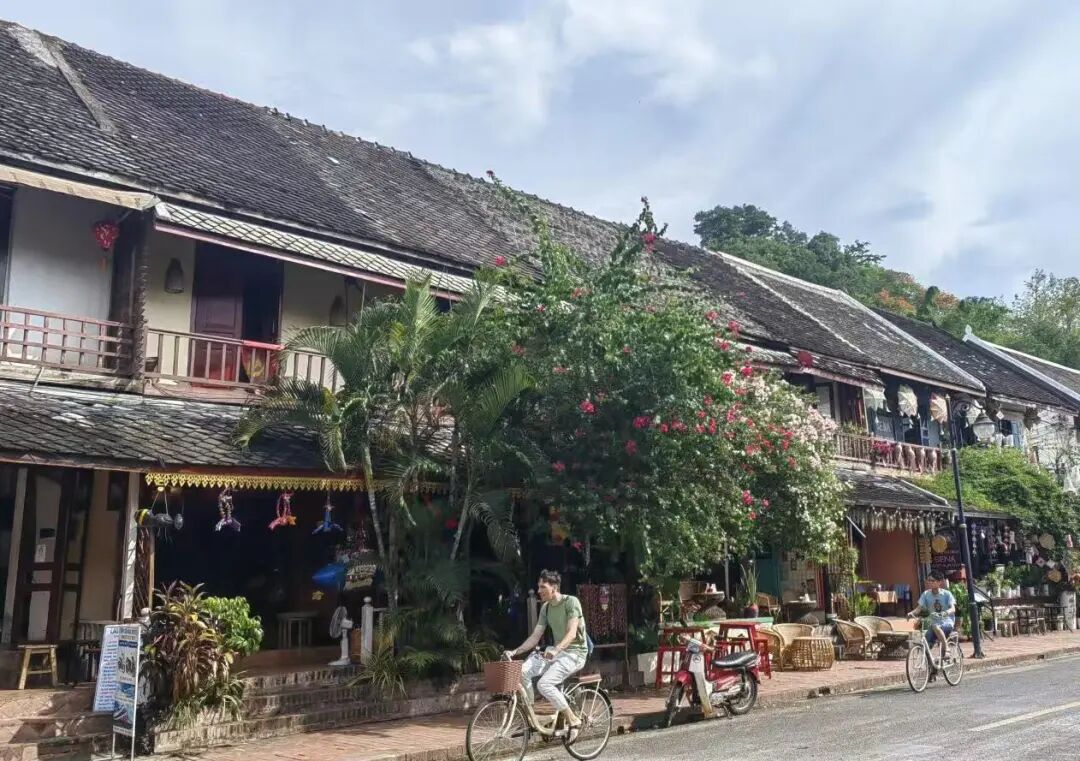
The World Heritage site of Luang Prabang old town
Luang Prabang: Not an Old Town to Be Enshrined
The ecological philosophy of the Laos-China Railway is highly consistent with Jingmai Mountain's green philosophy of "coexistence of forest and tea, shared prosperity of people and land." When the Laos-China Railway passes through the Xishuangbanna tropical rainforest, tunnels are extended to form bridges to reserve the natural passages for Asian elephants, achieving harmonious coexistence between railway operation and nature protection. Traveling south along the railway, passengers can see the practices of respecting nature and protecting heritage sites are similar to Luang Prabang's heritage preservation efforts.
Luang Prabang was inscribed on the World Heritage List in 1995. The ancient city is located on a peninsula where the Mekong River and the Nam Khan River meet, with 679 ancient buildings of preservation value still standing. Wat Xieng Thong is famous for its exquisite carvings and mosaics, while Mount Phousi is located in the city center, surrounded by multiple Buddhist sacred sites.
But Luang Prabang is not a city put on a pedestal. It also faces the challenge of balancing heritage protection with urban development.
The Asian Development Bank and the Lao government jointly funded a US$45 million urban environmental improvement project to address challenges brought by urban development such as waste management, sewage treatment and infrastructure. These measures have allowed Luang Prabang to achieve sustainable urban development goals, while maintaining the World Heritage status of the old town. Currently, Luang Prabang aims to be a green city, seeking a balance between cultural tourism and environmental protection.
Mountain Jingmai and Luang Prabang share common heritage values. The key to protecting the World Heritage site of Luang Prabang lies in developing a "heritage economy," with sustainable heritage protection as the driving force for development.
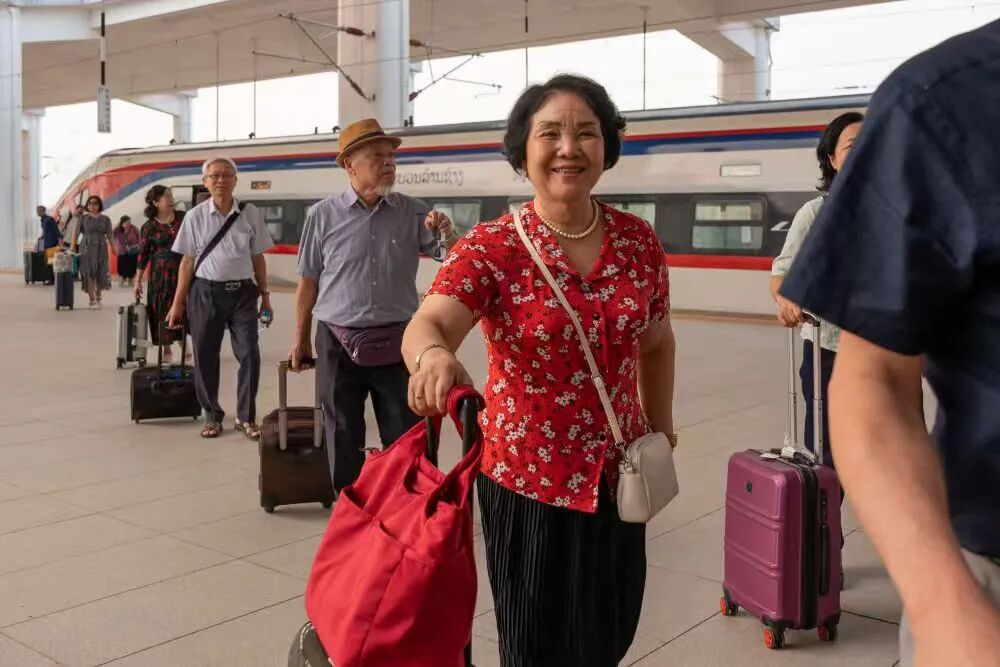
Tourists travel via the Laos-China Railway.
Railway Links up World Heritage sites
Since its start of operation, the Laos-China Railway has achieved a lot in transportation services, freight, passenger transport, and tourism.
For Laos, the railway has changed more than just the way people travel. The Laos-China Railway has promoted the cultural values of both Laos and China, enabling the protection and inheritance of Laos's tangible and intangible heritages. At the same time, the railway also provides more opportunities to popularize the value of heritage sites.
Connecting the Lao capital Vientiane, Luang Prabang, Vientiane Province, Oudomxay Province and Luang Namtha Province, the Laos-China Railway allowed the natural and cultural heritage sites along the route to form a corridor that can be seen by tourists, researchers, and investors alike. The railway also links up other places with provincial and national heritage sites and natural tourist attractions.
The extension of the railway network will continue to drive connectivity between Laos and its neighboring countries in the region.
The Laos-Vietnam Railway will connect Vientiane to the Vung Ang deep-water port in Ha Tinh Province, Vietnam. Along this line, tourism potential will extend to more heritage sites. In the future, the cross-border natural World Heritage sites such as Phong Nha-Ke Bang National Park in Vietnam and Hin Nam No National Park in Laos will benefit from railway connectivity, jointly bolstering tourism, cultural inheritance and ecological protection.
From this perspective, Laos is no longer just a landlocked node on the map, but a connector on the "World Heritage corridor." This will be another interpretation of Laos's transformation from a "land-locked country" to a "land-linked country."
Writing by Viengphone Soukhavong (Director General of the Department of Heritage and Fine Arts, Ministry of Information, Culture and Tourism, Laos); Trans-editing by Wang Shixue, Liu Ziyu and Qin Xuedan
