


Why didn’t India stop Hasina from speaking despite death sentence?


Former Prime Minister Sheikh Hasina, who is in exile in India, spoke out again on August 5, the second anniversary of the Bangladeshi "July Uprising" , stirring fresh tensions in India-Bangladesh relations. Bangladesh issued a sharply worded response, while India quickly denied the Bangladeshi charges. Knowing full well that this would enrage Bangladesh, why was India still not willing to stop Hasina from speaking?
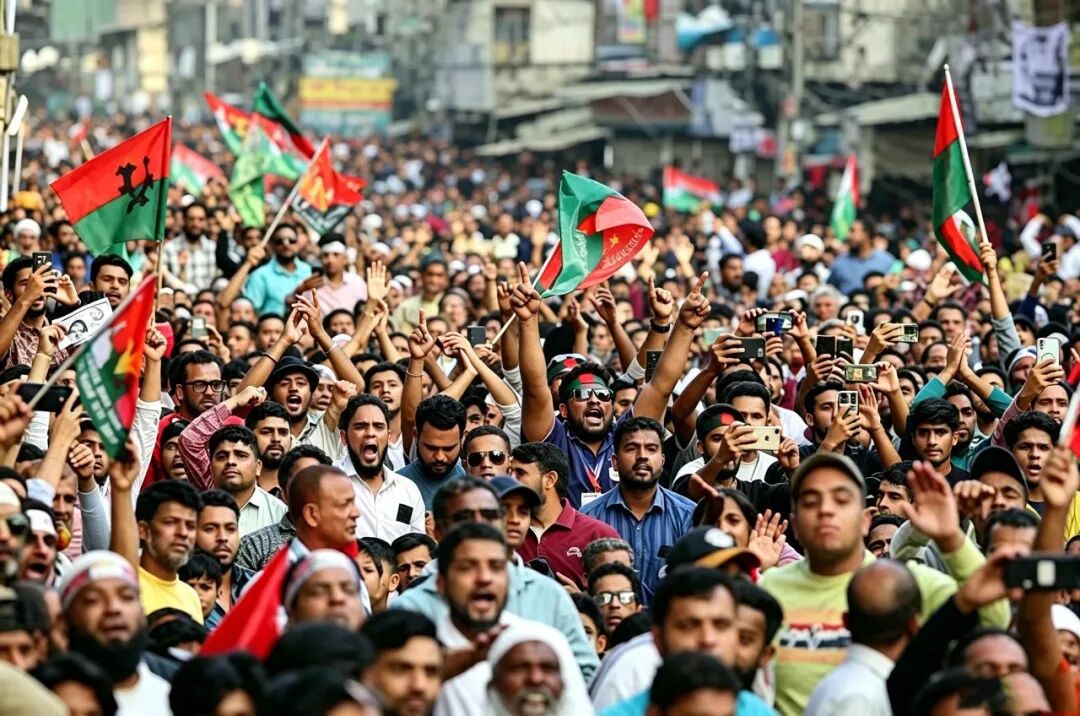
The Bangladeshi "July Uprising" in 2024
Hasina’s speech puts new sand in India-Bangladesh ties
The former Bangladeshi Prime Minister and banned Awami League (AL) chief Sheikh Hasina delivered a speech via audio at the South Asian Foreign Correspondents' Club in New Delhi, with a blank screen throughout the video feed. This event was also her first media appearance since fleeing to India in 2024. Hasina said that the 2024 student movement was manipulated from behind by organized political forces, aimed at overthrowing the government. She asserted that the tough measures taken by her AL government in 2024 were entirely justified, and that it was government employees, AL supporters, ethnic minorities and others who suffered extensive illegal violence before and after the movement, and that these criminal acts must be brought to justice.
Hasina added she would return to Bangladesh in December – despite having been sentenced to death in absentia by Bangladesh's International Crimes Tribunal. She called on AL supporters to unite and demanded that the current Bangladeshi government lift the ban on the AL. Hasina's son, Sajeeb Wazed Joy, who resides in the United States, also addressed the gathering via video, stating that Bangladesh had become a "failed state" and was turning into "another Pakistan," which would have a huge negative impact on India and the entire region.
Bangladesh reacted fiercely. Later that same day, the Bangladeshi Ministry of Foreign Affairs issued a press release on social media platform X, expressing outrage over the incident. It labeled Hasina a "fugitive genocide criminal" and "mass murderer," and called the AL a "criminal organization" and a "mafia." The statement also pointed a finger at India, asserting that India's permission for Hasina and her "henchmen" to launch "vicious attacks" against Bangladesh and its people from its territory was a grave insult to Bangladesh's sovereignty and the martyrs of the "July Revolution." Based on the principles of sovereign equality, mutual respect, non-interference in internal affairs, and national dignity, Bangladesh is committed to building a constructive, mutually beneficial, and future-oriented relationship with India. Bangladesh will never return to the dark past of the "fascist rule" or a "client state".
Hasina served as Bangladesh's prime minister from 2009 to 2024 and went into exile in India following the "July Uprising" in 2024. In November 2025, she was sentenced to death in absentia by Bangladesh's International Crimes Tribunal on charges of crimes against humanity, and the AL itself had been banned in May of the same year. According to UN agencies, the crackdown by Hasina's regime during the July 2024 uprising resulted in approximately 1,400 deaths. Bangladesh has consistently demanded India's extradition of Hasina and has repeatedly asked India to prevent her from speaking around the anniversary of the July Uprising. Given the current domestic political landscape in Bangladesh, Hasina would have to take enormous personal risks if she were to actually return in December.
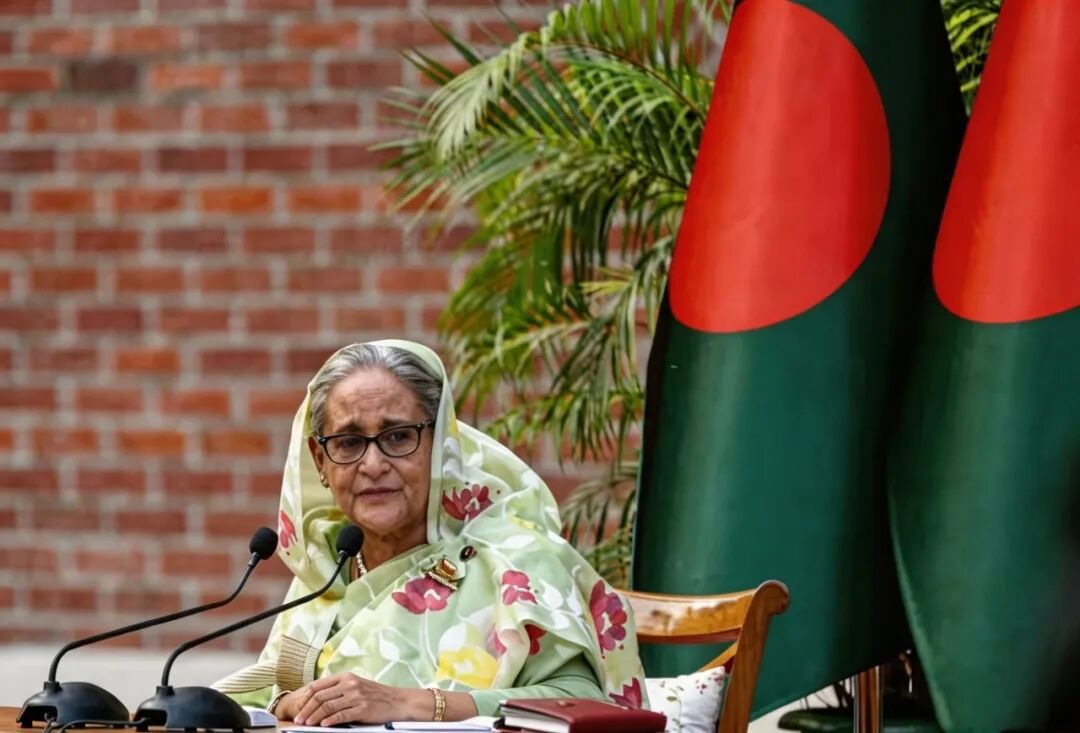
Former Bangladeshi Prime Minister Sheikh Hasina
India’s dilemma: Protecting the AL or comforting Bangladesh?
It can be observed that India has been working to distance itself from Hasina before and after the event and to minimize the damage to bilateral relations. On August 4, a spokesperson for India's Ministry of External Affairs said that the event at which Hasina would speak was organized by a private institution and that the Indian government played no role in it. On August 7, the spokesperson reiterated that the Indian government had nothing to do with the event and did not endorse the views expressed there, particularly those concerning the "duly constituted current government of Bangladesh." On August 10, Indian High Commissioner to Bangladesh Dinesh Trivedi met with Bangladeshi Prime Minister Tarique Rahman. Tarique said that India and Bangladesh should jointly create a favorable environment to lay the groundwork for improving bilateral relations, and he once again conveyed the demands for Hasina's extradition and for bringing to justice those responsible for killing Bangladeshi student leader Osman Hadi.
The India-Bangladesh relations had previously shown signs of improvement and warming. India relaxed tourist visa issuance for Bangladeshi citizens and eased trade restrictions on Bangladesh. India's appointment of Trivedi, a veteran politician from West Bengal, as its ambassador to Bangladesh was also seen as an ice-breaking move. Additionally, India has invited Tarique to attend the upcoming BRICS summit. So, since India has been committed to repairing ties with Bangladesh and knows full well how sensitive this issue is in Bangladesh, why did it allow the Hasina speech incident to happen?
In fact, the Indian permit for Hasina to speak in public is out of a pragmatic calculation. By preserving the AL's foundation, India can retain the means to reactivate this political asset in the future. For India, the roughly 15%-25% of AL supporters within Bangladesh still represent a force that can be mobilized to influence Bangladeshi domestic politics. India would prefer to see the AL, after restructuring, re-enter Bangladeshi politics and continue to serve as a political force it can rely on in Bangladesh. However, as Bangladesh accelerates its fight against the AL, this political asset for India is rapidly depreciating, and the positions, funds, and commercial bases that the AL relied on to maintain its political influence are eroding at an accelerated pace.
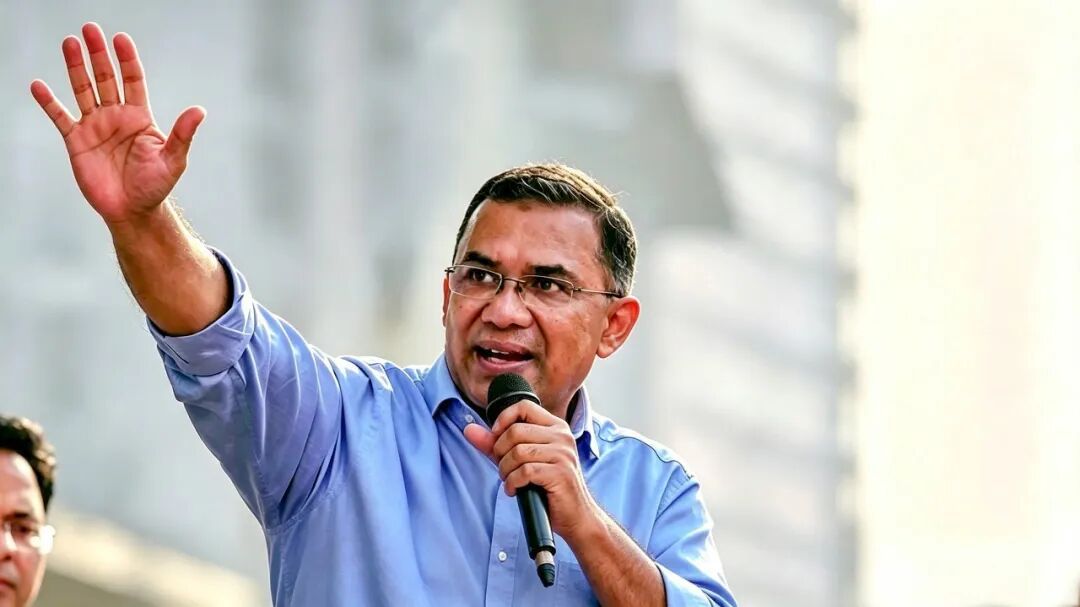
Current Bangladeshi Prime Minister Tarique Rahman
The campaign against the AL includes at least three aspects:
First, purges of public positions. During the AL's 15-year tenure in power, institutions across the government, police, military, and universities were permeated with AL supporters. The Bangladesh Nationalist Party (BNP) can quickly replace top leadership, but purging mid- and lower-level positions will take time. The author heard in Dhaka University that many deans and department heads are still occupied by former AL supporters.
Second, financial asset recovery. An economic white paper released during Bangladesh's interim government period estimated that a cumulative total of approximately $234 billion was illegally transferred out of the country between 2009 and 2023. In April, Tarique stated in parliament that recovering these illegally transferred funds was one of the government's primary goals. By July, Bangladesh's financial intelligence agency reported that frozen or seized assets both domestically and abroad had reached approximately 7.6 trillion taka.
Third, commercial and industrial purges. After Hasina's fall, a wide range of business interests closely tied to the AL – from major conglomerates to small and medium-sized enterprises – lost their former patronage and became targets of new political forces. Particularly in Bangladesh, political activities require funding, and commerce and industry are important channels for obtaining such funds. During the author's fieldwork, it was heard that a mobile phone assembly plant owned by a former AL supporter was shut down after the 2024 movement.
If this campaign continues, the AL organizational foundation may have been severely weakened, even though the party is allowed to participate in politics again in the future. This also explains why Hasina had to speak out. The ongoing purges and crackdowns have demoralized the AL's support base. To keep this political camp alive, Hasina and her family must maintain supporters' confidence that the AL still has a future, even if the only way is to buy time through united resistance. Otherwise, the AL camp will collapse, disintegrate, and ultimately be absorbed by other political forces.
Yet this in turn creates a problem for India. Hasina burdens the AL with heavy political liabilities, but her personal prestige is currently the most important force sustaining the AL camp. Moreover, Hasina refuses to admit any wrongdoing and maintains an uncompromising stance. India can restrict her public activities, but it is difficult to truly control her political expression. Hasina's son, Sajeeb Joy, may be seen by some supporters as an option for future leadership restructuring, but Joy has long lived overseas and lacks an organizational base within Bangladesh. Therefore, the AL's return to politics will depend more on the developments within Bangladesh, and India can mostly only seek to preserve the AL's support base and wait for changes. Allowing Hasina to speak is, for India, a "political loss it has to bear."
As such, Hasina's speech this time is unlikely to be a turning point that reignites a major deterioration in India-Bangladesh relations. However, the incident has also exposed the limits of bilateral rapprochement. The BNP can improve its ties with India, but it cannot accept India providing long-term political space for Hasina. India has already recognized Tarique's government, yet it is still unwilling to give up the AL, a political resource it has cultivated over many years. As long as Hasina remains the most compelling figure to hold together the AL's core supporters, this contradiction will recur repeatedly. In dealing with post-Hasina Bangladesh, India's biggest challenge lies in how to preserve the still-valuable AL political assets without allowing Hasina herself to continuously drag down its relations with the current government.
(The author Wu Mengke is Executive Deputy Director at the China Research Center in Bangladesh and Assistant Research Fellow at the Shanghai Institute for International Studies.)
