


Why Laos chooses to join the SCO


The 2026 Shanghai Cooperation Organization (SCO) Summit was held in Bishkek, the capital of Kyrgyzstan, from August 31 to September 1. Laos participated for the first time as a dialogue partner, with Laotian President Thongloun Sisoulith leading a delegation. Why did Laos choose this multilateral platform?
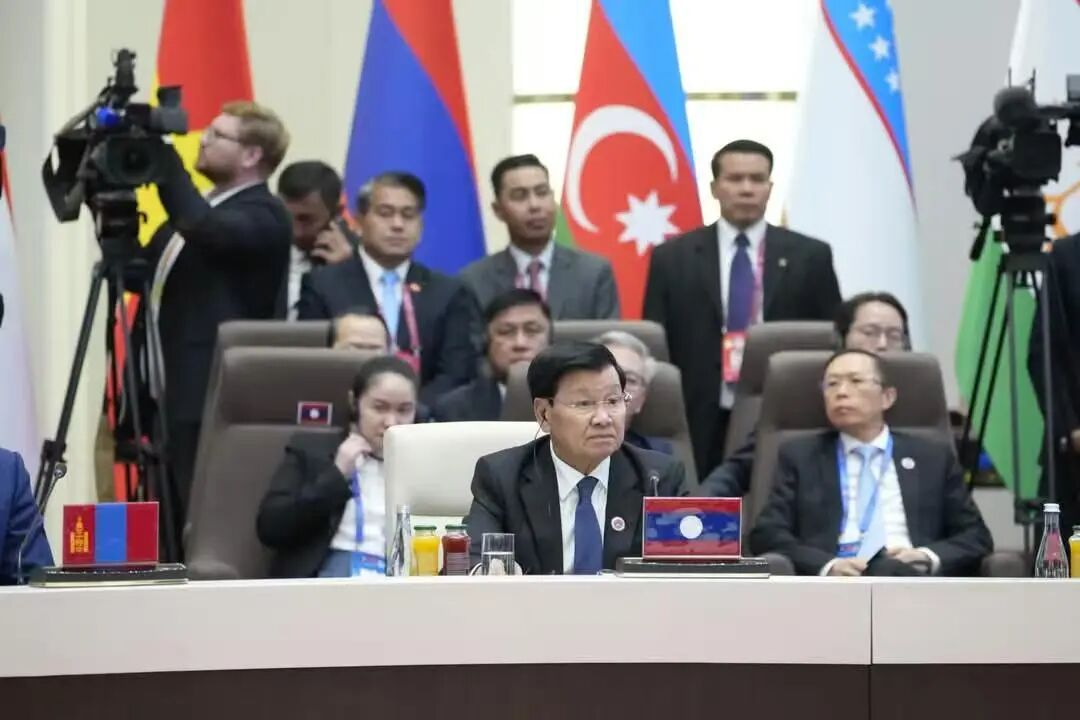
Laotian President Thongloun Sisoulith leads a delegation to the 2026 Shanghai Cooperation Organization (SCO) Summit in Bishkek.
From ASEAN to the SCO
For decades, Laos has long centered its diplomacy on the ASEAN and Mekong regional cooperative mechanisms. Joining the SCO marks a major upgrade in its geostrategic positioning and aligns with Goal 5 of Laos' Tenth National Five-Year Plan for Economic and Social Development (2026-2030).
The China-Laos Railway has transformed Laos from a "landlocked country" into a gateway connecting ASEAN and China; the SCO can extend this corridor to Central Asia and Europe under the Belt and Road cooperation, helping Laos diversify economic risks and reduce dependence on a single market.
Laos' decision to join is based on the principles of mutual trust, mutual benefit, equality, consultation, respect for diversity of civilizations, and pursuit of common development. These are advocated by the "Shanghai Spirit." It also aligns with the ASEAN Way's emphasis on consensus and non-interference in internal affairs. Laos adheres to ASEAN as its regional pillar while taking the SCO as a new strategic platform. The country is seeking strategic balance in a multipolar world.
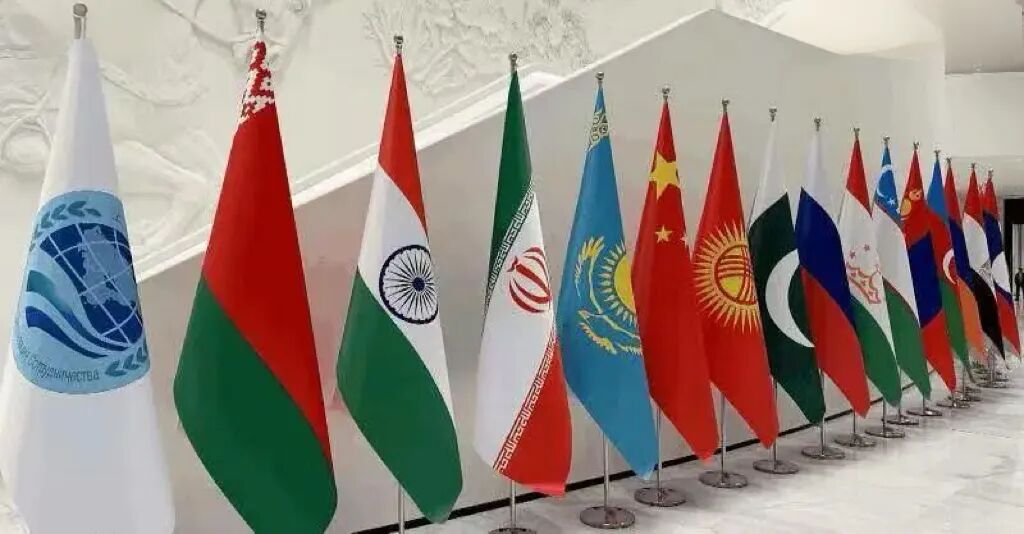
The SCO flags
Laos' Four Priority Areas
Laos officially signed the memorandum on dialogue partner status on July 10. Less than two months later, Thongloun Sisoulith proposed four priority cooperation areas in Bishkek.
Agriculture and food security. Laos will promote the export of potential agricultural products to SCO markets, while cooperating to import strategic production factors from Central Asia. The SCO fertilizers, raw materials and fertilizer production technology will reduce the production costs in Laos.
Cooperation in digital transformation. This aligns with one of the four breakthrough areas in the resolution of the 12th Congress of the Lao People's Revolutionary Party. The breakthrough area is concerning science, technology, innovation, and digital development. Specifically, the digital economy, digital society and digital government management will be advanced by seeking technology transfers from SCO member states.
Connectivity cooperation. This aligns with the work plan for connecting domestic, regional, and international infrastructure development. The focus is on upgrading the Laos-China Railway and linking it to the Eurasian transport network, making Laos a cargo transshipment hub.
Banking and financial cooperation. Laos focuses on participating in the SCO Interbank Consortium mechanism and promoting local currency settlement to reduce dependence on major foreign currencies in the world.
Significance of the Multilateral Platform
Joining the SCO helps Laos connect more broadly with the Global South, deepening the Laos-China community with a shared future and the Laos-Russia strategic security partnership. The SCO will open channels for Laos to enter the markets in India and Pakistan, as well as in the capital- and energy-rich countries such as the UAE, Saudi Arabia, and Qatar. In addition, Laos can use SCO mechanisms to address threats of terrorism, separatism, and extremism, and intensify efforts against transnational crime, telecom fraud, and drug issues.
Laos' joining the SCO as a dialogue partner is a strategic choice in line with the trends of the times and directly serves the two major tasks of "defending and building the country." This decision will lay the foundation for Laos to escape the status as an underdeveloped country and achieve the goal of the centenary of the founding of the Party in 2055, helping the country move toward lasting prosperity.
Writing by Ousavanh Thiengthepvongsa (Director General of the Socio-economic Policy Research Institute, Lao Academy of Social and Economic Sciences); Trans-editing by Wang Shixue, Han Chengyuan and Yang Chunmei
