


India's GDP growth of 7.8%: Reality or winology?


The Indian government announced August 31 that real GDP growth for the first quarter of the 2026-27 fiscal year (i.e., April-June 2026) reached 7.8%, exceeding the central bank's earlier forecast of 7%. Prime Minister Narendra Modi called it a "remarkable win" on social media.
However, Modi also urged citizens to reduce non-essential gold purchases, asking the public to save foreign exchange and narrow the trade deficit. On the one hand, there are internal and external pressures—foreign capital exodus, a plunging rupee, and energy strains; on the other hand, Modi declares strong data and strong confidence. Faced with such contradictions, should the Indians be cheering or scoffing?

An Indian bull
Growth of 7.8% comes from data revision
Subhash Garg, who served as Finance Secretary during Modi's first term, pointed out that behind India's "robust growth" lies statistical manipulation.
In the data released in August 2026, India's GDP at current prices for Q1 of FY2026-27 was 88.27 trillion rupees, while the Q1 FY2025-26 (April-June 2025) figure at current prices was 80 trillion rupees. This yielded a nominal growth rate of 10.3%, which, after removing inflation, produced a real growth rate of 7.8%.
In the data published in August 2025, however, the Q1 FY2025-26 GDP at current prices was 86.05 trillion rupees. It was precisely in May 2026 that the Indian government revised this figure downward to 80 trillion. With the base-period data significantly lowered, the current growth rate naturally rose. If compared with the pre-revision figure of 86.05 trillion, the current 88.27 trillion represents only 2.6% growth (before inflation adjustment).
Revising past statistics based on updated information is common practice and routine among countries, and it does not necessarily mean data fabrication or padding. However, the magnitude of India's revision is so large that it inevitably creates a stark disconnect between macroeconomic data and micro-level public sentiment. No wonder the well-known investor Basant Maheshwari observed, "India may be one of the few countries where the stock market falls after posting an astonishing 7.8% GDP growth."
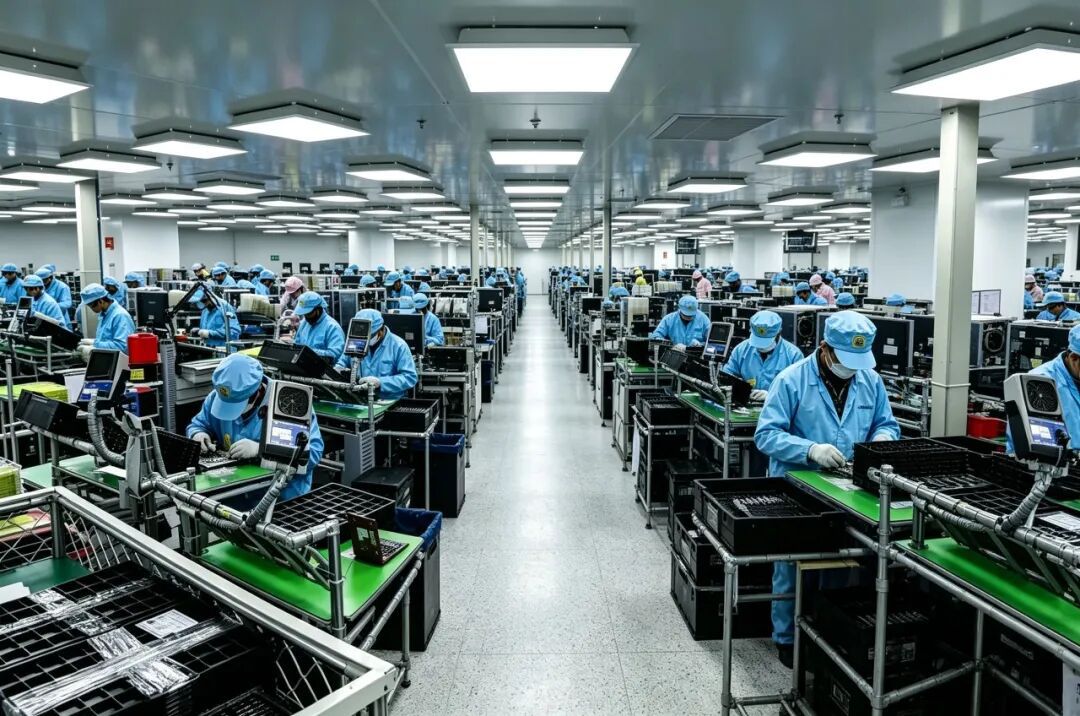
An Indian manufacturing hub
Indian increment is not entirely fictitious
Still, the fact that short-term GDP of data manipulation does not mean India's incremental gains are entirely imaginary. In fact, under Modi's tenure, India has indeed shown a long-term growth trajectory. While objective achievements fall short of the Modi government's self-praise, the existence of real incremental growth cannot be denied.
On credit: India's banking non-performing asset ratio spiked to 11% in 2018 but has now fallen to 2%, driving credit expansion. By the end of June 2026, credit growth reached 18.3%, the fastest in over a decade.
On consumption: The Modi government introduced Goods and Services Tax (GST) reforms in September 2025, lowering tax rates on various goods, and later it implemented personal income tax relief, spurring domestic consumption. A typical example is automobiles: according to the Federation of Automobile Dealers Associations, domestic passenger vehicle sales in India reached 1.2738 million units in Q1 FY2026-27, up 25.9% year-on-year. The figure is the highest ever for the first quarter of a fiscal year, with other vehicles also posting significant gains.
On mobile payments: India's Unified Payments Interface (UPI), launched a decade ago, now has 550 million users and covers 85% of non-cash transactions. In Q1 FY2026–27, total UPI transaction value reached 87.86 trillion rupees, up 20.1% year-on-year.
On manufacturing: Electronic products have become one of India's largest export categories. In FY2025-26, India's exports of printed circuit board assemblies (PCBA) jumped from under $100 million to about $1.9 billion, with nearly 80% destined for China. Entering FY2026-27, India has seen its overall electronics exports continue to climb rapidly. In Q1 FY2026-27, India's smartphone exports reached $9.84 billion, up 23.4% year-on-year; engineering goods exports reached $34.14 billion, up 18% year-on-year.
Admittedly, GDP has its "statistical magic," but data on product sales, exports, and the like have more diverse sources and cross-verification methods. They corroborate each other and reflect India's real sources of growth.
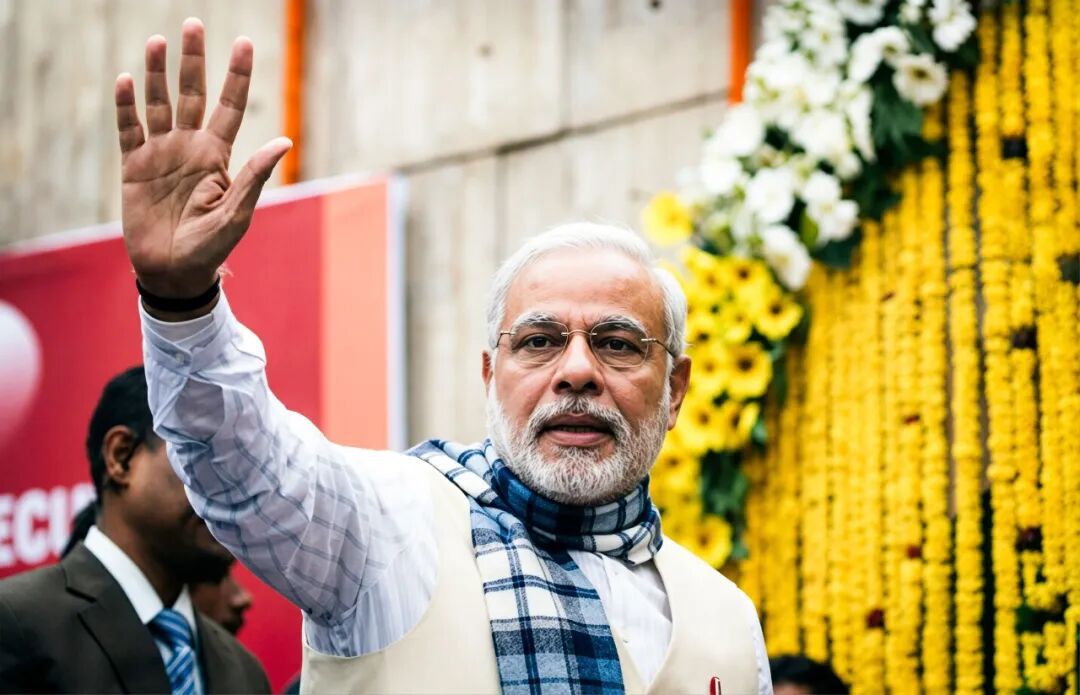
Indian PM Modi attends an event.
Winology politics runs between reality, fiction
The high-growth data produced by "statistical magic" is essentially a manifestation of India's winology politics in the economic sphere.
India's winology politics relies on emotional mobilization in the religious domain, built up by the Modi government through the Rashtriya Swayamsevak Sangh (RSS). In the diplomatic arena, winology politics relies on information control, and it is achieved through media management. But in the economic realm, winology ultimately runs against the public's real feeling and it struggles to work.
Nevertheless, the Modi government still needs winology economics—not only for narrative purposes but also for actual development. This is essentially a path of "using potential to attract resources, and using resources to drive development".
The Modi government hopes to use the U.S.-China competition to secure strategic support and capital investment from the West, rapidly catch up with—or even replace—China's manufacturing position. To attract external resources quickly, it must promote India's potential, using future value to obtain current leverage, and then use that leverage to build actual strength. Only by making the U.S., Europe, and even China accept a premium on India's potential, can the government induce the outside actors to enter early and even provide low-cost assistance to the country.
This is precisely the moment when India urgently needs to showcase its potential.
With stocks falling, the rupee depreciating and foreign capital fleeing, the Modi government urgently needs to inject confidence into both domestic and foreign capital. Real incremental gains can attract rational market investment, but they cannot secure strategic support. Therefore, the Modi government mixes real increments with "statistical magic," projecting resilience to the outside world in hopes of winning back investors. Domestically, the same logic aims to create optimistic expectations, spur production expansion and consumption, and ultimately undercut opposition groups such as the Cockroach Janta Party.
The Modi government's winology economics does not completely abandon reality; rather, it combines the real and the fictional—using fiction to supplement reality in propaganda, and using fiction to promote reality in development, attempting to build a closed loop from "winology" to specific wins. Given India's highly fragmented social structure and its electoral system, this is far from perfect but is one of the few effective paths available.
The danger, however, is that excessive fiction will backfire. The Modi government's problem lies precisely here: it elevates resilience against shocks into an achievement of robust growth, creating a contrast with people's daily lives that is too stark—and at a time of low public credibility, public backlash is all but inevitable.
Concluding remarks
India is a complicated major power. The Modi government's data-manipulation tactics are crude, inviting ridicule, but India does have real incremental gains. These achievements may not be solid and may even leave underlying problems.
In a turbulent international environment, even the established developed countries—Britain, France, Germany, Japan—failed to push through substantive reforms, and they can hardly face their difficulties squarely without resorting to winology or deflecting contradictions. India seems to have caught up with the trend of times.
The Modi government's problem is not that it has no achievements, but that it sets its rhetoric too high in good times and loses its bearings in bad times. In viewing India, one should neither be dazzled by the halo of winology nor ignore its objectively existing incremental growth and long-term potential.
Writing by Rao Jinshan (Member of the South Asian Studies Group and Doctoral Candidate at the Research School for Southeast Asian Studies, Xiamen University); Trans-editing by Wang Shixue and Han Chengyuan
