


Meter gauge reveals Japanese calculation in SE Asia


At the Vientiane South Railway Station, the standard gauge of the China-Laos Railway meets the Thai meter-gauge extension. Cargo departs from Kunming on the standard-gauge line all the way to Vientiane, where it is transshipped onto meter-gauge trains before heading south into Thailand and Malaysia.
In June, Japan Freight Railway Company, together with Nippon Express and other firms, used the existing Thai-Laos meter-gauge network to complete a round-trip cross-border test run of 650 kilometers from Chonburi in Thailand to the Thanaleng dry port in Laos.
When the China-Laos standard-gauge railway went into full operation, the meter gauge did not recede; instead, it has continued to be developed and utilized. The convergence of the two gauges in Vientiane reflects the reality of Southeast Asian railways: Standard gauge will not quickly replace meter gauge, and the two rail networks will coexist for an extended period.
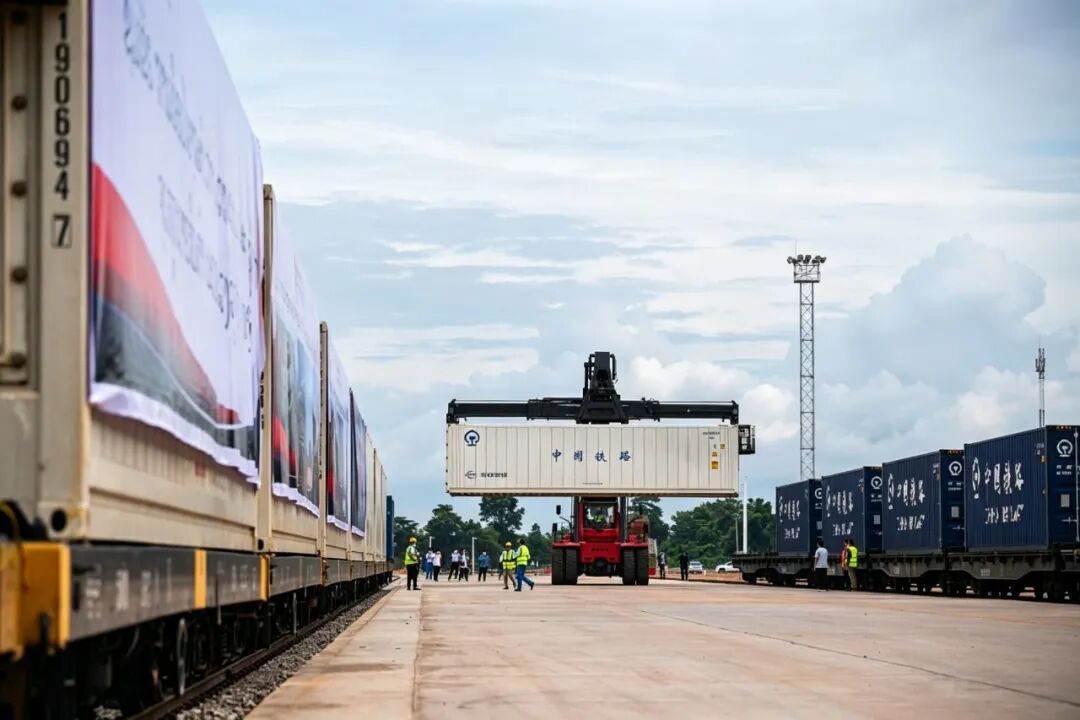
Transshipment yard of the Vientiane South Railway Station
Japan wants to promote meter gauge and Shinkansen
The Japanese calculation is not simply promoting the meter-gauge technology; Japan is adopting a dual-track cooperation strategy.
The railway cooperation agreement signed between Japan and Thailand in 2015 is highly representative: Japan studied the Bangkok-Chiang Mai Shinkansen line while pushing forward improvements to existing railways along the Southern Economic Corridor. The cooperation includes freight organization, track maintenance, and signal training.
In the Yangon-Mandalay railway renovation project in Myanmar, the Japan International Cooperation Agency (JICA) has since 2014 provided cumulative multi-phase loans totaling 142.2 billion yen, covering track, bridges, signaling systems, power facilities, and the procurement of new rolling stock. Japanese firms such as Sumitomo Corporation undertook core contract packages, while Japan provided training programs to cultivate 574 Myanmar technical workers and establish a localized operation system.
The logic behind these efforts is highly consistent: Japan is neither holding fast to meter gauge nor rejecting standard gauge. Instead, leveraging Southeast Asia's vast existing meter-gauge network, it is deeply engaging in line upgrades, equipment renewal, operations and maintenance, and talent development. By doing so, Japan hopes to build up a long-term, solid influence within local passenger and freight logistics systems.
Meter gauge carries Japan’s long-term calculation
The most obvious appeal of meter-gauge upgrades is low cost and rapid implementation.
For financially constrained countries such as Myanmar and Cambodia, JICA provides low-interest yen loans with repayment periods of 30 to 40 years. Without requiring a massive one-time investment, these loans enable the revitalization of colonial-era railway assets and the improvement of short-distance transport for passengers and freights.
Hidden beneath the low costs are industrial calculations. Japan has a large number of retired meter-gauge rolling stocks well-suited to Southeast Asia's 1,000 mm rail networks. After the second-hand Japanese vehicles are exported, spare parts supply and maintenance training over the past decades will continue to generate returns, while absorbing excess capacity from Japan's domestic rail industry.
The meter gauge is Japan's soft grip in Southeast Asia. Since the 1960s, Japan's Official Development Assistance (ODA) has consistently supported local transport infrastructure, and large numbers of Southeast Asian railway officials have traveled to Japan for training, resulting in a network for technical exchanges and people-to-people bonds. Even if Japan loses out to China in high-speed rail bidding, it can still maintain its market base through existing line upgrades.
From a geopolitical perspective, the meter gauge aims to slow regional integration. Japan does not seek a unified, interoperable cross-border rail network across the Indochina Peninsula. If a country's main freight trunk lines remain fixed to meter gauge, cargo must be transshipped at borders when connecting to the Pan-Asian standard-gauge network. High transshipment costs will impede land integration, resulting in fragmented rail networks.
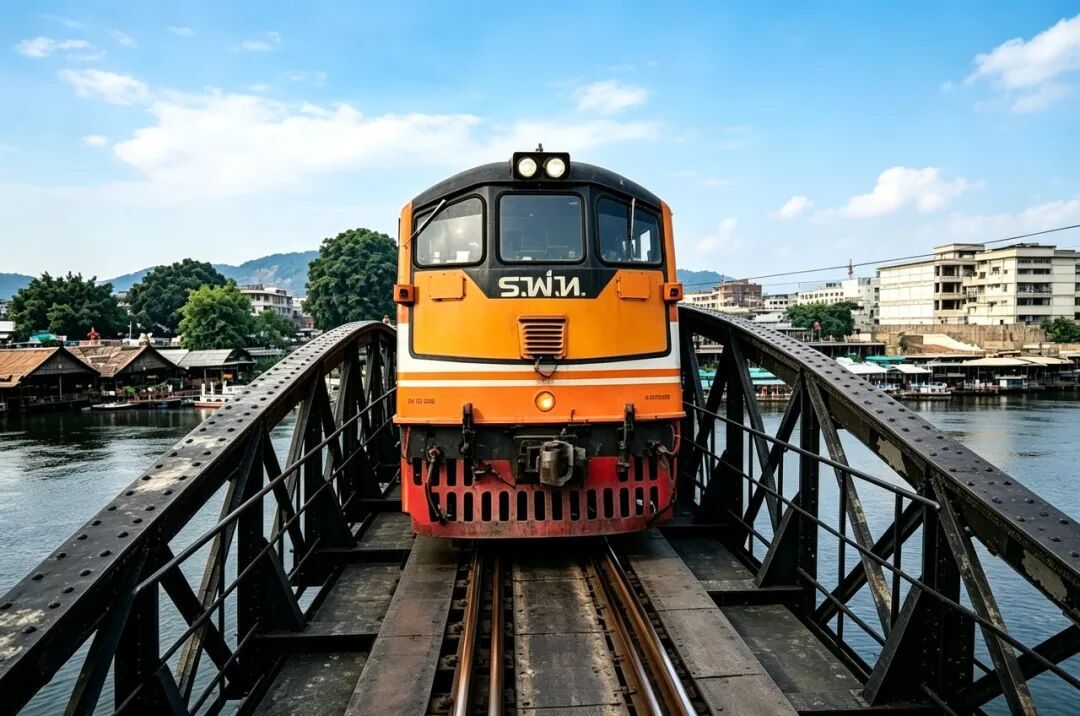
A train runs on the meter gauge in Southeast Asia.
Countries’ choices between meter gauge, standard gauge
Faced with different gauge options, Southeast Asian countries make pragmatic choices based on their own national conditions, seeking balance among various cooperation partners.
Laos has no historical meter gauges. As a landlocked country urgently seeking access to the sea, it directly chose standard gauge to build the China-Laos Railway and seize cross-border trade dividends.
Thailand has adopted a hedging strategy. Its northeastern branch line connects to the China-Laos standard-gauge corridor, while the northern Bangkok-Chiang Mai high-speed rail project is being developed by Japan. Thailand opens up logistics route to China while using Japan to balance the international cooperation dynamics.
Myanmar and Cambodia, constrained by short-term fiscal pressures, have prioritized upgrading their domestic meter-gauge lines and have postponed cross-border connectivity issues for the time being.
But choosing meter gauge does not mean a win in the future. The meter gauge has limited room for improvement in axle load and speed, making it difficult to handle large-scale cross-border freight in the long run. Money saved on construction today may become sunk costs tomorrow. The current vitality of meter gauge is a short-term phenomenon, not the long-term solution for the Indochina Peninsula's railways.
Should China enter the meter-gauge competition?
China does not need to compete head-on with Japan in all meter-gauge projects. The China-Laos Railway has already demonstrated that the transport efficiency and cross-border interconnectivity value of standard gauge are beyond the reach of meter-gauge upgrades. China should focus on standard-gauge connectivity.
Instead, China needs to change from "building a new line" to "operating a network." This means not only constructing standard-gauge backbone lines, but also developing the capacity to upgrade existing lines, signals, and freight nodes. China needs to deliver engineering, financing, local operations, talent training and supply chain services, while linking up points, ports, dry ports and logistics parks for transshipment.
The future of Southeast Asian railways is not about one gauge displacing the other. The meter gauge meets existing real-world demands, while the standard gauge is good for future connectivity networks. Whoever can turn the breaks between the two gauge systems into usable interfaces will hold the initiative in the next phase of regional cooperation.
Writing by Wang Yujiao (A Ph.D. holder in international relations from Waseda University and a researcher in Southeast Asia-China regional cooperation); Trans-editing by Wang Shixue and Han Chengyuan
