


Vietnam turns provinces into municipalities out of four reasons


The Vietnamese National Assembly recently passed a resolution approving the elevation of Quảng Ninh and Bắc Ninh from provinces to centrally governed municipalities. The assembly chairman Trần Thanh Mẫn explained after the vote that this is a concrete step in implementing the Central Committee of the Communist Party of Vietnam's resolution on reforming the national development model.
With this change, the four centrally governed municipalities in northern Vietnam—Hanoi, Haiphong, Quảng Ninh, and Bắc Ninh—are now linked together, transforming the Red River Delta into a mega-urban cluster and raising its industrial density and economic capacity in one stroke. Below are the four driving forces behind Vietnam's expansion through "province-to-municipality" restructuring.

A centrally-governed municipality of Vietnam
- Maximizing Geographical Advantages
- Academics believe that Quảng Ninh and Bắc Ninh, located in close proximity to China, have been elevated to centrally governed municipalities with high expectations. One important reason is their adjacency to China's border—after the upgrade, they can leverage their municipal status to strengthen supply chain integration with China's southwestern regions such as Guangxi, attract spillover from high-end manufacturing, and build an open hub that "faces China." Thus, the general view among scholars is that upgrading the border provinces closest to China to centrally governed municipalities are related to China, even though Vietnamese officials and media remain reticent on the matter.
- What is undeniable, however, is that Quảng Ninh shares borders with Guangxi's Fangchenggang and Chongzuo cities, connecting with China by both land and sea. Móng Cái border gate is the busiest trading port along the China-Vietnam border, and Hạ Long Bay in the province is one of the most popular attractions for Chinese tourists. As a middle power with long-term development goals in Southeast Asia, Vietnam possesses an irreplaceable advantage over other ASEAN members: its adjacency to China by land and sea, and its deep integration with China's industrial chain. By absorbing spillover from "Made in China" and serving as a springboard for multinational supply chains, Vietnam has made its geographical and locational advantages pronounced.
- Pressure for Economic Growth
- At the 14th National Congress of the Communist Party of Vietnam held earlier this year, the Vietnamese top leadership set a mandatory target of double-digit (10%) GDP growth for the 2026-2030 period. However, although Vietnam's GDP growth reached 8.18% in the first half of the year—outpacing all major ASEAN economies—it still falls short of the 10% target. A simple calculation shows that to achieve the annual goal, the national GDP growth for the second half must exceed 11.7%. The targets for several centrally governed municipalities were set even higher at 12% to 13%; Vietnam relies on the municipalities with more dynamism to drive national growth.
- By adding new centrally governed municipalities, the central government has thus effectively delegated both pressure and policy authority to local governments. On the one hand, it shortens administrative chains, strengthens direct central coordination of key growth poles, and uses preferential policies and fiscal incentives to promote industrial upgrading and foreign investment aggregation. On the other hand, municipalities are expected to play a backbone role in "urban clusters," driving rapid growth in surrounding areas and exerting a wider effect. For example, after Bắc Ninh and Bắc Giang merged, the combined area exceeded 4,700 square kilometers with a population of nearly 4 million, and more than 30 industrial parks concentrated in one area. In 2025, it ranked second nationwide in attracting foreign investment, and in the first half of 2026, it ranked first nationally in industrial export growth.
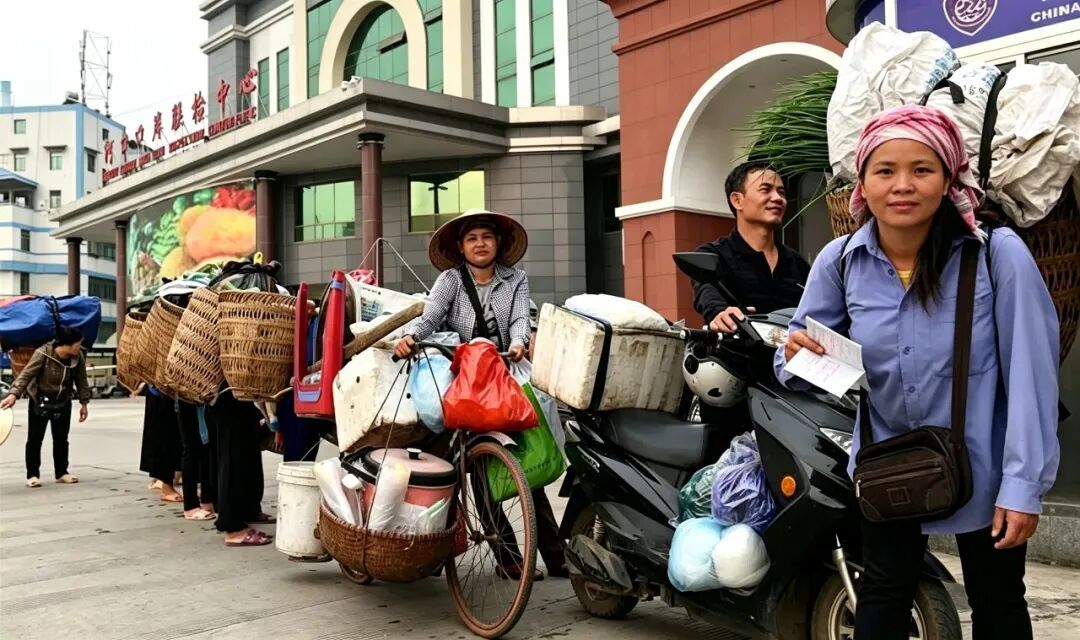
An urban view in Vietnam
- Shifting the Development Model
- This restructuring is also driven by the need to change the “playground”. In July 2026, the Central Committee of the Communist Party of Vietnam issued the first-ever special resolution focused on national development model reform. According to this resolution, the country will no longer accept low-value-added industries—such as assembly plants and rough processing—but will instead steer tax incentives and land resources toward semiconductors, new energy, and high-end electronics. The comprehensive reform package covers multiple dimensions—institutional, financial, foreign investment, trade, and administrative—signaling a fundamental shift in policy direction.
In simple terms, this new round of province-to-municipality restructuring aims to forcibly aggregate resources through administrative means, establishing 3 or 4 national-level economic circles across the country. By elevating some economically strong provinces to centrally governed municipalities, the central government can directly invest in major projects and build new-style cities. For instance, Quảng Ninh, now upgraded, is set to become a "green, smart coastal city," while Bắc Ninh will pursue a high-tech path and ultimately be developed into a "high-tech, innovative, green, and smart industrial city."
- Supporting Institutional Reforms
- The "province-to-municipality" restructuring is also tied to addressing a series of lingering issues stemming from institutional reforms—or rather, it serves as a further refinement of government restructuring and downsizing. More than a year ago, Vietnam carried out sweeping institutional mergers and administrative boundary adjustments. In particular, following the abolition of districts, lingering issues concerning land, household registration, taxation, and resettlement have continuously surfaced, becoming new governance challenges.
In this context, improving the business environment must advance in tandem with the implementation of institutional reforms and the rule of law. However, in practice, while the merged provinces expanded in area in 2025, governance complexity has risen correspondingly. By elevating management for major cities, the central government can avoid the predicament of "large provinces being difficult to govern." This approach, combined with the flattening reform of province-direct-township management, is expected to further enhance administrative efficiency.
Writing by Cheng Hanping (Executive Director, Professor and Doctoral Supervisor at the School of Region and Country Studies, Zhejiang University of Technology); Trans-editing by Wang Shixue and Han Chengyuan
