


Canals play a key role in the nation building of Thailand


The water-based lifestyle has existed for centuries in Thailand, and canals served as vital transportation arteries in the Thai history, much like what roads and railways do today. During the Rattanakosin period (1782-1932), the Rattanakosin city (today’s Bangkok) possessed an extensive waterway network and it was nicknamed as the "Venice of the East".
The water bodies even determined the location of cities. When locating their capitals, both the Sukhothai Kingdom (1238-1438) and the Ayutthaya Kingdom (1350–1767) prioritized rivers and moats in their planning, and even dug canals to cut across river bends and shorten travel distances.
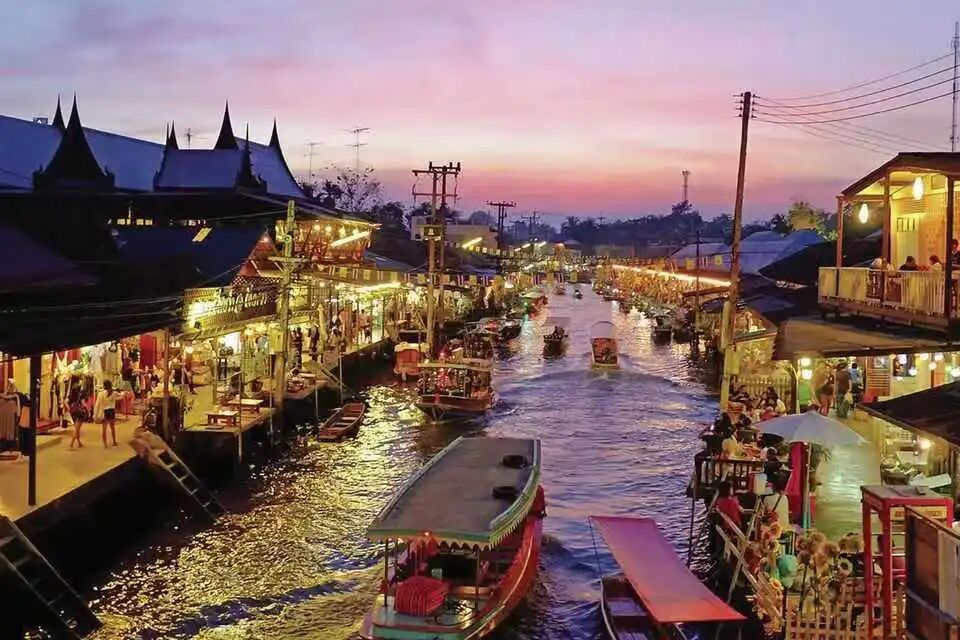
A Thai canal
The Ayutthaya Period
To avoid the time-consuming detours caused by the natural meanders of the Chao Phraya River, King Chairacha Thirat ordered the excavation of a canal to straighten the river for easier navigation. The canal altered the water's flow direction, and the current gradually widened the canal until it eventually became the main course of the Chao Phraya River that now flows past Tha Phra Chan Pier, Wat Arun, and Tha Tien Pier. Meanwhile, the original Chao Phraya River channel gradually silted up and narrowed, evolving into what are now the Bangkok Noi Canal, Bang Khun Si Canal, and Bangkok Yai Canal.
For ordinary Thai people, it is common to build a rowing boat. The royal court, on the other hand, had a dedicated royal shipbuilding department that constructed vessels for royal barge processions and warships for military campaigns. Ancient warships could carry 60 to 80 oarsmen.
The Early Rattanakosin Period
To connect major rivers, expand agricultural areas, and improve transportation, more canals were dug in Bangkok in the Early Rattanakosin Period. These digging projects required enormous inputs of human labor and material resources, all aimed at transforming the city into a land of rice and fish.
It was also during this period that people began building houses along the riverbanks, with nearly every home facing the water. In front of each house, there was usually a pier or stepping platform for boarding and disembarking from boats. At the same time, some people lived in floating houses that drifted with the water. These floating dwellings served both as homes and as places of livelihood.
As daily life became inseparable from the waterways, canals became the vessels of people's lives and culture. Residents on both banks drew water from the canals for drinking, washing, and cooking. Children played by the canals or rowed small boats to visit relatives, friends, and neighbors.
Canals were also spaces for faith and spiritual expression. From the reverence for the Ganges goddess came the tradition of Loy Krathong, and from beliefs in the spirit of boat mothers developed various water-related rituals and customs. For example, the "Tak Bat Phra Roi" (alms-giving to one hundred monks) ceremony took place during the end of Buddhist Lent in Nakhon Pathom and Nonthaburi provinces, where monks row boats to receive alms and laypeople travel by boat to participate in religious ceremonies or visit one another during festivals. The relationship between Thai people and canals thus extended beyond practical utility, becoming a cultural wellspring that has shaped communities and been passed down through generations.
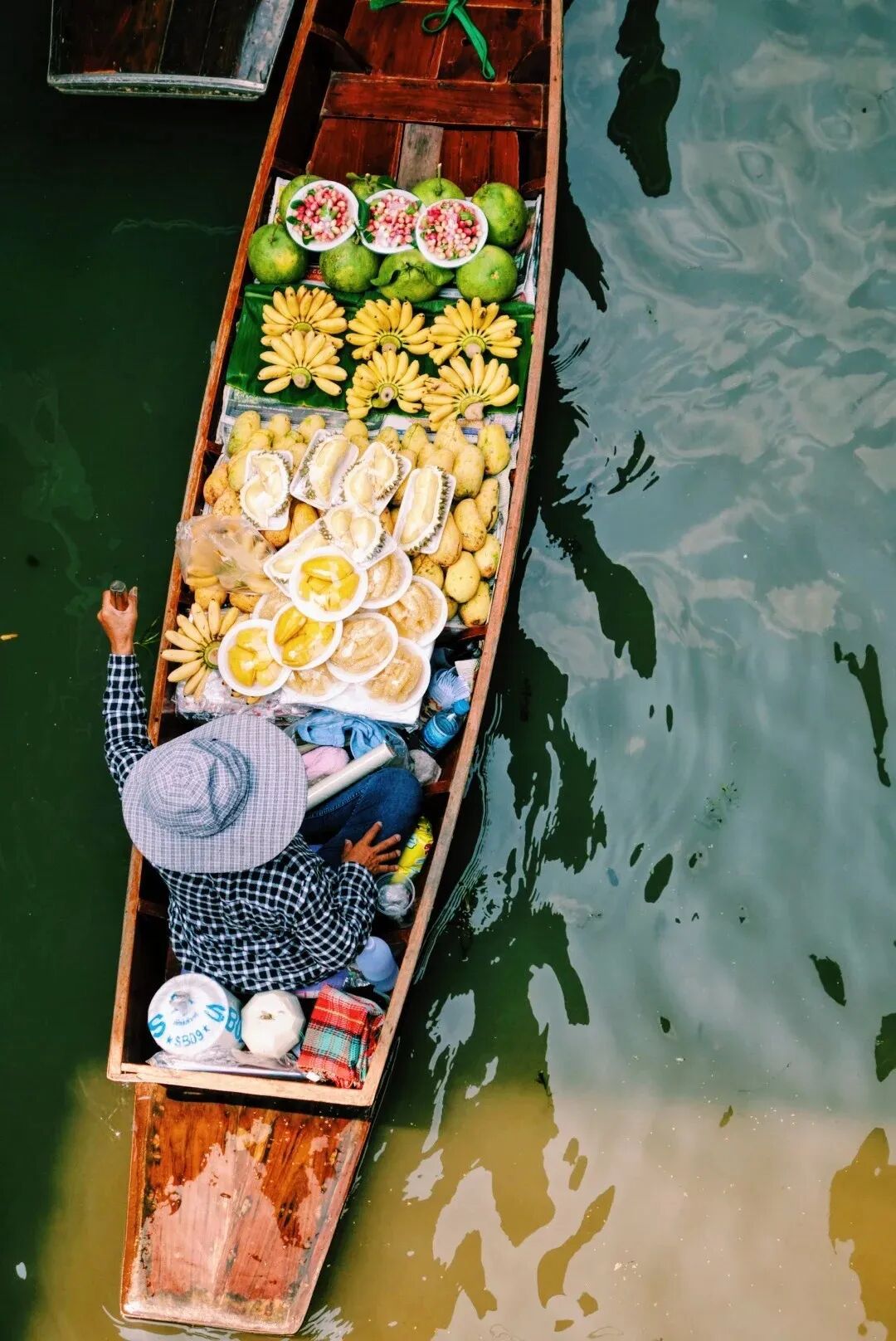
The Damnoen Saduak Floating Market
When canals became inseparable from communities, trade naturally emerged. Fruit growers from one area rowed their small boats to sell fruits, vegetables, or other agricultural produce in another area. Vendors used their boats as mobile shops, and the confluences of multiple rivers and canals gradually developed into trading hubs—a distinctive feature of Thai history and culture.
Damnoen Saduak Floating Market
The Damnoen Saduak Floating Market is one interesting example. Located in Ratchaburi Province, it emerged following the excavation of the Damnoen Saduak Canal during the reign of King Rama IV. The market's iconic image—boat vendors wearing palm-leaf hats, paddling small boats laden with fresh produce such as bananas, coconuts, and pomelos—vividly reflects the abundance of the central plain's waterborne agriculture. The market bustles from early morning until noon. Now Damnoen Saduak is not only a gathering place for fruit growers but also a landmark destination where global tourists come to experience the Thai way of life.
Wat Sai Floating Market
Another case is the Wat Sai Floating Market in Bangkok's Chom Thong district, which was once one of the most renowned floating markets. Situated along the Sanam Chai Canal that links up multiple waterways, it attracted people and merchant boats from surrounding communities. Every morning, the market sees hundreds of boats arrive laden with fruits and agricultural produce, which were then unloaded and transported to other regions.
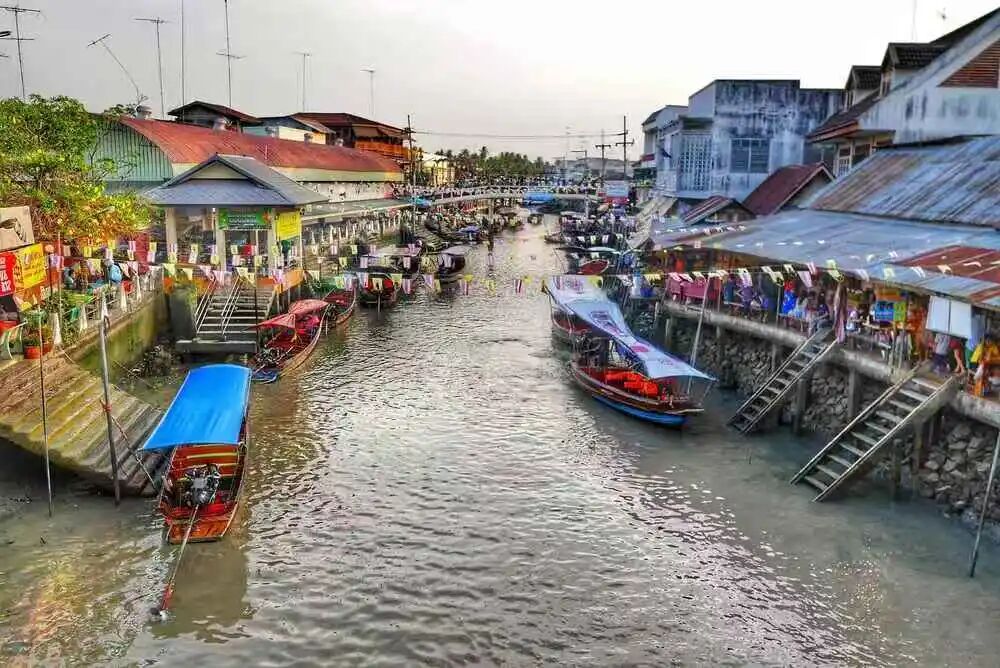
The Wat Sai Floating Market
The scene of bustling merchant boats and vibrant riverside life earned brought fame to Wat Sai Floating Market. Although the market's role diminished over time with the development of land transportation, its former prosperity remains a model of Bangkok's riverside commercial culture.
Amphawa Floating Mark
The final example is the well-known Amphawa Floating Market in Samut Songkhram Province. Situated along the Amphawa Canal, it has been an important trading community since ancient times. Its defining feature lies in the rows of ancient wooden houses that line up on both banks and the trading activities that continue into the evening. In 2004, the Amphawa local government promoted the revival of this floating market, helping it regain popularity among both Thai and international tourists. Visitors can take boat trips to explore the riverside community, appreciate the charm of old wooden houses, and, after nightfall, enjoy the twinkling lights of fireflies among the trees on the riverbanks.
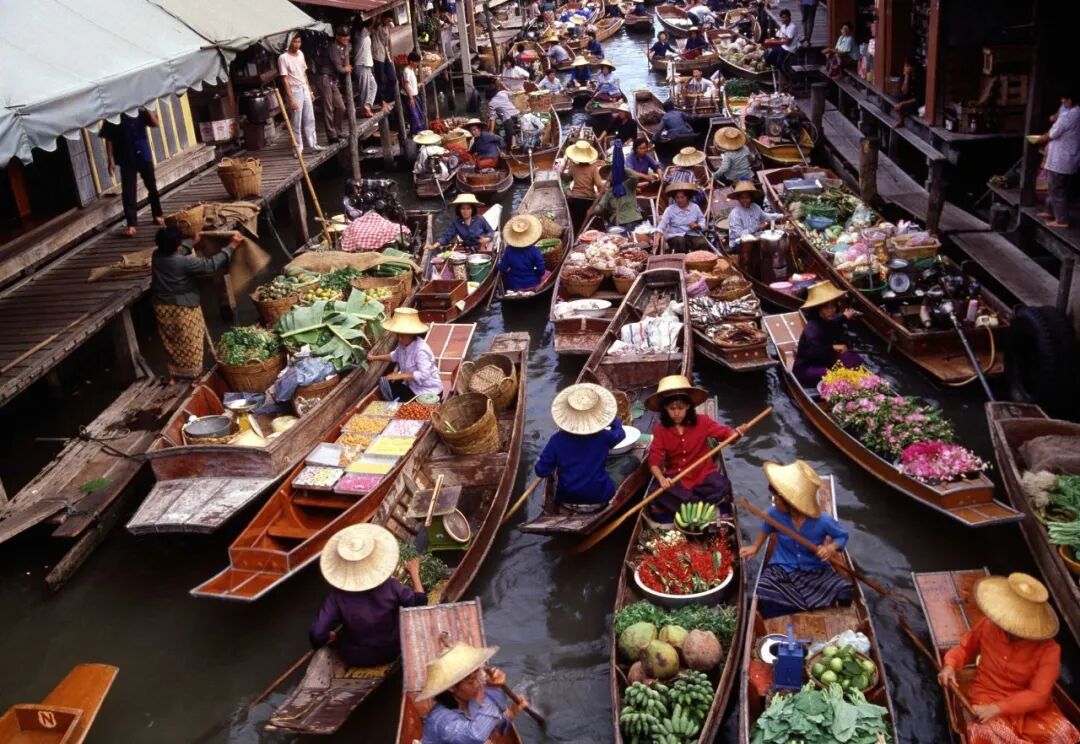
The well-known Amphawa Floating Market
Before the age of social media, floating markets also served as places for information exchange. Through conversations at the markets, people learned about festival dates, agricultural news, or community updates, which elevated the role of floating markets beyond mere economic centers.
Thus, the cultural value of Thailand's floating markets cannot be measured in monetary terms; it is woven from the relational value created on the canals. Centuries of history have demonstrated that for Thai people, canals are both a resource to be utilized and a force that has shaped their cultural foundations, giving rise to and sustaining a unique way of life.
(The author Thanayod Lopattananont is a Ph.D holder at the Mekong Research Center and the Institute of Asian Studies, Chulalongkorn University.)
