


Why a FCRA bill angers local governments, churches in India


The Indian Lok Sabha referred the 2026 amendment bill to the Foreign Contribution Regulation Act (FCRA) to a joint parliamentary committee for review on August 12. Prior to this, hundreds had taken to the streets in Mizoram to protest, Kerala openly opposed the bill, the Chief Minister of Nagaland wrote to the Home Minister, and the Tamil Nadu Legislative Assembly passed a resolution demanding withdrawal of the bill.
Why has a regulatory bill targeting foreign funds simultaneously ignited the fury of religious groups and local governments, while also drawing attention from politicians beyond India?
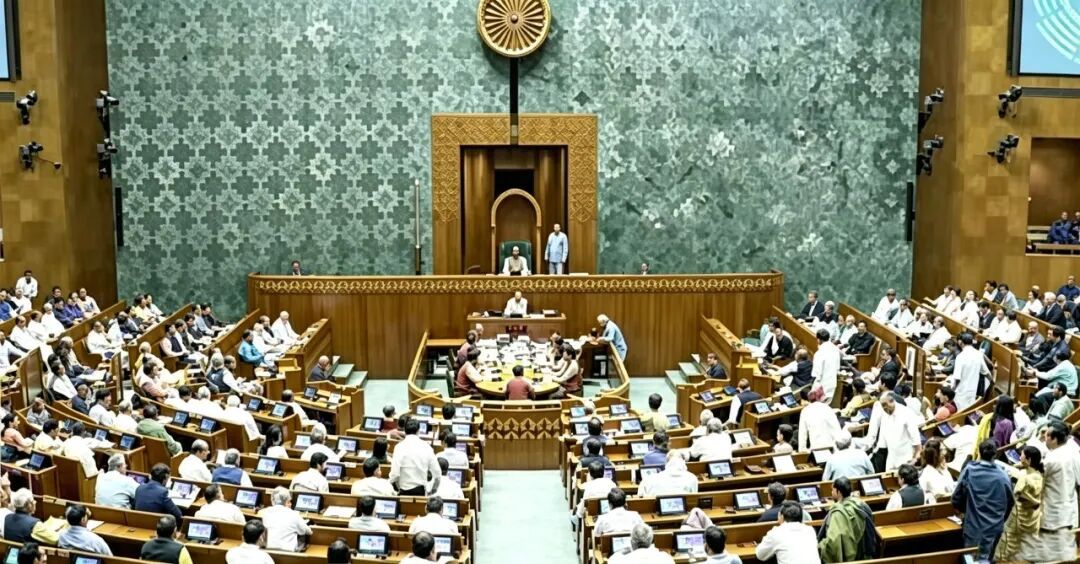
A session of the Indian Lok Sabha
Evolution of the FCRA
The FCRA is not a new act in India. In 1976, the government of Indira Gandhi enacted the first FCRA during emergency, aiming to prevent foreign powers from influencing Indian politics, society, and national security through funding. In 2010, the Manmohan Singh government replaced the old act with a new one, regulating foreign donations further and stipulating that such funds must not be used for activities detrimental to India's national interests. Since then, the FCRA was amended in 2016, 2018, and 2020, with regulations becoming increasingly stringent. The 2020 amendment bill required foreign donations to be deposited in designated bank accounts, reduced the administrative expense cap from 50% to 20%, and restricted fund transfers between organizations.
Overall, the FCRA regulatory scope has continued to expand. Since 2010, around 22,000 FCRA registrations of Indian institutions have been canceled, and as of April 2026, another 15,000 registrations had expired without renewal. The Indian government has justified this as a necessary measure to address the rapid development of global financial networks and digital transactions, enhance financial transparency, counter foreign influence, and protect democratic institutions.
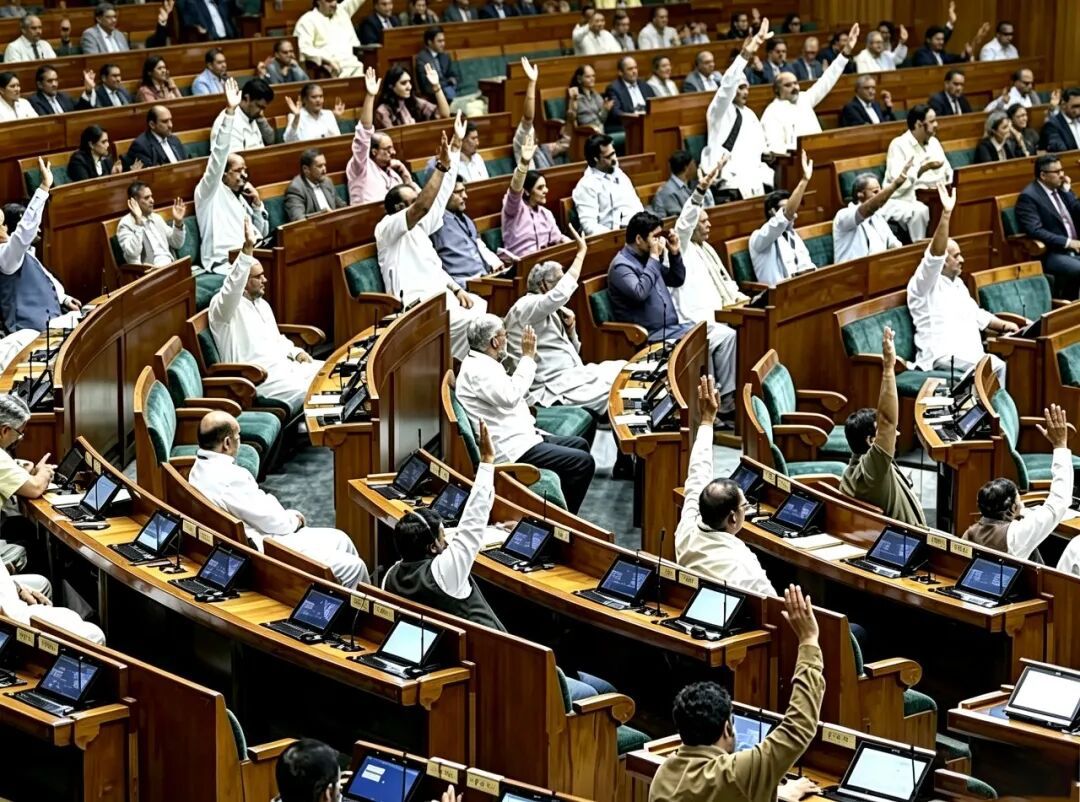
A session of the Indian Lok Sabha
Controversy of the 2026 FCRA Amendments
The 2026 amendment bill of the FCRA further clarified registration and accountability requirements for organizations, requiring them to select a purpose from a prescribed scope of activities and introducing geographical restrictions. Also, the bill strengthened renewal reviews, requiring organizations to submit fund utilization reports and restricting the transfer of foreign funds. Three controversial changes stand out in this amendment bill.
First, the regulatory scope extends from funds to assets.
Under the proposed amendments, if a foreign organization's FCRA registration is canceled, voluntarily surrendered, or expires without renewal, its donations and related assets will first be "temporarily vested in" a government-designated authority. The designated authority may take over and manage the relevant assets and further intervene in asset management based on "public interest." If the organization fails to regain, renew, or restore its registration, the assets may be permanently vested in the designated authority, transferred to central/state government departments, or disposed of through sale or other means. The proceeds—along with unused foreign contributions—will be credited to the Consolidated Fund of India.
This change has a notable impact on schools, hospitals, welfare centers, research institutions, and religious organizations that have long received foreign funds. For these institutions, foreign donations do not remain idle in bank accounts but are converted into long-term operational assets such as land, buildings, medical equipment, and educational facilities. Once an organization's FCRA status changes, its related assets may fall under the management purview of the government-designated authority.
There is a policy paradox here: Even if some Indian institutions no longer need foreign funds in the future, they may be reluctant to voluntarily exit the FCRA system out of concern for their existing assets. Suppose a church-run school in a remote area built a teaching building with foreign donations ten years ago but later switched to domestic funding for operations and no longer accepts foreign donations. Under the logic of this amendment bill, if the school voluntarily surrenders its FCRA registration, that teaching building—even though it was built with foreign donations from a decade ago and has since been maintained entirely with domestic funds—could still fall within the "takeover" scope of the designated authority. What does this mean? It means that organizations not only face restrictions on fund inflows but may also lose control over existing assets simply because they "once received foreign funds."
As a result, a system originally designed to reduce dependence on foreign funds may paradoxically incentivize some Indian organizations to maintain their foreign fund eligibility in order to reduce the risk of their existing assets being appropriated by the government.
Second, mixed funding create significant room for maneuver in enforcement.
In practice, a large number of Indian institutions are built through a combination of domestic donations, foreign funds and their own revenue, making the boundary between "foreign-funded portions" and "domestically-funded portions" unclear. Under Clause 16A (2) of the amendment bill, the assets may first fall entirely under the statutory control of the designated authority, with the institutions then required to claim the return of the distinguishable domestic-funds portion. For indivisible and continuously operating physical assets such as schools and hospitals, the amendment bill leaves considerable room for interpretation regarding how to accurately allocate property rights corresponding to different funding sources.
At the same time, the designated authority is not required to obtain prior judicial approval when taking control of assets, further exacerbating concerns over due process. Indian institutions may lose actual control over core assets before they can obtain adequate judicial relief. Additionally, the FCRA registration renewal is itself an administrative procedure. If the government delays processing renewal applications, it remains to be seen whether the current amendment bill can adequately protect the rights of organizations whose registrations are about to expire.
Third, shrinking space for NGOs will diminish capacity for social services.
On the one hand, the new bill makes it more difficult for foreign funds to flow in. On the other hand, small NGOs rooted in rural and underdeveloped areas often lack specialized financial personnel and stable administrative resources, and have limited capacity to cope with complex auditing and renewal requirements. Ultimately, they may exit the foreign funding system because they cannot sustain the investment of funds and manpower required to comply with the new regulations. All of this will affect the Indian healthcare, education, women's and children's welfare projects, and other programs, placing a burden on the civil society in India.

An AI-generated graphic on NGO
FCRA's Intersection with Religion
Another reason why this FCRA amendment bill has triggered strong political backlash is that foreign funds not only serve educational and social systems but are also closely intertwined with religion. Northeastern Indian states such as Mizoram, Nagaland, and Meghalaya have relatively high Christian populations, and Tamil Nadu also has a sizeable Christian community. Christian organizations have long operated schools, hospitals, and welfare institutions, with some of their construction and operational funding coming from overseas churches and congregants. Once the schools and hospitals built with foreign donations risk being taken over by the Indian government due to funding sources, those taking to the streets are not just church leaders—they are also parents of students and families of patients.
The Bharatiya Janata Party (BJP) and certain Hindu nationalist forces have long accused some Christian organizations of using foreign donations to promote forced conversions. Against this political backdrop, once the 2026 FCRA amendment bill expand government oversight over the assets of such organizations, it is inevitable that minority groups will view it as a potential threat to their institutional autonomy. The Catholic Bishops' Conference of India has called the amendments "dangerous" and "shocking." Muslim and Christian communities fear that the central government is using foreign fund regulation to further intervene in the operations of minority institutions, and that some Hindu nationalists may exploit the law to seize assets.
FCRA May Complicate U.S.-India Relations
Over the years, U.S. political circles have focused on issues of religious freedom, civil society space, and minority rights in India, while discontent among Trump's core evangelical supporters over Hindu values has been on the rise. Following news of the FCRA amendment bill, politicians from both major U.S. parties have voiced opposition, arguing that the bill would harm the interests of Christians.
Compared to its domestic political impact within India, the FCRA amendment bill's effect on U.S.-India relations remains a potential risk. Economic and trade ties, security cooperation, and Indo-Pacific collaboration between the U.S. and India still rest on a strong strategic foundation, and the FCRA bill is unlikely to change the overall direction of bilateral relations. However, if future enforcement cases target American religious charities or the assets of U.S. citizens, the relevant political forces in the U.S. may further call for government intervention, and the FCRA bill could become a new issue for U.S. critics to raise regarding India's human rights and religious freedom record.
Concluding Remaks
The 2026 FCRA amendment bill, in essence, shows the Indian government is redrawing the boundary between the state and civil society. For the Indian government, tightening the FCRA regulations helps improve transparency in foreign funding and prevents external forces from influencing domestic affairs through non-governmental organizations. But for citizens, as fund regulation becomes increasingly intertwined with institutional registration, asset control and public activity space, the line between national security oversight and social autonomy grows ever more blurred.
Fund regulation itself is not the problem. But when the criteria for defining "foreign funds" are vague and the discretion over asset disposal is overly broad, a bill framed in the name of "regulation" may become a policy tool that constrains the space for social organizations and minority communities to survive.
(The author Yu Wanlin is a Ph.D. candidate at the School of International Relations, Sichuan University and a member of the South Asia Research Group on WeChat.)
