


Talks vs gunshots: How soon will Myanmar get real peace?


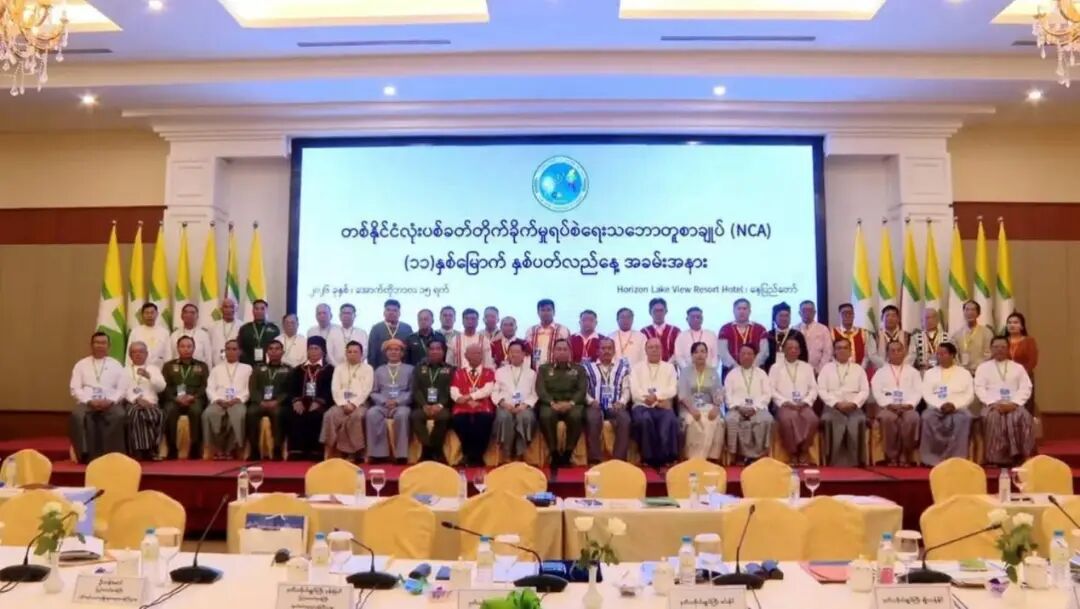
Myanmar marks the 11th anniversary of the NCA signing.
On October 15, 2026, Myanmar celebrated the 11th anniversary of the signing of the Nationwide Ceasefire Agreement (NCA). Eleven years on, the agreement has not completely silenced the guns. With the Union Solidarity and Development Party winning the general election and Min Aung Hlaing forming a new government and governing for half a year, the country seems to have reached yet another crossroads. Will war-torn Myanmar achieve true peace in the post-election era?
Six Months On: What Actions Has the New Government Taken?
Since independence, Myanmar has seen successive governments attach great importance to domestic peace. Before the Min Aung Hlaing government took office, Myanmar was going through one of the most severe domestic crises since its independence. Therefore, the top priority for the new government is to restore peace nationwide as soon as possible.
The First Action Is Setting up Central Bodies for Peace Talks.
Shortly after taking office, Min Aung Hlaing signed three orders to organize the National Solidarity and Peacemaking Central Committee, the National Solidarity and Peacemaking Working Committee, and the National Solidarity and Peacemaking Negotiation Committee. These three newly established committees form a central peace negotiation framework featuring "decision-making, execution, and consultation". Closely linked and complementary in functions, the committees build an institutionalized governance framework for Myanmar's peace process.
Among them, Min Aung Hlaing personally serves as Chairman of the National Solidarity and Peacemaking Central Committee, steering Myanmar's peace talks and peace process. Lieutenant General Yar Pyae serves as Chairman of the National Solidarity and Peacemaking Negotiation Committee, specifically responsible for contacting and negotiating with various organizations. In addition, Karen ethnic parliamentarian Nan Ni Ni Aye was elected as Vice President, becoming the first female Vice President in Myanmar's history. Her holding a key position in the central peace negotiation body is seen as an important move by the new government to send a signal of inclusiveness and improve relations with ethnic minorities.
The Second Action Is Setting Free Political Prisoners.
During the 2026 Thingyan (Myanmar New Year), President Min Aung Hlaing issued an amnesty order, exempting more than 4,300 Myanmar prisoners and 179 foreign nationals from serving their remaining sentences. Former President Win Myint was released from prison; Aung San Suu Kyi also had her sentence reduced and was transferred to house arrest, with her contact with the outside world slightly eased. On October 19, she received a book and letter sent by the King of the United Kingdom, and on October 22, she made a phone call to her son, with whom she had not been in contact for five years.
Granting amnesty to political prisoners has always been one of the important political measures for the Myanmar government to ease domestic and international contradictions and advance the peace process. The new government attempts to stabilize public sentiment to a certain extent, win favor from the public for the government, and prepare for subsequent actions through this move.
The Third Action Is Launching the "100-Day Peace Plan".
On April 20, Min Aung Hlaing launched the "100-Day Peace Plan" nationwide, placing domestic peace and national reconciliation at the top of the agenda. He sincerely invited all ethnic armed organizations (EAOs) and People's Defense Forces (PDF) to take the initiative to hold peace talks with the Myanmar government. Promising that no preconditions would be attached to the talks, Min Aung Hlaing aimed to improve the chaotic domestic situation soon.
Later, the Myanmar government held peace talks with seven NCA-signatory EAOs, as well as the Shan State Army-North (SSA-N), Shan State Eastern Alliance Army, United Wa State Army (UWSA), Red Shan National Army, and Ta'ang National Liberation Army (TNLA), among others. In his speech concluding the 100-Day Peace Plan, Min Aung Hlaing stated that during this period, the government had conducted fruitful peace talks with 13 EAOs. For the People's Defense Forces that had been strongly resisting, the government adopted psychological warfare, persuading them to lay down their weapons and return to the legal framework. According to incomplete statistics, since April 10, more than 2,000 armed personnel have publicly surrendered to the military, including a large number of PDF members and members of other EAOs.
The Fourth Action Is Intense Crackdown on Online Scam.
On July 28, the Myanmar Federal Parliament passed the first law since the new government took office—the Anti-Online Scam Bill, which increases penalties for online scams and related crimes. In terms of specific measures, the Myanmar government has also continued to intensify its crackdown on various illegal crimes. In multiple special operations launched since 2026, several criminal gangs have been dismantled, and a number of suspects have been arrested, with some cross-border criminals repatriated.
This year, in a joint operation in the KK Park in Myawaddy, Myanmar police have demolished more than 100 illegal buildings used for telecom fraud. At the same time, relevant departments have strengthened entry-exit management, and modern security inspection equipment has been installed at 11 security checkpoints. Specifically for detecting drugs and illegal goods, the new equipment improved the efficiency of detecting and combating illegal activities.
In addition, the new government has also made breakthroughs in diplomacy, creating an external environment for Myanmar's peace process. Since taking office, Min Aung Hlaing has visited India, China, Russia, Belarus, and several Southeast Asian countries, carrying out multi-field cooperation with these countries. The visits strengthened Myanmar’s security cooperation these countries, spurring the implementation of a number of cooperation agreements.
Among the agreements, Myanmar's defense cooperation with Russia is particularly prominent. The two sides deepened military-technical cooperation, with the Russian side providing weapons and equipment support for Myanmar on the international stage. As Myanmar's largest neighbor, China and Myanmar have long carried out practical security cooperation that focuses on telecom fraud, drug trafficking, and smuggling in border areas, and the two sides jointly safeguarded the security and stability of the borders of both countries.
At the regional level, relations between Myanmar and ASEAN have also eased, with high-level interactions increasing. In July 2026, the Myanmar Foreign Minister met with foreign ministers of other member states, marking the first contact between Myanmar and ASEAN since 2021. At the same time, Myanmar is carrying out cooperation with other ASEAN member states. However, some member states within ASEAN still strongly adhere to the "Five-Point Consensus," and Myanmar still needs to go through tests to truly return to ASEAN.
Historical Rifts: Why Is the 70-Year Civil War So Entrenched?
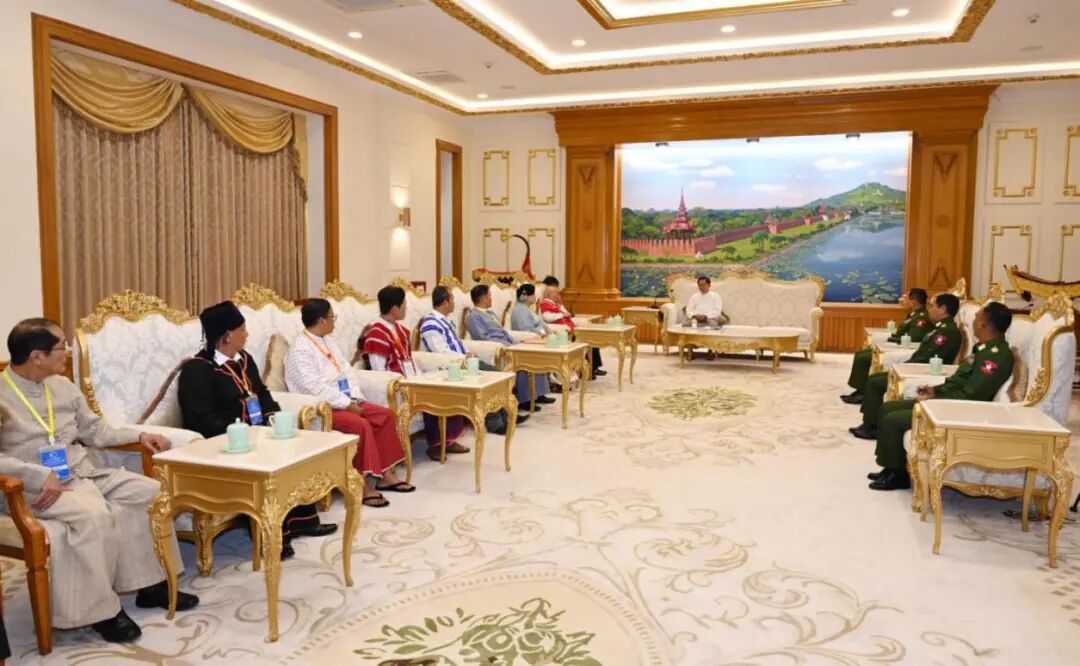
Myanmar President Min Aung Hlaing meets with representatives of some ethnic armed organizations.
Myanmar's civil war is essentially a manifestation of ethnic issues. Lasting for over 70 years, the war is a continuation and development of the struggle for rights among various ethnic groups. The civil war has both profound historical roots and realistic interest entanglements, as well as Western infiltration and intervention, and it is the result of multiple factors intertwined.
Since its independence in 1948, Myanmar has been trapped in the quagmire of civil war, with constant ethnic disputes. Almost every ethnic group has its own armed forces, and some ethnic areas even have two or more armed organizations. Therefore, successive governments of Myanmar have taken peace as their primary goal and adopted measures to achieve the goal, but with little effect.
Historical Grudges Are the Root Cause of Myanmar's Ethnic Conflicts.
Earlier, the ethnic minorities of Mon, Shan, Karen and Rakhine settled in Myanmar and established city-states, and their settlements covered the entire territory of present-day Myanmar. After their rise, the Bamar conquered smaller states by ethnic minorities, starting the grudges between the Bamar and ethnic minorities. Long-term wars caused a large number of casualties, and some weak ethnic groups were even massacred. As a result, the victorious Bamar occupied the rich plain areas in central and southern Myanmar, becoming the main ethnic group and taking control of the country's political, economic, and cultural affairs. Ethnic minorities were forced to retreat to remote mountainous areas, resulting in their isolation and backwardness, and the development gap with the Bamar continued to widen.
During this period, a relationship of ruler and ruled was formed between the Bamar and various ethnic minorities, and ethnic minorities were exploited and enslaved by the Bamar. The estrangement and accumulated grudges between various ethnic groups continued to deepen and have continued to this day, becoming the root cause of Myanmar's ethnic conflicts that are difficult to resolve. After independence, the country has seen successive governments introduce their ethnic policies, but due to improper implementation, the policies have led to deterioration of ethnic relations and continuous ethnic conflicts. During the Ne Win government, a centralized system was forcibly implemented, especially with the prevalence of Greater Bamar chauvinism, and military means were used to solve ethnic problems. As a result, various ethnic groups took up arms to resist, giving birth to more ethnic armed forces to contend with the government.
Colonial Rule Sowed the Evil Seed of Ethnic Conflict.
After Myanmar became a British colony in 1885, Britain implemented the strategy of "divide and rule, using one ethnic group to balance another." This strengthened the British rule and control over Myanmar. For example, the British rulers issued regulations and laws to block the contact, communication and integration between the Bamar and ethnic minorities and among ethnic minorities themselves. By recruiting ethnic minority personnel into the military and police forces, they set up rifle battalions in the Shan, Chin, Mon, Karen, Kachin, and Kayah ethnic minorities, in a bid to suppress anti-British struggles of the Bamar and other ethnic groups.
After Japan occupied Myanmar in 1942, it implemented fascist rule and continued the policy of "balancing one ethnic group with another," using the Bamar to suppress pro-British forces such as Kachin and Karen. A series of ethnic policies further intensified the confrontation and hatred between the Bamar and ethnic minorities. The colonial policies implemented by Britain and Japan was harmful in that they "split the people from religion and system, disintegrating national unity." The policies hindered the development of ethnic minorities in mountainous areas, and they had an adverse impact on the national consciousness of Myanmar ethnic minorities.
Economic Interest Is Objective Factor of Ethnic Conflicts.
The competition for resources between the central government and local areas has never stopped. In promoting national development, successive governments of Myanmar have extracted resources from mountainous ethnic minority areas, while ignoring the development of ethnic areas and disrespecting the rights and interests of ethnic minorities. This further widened the gap between the Bamar and ethnic minorities, and deepened ethnic contradictions accordingly.
Decades of resource control, coupled with the consumption brought by ethnic conflicts, have led to long-term lagging economic development in many ethnic minority areas. As a result, some armed organizations and even civilians have been forced to embark on the path of illegal crimes, obtaining funds through illegal channels such as fraud and drug trafficking. At the same time, the funds encouraged ethnic armed forces to contend with the military, further deepening the confrontation between the central government and ethnic armed forces. This has also made the road to peace more difficult.
External Infiltration Is the Inducement for Ethnic Conflicts.
Since 2013, external forces have interfered in Myanmar affairs under various pretexts. The United States has taken the refugee issue as an excuse and interfered in the affairs of northern Myanmar through official and semi-official agencies. The International Republican Institute of the United States has carried out political party building and external liaison training in northern Myanmar, supporting multiple local political parties. By using the U.S. Agency for International Development to provide funds and material assistance to Kachin State, southern Shan State, and other places, the U.S. got deeply involved in the affairs of northern Myanmar under the guise of refugee assistance.
The European Union has gradually involved in Myanmar affairs by using the improvement of bilateral relations as bait; Japan has continuously strengthened its infiltration into Myanmar through organizations such as the Japan Foundation, actively intervening in Myanmar affairs by aiding the National Unity Consultative Council (NUCC). Intervening in the ceasefire between the Arakan Army (AA) and the Myanmar military, Japan is wooing the National League for Democracy (NLD). The multi-party intervention of external forces has further disrupted Myanmar's internal political landscape, making the ethnic issues more complex and difficult to solve.
Practical Dilemma: Why Is the Dawn of Peace Obscured by War?
Although the new government has shown a positive attitude towards restoring peace, Myanmar still faces many obstacles at present, and it still has a long way to go before achieving true peace.
The Civil War in Myanmar Will Persist.
After taking office, the new government has sent reconciliation signals to ethnic armed organizations, but has not abandoned the use of military means. The military has continued to launch fierce offensives in the areas of strong ethnic armed forces, which, while weakening their combat effectiveness to a certain extent, has also caused heavy civilian casualties. At the same time, most armed organizations remain cautious and wait-and-see towards the new government's peace talk initiative, and some armed organizations are still unwilling to give up resistance.
At present, the armed organizations that accept the government's peace talks are mostly organizations with limited strength and low activity levels, some of which originally had a strong willingness to hold peace talks. The Kachin Independence Organization (KIO) has a particularly tough attitude, clearly refusing to hold one-to-one talks with the new government, and it advocates for comprehensive negotiations including all stakeholders under an inclusive framework.
In addition, the sincerity of the new government's peace talks is also highly questioned. Some believe that the military's separate talks with individual organizations are an attempt to create divisions among resistance organizations and use civilians as a shield. Currently, Myanmar is falling into a war of attrition of endurance. Although the military has made progress in local battlefields, the resistance forces have not been eliminated. Judging from the current situation, large-scale military operations for peace is not only full of difficulties in the long term, but may also make peace even more out of reach.
Humanitarian Crisis Will Continue to Deteriorate.
Armed conflicts in Myanmar have forced a large number of people to flee their homes, and the problem of civilians being displaced is prominent. Coupled with the impact of natural disasters and the deterioration of public health conditions, the livelihood of the people is getting worse. Although the European Union, the United Nations, and other international organizations and countries have provided humanitarian assistance to Myanmar, it is still a drop in the bucket for Myanmar's current huge needs. At the same time, illegal industries such as drug cultivation, cross-border smuggling, and telecom fraud in border areas cannot be eradicated in the short term, and they have showed a tendency to spread to Myanmar’s central areas. The interweaving of multiple contradictions can easily trigger border security crises, expand the scale of refugees, increase the risk of border residents outflow, and further lead to domestic social security chaos.
The new government of Myanmar is actively promoting the peace process, the new institutions have been fully operational, and ethnic peace talks are carried out in an orderly manner, with peace achieving phased results. However, the current peace talks are still far from true peace. Fighting continues in many places such as Kachin State and Rakhine State, and a large number of civilians are under the oppression of war, struggling to find shelter in displacement.
Peace is not just an attitude, but also mutual compromise and interest concession among all parties. History has proved that a ceasefire agreement without substantive institutional guarantees is likely to be just a flash in the pan. In fact, all forces in Myanmar desire peace, but they also want to stick to their own interests and are unwilling to give up resistance. The armed conflict in Myanmar has lasted for more than 70 years, and it cannot be solved overnight. Only when all parties are willing to lay down their weapons and talk frankly can peace be expected. If they continue to confront, no one will win in the prolonged fighting. Judging from the current situation, the Myanmar forces still have a long way to go before establishing a truly stable and peaceful country.
Writing by Geng Xianhui and Xu Yueming (School of International Chinese Language Education, Yunnan Normal University); Trans-editing by Wang Shixue and Han Chengyuan
