


Behind 1 billion kWh: China-Laos power cooperation goes beyond cross-border transmission


On October 8, the cumulative traded electricity under the China-Laos 500 kV interconnection project surpassed one billion kWh.
The China-Laos 500 kV interconnection project was jointly invested in and built by the two countries. The Chinese section and the Lao section are constructed and operated respectively by China Southern Power Grid Co., Ltd. and Electricité du Laos Transmission Company (EDL-T). It is China’s first cross-border 500 kV AC interconnection project and the first AC synchronous interconnection between China’s main power grid and the main grid of a neighboring country.
On April 20, Lao photovoltaic power entered the Southern China regional power market for the first time, and on August 6, Lao hydropower was delivered from Yunnan to the Guangdong-Hong Kong-Macao Greater Bay Area. Within less than six months. this energy corridor linking China and Laos achieved a series of important milestones.
The one billion kWh milestone is both a phased result of China-Laos cross-border power transmission and an important window to look into the effectiveness of China-Laos power cooperation.
The value of a cross-border grid lies not only in how much electricity is transmitted, but also in whether it can improve grid structure, strengthen supply security, and enable clean energy to be used efficiently across a wider area. Since its commissioning, the China-Laos 500 kV interconnection project has enhanced energy cooperation between the two countries in grid structure, supply resilience, and market place.
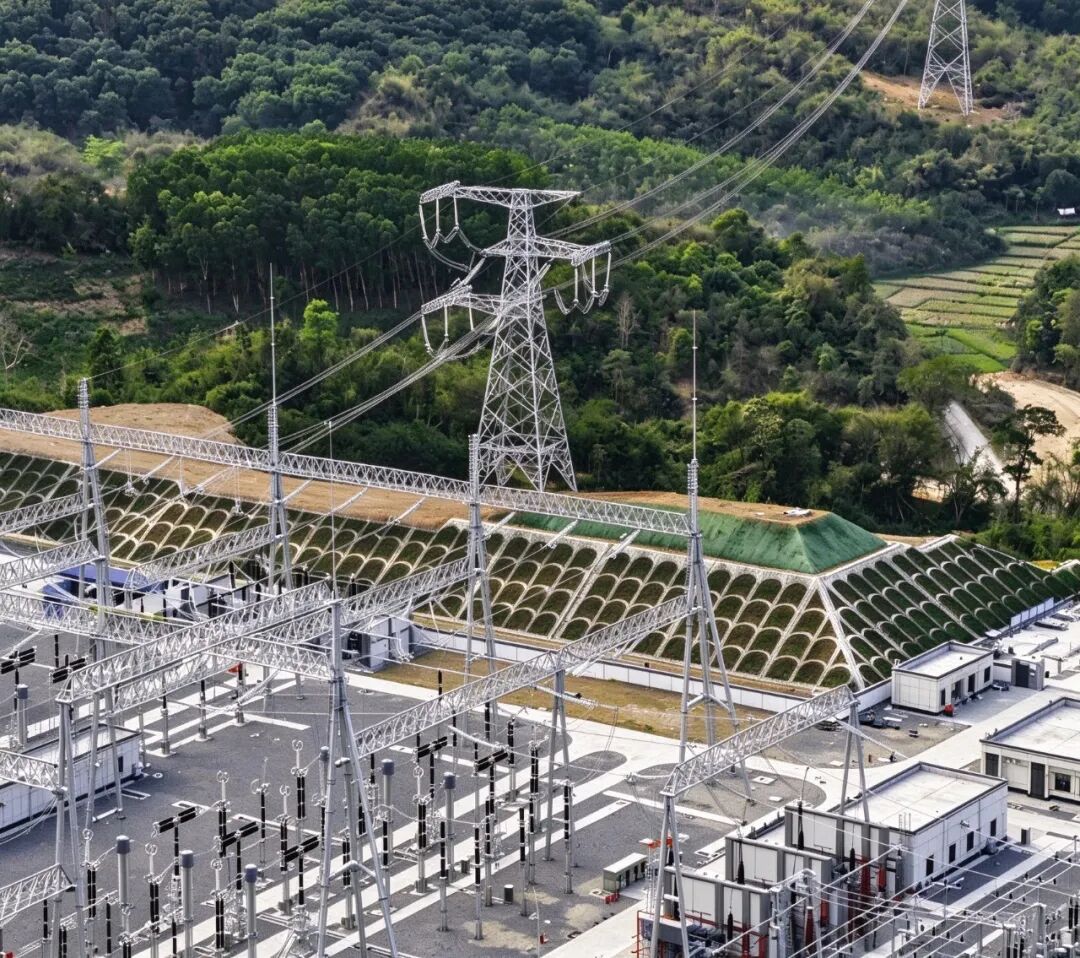
Part of the China-Laos 500 kV interconnection project
Improving Grid Structure: From a Cross-Border Transmission to a Regional Power Hub
For Laos, which is rich in hydropower and solar resources, clean energy development requires not only power generation assets but also a strong grid. How to break through transmission constraints and turn abundant energy resources into stable power supply is a key issue for Laos’ power development.
The China-Laos 500 kV interconnection project has not only built a cross-border transmission corridor, but also added an important transmission hub to northern Laos’ power grid.
The Lao section has a total line length of 177.5 km. The new 500 kV Namor 3 substation was built and connected to northern Laos’ main grid through two 230 kV lines, achieving effective integration between the cross-border transmission corridor and Laos’ domestic grid.
This layout not only opens up a cross-border power delivery channel, but also enhances northern Laos’ ability to pool, transmit and dispatch electricity.
At the commissioning ceremony, Lao Minister of Industry and Commerce Malaithong Kommasith noted that the power project would become an artery in the power sector, represent a breakthrough in addressing Laos’ domestic transmission constraints, and drive renewable energy development in northern Laos.
With the new transmission facilities in operation, northern Laos’ clean energy has gained broader market place, the resource allocation capacity of the regional grid has been further strengthened, and a foundation has been laid for subsequent new-energy development, main-grid upgrading and regional supply security.
Enhancing Supply Resilience: From One-Way Delivery to Two-Way Power Support
Power supply is seasonal and regional. For Laos, where hydropower accounts for a high share of generation, water is abundant in the rainy season while power supply is scarce in the dry season. Achieving complementary power balance across seasons has something to do with energy efficiency and supply security.
After the China-Laos 500 kV interconnection project entered operation, the cross-border power exchange capacity rose from the original 50 MW to 1,500 MW, providing the basis for two-way power mutual support.
This means cross-border interconnection is no longer simply delivering power from one country to another. Instead, the connection project flexibly adjusts the power flow according to seasonal supply and demand on both sides.
In the rainy season, surplus Lao hydropower can be sent to China, reducing spilled water and extra power and improving hydropower utilization. In the dry season or periods of scarce supply, the power project can deliver Chinese clean energy to Laos, strengthening local supply security.
Through mutual support and two-way regulation over surpluses and-shortages, the power systems of both countries can better exploit their complementary resource advantages.
China-Laos power cooperation has been going on for years. In 2009, the two countries began cross-border supply via a 115 kV line; in 2022, they launched two-way power trade. Now, the 500 kV interconnection project takes cross-border cooperation to a higher level and a larger scale, providing a firmer basis for mutual support in power supply.
In the long run, the cross-border interconnection also expands the dispatching space of the China-Laos power systems, helps both countries respond to seasonal supply-demand changes, and further improves the flexibility and reliability of regional grid operations.
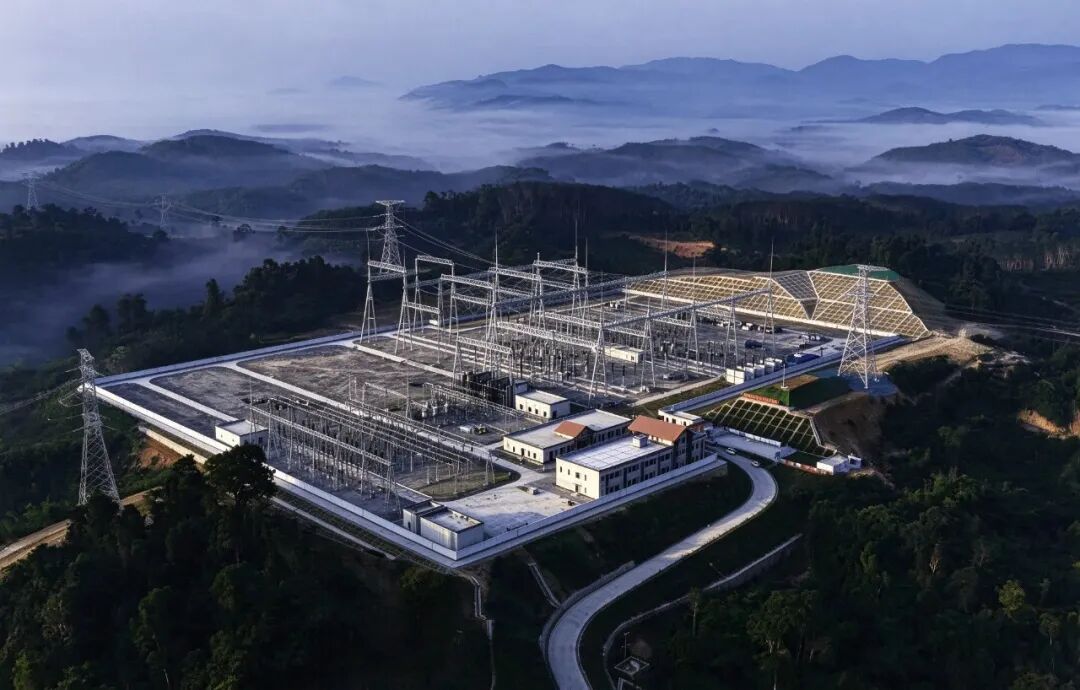
A view of the China-Laos 500 kV interconnection project
Expanding Market Place: From Physical Interconnection to Cross-Border Market Coordination
The grid allows power to be delivered, while the market determines whether power can be used more economically.
Since the China-Laos 500 kV interconnection project entered operation, the cross-border transactions that are market oriented have been achieved. As of October 8, the photovoltaic power had accounted for about 70% of the project’s cumulative traded electricity, with the hydropower making up 30%. All the power was traded through market-based mechanisms.
The Lao photovoltaic power directly entered the South China spot market, while the Lao hydropower was transmitted to Guangdong and traded through a power purchase and sale contract. These figures reflect not only growth in cross-border clean-energy delivery, but also the real results of grid interconnection and power-market coordination.
On April 20, a photovoltaic field in northern Laos delivered power to Yunnan through the China-Lao power interconnection corridor, becoming the first overseas power source to directly enter the spot market in Southern China. The Lao power was dispatched, sold and paid in the same way as its Chinese peer.
In July, power from the Lao Nam Tha 1 Hydropower Plant was sent to Guangdong via the China-Laos 115 kV channel. On August 6, the Lao hydropower from the Nam Ou River 5, 6 and 7 cascades was delivered via Yunnan province to the Guangdong-Hong Kong-Macao Greater Bay Area. This marked the first large-scale delivery of Lao hydropower to the Greater Bay Area, extending the clean-energy transactions from Yunnan to the broader market in southern China.
Whether it is in photovoltaics or hydropower, the China-Laos power interconnection has achieved an important extension—from infrastructure connectivity to market-transaction coordination.
For Laos, a broader Chinese power market means surplus clean energy gains more consuming channels, reducing spilled water, energy waste and resource loss. The trade improves cash flow for Lao power generators, easing pressure on hydropower operators.
For China, the clean energy from Laos further diversifies southern China’s power supply sources, optimizing the energy allocation in Yunnan province and securing power supply for the Greater Bay Area.
The China-Laos project already achieved multiple cross-border trading models: Laos-to-Yunnan delivery, Yunnan-to-Laos delivery, and Lao power transmitted through Yunnan to Guangdong.
This makes the China-Laos interconnection corridor not only an infrastructure for two-way power flow, but also an important link connecting different regional power markets.
As the mechanisms for cross-border trading, settlement and dispatch coordination improve, China-Laos power cooperation will further break through geographical and seasonal limits and optimize clean-energy allocation across a wider area.
Beyond 1 Billion kWh: From Bilateral Interconnection to Regional Energy Cooperation
In less than six months, the China-Laos 500 kV interconnection project saw the cumulative electricity trade exceed 1 billion kWh, demonstrating the project’s excellent performance.
But the long-term value of the cross-border grid project cannot be judged by delivered volume alone, and what matters more is the lasting change it brings to power systems and regional energy cooperation.
As clean-energy development expands across Southeast Asia and power demand keeps growing, optimizing energy allocation beyond national borders has become a central question for regional energy transition. Cross-border grid interconnection concerns not only efficient clean-energy use, but also supply security, operational flexibility and long-term development of national power systems.
The cross-border power grid requires both interconnected transmission infrastructure and matching cross-border trading, market linkage and coordinated dispatch mechanisms. Upgrading power cooperation from physical interconnection to market coordination will be a key direction for future regional energy collaboration.
The China-Laos 500 kV interconnection project offers a practical case. By advancing cross-border transmission corridors, domestic main-grid integration, two-way power mutual support and market-based trading mechanisms together, the project explores a cooperation path that combines infrastructure development with regional power-market growth, and accumulates practical experience for wider cross-border grid interconnection and power trading in the future.
The one billion kWh trade is a phased achievement of China-Laos power interconnection, and it is also a typical case to look into the direction of energy cooperation in the Lancang-Mekong region and even wider Southeast Asian region.
Writing by Alex (International Energy Observer); Trans-editing by Wang Shixue, Yao Chengcheng and Wang Huan
