


Borwornsak Uwanno: How to harmonize Thailand-China relations


At the invitation of Thai Prime Minister Anutin Charnvirakul, Chinese Premier of the State Council Li Qiang paid an official visit to Thailand from November 13 to 15. At this critical juncture in China-Thailand relations, Borwornsak Uwanno, former Deputy Prime Minister of Thailand, a senior statesman and scholar with a long-standing focus on global governance and the rule of law, shared his in-depth reflections on issues such as the China-Thailand Railway, Lancang-Mekong Cooperation, and cross-border telecom fraud.

A view of urban Thailand
Align Thailand 4.0 with 15th Five-Year Plan
Chinese modernization will profoundly reshape global supply chains and regional economic linkages, benefiting Thailand and other countries. The alignment between Thailand's 4.0 strategy and China's 15th Five-Year Plan centers on driving economic upgrading through knowledge, technology, and innovation. China's 15th Five-Year Plan covers the period from 2026 to 2030, with a focus on high-quality development, innovation, people's well-being, and green transition. Therefore, there is room for the two countries to cooperate in diverse areas.
The most promising areas of cooperation lie in leveraging technology to upgrade Thailand's existing production and service bases, such as automobiles and auto parts, agriculture and food, healthcare, tourism, and logistics. This approach will help better connect new investments with Thai enterprises and the workforce, while also providing opportunities for small businesses to improve efficiency and access markets through digital systems.
Regarding new energy vehicles, it is hoped that cooperation will cover the development of component manufacturers, engineering R&D, software, charging systems, standard testing, and battery full-life-cycle management, while simultaneously promoting skills upgrading for the workforce and supporting the adaptive transformation of existing enterprises. Analysis by the International Energy Agency shows that the China-Thailand links in energy, industry, and trade policies are becoming increasingly close, so the effects of these measures must be assessed in a coordinated and prudent manner.
In the digital economy, projects with visible results should be supported. Using artificial intelligence to reduce factory waste, trace the origin of agricultural products, or develop digital systems for tourism businesses, the two sides can make the projects underpinned by personal data protection, cybersecurity, and liability backstops in case of damage.
To translate strategic alignment into tangible results, there must be joint projects with clearly designated responsible entities, budgets, timelines, and indicators. Starting with cooperation among universities, vocational colleges, and the business community, the two sides will cultivate talent, solve real-world production problems, and improve intellectual property rules and fair benefit sharing. The effectiveness should also be measured by the productivity, skills, and value generated in Thailand itself.
Make Sino-Thai Railways Fully Connected
Railway connectivity should be considered within the context of a complete international transport system. At the same time, the existing railway freight network should be distinguished from the China-Thailand high-speed rail project. In terms of freight, Thailand's meter-gauge railway is incompatible with the 1.435-meter standard gauge of the China-Laos Railway, requiring cargo to be transloaded. The State Railway of Thailand has already illustrated this connection model using Thanaleng Station and the Vientiane Logistics Center as examples. Since the core function of the China-Thailand high-speed railway is passenger transport, it is necessary to coordinate planning to promote the linkage and support of the two systems.
Priority should be given to three tasks: First, infrastructure and operations. The capacity of container transloading points, cargo yards and cold chain systems need to be enhanced, while the timetables need coordination. Second, customs clearance should be optimized, including customs inspection, animal and plant quarantine, and pre-declaration data transmission. Third, a cargo tracking system should be established, featuring user services, clarifying rates and terms of responsibility. All of the above work needs to be carried out in coordination with the Lao side.
A World Bank research on The Economics of the Belt and Road shows that transport networks have the potential to promote trade and investment, but their benefits can only be fully realized when supporting policies and institutional reforms are advanced simultaneously, and environmental, social, and financial risk management is improved. At the same time, the WTO's Trade Facilitation Agreement also emphasizes expediting the release of goods and strengthening cooperation among border agencies. This shows that infrastructure and management systems must develop in tandem.
The China-Thailand railway should be built up with high safety standards and transparent management, while facilitating the professional capabilities of Thai local talent in train operation, maintenance, and track engineering. At the same time, it is necessary to improve the supporting-station system and urban-development planning to ensure that the public truly benefits from this transport service. The long-term effectiveness of the project should be measured by the costs and time saved for the public, the reliability of services, and economic opportunities generated along the routes, especially the opportunities benefiting farmers, small and medium-sized enterprises, and local operators.
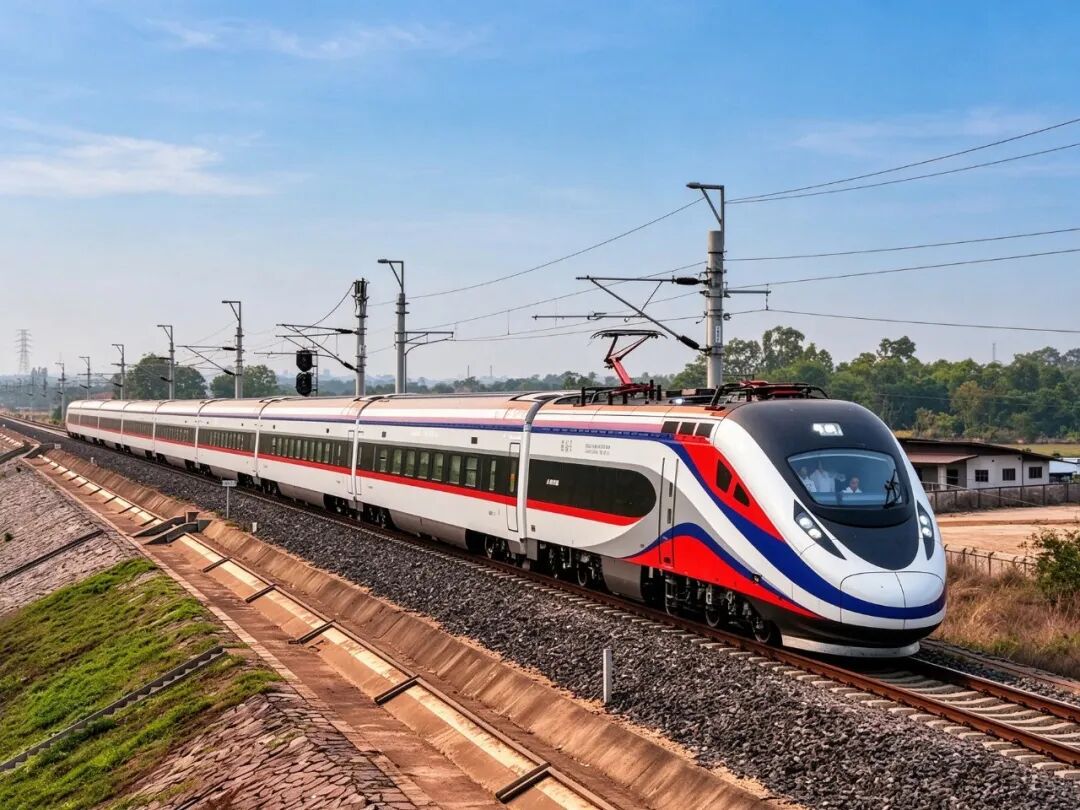
A passengers' train runs on the China-Laos railway that will link to the Thai railway network.
Improve Regional Governance with LMC Mechanism
Data released by China on the 10th anniversary of the Lancang-Mekong Cooperation (LMC) mechanism shows that trade between China and the five Mekong countries exceeded 500 billion U.S. dollars, a 150% increase over a decade ago. These figures reflect the magnitude of the economic relationship between the two sides, but to assess its actual impact on the public, further questions must be asked: Which groups have benefited from the income and opportunities? To what extent have skills been upgraded? Has the livelihood security of various communities truly been enhanced?
Water resources cooperation is an important example directly related to people's livelihoods. The Mekong River Commission pointed out that China has been sharing data from two hydrological stations year-round since November 2020, which lays the foundation for developing forecasting and early warning systems. It is worth noting that although the Mekong River Commission and the LMC framework are different mechanisms, they can support each other.
For the upgrade of LMC 2.0, Thailand should focus on three priorities: water security and ecosystems, creating inclusive employment, and addressing cross-border risks. In terms of water affairs, efforts should be made to improve the quality and speed of data and information exchange, refine early warning mechanisms, and deliver data and information to communities in a form that can be used for decision-making. In economic terms, local operators should be connected with trade, tourism, and industrial chains. As for risks, issues such as disasters, pollution, and transnational crime should be covered.
Hydropower research should balance energy benefits with impacts on the river basin system, based on scientific data and community opinions. Project assessments must comprehensively examine the nexus between water, energy, food, and ecosystems, thereby maintaining balanced development and winning public trust.
Cut Off the Criminal Chain of Telecom Fraud
The two countries also face common challenges, such as jointly combating telecom fraud. To solve this problem, Thailand and China must start by candidly acknowledging the harm suffered by the public. A large number of victims have lost their savings and family stability. At the same time, these gangs may also involve people who have been deceived, trafficked, or forced to participate in criminal activities. Reports from the Office of the United Nations High Commissioner for Human Rights and the United Nations Office on Drugs and Crime have revealed the link between online scams and human trafficking in Southeast Asia, so it is necessary to carefully clarify the roles played by individuals based on facts and evidence.
Thailand-China cooperation should cover the entire process from prevention, damage control, investigation to victim assistance. The rapid coordination among the police, financial intelligence agencies, banks, telecom operators and digital platforms is particularly valuable in preserving evidence, tracking the flow of funds, and taking timely legal action. In addition, cooperation with other neighboring countries should be carried out, as criminal networks can operate across borders in multiple locations.
At the legal level, cooperation must be advanced in digital evidence, international mutual legal assistance in criminal matters, and asset tracing, while respecting sovereignty, judicial procedures, and the rights of relevant persons. At the same time, screening and protection mechanisms must be established to protect those who may become victims of human trafficking. Effectiveness evaluation should take into account the damage reduction, the asset return, and the ability to dismantle criminal networks.
The media outlets of the two countries can establish a common fact-checking channel and issue easy-to-understand warnings in the languages of involved parties. Good mutual trust stems from candid information, tangible assistance to victims, and law enforcement results that the public can oversee.
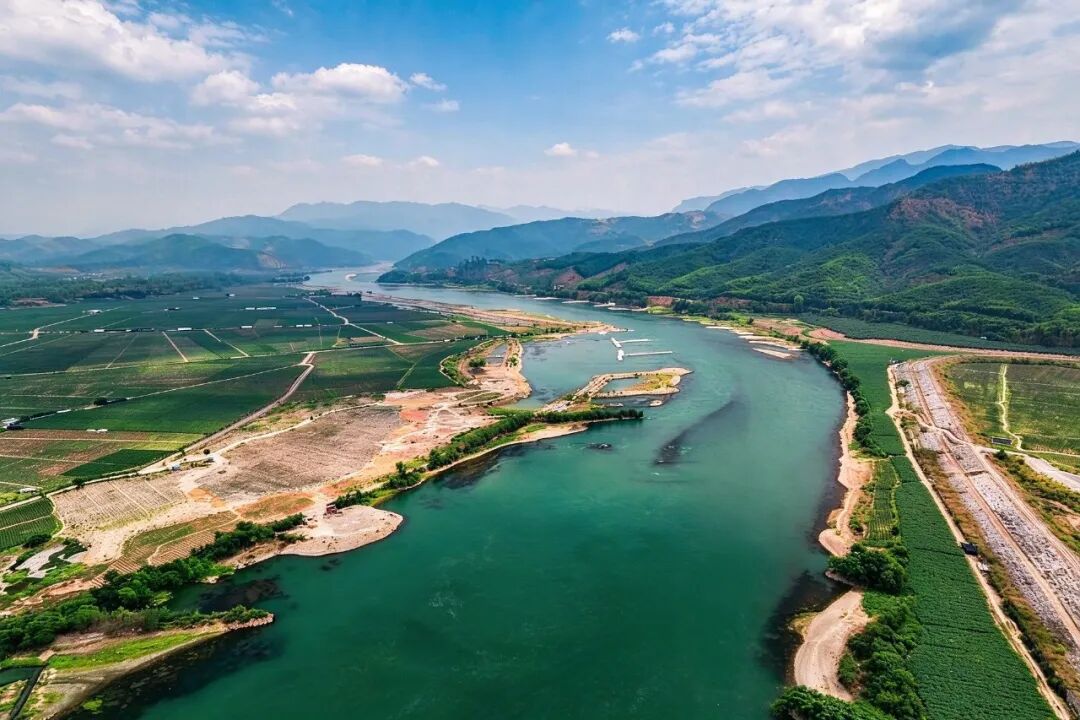
A view of the Lancang-Mekong River
Turn Yunnan into Hub for China-Thailand Folk Ties
The state visit to China by His Majesty the Thai King and Her Majesty the Thai Queen from November 13 to 17, 2025, is a major event on the occasion of the 50th anniversary of the establishment of diplomatic relations between Thailand and China, and it is of great significance to the friendship between the two countries.
The importance of this official visit to Thailand by Chinese Premier Li reflects the deep foundation of the continuously deepening and developing relations between the two countries, and the visit serves as an important moment for the government, business community, educational institutions, and the public to jointly advance relations in various fields and bring sustainable benefits. The parties are carrying out work based on their respective roles and responsibilities.
The future Thailand-China relationship will have both depth and breadth. Depth means jointly developing knowledge, technology, and talent; breadth means providing more opportunities for participation to farmers, small and micro operators, youth, and communities in various regions, while having mechanisms to resolve problems and differences through understanding.
China’s Yunnan can become an important hub connecting cooperation between Thailand and Southwest China, and the province is expected to cooperate in at least three areas: trade and logistics, education and talent cultivation, and cultural and tourism cooperation. This visit by Chinese Premier is expected to facilitate school-to-school programs, cultivation of a new generation of entrepreneurs, and knowledge exchange in agriculture and environmental fields.
Trans-editing by Wang Shixue, Hu Lixian, Han Chengyuan and Liu Ziyu
