


ASEAN assumes four roles in great-power rivalry


Against the backdrop of deepening great-power rivalry and the restructuring of the Asia-Pacific geopolitical landscape, Southeast Asia has become an intersection where various forces clash and interact.
The eleven ASEAN countries generally refuse to choose sides between China and the United States, and they are trying to maintain neutrality and policy flexibility by playing the four roles of a bridge, a buffer, a balancer, and a leader.
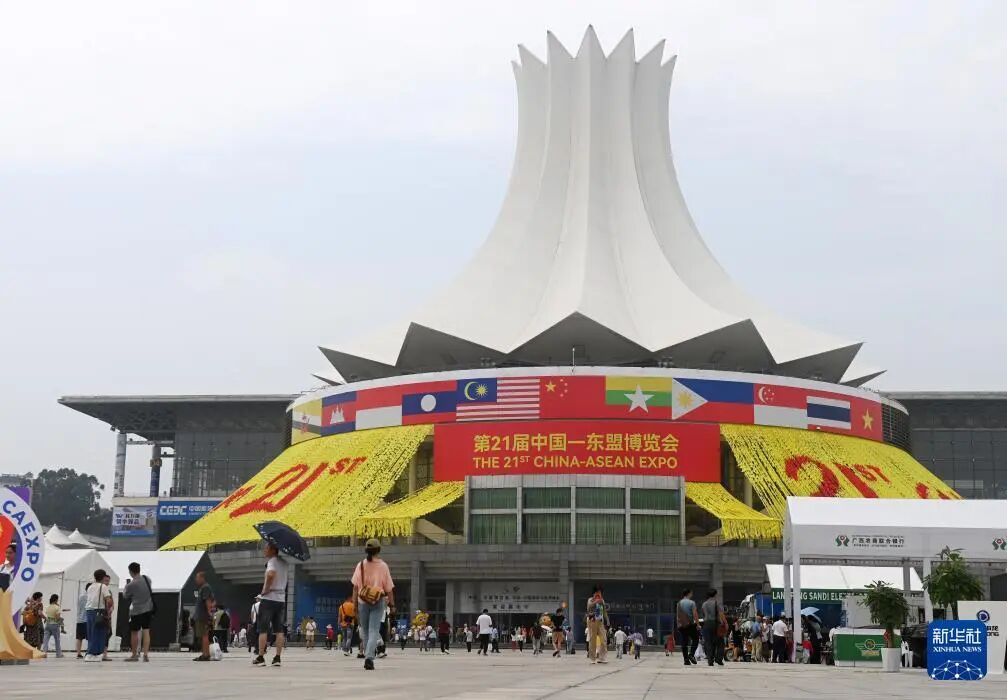
Venue of the China-ASEAN Expo in Nanning, Guangxi
A Bridge That Brings China and the U.S. to the Negotiating Table
The so-called bridge role refers to ASEAN leveraging its multilateral mechanisms to provide China and the U.S. with regular and multilateral dialogues, enabling both sides to still convey their positions, avoid miscalculation, and explore space for cooperation when competition intensifies and bilateral communication channels come under pressure.
Platforms led by ASEAN, such as the East Asia Summit, the ASEAN Regional Forum, and the ASEAN Defence Ministers' Meeting Plus, cover issues including regional security, economic and trade cooperation, climate governance, and counterterrorism. They are characterized by lower costs, weaker confrontational dynamics, and suitability for informal communication. For China and the U.S., these platforms do not replace bilateral channels but provide opportunities for solving the issues.
The foundation for ASEAN's ability to serve as a bridge is that it maintains stable relations with both China and the U.S. and does not attach itself to either side. ASEAN actively builds communication links, prevents China and the U.S. from falling into zero-sum confrontation in Southeast Asia, eases the dynamics of regional rivalry, and stabilizes great-power relations in the Asia-Pacific.
However, the bridge role has clear limits. Once China-U.S. relations become highly tense, or sudden crises occur in the Taiwan Strait or South China Sea, both sides tend to engage directly through bilateral channels, and the ASEAN platforms can easily be bypassed or marginalized. A bridge can reduce the risk of miscalculation, but it cannot replace fundamental compromise between great powers.
In addition, ASEAN member states do not hold consistent attitudes toward China and the U.S. Some members may use multilateral platforms to pursue their own demands, weakening ASEAN's credibility as a bridge as a whole. Therefore, the bridge role is the most easily perceived by the outside world, yet its actual effectiveness is often overestimated.
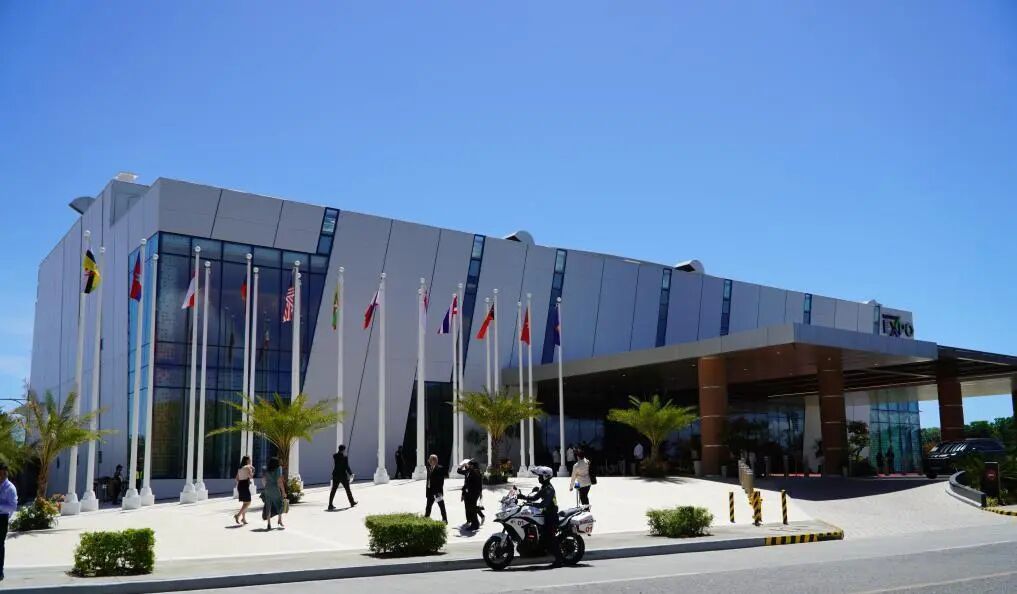
An ASEAN meeting site
A Buffer That Stops Southeast Asia from Being a Frontline of Confrontation
If the bridge focuses on communication, the buffer focuses on insulation. The core strategic value of the ASEAN buffer role is to prevent Southeast Asia from becoming a frontline in the China-US great power confrontation.
In the face of great power strategic rivalry, ASEAN as a whole remains vigilant and refuses to join exclusive military alliances targeting third parties. On the South China Sea issue, ASEAN insists on managing differences through dialogue and promotes consultations on a "Code of Conduct in the South China Sea"; in security cooperation, it upholds the principle that "security cooperation does not target any specific country."
No matter how the external situation fluctuates, ASEAN always adheres to "not choosing sides, not confronting, and not aligning," and through collective neutrality it has maintained peaceful development in Southeast Asia for decades.
However, the ASEAN buffer is not a monolithic bloc. The Philippines' alliance with the United States continues to strengthen; Vietnam, Indonesia, and Malaysia each have their own security concerns; and the Myanmar crisis and the Cambodia-Thailand conflict further impact ASEAN's internal unity.
Therefore, the buffering role is ASEAN's overall tendency, but when it falls onto the member states, their attitudes may differ. Whether the buffer can function depends both on whether ASEAN itself can build consensus and on whether major powers are willing to leave space for Southeast Asia to consult.
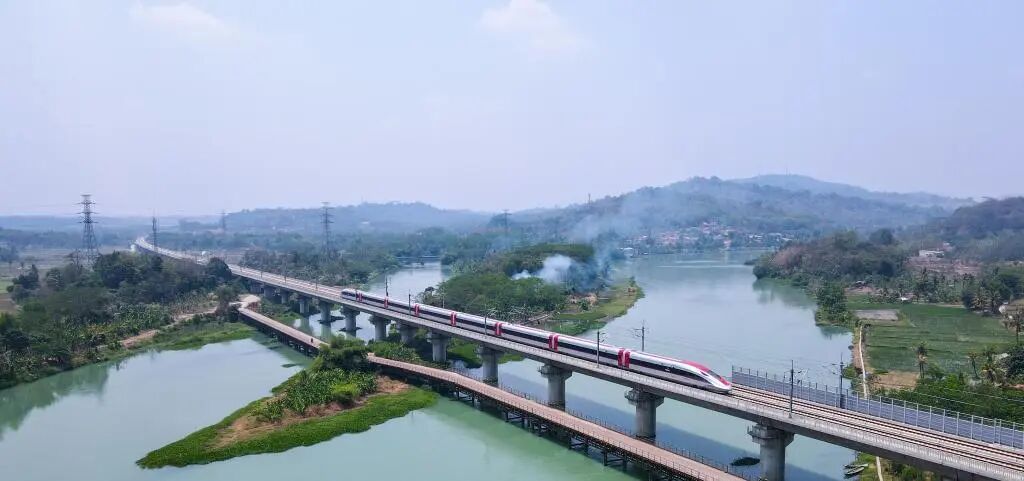
The China-Laos railway that connects China with ASEAN
A Balancer That Calculates Security and Economy Respectively
A buffer can avoid direct confrontation, while a balancer creates the path to development. The balancer role refers to ASEAN forming a two-way balancing strategy between China and the U.S. Namely, ASEAN deepens economic cooperation with China, while connecting with U.S. resources on security.
China has long been ASEAN's largest trading partner. After the RCEP mechanism fully came into force, the industrial chains, supply chains, and value chains of the two sides have become deeply integrated. The China-Laos Railway and the Jakarta-Bandung High-Speed Railway have facilitated regional connectivity, and the China-Thailand Railway project is making progress, allowing ASEAN countries to directly feel the practical value of cooperation with China.
At the same time, the United States remains an important source of investment and a security cooperation partner for ASEAN. Some ASEAN countries make up for shortcomings in security capacity through joint military exercises, defense dialogue, and military assistance. This arrangement of pragmatic economic cooperation with China and diversified, non-exclusive security cooperation with the U.S. is not opportunistic side-taking. As a rational choice based on national interests of the ASEAN members, the arrangement is aimed at maximizing dividends and minimizing risks.
But the balance is equally fragile. When China-U.S. competition extends from trade and technology to all-dimensional areas such as military, finance and supply chains, the ASEAN nations may be forced to put together security and economy. Once the two areas are merged, ASEAN will lose the space for two-way balancing and be forced to choose sides. Technological decoupling, supply chain restructuring, the Taiwan Strait situation, and South China Sea frictions will all compress ASEAN's balancing space.
Balancing requires both China and the U.S. to accept ASEAN's intermediate position, and this is not something ASEAN can decide unilaterally. If the United States demands that ASEAN clearly choose sides on security, or if China increases pressure on the South China Sea issue, ASEAN's balancing strategy will not work.

A railway section in the ASEAN
A Leader That Uses the "ASEAN Way" to Expand Regional Cooperation
The first three roles are mainly passive responses, while as a leader, it means ASEAN actively sets the agenda. When assuming the so-called leadership role, ASEAN is not satisfied with passively responding to great power rivalry, but instead attempting to shape the regional cooperation order through the "ASEAN Way."
With itself at the core, ASEAN has built a multilateral cooperation network covering major powers such as China, the U.S., Japan, South Korea, Australia, New Zealand, and India. It holds agenda-setting power in mechanisms such as the East Asia Summit, the ASEAN Regional Forum, and the 10+3 and 10+8 meetings. ASEAN also extends cooperation to emerging areas such as the digital economy, clean energy, public health, and cross-border governance.
The "ASEAN Way" is centered on equal consultation, non-interference in internal affairs, seeking common ground while reserving differences, and inclusive win-win outcomes. Unlike the confrontational and exclusive clubs led by the United States, the "ASEAN Way" provides a new choice for Asia-Pacific regional cooperation. ASEAN expands the boundaries of cooperation and gets multilateralism to hedge against unilateralism. Using open cooperation to dissolve camp confrontation, ASEAN has expanded the space for win-win regional cooperation.
The problem is that "ASEAN centrality" is more of an institutional discourse and normative proposition than a solid power. Major powers accept the ASEAN framework often because it is low-cost and does not have strong binding force, rather than truly transferring leadership. Minor multilateral mechanisms such as the Quad, AUKUS, and the Indo-Pacific Economic Framework are diluting ASEAN's central position.
Whether ASEAN can lead depends on internal unity and on whether major powers are still willing to rely on its platforms. If ASEAN cannot form a common position on issues such as the Myanmar crisis and the South China Sea issue, its leadership role will remain more at the level of discourse.
Conclusion: ASEAN Is Not a Pawn, but a Dynamic Balancer
Sitting in the core of great power rivalry, ASEAN has long moved beyond the traditional geopolitical logic that "small countries must be pawns." Through the four roles of a bridge, a buffer, a balancer and a leader, ASEAN safeguards its autonomous space in complex rivalry and the regional organization has embarked on a development path suited to its own realities.
But the four roles are not independent of one another, and internal contradictions always exist within ASEAN: the neutrality paradox as a bridge, the unity dilemma as a buffer, the bargaining-chip dependence as a balancer, and the recognition problem as a leader. These contradictions intertwine, keeping the “ASEAN centrality" in a dynamic process of being confirmed, challenged, and reconfirmed.
The China-US great power rivalry will persist for a long time, and ASEAN's balancing role will be even more critical in the years to come. Understanding these four roles not only clarifies the current geopolitical logic of Southeast Asia but also helps grasp the future symbiosis in the Asia-Pacific region.
Writing by Liang Yajie (Lecturer at the School of Foreign Languages, Yunnan University) and Luo Shengrong (Researcher at the Institute of International Relations, Yunnan University); Trans-editing by Wang Shixue and Han Chengyuan
