


Farewell to fuel dependence: Laos eager to cooperate with China on clean energy


"Does the internet in the car require a separate payment?"
"How smart are China's electric vehicles now?"
"Can an electric car drive itself out after the passengers leave the parking space?"
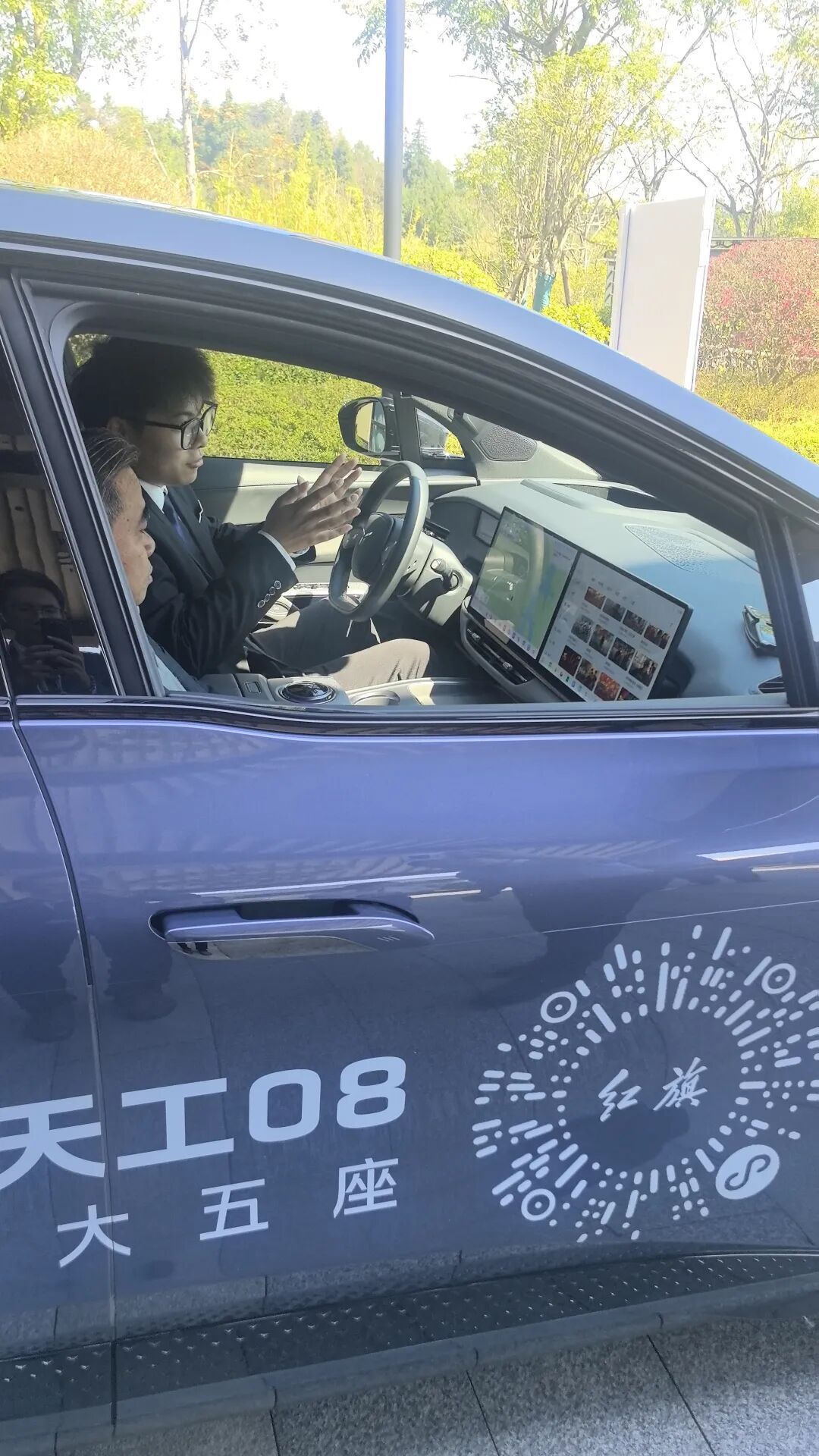
Anousak Phongsavath with the Lao Ministry of Industry and Commerce looks into a Hongqi Tiangong 08 electric car in east China’s Jiangxi province on October 7.
The three questions were asked on October 7 by Anousak Phongsavath, Director General of the Institute for Industry, Commerce and Energy under the Lao Ministry of Industry and Commerce. That day, Anousak led a Lao delegation to Xinyu, east China’s Jiangxi province for the “Tiangong Kaiwu, Connecting the World” Dialogue on High-Quality Industrial Development. During a break outside the meeting room, he saw a Hongqi Tiangong 08, a mid-size luxury electric crossover SUV. He got onto car, watched the staff operate it, and asked the questions.
During a demonstration on automatic parking, the staff monitored from the driver's seat while the car turned the steering wheel and parked itself. Anousak sat beside the staff, watching and nodding to show his approval.
Anousak also has a special feeling toward Hongqi. He said: "For a long time in the past, Hongqi was the first official vehicle that China uses to aid the Lao government, so the Lao officials have been familiar with the car. Now, the Hongqi vehicle has been turned into a smart electric car that can park itself, the change is huge."
Now Anousak himself usually drives an electric vehicle to work. "You don't have to keep thinking about refueling, you don't have to watch international oil prices every day, it saves money and also saves worry," added Anousak. So when sitting in a Hongqi smart electric car, Anousak asked in detail and took things seriously, from vehicle-use costs to smart functions.
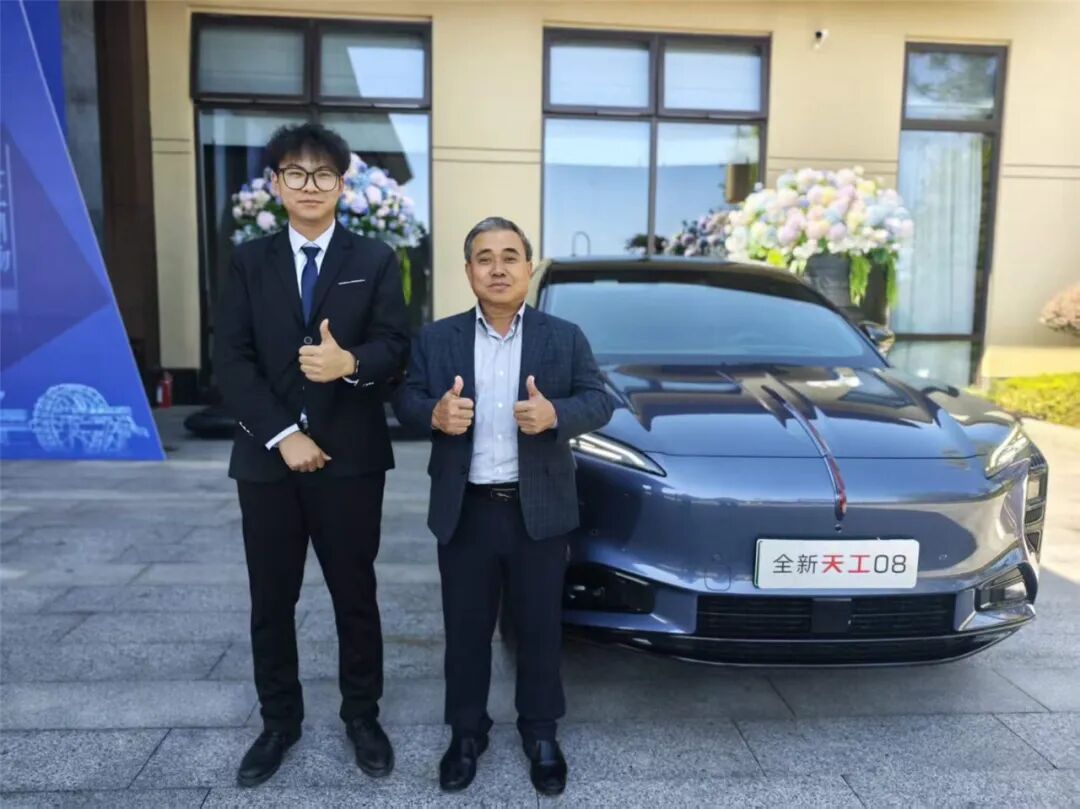
Anousak Phongsavath (right) and the staff operating the Hongqi Tiangong 08
Laos has been stuck by fuel shortage for many years, because this is a landlocked country that produces almost no oil itself. Anousa said: "More than 90% of Laos' fuel is imported from Thailand and Vietnam. When international oil prices fluctuate, domestic prices, transportation costs, and economic operations all waver with them." The Lao government has set a goal: by 2030, the market share of electric vehicles should reach 30%. Burning less oil and using more electricity is the path Laos wants to take.
Anousa has worked in the energy industry for many years and he is very clear about the changes in Laos' power sector. He said: "In 1996, power was supplied to only 16% of Lao families, and most households had difficulty accessing stable electricity. More than twenty years later, in 2020, this figure rose to 90%." Now, Laos has already formed a clean-energy composition, with hydropower, wind power, and solar energy complementing one another.
For electric cars to run, there must first be electricity. Only when electricity is cheap and stable can the clean energy vehicle be popularized. Laos has confidence in electric cars, and the key lies in power cooperation with China.
On April 20, 2026, the China-Laos 500 kV interconnection project was put into operation, and it was jointly operated by China Southern Power Grid and Electricite du Laos. On August 6 this year, Lao hydropower was transmitted to China's Guangdong-Hong Kong-Macao Greater Bay Area through this line for the first time. The surplus hydropower in Laos during the rainy season now has a market, and clean energy cooperation with China has also helped Laos develop its own grids and systems for cross-border power dispatch.
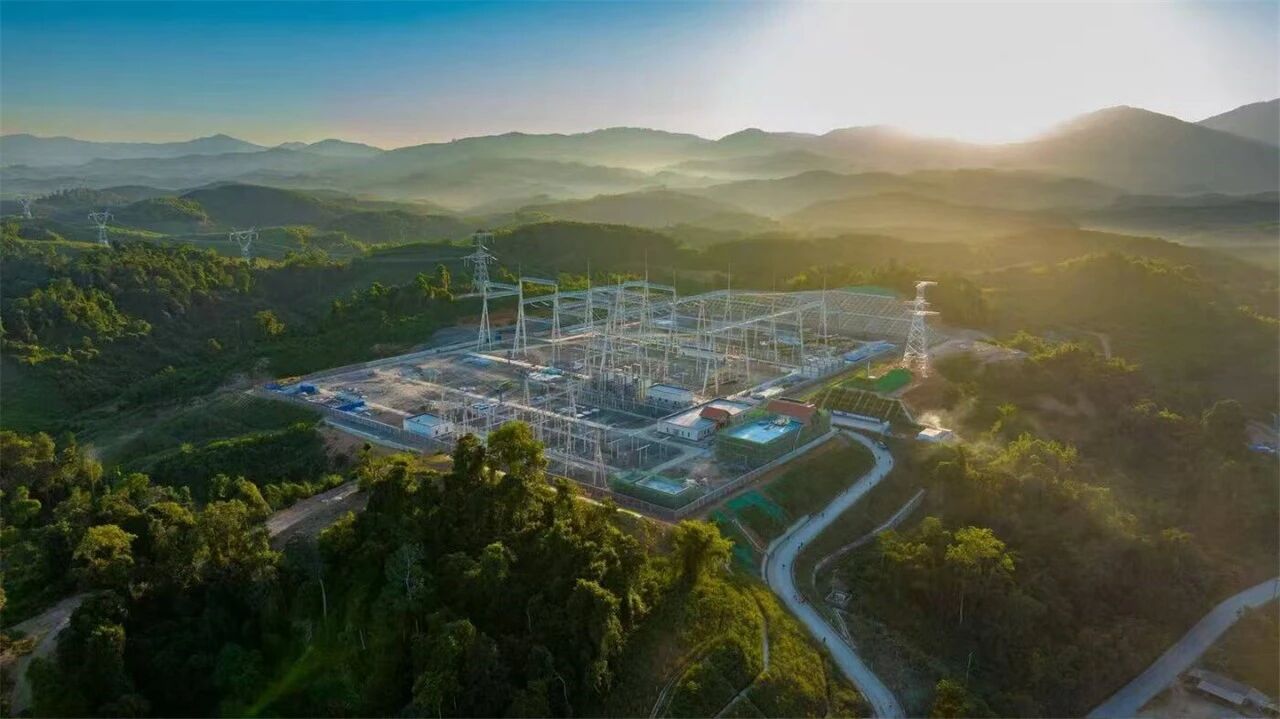
The China-Laos 500 kV interconnection project. Photo provided by the Lancang-Mekong International Company under China Southern Power Grid
During the interview, Anousak also mentioned that Laos-China cooperation on nuclear power is also being advanced. The clean energy base of China General Nuclear Power Group in northern Laos has already put into operation, with an average annual power generation expected to reach 1.65 billion kWh. After the first and second phases are fully completed, the cumulative installed capacity will reach 2,556 megawatts, and annual power generation is expected to be about 4.5 billion kWh.
But real problems still exist in Laos.
Most Laotians car users wanted to switch to electric cars, but they have a pile of question marks in their hearts: Where can they buy legitimate vehicles? How is the battery quality? Who can repair the electric cars if they break down? Is there any maintenance after sales? If these problems are not solved, Laotians can only wait and see.
The Lao government is telling the public about vehicle uses, supporting services, and preferential policies. Anousa is even clearer that the bigger shortcomings are still talent and technology. He said: "Laos lacks technical talents, operation and maintenance talents, and industrial talents for the clean energy sector. If the equipment is bought but no one knows how to install it, how to repair it, and how to operate it, things will be difficult for the sector to grow."
When talking with head of the Energy Storage Branch of the China Industrial Battery Association, Anousak put it frankly: "Laos hopes to cooperate more with China in talent cultivation, technical training, and supporting facilities." He noted that China has mature technology and experience, while Laos has abundant resources and an urgent need for energy transition, so the two sides can match up.
Reporting by Yang Chunmei; Trans-editing by Wang Shixue
