


Five years on: What changes has the GDI brought about?


In September 2021, China put forward the Global Development Initiative (GDI) at the general debate of the 76th Session of the United Nations General Assembly, calling on the international community to place development in the center of global macro-policy framework, so as to better implement the UN 2030 Agenda for Sustainable Development.
The GDI has so far mobilized more than US$23 billion in funding and launched over 2,000 cooperation projects. Practical cooperation under the framework of the Global Development and South-South Cooperation Fund has been implemented in more than 70 countries, benefiting over 40 million people. The Group of Friends of the GDI has expanded to 88 countries, and more than 130 countries and international organizations have participated in the cooperation.
Five years on, what changes has the GDI exactly brought about? In a turbulent world, why has it been welcomed by most developing countries? Can Southeast Asia become a demonstration zone for the initiative? And what role can Yunnan play in the GDI?
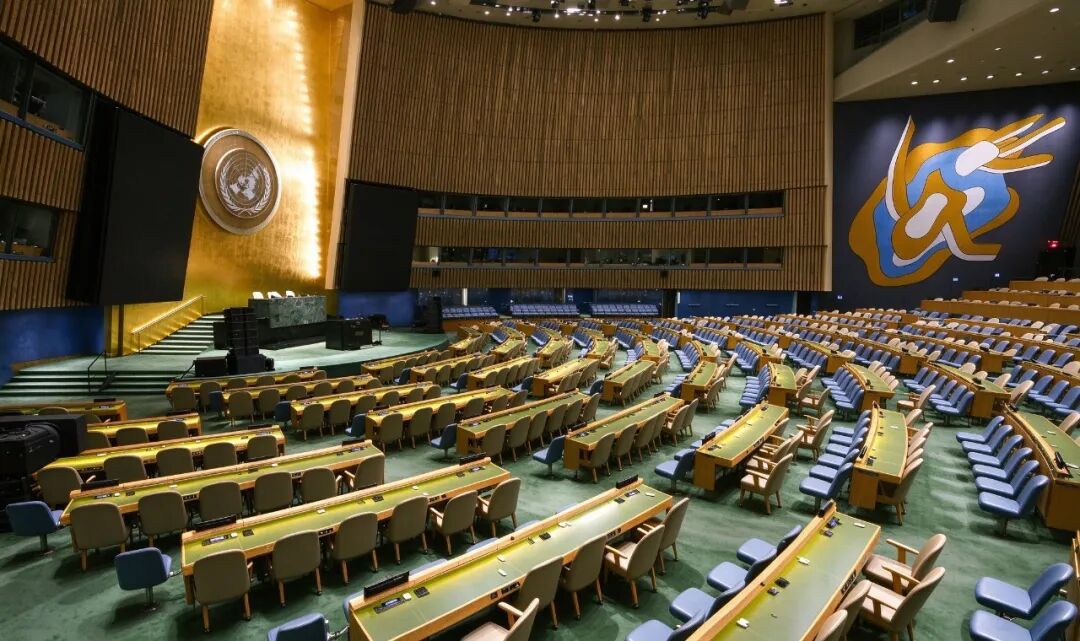
The meeting site of the United Nations General Assembly
Six Principles Answer the Questions of Our Times
The GDI is built on six principles: staying committed to development as a priority, to a people-centered approach, to benefits for all, to innovation-driven development, to harmony between man and nature, and to action-oriented implementation. The principles answer the fundamental questions of global development in the new era: "development for whom, by whom, and how to achieve common development." This is also why the GDI can transcend differences in civilization, system, and stage of development, winning broad support among developing countries.
Staying committed to development as a priority holds the key to solving global dilemmas. In today's world, geopolitical conflicts are intertwined and unilateralism is resurging. Some countries have generalized security issues, and development issues have been marginalized. The initiative reaffirms that development is the foundation for solving all problems and calls for putting development back at the core of the global agenda. This precisely matches the most urgent demands of developing countries—escaping poverty, improving livelihoods, and advancing industrialization—rather than being drawn into great-power rivalry.
Staying committed to a people-centered approach establishes the value of global development. The GDI proposes that on the path to modernization, no one should be left behind and no country should fall behind. Unlike traditional cooperation models that focus on macro indicators, the initiative promotes "small yet beautiful" livelihood projects that warm people's hearts, focusing on poverty reduction, food security, public health, and basic education. Thus, the GDI resulted in benefits for ordinary families and grassroots communities. This development philosophy, which takes people's well-being as its yardstick, transcends pure capital logic and matches the common aspiration of people in all countries for a better life.
Staying committed to benefits for all abandons the center-periphery paradigm for development. The traditional system for global development is Western-centric, with developed countries holding the power to set rules and the North-South gap continuing to widen. The GDI advocates an equal and balanced partnership for global development, respecting each country's independent choice in development path. Without exporting development models and attaching political conditions, it fully respects the sovereignty and development autonomy of Global South countries.
Staying committed to innovation-driven development opens up new ground for sustainable development. At present, the digital divide and industrial disconnection constrain the development of developing countries. The GDI promotes cooperation in the digital economy, green technology, and industrial capacity building, helps developing countries achieve leapfrog development by relying on new technologies, and provides new paths for less developed countries to break through resource constraints and industrial weaknesses.
Staying committed to man-nature harmony coordinates development and green transformation. Climate change hits developing countries hardest, and many face the dilemma between the "right to development" and the "emission reduction responsibilities." The initiative insists on promoting development and protection in tandem, supports the green and low-carbon transformation of developing countries, and opposes turning climate issues into a tool to contain the development of developing countries.
Staying committed to action-oriented implementation rejects empty talk and focuses on delivery. From the outset, the GDI has refused to remain at the level of dialogue, and it built funding platforms, project libraries, and cooperation mechanisms. Relying on the Global Development and South-South Cooperation Fund and the Global Development Promotion Center, the GDI is quick in implementing projects. Whether it is infrastructure connectivity, public livelihood projects, talent training or technical exchanges, the GDI fulfills commitments with concrete actions. This is why the GDI impressed the international community most.
The six principles of the GDI are interconnected and organically unified, forming a complete set of governance solutions to global development. The GDI is not an alternative that starts from scratch, but a reinforcement and improvement to the existing global development system.
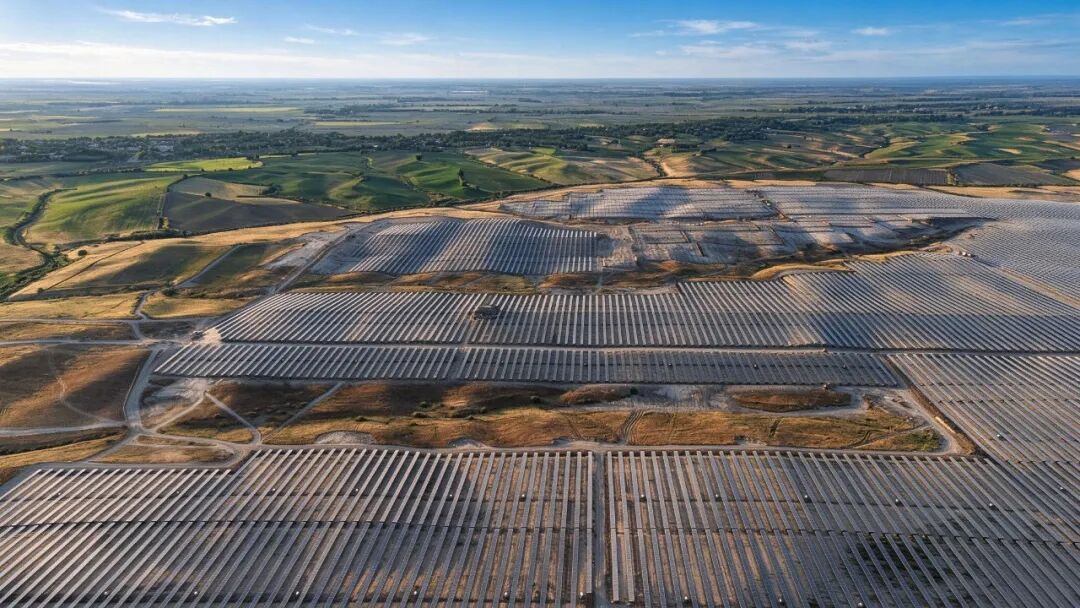
A clean energy field in China
The GDI Stays in Tune with the UN 2030 Agenda
The UN 2030 Agenda for Sustainable Development sets 17 goals, but overlapping crises are battering the implementation. The UN assessments show that the goals are progressing slowly or even regressing, and funding gaps, insufficient implementation mechanisms, and geopolitical interference are seriously dragging down the agenda's delivery. The GDI does not build a separate system. Rather, it takes the 2030 Agenda as its target guide, forging a partnership of aligned goals, complementary mechanisms, and coordinated actions.
The two are highly aligned in values and goals. Whether they are the six principles of the GDI or the 17 goals of the UN 2030 Agenda, the points are the same: eradicating poverty, narrowing development gaps, ensuring food security, addressing climate change, and promoting sustainable industrialization. The GDI translates grand goals into operable areas of cooperation, focusing on poverty reduction, food security, green development, and the digital economy.
The two are complementary in function. The UN 2030 Agenda focuses on goal setting and monitoring and evaluation, and at the implementation level it has long faced shortcomings such as insufficient funding and a lack of project vehicles. The GDI focuses on filling implementation gaps: building South-South cooperation funding platforms and mobilizing diverse funding; drawing on China's development experience to provide replicable development paths; and establishing project libraries and tripartite cooperation mechanisms to open the channel from consensus to projects. The UN system and the GDI platforms work together for practical actions to achieve grand goals.
The two share a common commitment to multilateralism. The GDI upholds the UN's central role in international affairs and advances tripartite cooperation with the UN Development Programme, the Food and Agriculture Organization, and the World Health Organization, integrating the professional capabilities of multilateral institutions with South-South cooperation resources. The GDI does not replace existing multilateral frameworks; it mobilizes Global South forces, supplements the supply of public goods for multilateral development, and pushes the 2030 UN Agenda back on track.
Of course, the GDI and the 2030 UN Agenda need more cooperation and coordination. In their follow-up cooperation, it is necessary to further align projects with the UN sustainable development indicators, strengthen data monitoring and evaluation, respect each country's national plan, and better embed the GDI projects into national plans for implementing the UN 2030 Agenda.
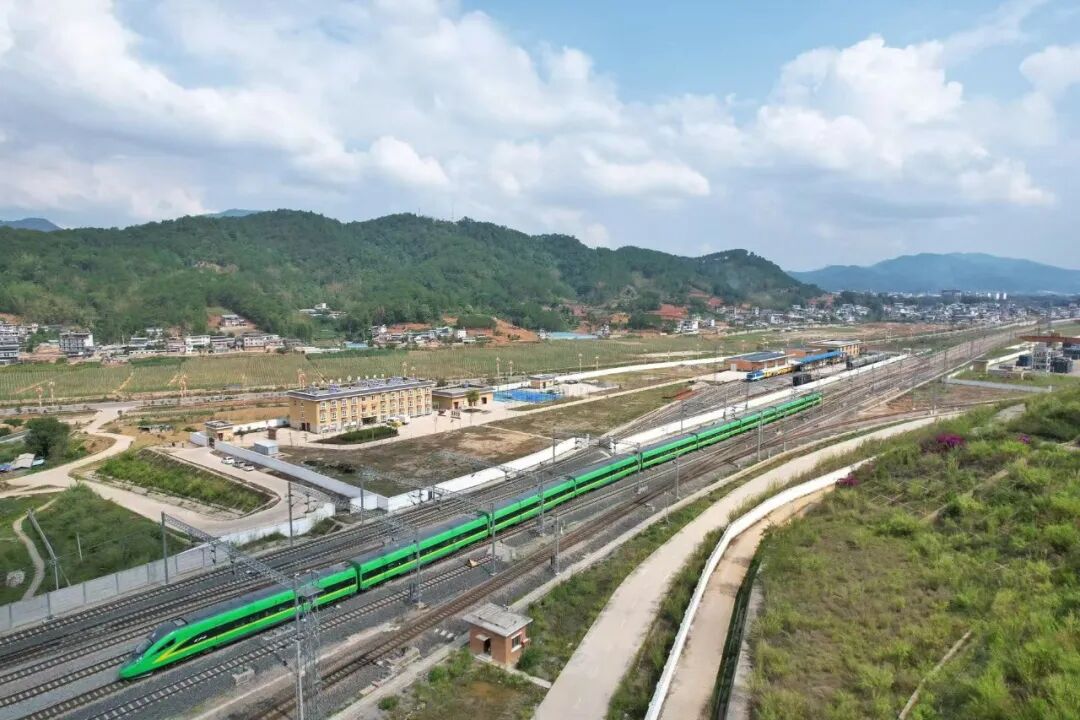
A train runs on the China-Laos Railway.
Southeast Asia Emerges as Example for the GDI
The Southeast Asia region is one of the most dynamic regions in the global economy and a priority region for GDI implementation, for the region has the basic conditions to build up a demonstration zone.
The development demands of Southeast Asian countries are highly consistent with the GDI. The ASEAN Community Vision is committed to narrowing the development gap among member states and advancing regional connectivity, industrialization, food security, green transformation, and digital integration. These are exactly the key cooperation areas identified in the GDI. The Southeast Asia region has an obvious internal development gradient, which makes it well suited to test an inclusive cooperation model that accommodates countries at different development levels.
Major connectivity projects in Southeast Asia embody the initiative's action orientation. The China-Laos Railway, as a landmark project under the GDI framework, helps to improve the railway network in the Indochina Peninsula and reduce cross-border logistics costs, while driving the development of industrial parks, tourism, and agricultural trade along the route. The railway features joint construction and shared benefits, balancing engineering construction, ecological protection, local employment and talent training, and it drives poverty reduction and industrial upgrading in Southeast Asia. The Lancang-Mekong Cooperation mechanism focuses on cooperation among the six countries in water resources, agriculture, poverty reduction, infrastructure, and public health. With countless small and medium-sized livelihood projects in implementing, the mechanism practices the "small yet beautiful" cooperation theory.
Admittedly, building the demonstration zone also faces constraints. Southeast Asian countries differ greatly in national conditions, some face pressures such as debt, inflation, and fragile supply chains, and external geopolitical rivalry continues to interfere with regional cooperation. Therefore, building the demonstration zone means exploring a cooperation paradigm of country-specific customization, regional linkage, capacity first, and people's livelihood as the foundation. The parties need to balance large-scale connectivity projects with grassroots livelihood projects, while advancing technology transfer, talent training, and local industry cultivation. They also need to adhere to green and low-carbon development to protect the regional ecological environment. Once the model of "infrastructure connectivity + industrial empowerment + livelihood improvement + capacity building" matures, it can be promoted in other developing regions.

A view of central Yunnan's Kunming city
Yunnan Has Unique Role to Play in the GDI
Yunnan is building China's pivot of opening-up to South and Southeast Asia, and in the GDI's layout on the Indochina Peninsula, the Chinese province has irreplaceable locational and experiential advantages.
First, Yunnan's own experience in poverty reduction and development provides a localized reference for regional poverty-reduction cooperation. Yunnan was once a major region in China's fight against poverty and it has blazed a path of poverty reduction and green development in border areas near the Southeast Asian countries like Vietnam, Laos and Myanmar. This experience, grounded in mountainous, multi-ethnic, and ecologically fragile areas, is highly useful in dealing with the development dilemmas of many mountainous and ethnic minority areas in Southeast Asia. Relying on international people-to-people networks for poverty reduction cooperation and various training platforms, Yunnan can share practical experiences in industry-based poverty alleviation, resettlement for remote villagers, ecological compensation, and rural governance. The experiences can help the Chinese neighboring countries to explore poverty reduction paths suited to their own national conditions.
Second, Yunnan is a hub for regional connectivity. With Yunnan as the starting point, cross-border infrastructures such as the China-Laos Railway, the China-Myanmar oil and gas pipeline, and the China-Vietnam highway form a multidimensional connectivity network that can reach more countries in South and Southeast Asia. The Chinese section of the China-Laos Railway starts in Yunnan, and the province thus works as a material distribution center, a major industrial linkage, a dry-port support, and a cross-border logistics hub. Relying on the Lancang-Mekong Cooperation, Yunnan continues to advance cross-border water resources governance, cross-border agricultural cooperation, cross-border disease prevention and control, and green industry cooperation in the border areas. A large number of livelihood projects benefited people on both sides of the border section between China and Vietnam, Laos and Myanmar, turning connectivity into tangible livelihood dividends.
Third, Yunnan plays a platform role in regional people-to-people exchanges and capacity building. Relying on universities, research institutions, and vocational training bases, the province continues to train talent in engineering technology, agriculture, health, and the digital economy for Southeast Asian countries, implementing the initiative's capacity-building goals. On the basis of border ports, cross-border cultural tourism, and ethnic cultural exchanges, it enhances people-to-people bonds and consolidates the social foundation for development cooperation.
The Yunnan practice shows that the GDI implementation needs to rely on regional pivots. By translating national-level cooperation frameworks into projects that can be implemented in the border areas, the pivots can achieve an organic linkage among national strategies, local practices, and regional needs.
Five Paths to Avoid Current Risks
At present, the GDI is getting through a complex environment of overlapping risks, and the global development deficit continues to expand. In the face of challenges, China and regional countries should uphold the GDI philosophy and act together.
First, upholding development as a priority to resist the securitization of development issues. The parties should adhere to true multilateralism, oppose bloc confrontation, and push the international community to return development issues to the core of the agenda. By jointly safeguarding open, stable, and inclusive regional industrial and supply chains, they can get rid of the unilateral trade barriers and technological blockade.
Second, innovating diverse financing models to provide more development funds. The GDI partners need to make good use of the Global Development and South-South Cooperation Fund, expand tripartite cooperation, and attract multilateral institutions, the private sector and local actors to participate in the initiative. By improving the global development financing system and calling on the developed countries to fulfill their funding commitments, they can jointly reform the multilateral financial institutions and enhance the voice of developing countries.
Third, relying on regional platforms to continuously advance connectivity and capacity building. The parties should use regional mechanisms such as ASEAN and Lancang-Mekong Cooperation as vehicles to improve cross-border infrastructure networks. By increasing technology transfer, talent training and local industry cultivation, China can help partner countries enhance their own development capacity.
Fourth, coordinating green transformation and the right to development, and jointly responding to climate challenges. The countries should advance cooperation in renewable energy, disaster prevention and mitigation, and ecological protection. By supporting developing countries in achieving green development, China can help thaw the hegemonic practice of restricting the development space of developing countries in the name of climate.
Fifth, upholding the idea of benefits for all and respecting the development path of all countries. Instead of engaging in the export of development models, the global development cooperation should respect each country's sovereignty and national conditions. By letting each country independently determine its development priorities, the GDI partners can design cooperation projects through equal dialogue and consultation to ensure that the results will benefit the grassroots public.
In conclusion, the destinies of all countries are closely linked in today's world. Only by abandoning zero-sum games and adhering to mutual benefit and win-win outcomes, can the parties continue to implement the Global Development Initiative and jointly advance the UN 2030 Agenda for Sustainable Development. Through expanding the circle of friends for common development, the GDI partners can move the world toward a more balanced, inclusive, and prosperous future.
Writing by Xu Jin (Director and Researcher at the Research Department of Xi Jinping Thought on Diplomacy in the Institute of World Economics and Politics, Chinese Academy of Social Sciences); Trans-editing by Wang Shixue and Han Chengyuan
