


Duong Van Huy: CPC solves self-oversight dilemma for ruling parties


Editor's note:
From the first Party congress on the Red Boat on South Lake in Zhejiang province to a century-old major party that successfully governs China for decades, what is the source of strength that keeps the Communist Party of China (CPC) forever young and vigorous?
The Fifth Plenary Session of the 20th CPC Central Committee was held in Beijing from October 26 to 29, making important strategic arrangements for persistently advancing full and rigorous Party self-governance. In the eyes of scholars, consuls, teachers and students from South and Southeast Asia, what kind of "China governance" has the CPC's advancement of Party self-governance brought about, and what has the Chinese modernization brought to the world?
Today, we present an article by Duong Van Huy, Associate Professor and Ph.D. Holder, Senior Researcher at the Institute for Asia-Pacific Studies, Vietnam Academy of Social Sciences.
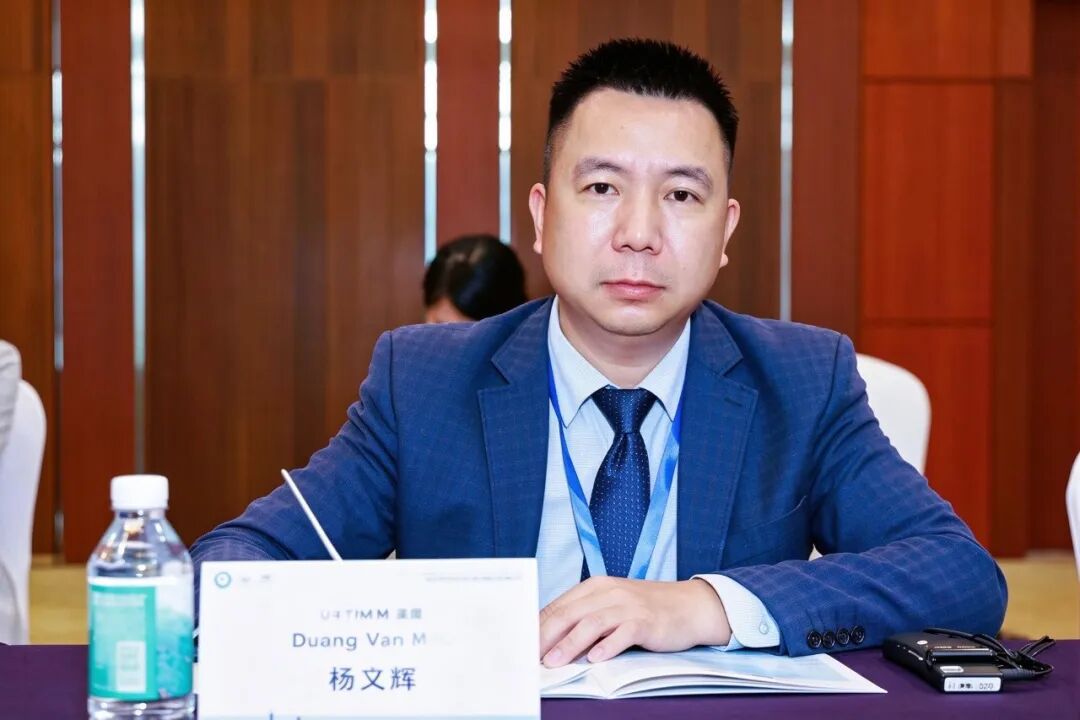
Duong Van Huy
A Global Dilemma: How Can a Ruling Party Supervise Itself?
The self-supervision of a ruling party is a global challenge. The complex contradictions among reform, development, and stability make this issue even more intractable. Self-supervision tests a political party’s ability to govern for the long term.
The answer given by the CPC is a dual approach of “self-supervision plus institutional building”: On the one hand, the CPC strengthens self-building through “self-revolution” and continuous anti-corruption. On the other hand, it constantly improves the institutional system including laws and regulations, state organizational structure, and technological means. This dual approach not only helps China cope with governance challenges but also contributes new theoretical connotations to Xi Jinping Thought on Socialism with Chinese Characteristics for a New Era.
Self-Supervision: From “Self-Revolution” to “Turning the Blade Inward”
Theoretically, the self-supervision of a ruling party must adhere to the principles of “self-purification, self-improvement, self-innovation, and self-elevation,” ensuring that full and rigorous management and governance of the Party are implemented in all aspects of its operations. In practice, China has strengthened intra-Party supervision by improving the system of intra-Party regulations. This aims to implement the requirements put forward by General Secretary of the CPC Central Committee and Chinese President Xi Jinping, who emphasized: “To strengthen the Party’s ability of self-purification, the fundamental solution lies in strengthening the Party’s self-supervision and public supervision.”
The CPC has established a supervision framework featuring “unified leadership of the Party, full coverage, and authority and high efficiency.” This system organically integrates intra-Party supervision, state supervision, judicial supervision, democratic supervision, and public opinion supervision, ensuring that the exercise of power is open, transparent, and placed under effective supervision. Its cornerstones are “full coverage” and the “accountability system”—expanding the scope of inspections to ensure that Party organizations at all levels and officials faithfully fulfill their duties.
However, the core of “self-supervision” is a concept with greater theoretical breakthrough: “self-revolution.” This is the most distinct feature and the greatest strength of the CPC. Since the 18th CPC National Congress, General Secretary Xi Jinping has led the entire Party to advance full and rigorous self-governance of the Party with unprecedented determination and intensity.
At the Sixth Plenary Session of the 19th CPC Central Commission for Discipline Inspection on January 18, 2022, General Secretary Xi Jinping gave a comprehensive exposition of the connotation of “self-revolution”: This means that the CPC has the courage to “turn the blade inward”—just like removing the toxins within a wound. Sparing no cost even at great expense, the CPC aims to eliminate rotten elements within itself and maintain the Party’s vanguard nature and purity. This process includes continuously removing “viruses” that damage the Party’s health and constantly enhancing the “immunity” within the Party.
General Secretary Xi Jinping once emphasized: “The key to running China’s affairs well lies in the Party, and lies in persisting in running the Party strictly and governing the Party in full rigor.” Thus, full and rigorous self-governance of the Party is not only related to the Party’s own development but also serves as an important cornerstone of China’s modernization process.
This commitment has been fully demonstrated through a relentless fight against corruption. The CPC has implemented the strategy of “beating both ‘tigers’ and ‘flies,’ and hunting ‘foxes’”—taking actions against senior officials, grassroots cadres, and fugitive suspects of economic crimes. At the same time, it is committed to achieving the goal of making officials “dare not, cannot, and do not want to be corrupt.” The deterrence mechanisms, institutional constraints, and ideological education reinforce each other, jointly forming a comprehensive governance framework. Since the 18th CPC National Congress, this approach has greatly reduced corruption, dismantled deeply rooted interest groups, and paved the way for further deepening reforms.
Institutional Support: From “Phased Measures” to “Normalized Mechanisms”
The world today is undergoing major changes unseen in a century, and China is also facing arduous tasks of reform, development, and stability. Against this background, the CPC is committed to fostering a culture of accountability. This approach is rooted in the political nature of a Marxist political party and requires advancing Party governance through institutions and regulations.
For self-supervision to be sustainable, it must be grounded in institutions.
The CPC has reformed its supervisory commission system, establishing and strengthening a network of supervisory commissions from the central to the local levels, and the network integrates the functions of anti-corruption, investigation, and discipline inspection. This system supervises all personnel exercising public power, overcoming the shortcomings of the previously loose structure of “internal self-supervision” mechanisms.
In terms of power restraint, three key measures were proposed at the 18th CPC National Congress: First, improve the decision-making mechanism by continuously advancing “scientific, democratic, and law-based decision-making”. Second, promote transparency and standardization in power operation. Third, build a comprehensive supervision system covering intra-Party supervision, democratic supervision, legal supervision, and public/media supervision.
At the same time, the building of intra-Party regulations has been accelerated. Since the 18th CPC National Congress, newly formulated and revised intra-Party regulations account for more than 70% of the total number of currently effective intra-Party regulations. This shift is significant in that governing the Party through institutions helps establish rigorous standards, and governing the Party through regulations ensures consistent implementation of these standards. As a result, full and rigorous self-governance of the Party has been transformed from phased measures into a normalized management mechanism.
In cadre management and discipline enforcement, the CPC closely aligns the implementation of state laws with the CPC Constitution, and establishes strict standards based on officials’ administrative levels. In addition, the CPC manages governance risks through a multi-level governance model covering the Party, the state, the society, as well as technology and digital data, and it regards cyberspace as the “main stay” for ideological and political security work.
This institutionalized supervision covers the entire life cycle of an official’s career, including selection, training, daily supervision, and performance evaluation, and it aims to balance strict discipline with career advancement incentives. In December 2012, the Political Bureau of the CPC Central Committee issued the Eight-point Regulation on Improving Work Style and Maintaining Close Ties with the Masses.
By doing so, the CPC further strengthened its organizational structure, cultivated a high-quality cadre team, improved work style, tightened discipline, combated corruption, and refined the intra-Party regulation system. In October 2017, detailed implementation rules were deliberated and adopted. After the 19th CPC National Congress, General Secretary Xi Jinping also issued important instructions on rectifying the “four undesirable work styles” (formalism, bureaucratism, hedonism, and extravagance).
As a result, problems such as weakened Party leadership and inadequate Party governance have been fundamentally reversed. Cadre management has achieved full-process institutionalization, emphasizing political standards and daily supervision. While maintaining a balance between strict management and appropriate support, the management stroke a balance between incentive policies and accountability mechanisms. Through these institutional practices, the CPC has enhanced the stability of institutional operation, ensured the continuity of policy implementation, and transformed the Party’s political and organizational advantages into governance effectiveness, laying a solid foundation for advancing Chinese modernization.
The deep foundation of all said measures lies in ideals and convictions. For Communists, ideals and convictions are the spiritual pillar and political soul. Through education on ideals and convictions, cultivation of Party spirit, and fostering of political loyalty, Party members and cadres can internalize these strict standards and transform them into conscious pursuits in their political stance, thinking, and practical actions.
The Global Significance of China’s Experience
In conclusion, the CPC achieved remarkable results in addressing governance challenges in recent years, and it did so through strict self-supervision and strong institutional development.
This process not only enriches the theoretical framework of Xi Jinping Thought on Socialism with Chinese Characteristics for a New Era but also provides valuable insights for other socialist countries. In combination with their own national conditions, the socialist countries worldwide can draw useful experience from the CPC’s practices in Party building and state governance.
Trans-editing by Wang Shixue, Chen Chen and Han Chengyuan
