


APEC in Shenzhen: China offers certainty to the Asia-Pacific


The 33rd Economic Leaders' Meeting of the Asia-Pacific Economic Cooperation (APEC) was held in south China’s Shenzhen city from November 18 to 19. This year coincides with the fifth anniversary of the Global Development Initiative, the fifth anniversary of the establishment of the China-ASEAN Comprehensive Strategic Partnership, and the tenth anniversary of the first Leaders' Meeting of the Lancang-Mekong Cooperation. The convergence of these important milestones elevates the "Shenzhen Meeting" beyond a conventional diplomatic event, making it an important occasion for observing the regional cooperation in Asia-Pacific.
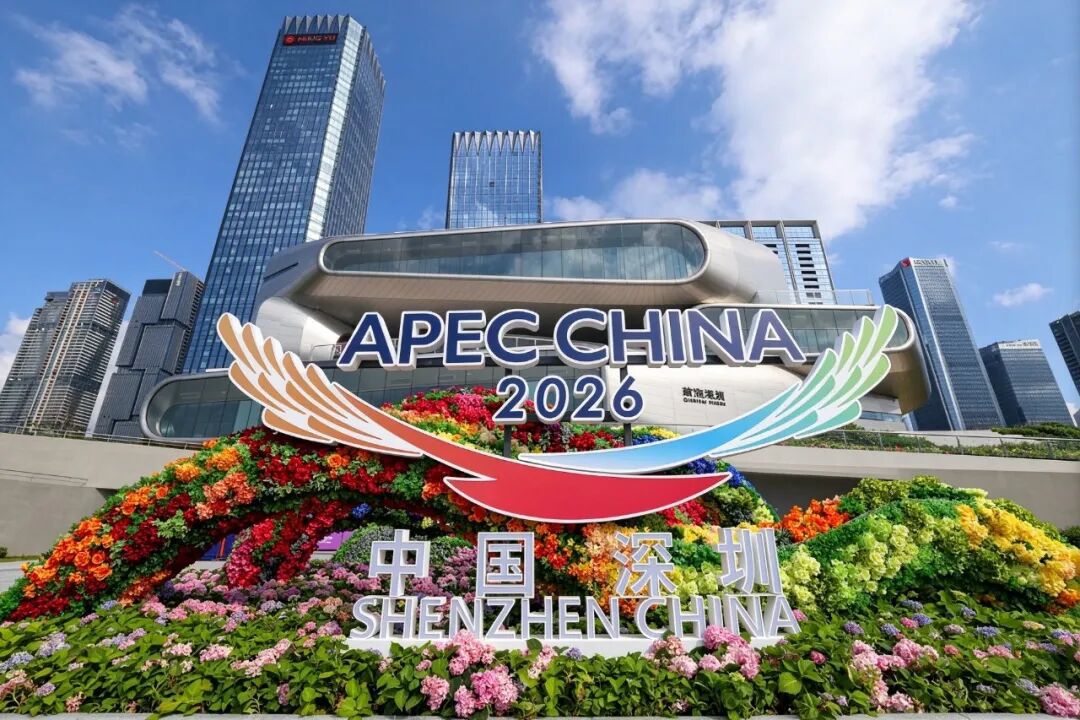
Logo of the 33rd APEC Economic Leaders' Meeting
How to Answer the Question of Our Times
Looking back to history, one can see that with the end of the Cold War, economic cooperation in the Asia-Pacific region entered a fast track. The APEC, founded in 1989, held its first Economic Leaders' Meeting in 1993. Since then, APEC cooperation has been continuously elevated, triggering various sub-regional and bilateral cooperation mechanisms across the Asia-Pacific.
Nurtured by an institutional environment of openness and cooperation, the Asia-Pacific region has gradually grown into the most dynamic region for global trade and investment, contributing a major share of world economic growth over the long term. The 1994 Bogor Goals established the long-term direction of trade and investment liberalization. The Putrajaya Vision 2040, adopted in 2020, proposed building an open, dynamic, resilient and peaceful Asia-Pacific community, anchoring new pathways for regional cooperation.
At the same time, one must clearly recognize that Asia-Pacific open regionalism is at a critical juncture of transformation, upgrading and acceleration. On the one hand, trade protectionism and economic nationalism are on the rise. Under the influence of de-globalization trends, tariff barriers and discriminatory trade and economic measures have increased globally, the "weaponization" of economy has intensified, global industrial and supply chains have suffered man-made disruptions, and the efficiency-oriented logic of regional industrial division of labor is being squeezed by a "security-first" logic.
On the other hand, the new round of technological revolution represented by artificial intelligence, big data and other technologies is thriving, exerting a disruptive impact on labor production methods and the forms of factor flows, and the tech-revolution is profoundly changing the foundation and landscape of Asia-Pacific cooperation and development. Amid these changes, whether to move toward closed and exclusionary bloc politics or to uphold open and inclusive integration tests the strategic wisdom of regional economies and constitutes a question of our times that all countries must answer.
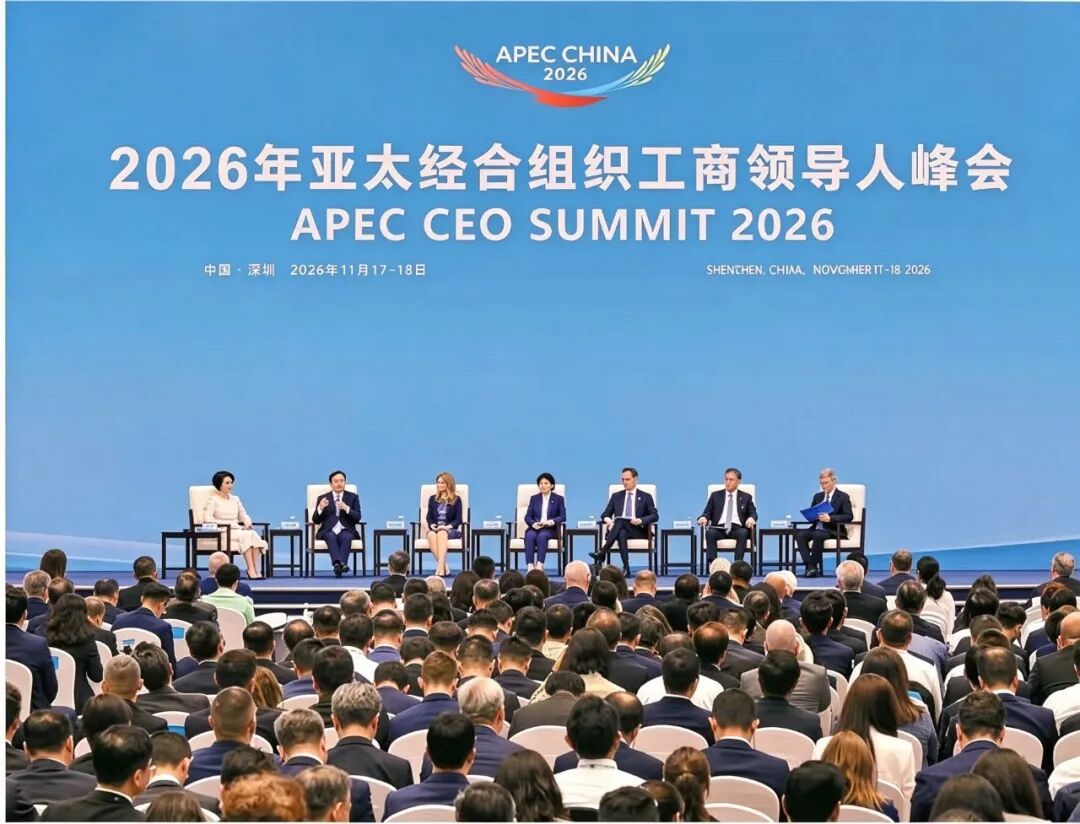
The 2026 APEC CEO Summit in Shenzhen
China Injects Certainty into Regional Cooperation
As a firm supporter and important leader of Asia-Pacific regionalism, China has injected certainty into regional cooperation through institutional opening-up. China's overall tariff has been reduced to 7.3%, lower than the commitment upon its WTO accession. The negative list for foreign investment access has been continuously shortened, and access restrictions in the manufacturing sector have been fully eliminated. China is also advancing its accession to the Comprehensive and Progressive Agreement for Trans-Pacific Partnership (CPTPP) and the Digital Economy Partnership Agreement (DEPA), aligning itself with high-standard international trade and economic rules.
Since the Regional Comprehensive Economic Partnership (RCEP) came into full effect, China's goods trade with the RCEP members has steadily accounted for more than 30% of its total imports and exports. The China-ASEAN Free Trade Area 3.0 will incorporate the digital economy, green economy and supply chain connectivity into its cooperation framework, further advancing regional integration from tariff reduction toward joint rule-building. These concrete measures demonstrate that China's door of opening-up will only open wider.
The deeper support lies in the overall leap in China's logic of opening-up. Over more than four decades of reform and opening-up, China has evolved from factor-driven opening-up to today's institutional opening-up in rules, regulations, management and standards. The "China Opportunity" is upgrading from the 1.0 version of cost dividends to the 2.0 version of innovation dividends, institutional dividends and market dividends.
This year is the opening year of China's 15th Five-Year Plan. China is increasing high-level opening-up, fully implementing the negative list system for foreign investment access, continuously improving the business environment, and fostering a thriving ecosystem for technological innovation. From 2021 to 2025, China's imports and exports of high-tech products grew at an average annual rate of 7.9%. In 2025, exports of the electric vehicles, lithium batteries and photovoltaic products grew 3.5 times compared with 2020.
At the same time, hard and soft connectivity projects within the region are developing in tandem. The construction of the New International Land-Sea Trade Corridor continues to advance in depth, linking China's western hinterland with ASEAN and the broader Asia-Pacific market. China's super-large market and complete industrial system complement each other, providing the China opportunities for countries around the world to develop, innovate and reform.
From the banks of the Huangpu River in Shanhai to the shores of Yanxi Lake in Beijing, and further to the coast of the South China Sea, China has consistently advanced Asia-Pacific regional cooperation and integration. This journey has witnessed both the profound transformation of the Asia-Pacific region from the "world factory" to an "innovation highland" and the evolution of China's role from a participant in regional cooperation to an important provider of public goods.
The Asia-Pacific's past owes to openness, and its future hinges on cooperation. In the face of the headwinds of world economy, it is a shared historical mission for all Asia-Pacific countries to calibrate the course of open regionalism, counter the closure and decoupling with win-win cooperation, and achieve common development through closer cooperation.
Writing by Bao Zhipeng (Assistant Researcher at the Institute of Ethnology and Anthropology, Chinese Academy of Social Sciences); Trans-editing by Wang Shixue and Zu Hongbing
