


Can Thailand become a high-income country in 12 years?


Thai Prime Minister Anutin Charnvirakul paid an official visit to China from July 16 to 20. This was his first official visit to China since taking office as prime minister. Prior to this, the Joint Public-Private Consultative Committee formulated a "12-year economic roadmap."
This is a long-term strategy aimed at leading Thailand out of the middle-income trap and toward becoming a "high-income country." The goal is to raise per capita annual income to approximately $15,000 and elevate the country's competitiveness to the global top 20 by 2030.
The roadmap seeks to drive Thailand's transition toward an innovation-driven, high-tech, and high-value-added economy by restructuring seven core industrial sectors. These seven core industries include: premium agriculture and food, future automotive industry, electronics and digital industry, medicine and health industry, high-quality tourism, trade, and the creative economy.
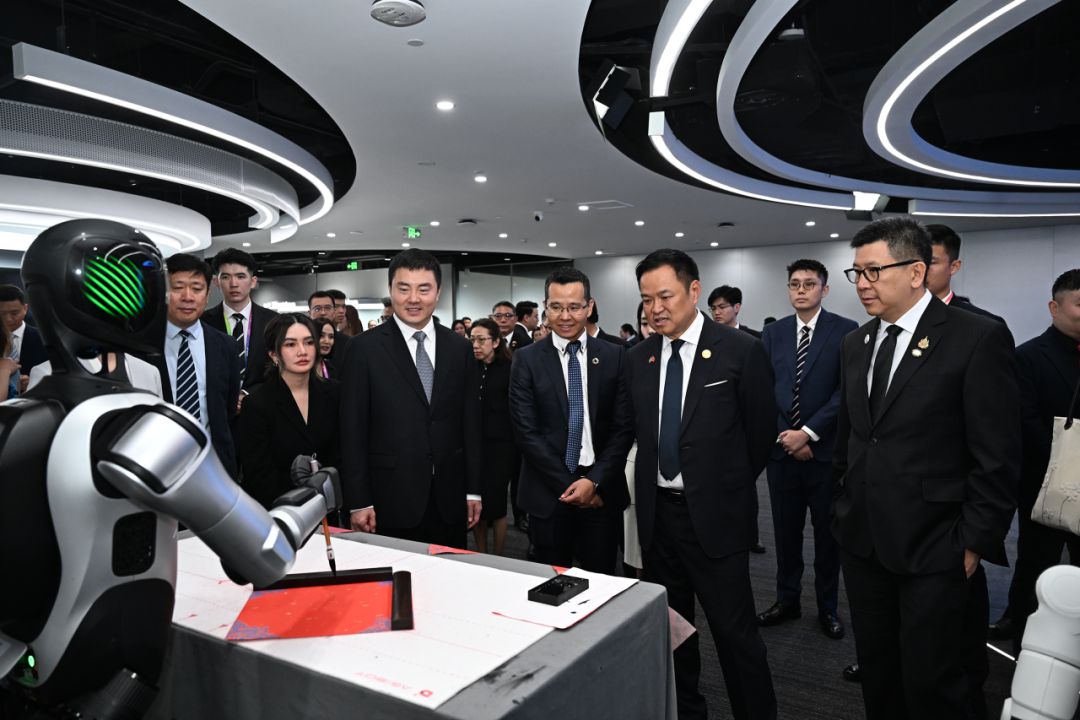
Thai Prime Minister Anutin Charnvirakul visits China.
Five strategic cost advantages
The extent to which the identification of these seven target industries can drive Thailand's economic development ultimately depends on the country's "strategic costs." On the positive side, Thailand is not starting from scratch — it possesses five strategic cost advantages that support the development of these target industries and create opportunities for the economic roadmap to bear fruit in the long run.
Improved Digital Infrastructure. Thailand has extensive 5G network coverage, a mature digital payment system (PromptPay), and a regionally recognized digital infrastructure framework, which effectively reduces business operating costs. This also serves as a key factor in attracting investment in smart electronics and digital industries, hyperscale data centers, cloud services, and the digital economy.
Supports from private enterprises. Large private enterprises participate in strategy formulation through the Joint Public-Private Consultative Committee, providing financial, technological, and business network support for the development of target industries. The enterprises will alleviate government budget constraints while accelerating technology transfer, innovation, and supply chain development, and they will also strengthen their connection with local Thai enterprises and SMEs.
The "Thailand Fast Pass" mechanism introduces digital systems, automation technologies, and artificial intelligence into government approval and service processes, helping to streamline administrative procedures, reduce bureaucratic discretion, enhance transparency, and further optimize the investment environment. It will also thereby create more favorable institutional conditions for the development of the seven target industries.
The "China + 1" dividend. If Thailand can maintain policy stability and fully leverage its geographical advantages and infrastructure strengths, it will be well-positioned to attract more investment in the future automotive industry, smart electronics, and high-tech sectors.
Advantages in food, health and tourism. The global food security crisis, climate change, and the trend of population aging continue to drive up demand for quality food, health products, and medical services. Combined with Thailand's potential in tourism resources, the country has clear advantages in developing premium agriculture and food, medicine and health, and high-quality tourism — all of which are key engines for the realization of the economic roadmap.
Internal risks and external challenges
The economic roadmap must face a series of deep-rooted structural constraints and challenges within Thailand.
First, lack of political and policy continuity. Frequent changes in Thailand's political landscape often undermine the stability of long-term strategic planning, as policy directions are repeatedly adjusted or abandoned with shifts in power, severely eroding investor confidence in long-term investment commitments.
Second, corruption and patronage networks. Thailand's Corruption Perceptions Index (CPI) has yet to show improvement, posing a major obstacle to attracting high-quality foreign investment that values good governance.
Third, highly monopolized market structure. Thailand's economy is largely dominated by a small number of large capital groups. Without effective enforcement of antitrust laws, it remains difficult for SMEs to grow and compete in the global market.
Fourth, demographic crisis and labor structure. Thailand has already entered an aging society, with the working-age population continuing to shrink, while welfare expenditures for the elderly keep rising. At the same time, Thailand's education system has yet to produce sufficient high-skilled talent, such as AI specialists, in a timely manner.
Meanwhile, Thailand's economic structure is highly dependent on and closely tied to external factors, which directly affect GDP growth.
First, excessive external dependence. Approximately 60%–70% of Thailand's GDP relies on exports and tourism. Any slowdown in global economic growth or trouble among major trading partners can paralyze the Thai economy.
Second, energy cost crisis and inflation. Thailand is highly dependent on oil imports. When international conflicts or wars break out, transportation costs and commodity prices surge sharply. This problem is further exacerbated by the slow transition of Thai industry toward clean energy.
Third, new trade barriers. Carbon tariffs introduced by Europe and the United States are impacting Thai exports, as most Thai factories still use fossil fuels for electricity generation and rely on traditional production technologies.
Fourth, monetary policy fluctuations. Fluctuations in U.S. Federal Reserve interest rates directly trigger capital outflows and cause significant volatility in the Thai baht exchange rate.
A long way to go to achieve the goals
The "12-year economic roadmap" is an indispensable strategy for Thailand to enhance its national competitiveness and move toward high-income status. However, due to constraints in economic structure, bureaucracy, political stability, and global economic volatility, achieving all the set goals in full still faces considerable challenges.
Based on a qualitative assessment, the roadmap's probability of success is at a moderate level. Among the seven target industries, they are expected to benefit the most from foreign investment and production base relocation. Meanwhile, SMEs and grassroots workers will still need systematic improvements in funding, technology, productivity, and labor skills to ensure that economic growth more broadly benefits the grassroots economic system.
Key conditions for the roadmap's success include: policy continuity across successive governments, reform of the bureaucratic and legal systems, investment in education, research and innovation, upgrading the productivity and skills of the labor force and SMEs, and fostering a level playing field while reducing monopolies.
Even if not all goals are fully achieved within 12 years, the roadmap still holds significant value as a long-term strategic framework — helping to accelerate bureaucratic reform, optimize the economic structure, strengthen investor confidence, and lay a solid foundation for Thailand's sustained economic growth in the future. If implementation proceeds steadily with coordinated efforts from all sectors of society, Thailand's sustainable transition to a high-income country should be well within reach.
(The author Dr. Krittika Sawetamornkul is Senior Advisor to the Committee on Land, Natural Resources and Environment of the Thai House of Representatives. She is also Associate Dean at the School of Public Administration, Dhurakij Pundit University, Thailand.)
