


Can "Abe's girl" deal with the predicament in India-Japan ties?


Makihara Hideki, Japan's former Minister for Economy, Trade and Industry, publicly criticized India on X July 14, saying that "the lack of progress in India's Shinkansen project is 100% India's responsibility," and that "even if Indians make a promise, they will immediately go back on their word." He also said that "even the recent visit by Japanese politician Takaichi Sanae to India for talks with Modi failed to turn the situation around."
Three days later, Indian Ministry of External Affairs spokesperson Randhir Jaiswal hit back, calling Makihara's remarks a personal opinion that was seriously inconsistent with the facts. Randhir explained that Japan's high-speed rail technology was still in the development phase and that India was unwilling to wait idly.
This dispute occurred shortly after Japanese Prime Minister Takaichi Sanae's visit to India.
Since Makihara Hideki is not an ordinary netizen but was a senior Japanese cabinet official with extensive experience in economic and trade negotiations. Since Makihara had previously been directly involved in the project, his criticism can be said to reflect the long-suppressed resentment that Japan's industrial circles have harbored toward India over the years. This sharp criticism has stirred up widespread debate, exposing the deep structural contradictions in India-Japan cooperation.
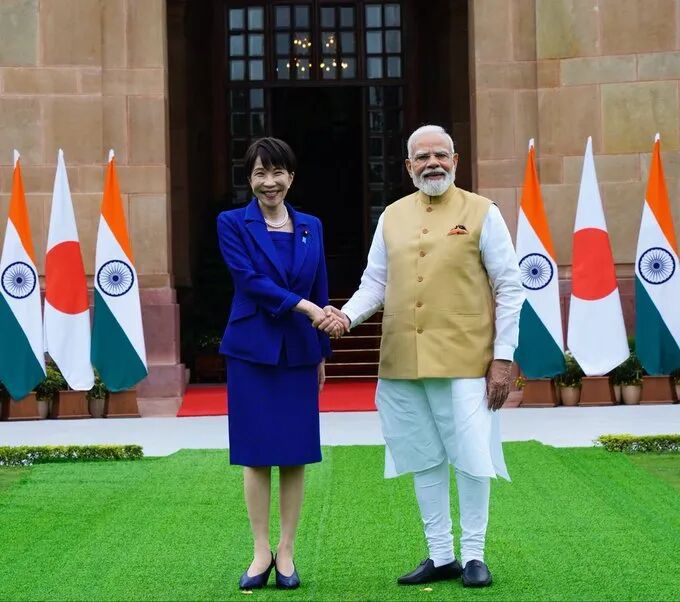
Japanese Prime Minister Takaichi Sanae's visit to India
Blunders behind "brother-sister diplomacy"
From July 1 to 3, 2026, Takaichi Sanae attended the 16th India-Japan Summit in New Delhi. The visit attracted considerable attention because it coincided with the 20th anniversary of former Japanese Prime Minister Abe Shinzo's first articulation of the "Free and Open Indo-Pacific" concept, and also came at a time when the U.S. military officially reverted the name of "U.S. Indo-Pacific Command" to its original "U.S. Pacific Command." As "Abe's girl," whether Takaichi Sanae would position herself as a "steadfast inheritor of the Abe line" on India policy was closely watched.
The visit yielded a number of outcomes, including 16 formal agreements, three joint statements, and 129 corporate memoranda of understanding. 150 Japanese companies pledged approximately $12.5 billion in investment. Most importantly, the two countries signed their first-ever joint defense research and development agreement (UNICORN, or Unified Complex Radio Antenna) in the defense sector—their first substantive joint R&D and production agreement for defense equipment.
However, Modi and Takaichi Sanae's "brother-sister diplomacy" also added some dramatic and comical blunders to the visit.
Takaichi Sanae happily embraced Modi's address to her as "my beautiful sister" and spoke at length about "continuing our relationship as brother and sister." But Japanese media later revealed that Modi's original words were merely "my sister," with no mention of "beautiful"—the word was a mistranslation by the simultaneous interpreter. The English transcript from India's Ministry of External Affairs also confirmed that no such word as "beautiful" appeared.
Could this be a harbinger of something in India-Japan relations? Beneath the grand ceremonies and fervent "friendship" lies a mutual misreading.
Abe Shinzo: Major driver of India-Japan relations
After India's independence, the world quickly entered the bipolar Cold War structure. With Japan and India long belonging to different camps, bilateral relations remained lukewarm for a long time. After the Cold War ended, Japanese business circles initially developed a keen interest in India, but this soon turned into disappointment. Strategically, India-Japan relations have always been seeking strategic enthusiasm.
The major driver behind the substantive transformation of India-Japan relations into a "Special Strategic and Global Partnership" was Abe Shinzo.
When Abe first took office in 2006, he placed India-Japan relations at the heart of his geopolitical thinking. In 2007, Abe delivered his famous "Confluence of the Two Ocean" speech to the Indian Parliament, systematically articulating for the first time a strategic vision spanning the Indian Ocean and the Pacific. He actively promoted the U.S.-Japan-Australia-India quadrilateral security dialogue and the Malabar naval exercises, laying the track for India-Japan security cooperation.
After Abe returned to power in 2012, he proposed a "Democratic Security Diamond," clearly positioning India as a key fulcrum for balancing Asia's uncertain future. Following Modi's election in 2014, he made a quick visit to Japan, elevating bilateral ties to a "Special Strategic and Global Partnership." Abe even became the first Japanese prime minister invited to attend India's Republic Day parade. During this period, both the entry into force of the Japan-India Nuclear Energy Agreement and Japan's securing of the Mumbai-Ahmedabad high-speed rail project with ultra-low-interest loans marked Abe's substantial investment and strategic enthusiasm toward India. Through personal political trust and values-based diplomacy, Abe built the foundation for an India-Japan "honeymoon," transforming the relationship from mere economic assistance into a comprehensive strategic coupling that encompasses defense, infrastructure, and supply chains.
But even by the time Abe Shinzo formally stepped down in 2020, India-Japan relations had generated "more sound and fury than substance," with few tangible outcomes on the ground. Many strategic concepts (such as the Asia-Africa Growth Corridor) remained stuck in the blueprint/PPT stage for years. After Abe, Japanese Prime Ministers Suga Yoshihide, Kishida Fumio, and Ishiba Shigeru—though inclined to continue the momentum of India-Japan cooperation—found it difficult to recapture that full enthusiasm. The flagship Mumbai-Ahmedabad high-speed rail project became almost a "half-finished building" in India-Japan cooperation.
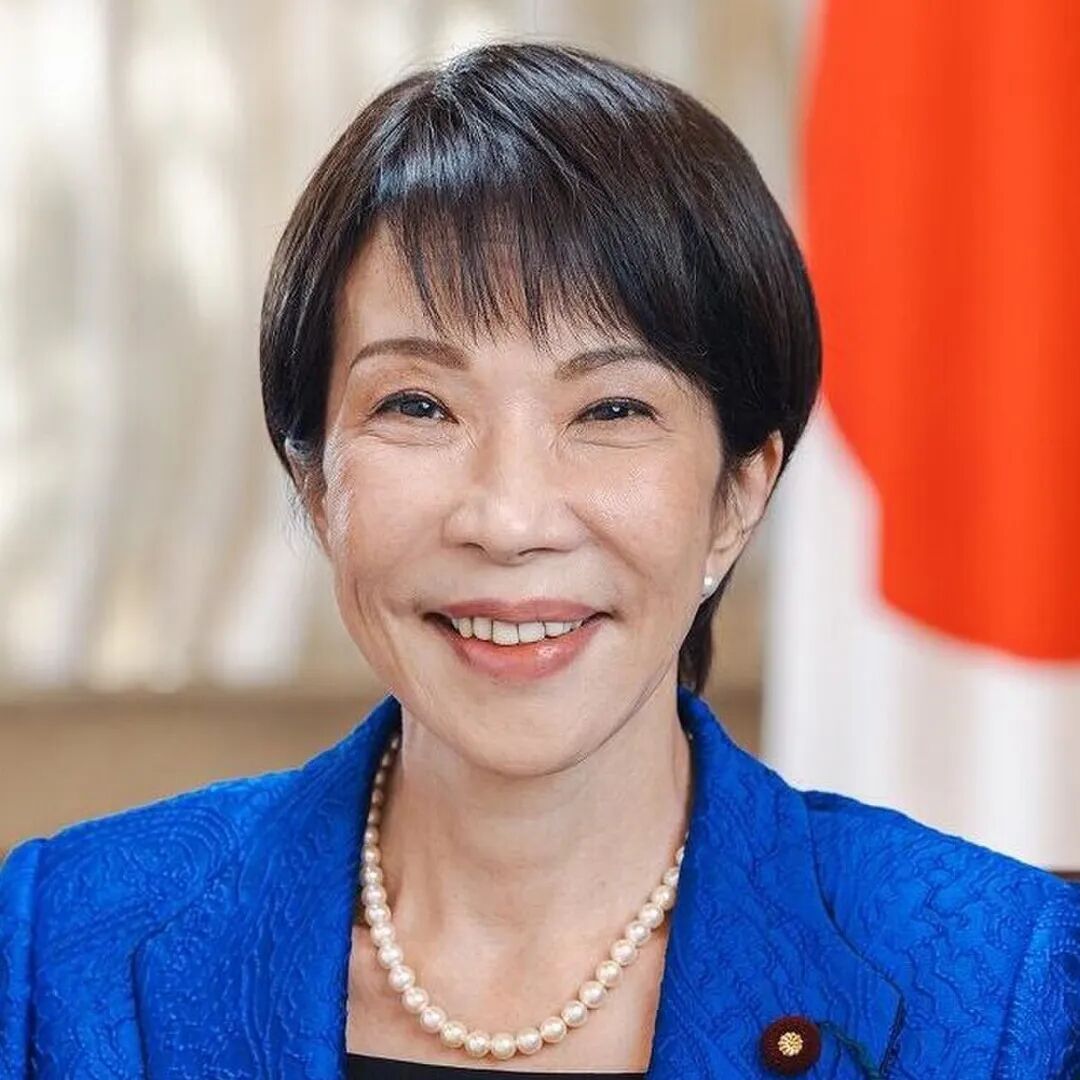
Takaichi Sanae, Abe's girl
Strategic layout to India by Takaichi Sanae, Abe's girl
According to Japanese media, Modi's address to Takaichi as "sister" was actually proposed by Takaichi herself during the talks: citing that Abe Shinzo had once called Modi "brother" and that she regarded Abe as her own elder brother, she asked Modi to call her "sister."
Abe's "sister" is clearly attempting to respond to new geopolitical anxieties on the foundation of Abe's legacy, and the core outcomes of her approach show a distinct shift from traditional infrastructure toward economic security and cutting-edge technology transfer. This strategy echoes the priorities of the Abe era while also adapting to Japan's own evolving strategic needs to strengthen cooperation across various fronts.
First, there is the "de-Chinaization" strategy on the supply chain. Unlike the Abe era's focus on high-speed rail and large-scale ODA (Official Development Assistance), Takaichi Sanae and the Modi government signed a Joint Declaration on Economic Security Cooperation, targeting four key areas: semiconductors, critical minerals (rare earths, lithium, cobalt), battery supply chains, and active pharmaceutical ingredients. The two sides plan to build an "India-Japan Semiconductor Industry Corridor". With Japan providing technologies to co-establish a rare earth processing chain independent of China, the two sides are clearly aimed at reducing dependence on Chinese supply chains.
Second, there is the substantive breakthrough in defense cooperation. While the Abe era focused on strategic dialogue and military exercises, Takaichi has pushed for the first-ever military hardware joint R&D agreement (the UNICORN project) since the establishment of diplomatic ties. This marked the upgrade of India-Japan defense cooperation from "joint exercises" to "joint development of military technology."
Third, new frameworks for finance and investment have been established. The two sides launched a "Japan Business Week" mechanism, reaffirming the target of 10 trillion yen (approximately $68 billion) in investment over ten years, and they set up a yen-rupee direct settlement channel in an attempt to bypass the U.S. dollar intermediary and diversify geopolitical financial risks.
There is no doubt that these outcomes show that Takaichi is continuing the legacy of Abe's "Indo-Pacific Strategy," adapting it to the "counter-China" needs of the new era. By translating the legacy into a substantive "economic security" entwinement that covers semiconductors, rare earths and defense hardware, Takaichi aims to address Japan's concerns about its own industrial vulnerabilities amid the U.S.-China rivalry. India, for its part, is actively embracing this approach, seeking strategic solidarity under "Trump 2.0."
India and Japan destined to let each other down
Just as with Abe Shinzo's visit to India in 2017, Takaichi Sanae's visit also produced an array of agreements. But India-Japan relations have long been mired in the dual quagmire of mismatched strategic aspirations and weak implementation. Can this truly be dealt with by "Abe's girl"?
First, there is the "tuition-paying " curse regarding India's business environment. The Japanese government and business circles hold sharply polarized views on India-Japan cooperation. The Japanese government's enthusiasm is rarely matched by the enthusiasm of Japanese conglomerates and industries to invest in India. The first Shinkansen high-speed rail line in India, started at huge cost during the Abe era, remains unfinished and delayed, with its completion nowhere in sight. Makihara Hideki's criticism reflects the extreme disappointment of Japanese senior officials with India. In fact, Japanese business circles have developed a entrenched perception of the Indian market as a "scam." How can Takaichi Sanae's investment targets possibly be achieved under such circumstances?
Second, there is the illusion of industrial complementarity. Japan wants to transfer production capacity and technology, but India pursues full industrial chain autonomy and technology acquisition. The two sides face a clear hierarchy gap and trust deficit in technological cooperation in areas like semiconductors. Japan's anxiety after its economy was overtaken by Germany coexists with India's ambition to "catch up with Japan and surpass Germany," making it difficult to achieve synergy in high-value-added industrial collaboration. As Japan's economy is overtaken by India in size, the anxiety toward India is increasingly growing in Japan. As U.S. Deputy Secretary of State Christopher Thomas Landau stated in New Delhi in March 2026, the United States would not repeat the "mistake" of 20 years ago in China policy by subsidizing India to grow into a powerful economic and industrial competitor. In fact, similar views exist in Japan as well—Japan, too, cannot afford to make the same mistake of helping India develop into another China.
Finally, India and Japan both fear being betrayed or dragged down by the other in the "contain China" front. Without the U.S. leadership now, Japan wants India to be the forward edge of containing China, while India wants Japan to stand on the "front line." At the same time, both countries also have domestic political forces that advocate a rational view of China. Japan hopes to attract high-quality Indian IT talent and international students to fill the gap left by the loss of Chinese talents, but Japan's strong xenophobic air is critical of a large-scale increase in Indians in the country. People-to-people and cultural exchanges between the two countries will also face strong domestic opposition, especially in Japan.
Takaichi Sanae's visit to India has formally inherited Abe Shinzo's strategic legacy toward India and sought to break new ground in the economic security domain. But India-Japan relations still face a structural ceiling. This "honeymoon" remains a paper prosperity of summit interactions, incapable of fundamentally changing the bilateral relationship. For China, keeping strategic composure and rationally observing the substance of India-Japan cooperation remains the optimal response.
(The author Lin Minwang is a research fellow at the Institute of International Studies, Fudan University.)
