


China should support naming "death railway" as World Heritage


A dam in Kanchanaburi Province, western Thailand, was recently drained for maintenance, revealing the long-submerged remains of the "death railway" that had lain silent beneath the water for decades. Soon, the Thai government announced its intention to submit a nomination to UNESCO for the Thailand-Myanmar Railway to be inscribed as a World Heritage site.
The news has drawn widespread international attention. Supporters hail it as part of humanity's shared memory, while opponents worry it may reopen old historical wounds. How should this railway—built up with the lives of 150,000 people—be remembered?
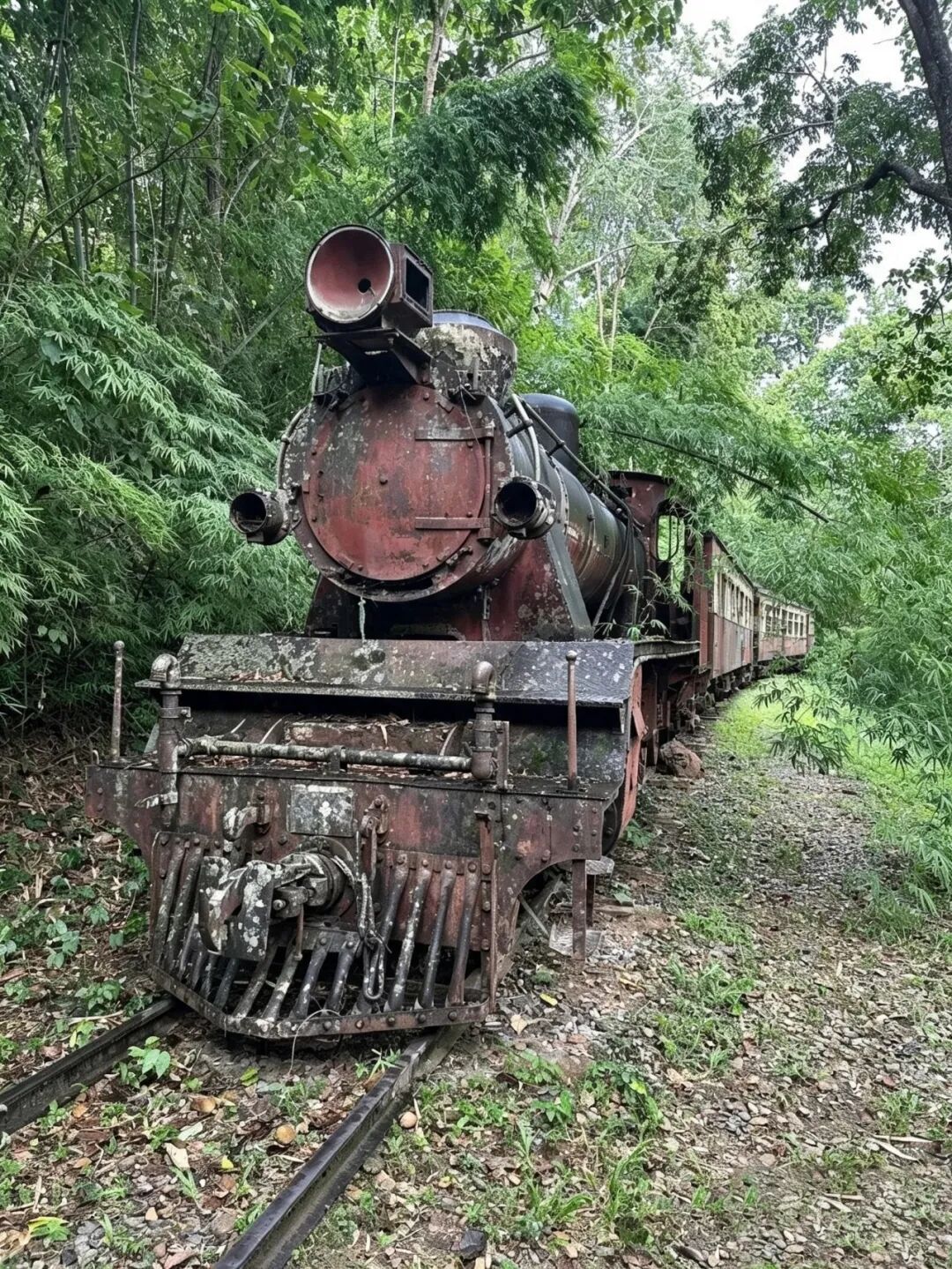
Part of the 415-kilometer Thailand-Myanmar Railway, or death railway
A Railway Built up with 150,000 Lives
The 415-kilometer Thailand-Myanmar Railway is also known as the Burma Railway or the Burma-Siam Death Railway. Spanning from Bangkok to Yangon, it was a strategic railway forced into construction by Japanese militarism during World War II. The railway aimed to support the Japanese war of aggression and secure an overland supply route to Southeast Asia.
In June 1942, the Japanese army forced approximately 62,000 prisoners of war (POW) of the Allied Forces and about 350,000 Southeast Asian laborers to work through virgin jungles and along steep cliffs. A project originally estimated to take six years was compressed into just 16 months under the threat of Japanese bayonets. During the construction, prisoners and laborers were made to work 16 to 20 hours a day. Due to torture, tropical diseases, starvation, and malnutrition, the total deaths exceeded 150,000. For every 10 meters of track laid, two or three people lost their lives. The harrowing testimony of Paul Duncan, a British POW, still haunts: "They were forced to work under the threat of bayonets and bamboo sticks, with death, malnutrition and disease ever present."
This railway deserves to be remembered by the world, not only because it records the brutality of war, but also because it represents a collective memory of suffering and trauma shared by multiple ethnic groups and nations. Among the victims of the railway's construction were Allied POWs from Britain, Australia, the Netherlands, and the United States, as well as laborers from Thailand, Myanmar, Malaysia, Indonesia, China, and other Asian countries. Each sleeper and every rail along this line is steeped in the blood and tears of people of different colors, nationals, and faiths. The railway is not an exclusive memory of any one nation, but a shared narrative concerning war and peace, violence and humanity, and aggression and resistance. These should all be inscribed in the annals of human civilization.
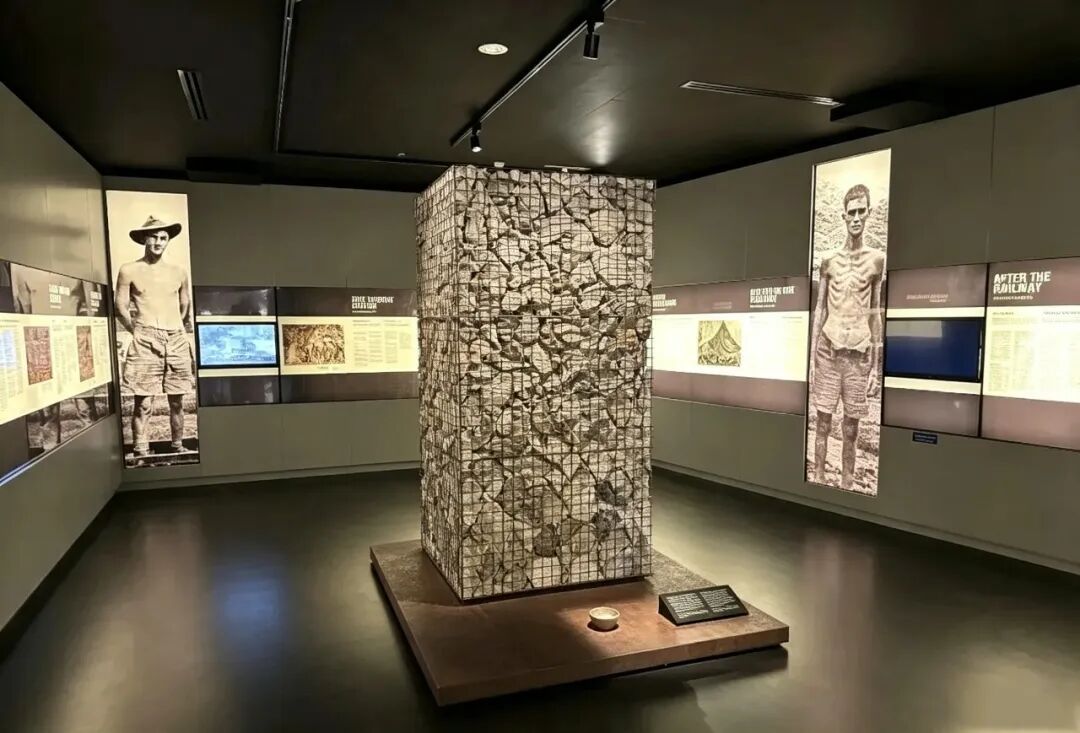
Displays at the museum of Thailand-Burma/Myanmar Railway Center
Struggle between Historical Memory, Diplomatic Reality
Nevertheless, the nomination of the Thailand-Myanmar Railway as UNESCO heritage is not without controversy. Japanese media have expressed concern that seeking World Heritage status under the name "Death Railway" might strain Japan-Thailand relations. Some in Japan worry this could exacerbate "friction" with Thailand over historical issues. Such concerns reveal a deeper question: when historical memory implicates multiple countries, how does one balance factual truth-telling with international relations? Thailand's response is worth pondering. At the nomination hearings, Thai officials made it clear that the aim of the bid is "to ensure that humanity never repeats the same mistakes." Supporters of the nomination have pointed out that it is not about blaming any specific country, adding that "the historical facts are as what they are, and this name has already been widely accepted internationally as the appropriate designation." This position suggests that Thailand's motivation is not to seek a political blame over the past, but an educational mission toward the future.
In fact, UNESCO's original purpose in establishing the World Heritage and Memory of the World programs is to "promote the use of cultural heritage and raise awareness of the importance of documentary heritage." The value of Memory of the World heritage lies not in passing judgment on the rights and wrongs of history, but in ensuring that history itself is seen, remembered, and reflected upon. As demonstrated by recent Chinese inscriptions on the Memory of the World Register, such as the Steles of Shaolin Monastery and the Stele of the Bestowal of Gifts to the Temple of Adam's Peak in Ceylon, documentary heritage "reflects the exchanges and dialogues between different civilizations throughout history" and "helps enrich the diversity of the world's documentary heritage and showcase the harmonious coexistence of human civilizations."
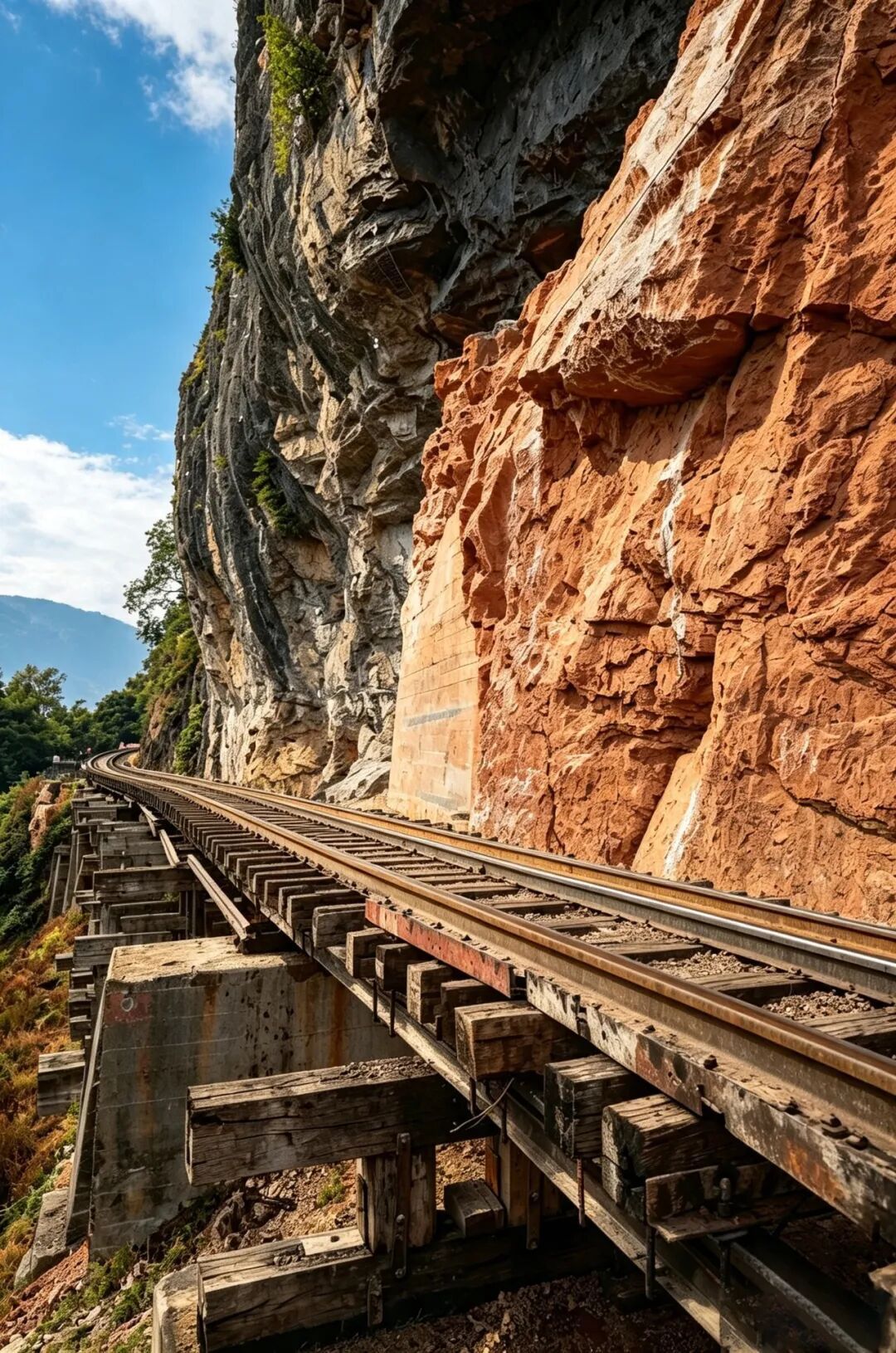
Part of the 415-kilometer Thailand-Myanmar Railway, or death railway
What Stance Should China Take Amid the Controversy?
First, China must move beyond the narrow framework of "historical responsibility" and return to the intrinsic value of shared human memory. The nomination should not be reduced to a historical trial over "who was right and who was wrong," but rather understood as a cultural endeavor in which all of humanity collectively confronts the trauma of war and safeguards the memory of peace. The railway was built by Japanese militarism, but the suffering was borne by the peoples of different nations and ethnicities. The war was launched by a few aggressors, but its lessons belong to all humanity. China has long advocated "drawing lessons from history and looking into the future." This principle is also relevant to the Thailand-Myanmar Railway nomination: remembering history is not about perpetuating hatred, but about preventing tragedy from recurring.
Second, the country should promote deep regional cooperation in heritage preservation, under the vision of a "community with a shared future for mankind". The Thailand-Myanmar Railway involves Thailand, Myanmar, Britain, Australia, the Netherlands, the United States, and multiple Southeast Asian countries, making its preservation and nomination transnational. As a major Asian nation and an active UNESCO member, China can offer technical assistance, share experience, and engage in joint research. In recent years, China and Thailand have increased cooperation in cultural heritage protection. Chinese experts have shared their experience in nominating Beijing's Central Axis as a UNESCO heritage, and Thai scholars have reported Ayutthaya's heritage conservation to their Chinese peers. This mechanism of mutual learning can be extended to the Thailand-Myanmar Railway nomination.
Third, China needs to seize the nomination as an opportunity to advance historical education and foster people-to-people exchanges. Facilities such as the Thailand-Myanmar Railway Center, the Kanchanaburi War Cemetery, and the Hellfire Pass Interpretive Center have attracted visitors from around the world. A successful nomination of the death railway would bring these sites greater international visibility, turning them into platforms for learning about World War II history and increasing mutual understanding among peoples. China could encourage its academic institutions, museums, and education departments to collaborate with Thai counterparts in exploring the multiple narratives within the railway's history, allowing people from different nations—including descendants of POWs and laborers—to meet, converse, and reconcile through this shared memory.
Fourth, it should foster a rational and constructive atmosphere in the international public discourse regarding the nomination. In essence, supporting Thailand's bid is rooted in the protection of shared human memory and the cherishing of historical lessons, not in any political posturing against any country.

The Kanchanaburi War Cemetery near the museum of Thailand-Burma/Myanmar Railway Center
Memory Is a Bridge, Not a Barrier
The Thailand-Myanmar Railway basically is a physical heritage site, but the historical archives, diaries, photographs, and POWs’ records associated with it constitute a precious documentary heritage. As a documentary heritage, the railway is a "negative" of civilization memory. This death railway, which cost 150,000 lives, should not be allowed to sink once again beneath “the waters of time” or “the tide of collective forgetting”. When the Thai government pushes this railway toward World Heritage status, it is in effect inviting all of humanity to gaze upon a tragic past and to draw from it the courage to move toward a peaceful future.
As a Chinese saying goes: "The past lesson, if not forgotten, is a guide for the future." The value of the Thailand-Myanmar Railway nomination lies precisely in turning the memory of war into a shared textbook for all humanity. In this textbook, there is neither the arrogance of victors nor the humiliation of the vanquished—only reverence for life, a longing for peace, and honesty before history.
(About the authors: Ma Junling is Executive Council Member of the China Council for BRICS Think Tank Cooperation; Yu Haiqiu is Director and Research Fellow at the Thai Studies Institute, Yunnan Academy of Social Sciences.)
