


What does it mean for Myanmar to open gem emporium in Yunnan?


The inaugural Myanmar Gems Emporium (China) was held in Ruili city, west Yunnan’s Dehong Dai and Jingpo autonomous prefecture, from July 22 to 25.
The Myanmar Gems Emporium is a legal export trading platform for jadeite rough stones officially organized by the Myanmar government. In 1964, the Myanmar government enacted the Gemstone Law, establishing the emporium system.
For a long time, the emporium was held in Naypyidaw, Myanmar, with over 90% of the world's high-end jadeite stones traded and auctioned through this platform. The emporium was thus reputed as the "pricing bellwether" of the global jadeite industry. In 2023, the total transaction value reached RMB 2.078 billion.
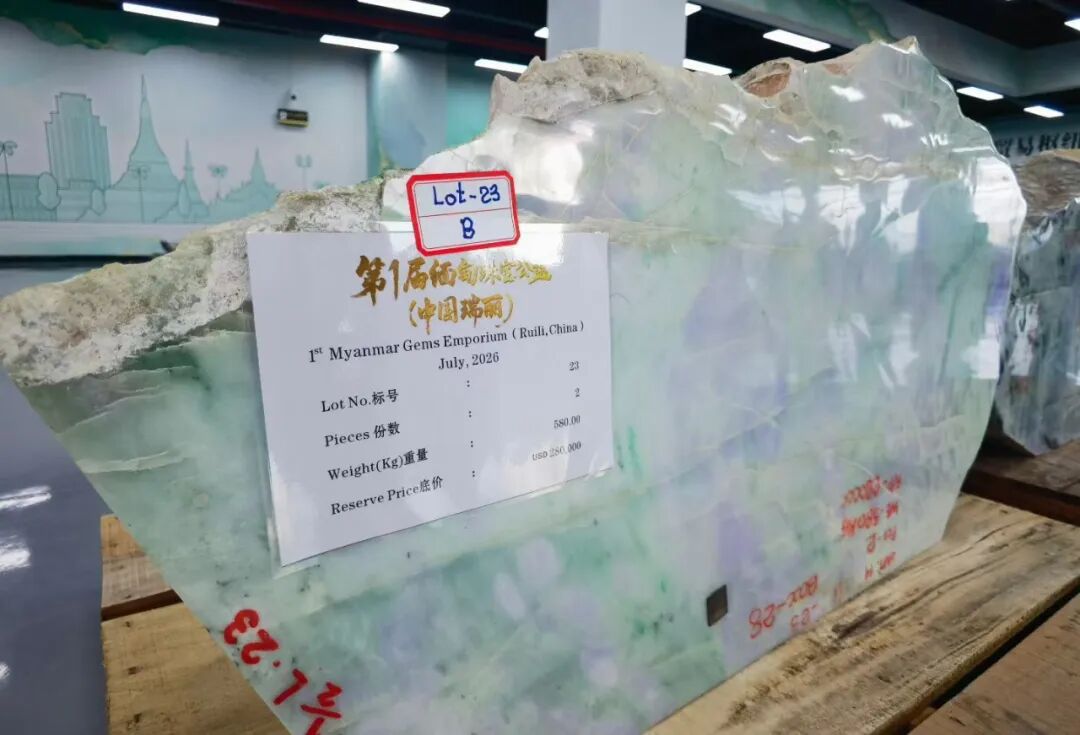
A jade stone is displayed at the inaugural Myanmar Gems Emporium in China's Yunnan.
Why is Yunnan’s Ruili chosen?
Ruili city is located in Dehong Dai and Jingpo autonomous prefecture in west Yunnan, bordered by Myanmar on three sides. It serves as a hub of the China-Myanmar Economic Corridor. The Ruili border gate faces Muse in northern Shan State, Myanmar, and the city has been a major center for China-Myanmar jade and gemstone trade since ancient times. Ruili enjoys the reputation of the Oriental Jewelry City.
Data shows that over 95% of Myanmar's jadeite enters the Chinese market through Yunnan ports, with the majority imported via Dehong prefecture. The Muse border gate facing Ruili is the only land port officially approved by the Myanmar government for the legal export of jadeite rough stones.
After decades of development, Dehong prefecture has formed a complete industrial chain integrating rough stone import, emporium auctions, design and processing, livestream sales, and inspection and certification. Over 45,000 jewelry and jade businesses registered in Dehong, employing more than 100,000 people. In 2025, local livestream jewelry sales reached RMB 11.59 billion.
Beyond location advantages and industrial foundations, policy support has also been crucial. Ruili’s Jiegao is the only border trade zone in China operating under the "within China but outside customs" supervision model, allowing goods to be freely stored, processed, and displayed. Gem stones traded at the emporium can enjoy zero import tariffs, tax exemption and tax reductions, with all transactions settled in RMB.
In February 2026, Myanmar's Ministry of Natural Resources and Environmental Conservation and China’s Yunnan Province signed a memorandum of cooperation in Kunming, agreeing to jointly host the Myanmar Gems Emporium in Ruili, Dehong. It took only five months to go from signing to implementation.
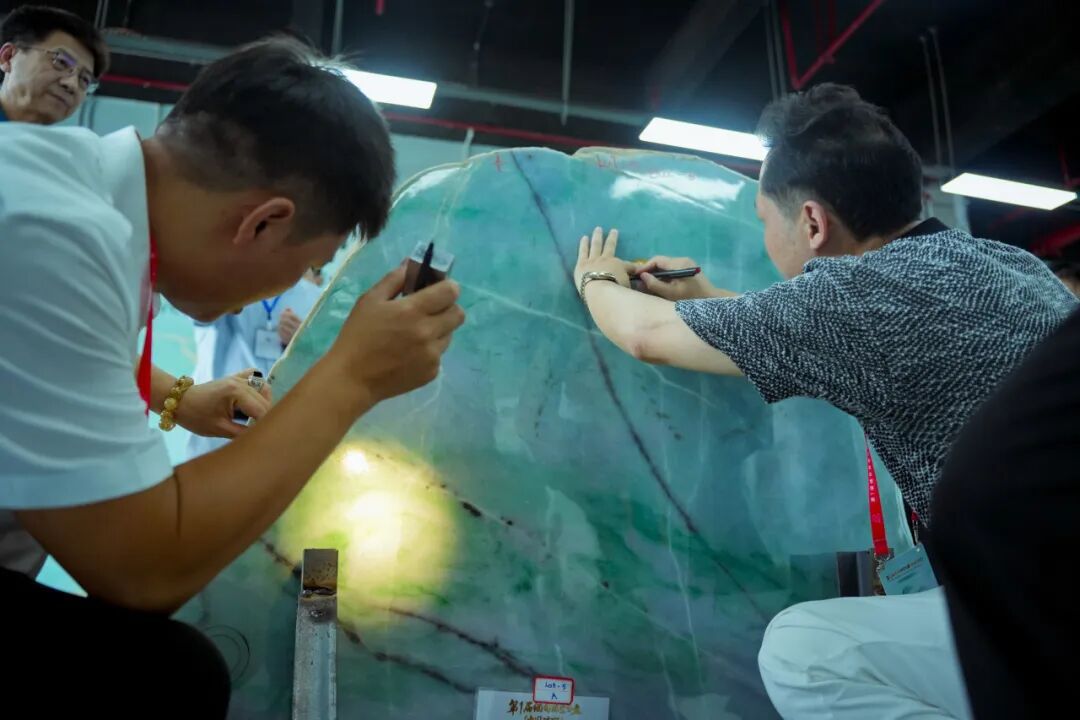
Workers set a jade stone for the inaugural Myanmar Gems Emporium in China's Yunnan.
Impact of Ruili emporium on jewelry industry
On the opening day of the emporium on July 22, Yunnan said that the event was a concrete action to implement the outcomes of talks between leaders of the two countries, expressing the hope to work with Myanmar to create "a demonstration model for economic and trade cooperation, an authoritative and professional trading platform, and a window for people-to-people exchanges."
The Myanmar side stated that hosting the Myanmar Gems Emporium in China’s Ruili is a practical measure to enhance the Paukphaw brotherly friendship and deepen exchanges and cooperation, and the jade market will play an important role in regulating the jade and gemstone trade and promoting the sustained and healthy development of related industries.
The first emporium featured a wide selection of first-hand Myanmar jadeite rough stones, covering all categories and quality levels. It attracted over 4,600 jewelry merchants from across China to register, with more than 10,000 visitors attending for viewing and purchasing.
To ensure smooth operations, Kunming Customs established a dedicated task force for full-process guidance and opened a "fast channel" for exhibited jade rough stones, offering appointment-based customs clearance with on-arrival inspection. "The entire process from overseas dispatch to warehouse entry took less than two days," said the operating company's representative.
A new pattern of alternating emporiums will be formed between Naypyidaw and Ruili. With the Ruili emporium, Chinese buyers no longer need to travel to Myanmar to bid on first-hand supplies. More importantly, the Ruili jade market will allow China to grow from a buyer's market to a major node in the jade industrial chain.
In addition, the emporium may allow multi-currency competition, expanding the use of RMB in China-Myanmar trade and facilitating cross-border RMB settlement. With a jade trading center located in Yunnan, China's influence over pricing is expected to grow, further enhancing its say in the global jadeite industry.
During the same period, Dehong prefecture also held a jewelry and jade industry investment promotion conference and a China-Myanmar jewelry industry cooperation exchange conference. The emporium not only fills Ruili's long-standing gap in high-end raw material sourcing but will also foster the formation of a complete industrial chain: From rough stone emporium bidding and on-site material processing to finished product wholesale and online livestream retail.
The gem emporium in Ruili marks a milestone in the iterative upgrading of cross-border trade along the China-Myanmar border, injecting new momentum into Yunnan-Myanmar industrial synergy, border opening and development, and the standardized transformation of the jadeite industry. It is conducive to promoting the development of China's jadeite market and reshaping Ruili's position as a jadeite distribution center.
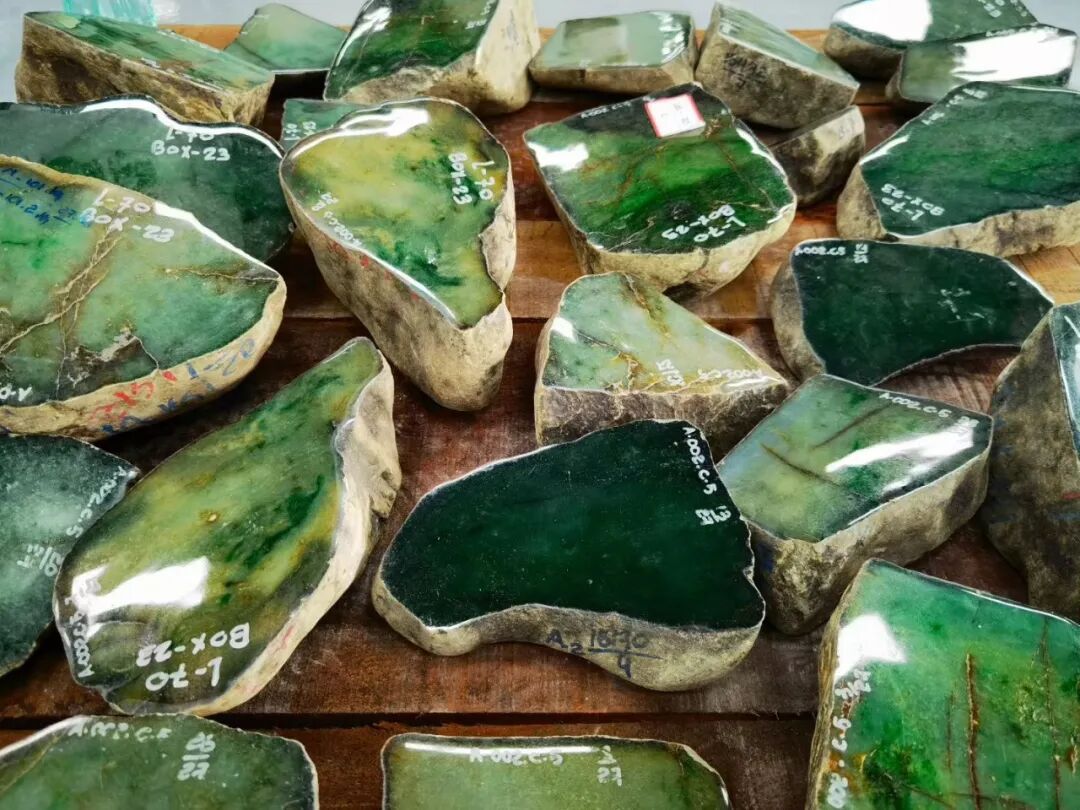
Pieces of jade stone are displayed at the inaugural Myanmar Gems Emporium in China's Yunnan.
What can come following the emporium?
In the future, China and Myanmar can further optimize cross-border logistics channels and explore establishing a dedicated fast-track customs clearance mechanism for jewelry to improve efficiency;
The two sides can upgrade the online bidding system and integrate it with offline emporium resources to break geographical constraints and enhance remote trading convenience. Leveraging the local livestream industry base, they can cultivate a new "emporium plus cross-border e-commerce" model to expand sales channels and stimulate the digital border economy.
They can strengthen industry credit system building and market supervision to protect the legitimate rights and interests of all trading parties. By enhancing policy coordination and multilateral consultations, China and Myanmar will ensure the steady implementation and long-term operation of cross-border projects.
With the jewelry emporium as a core platform, the two side can regularly hold jewelry cultural festivals, industry forums, and economic and trade negotiation events. Using jewelry trade as a driver, they can expand into diverse cross-border categories such as agricultural products, timber, and minerals to enrich the border trade system.
(About the authors: Qin Ruijing is an associate research fellow at the Myanmar Research Institute, Yunnan Academy of Social Sciences; Du Yayi is a undergraduate student majoring the Myanmar language at Yunnan Normal University; Yang Ziyin is a graduate student majoring Asian and African Languages and Literatures at the same university.)
