


2 years on, what’s the onsite progress at Funan Techo Canal?


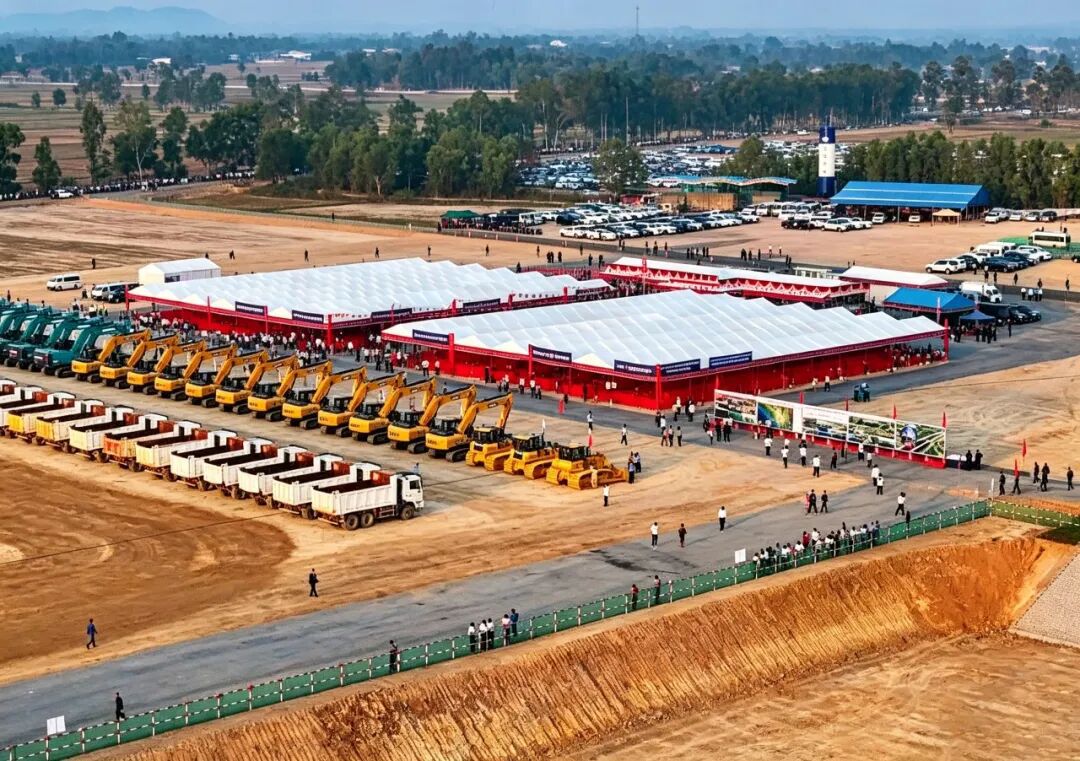
A construction site of the Funan Techo Canalat is seen in the Bourei Cholsar District in Takeo Province, Cambodia.
The Funan Techo Integrated Water Resources Management Project in Cambodia connects multiple provinces and drives the country's overall development. It is also a key project under the China-Cambodia Belt and Road cooperation framework. It has been almost two years since the project began, and I recently visited the construction site at the Bourei Cholsar District in Takeo Province, one of the canal sections.
A 180-km economic lifeline
The Funan Techo water project spans a total length of 180 kilometers, passing through four provinces—Kandal, Takeo, Kampot, and Kep—making it a vital economic artery for Cambodia.
The total investment is approximately US$1.7 billion. The project is currently divided into two main construction zones with a clear construction timeline. Phase I, located in Kandal Province's Angk Snuol District, officially broke ground on August 5, 2024. Phase II, situated in Bourei Cholsar District, Takeo Province, commenced construction on April 11, 2026, under the auspices of Prime Minister Hun Manet.
Currently, the Bourei Cholsar section is prioritizing the construction of a 5-kilometer demonstration canal, which has now completed excavation. The canal specifications are clear: a width of 100 meters, a slope of 80 meters, and a normal water level of 5 meters. The figures set a benchmark for subsequent construction.
In fact, Cambodia's Ministry of Economy and Finance conducted thorough surveys prior to the project's launch, listened to public concerns, and properly addressed residents' worries. During my visit, I learned that land and tree compensation along the route has been open and transparent, with clear compensation standards for local land and palm trees. Villagers' demands have been properly addressed, and the public support the project, laying a solid foundation for smooth project advancement.
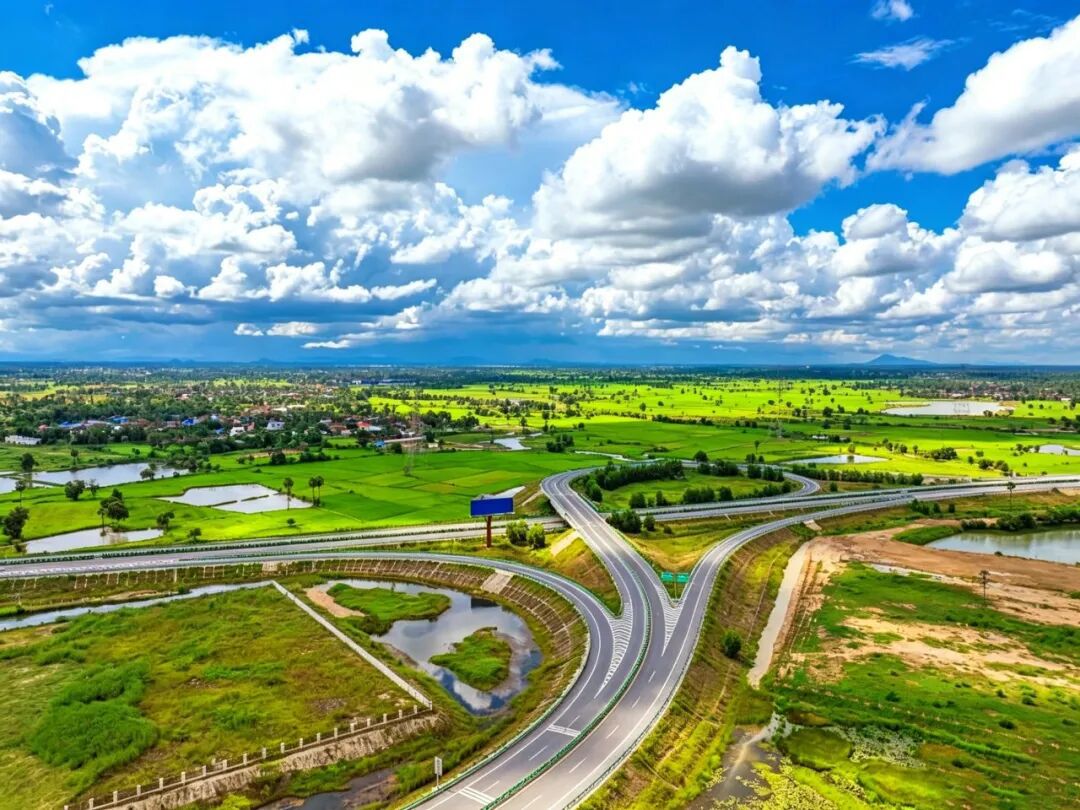
Beyond the Funan Techo water project, transport infrastructure projects under Cambodia-China cooperation are flourishing.
Scientific evidence refutes unfounded doubts
The Funan Techo Integrated Water Resources Management Project has undergone decades of research and feasibility studies. Since its initial planning, it has attracted considerable attention and sparked various criticisms. These concerns mainly focused on the canal excavation that could affect the hydrological environment of neighboring countries and the unfounded speculation that the project has military purposes. In response, professional teams conducted extensive field research and scientific assessments, ultimately concluding that the canal would not negatively impact neighboring water systems, and that claims of military use are entirely baseless.
This canal serves multiple functions with outstanding economic and social value.
First, it is an important freight corridor. Once completed, it will greatly enhance logistics efficiency along the route, drive industrial and commercial development in Kampot, Kep, Takeo and other provinces, and become a key engine for regional economic growth.
Second, the canal will link cross-border tourism routes. Leveraging the integrated land-water transport network, tourists can enter Cambodia from China and Laos via waterways and travel through multiple provinces all the way to the sea outlet. This will effectively activate tourism resources along the route.
Moreover, the Cambodian government plans to restore a canal diverting water from Preah Vihear, connecting it to the Sesan River and the Stung Sen River in Kampong Thom Province. Some observers believe that once this canal is excavated, multiple ports will be built up, particularly the ones in Kampong Chhnang Province and near Tonle Sap Lake. Several Chinese enterprises have already positioned themselves for supporting port infrastructure, with plans to extend further upstream in the future. Leveraging the existing China-Laos Railway, cross-border highways, and newly built bridges and waterways, Cambodia can build up a land-water intermodal transport network on the Indochina Peninsula.
Canal brings new hope
Cambodia was among the first ASEAN countries to support and join the Belt and Road cooperation. Over the past decade and more, Cambodia and China have worked hand in hand to deepen infrastructure cooperation, with results visible across Cambodia. As Chairman of the Cambodia-China Journalists Association (Cambodian side), I have led two consecutive annual visits, traveling through Laos and Chinese cities such as Nanning and Kunming, and I personally witnessed the development opportunities brought by Belt and Road cooperation. Benefiting from a stable domestic environment since 1998, Cambodia has deepened friendly cooperation with China and implemented cooperative projects in various fields.
Beyond the Funan Techo water project, transport infrastructure projects under Cambodia-China cooperation are flourishing: the Phnom Penh-Sihanoukville Expressway is already open to traffic, construction of the Phnom Penh-Bavet Expressway is making progress, the upgrading of Cambodia's National Road 7 (Skuon-Kampong Cham section) is nearly complete, and plans to extend National Road 7 to Ratanakiri and Mondulkiri provinces are being steadily studied.
From roads/bridges to ports, waterways and airports, Cambodia-China cooperation covers hardware facilities, technical exchanges, talent development, and many other areas, providing all-round support for Cambodia's development and reaffirming the unbreakable ironclad friendship between the two countries.
In my view, the Funan Techo project carries the hopes of the Cambodian people for a better life. The areas along the route will, in the future, leverage water transport advantages to unlock economic and tourism potential. Although there have been differing voices, the project is a livelihood one that benefits both the present and the future. I also call on Cambodian local authorities and Chinese construction enterprises to continue rigorous project supervision and keep the public informed of construction progress in a timely manner.
Looking ahead, I can see this canal will open up a waterway connecting Cambodia, Laos, and southwest China, complementing the existing land transport routes and forming an integrated transportation corridor across the Indochina Peninsula. I believe that under the Belt and Road framework, Cambodia and China will continue to join hands, allowing the fruits of cooperation to benefit both peoples and contribute to shared regional prosperity.
(The writer Soy Sopheap is the founder and director-general of the DAP Media Center based in Cambodia.)
