


U.S. reverts to “Pacific Command”, exposing India's great-power illusion


The U.S. Department of Defense announced that the "U.S. Indo-Pacific Command" would be renamed back to "U.S. Pacific Command" on June 16, while emphasizing that the command's area of responsibility and basic mission would remain unchanged.
A change in name signals a clear shift in strategy.
The renaming to "Indo-Pacific Command" in 2018 was largely driven by the U.S. need to elevate India's strategic status in order to draw it into the front line of balancing against China. With the restoration of the "Pacific Command" name in 2026, the U.S. still expects India to shoulder strategic responsibilities in containing China, but no longer deems it necessary to endorse India's rise as a great power.
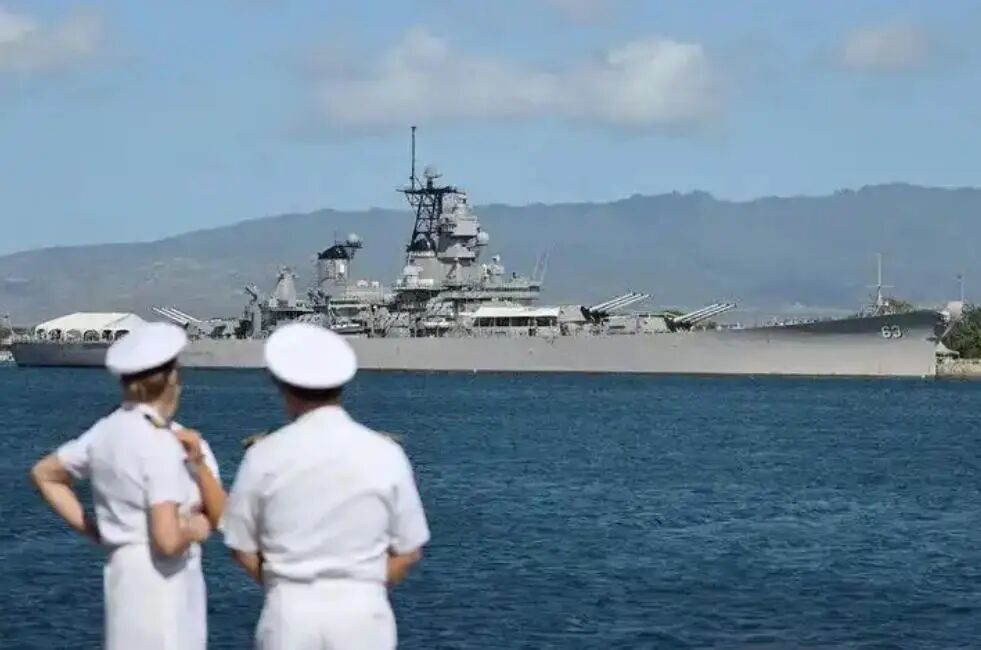
A U.S. navy ship is seen in the Pacific waters.
"Indo-Pacific" is chip against China, not commitment to India
In 2018, the U.S. inserted "Indo" into the name of its largest combatant command, the Pacific Command, renaming it the U.S. Indo-Pacific Command. The strategic context was that the U.S. was moving to implement the Indo-Pacific Strategy, elevate India's position in the U.S. grand strategy, and incorporate India into a broader U.S.-led strategic framework aimed at China.
The then-U.S. Secretary of Defense James Mattis emphasized that the Indian Ocean and the Pacific were becoming increasingly interconnected. India echoed this sentiment with strong political enthusiasm. Two days after the U.S. Pacific Command was renamed, Narendra Modi became the first Indian prime minister to deliver a keynote address at the Shangri-La Dialogue. He described the "Indo-Pacific" as a natural region and declared that U.S.-India relations had overcome "historical hesitations." India's Ministry of External Affairs formally established an Indo-Pacific Division in April 2019.
India's excitement at the time was not without basis. "Indo-Pacific" brought India out of South Asia and into America's Asian strategy. Subsequently, the Indo-Pacific Strategy allowed India to receive various entitlements typically reserved for the U.S. allies, without having to assume the obligations of an ally.
The U.S. was willing to accept this asymmetrical relationship because Washington believed that India was a vital piece that could be used to contain China. The aim of courting India was, on the one hand, to secure India's greater role in the anti-China direction in the future. At the same time, it could also drive a wedge between China and India, and the intensifying China-India friction in the border areas would prompt India to gradually increase its strategic investment against China.
As a result, India developed a long-standing miscalculation: As long as U.S.-China competition persisted, its own status would continue to rise. However, the "May 7" India-Pakistan aerial engagement in 2025 prompted Trump to reassess India's capabilities. To this day, he still describes the conflict as "India taking a heavy hit and then accepting U.S. mediation." In Trump's view, India was neither willing to accept U.S. constraints nor had it proven that it could effectively alter the regional balance of power.
More importantly, India seemed to have misunderstood. "Indo-Pacific" reflected the U.S. need to bring India into the fold, not a recognition of India's great power status or unconditional support. The U.S. never committed to supporting India's rise on its own terms. What the U.S. valued was whether India could help contain China, not India's rise per se. In March, U.S. Deputy Secretary of State Christopher Landau publicly stated that the U.S. would not repeat the mistake it made with its China policy—helping a country develop only to find it becoming a commercial competitor.
Currently, the Trump administration's "strategic contraction" is redrawing the boundaries of U.S. power projection. According to the President's Fiscal Year 2027 Defense Budget Request, the total U.S. defense budget request reaches $1.5 trillion, a record high. But the new resources are prioritized for homeland defense, defense industrial capacity, and naval power construction. Budget expansion and strategic contraction are not contradictory. The U.S. wants to concentrate its strength on areas that directly affect homeland security and U.S. superiority in the Western Pacific, rather than using its own resources to sustain a broad alliance architecture spanning two oceans.
On May 30, 2026, U.S. Secretary of Defense Pete Hegseth repeatedly invoked the term "Pacific" at the Shangri-La Dialogue, calling on partners to increase their input and explicitly requiring India to assume security responsibilities in the Indian Ocean. Half a month later, the U.S. restored the old name "Pacific Command." Together, these two moves indicate that the U.S. is no longer relying on India to construct a two-ocean strategic framework spanning the Indian Ocean and the Pacific, but instead demands that India bear the strategic costs in the Indian Ocean on its own.
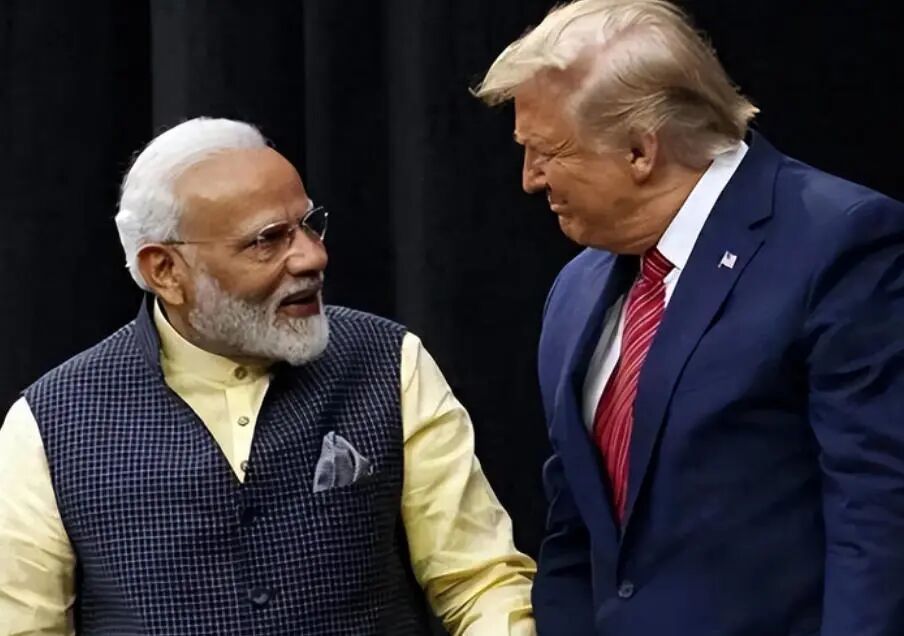
Narendra Modi and Donald Trump
Utility value is not great-power status
After the announcement of the rename from "U.S. Indo-Pacific Command" to "U.S. Pacific Command," a clear sense of frustration emerged in India.
Former Minister of State for External Affairs Shashi Tharoor asked whether this was "yet another nail in the QUAD coffin." Defense analyst Pravin Sawhney was even more pessimistic, arguing that India had lost its strategic role—"The U.S. no longer has any geopolitical need for India in the Asia-Pacific." India began to question whether its international standing, gained over the past decade through U.S.-China competition, could be sustained.
Several recent incidents have deepened this doubt.
In June, the U.S. military struck oil tankers suspected of violating the blockade against Iran in the Gulf of Oman, resulting in the deaths of three Indian sailors. India lodged a strong protest and summoned U.S. diplomats, but the U.S. did not issue the apology India had expected.
The map of the responsibility area attached to the command’s renaming announcement did not adopt India's official territorial boundaries; the map showed Pakistan-administered Kashmir and other areas outside India's borders. For India, this meant that while the U.S. was downgrading the symbolic status of India, it was also publicly disregarding India's most sensitive territorial claims.
The deeper shift reflected in these events is that the U.S. no longer feels the need to carefully accommodate India's sensitivities in order to secure its cooperation. The U.S. will still demand that India assume security responsibilities and will continue defense cooperation, but the returns India receives from such cooperation are diminishing.
India's strategic community currently tends to attribute the problem to Trump's unpredictability or explain it as a decline in U.S. power. These assessments evade the embarrassing truth: India's rise in status over the past decade was built on the U.S. willingness to exchange political accommodation for India's cooperation against China, but India mistook this utility value as proof of its own indispensability. Now that Trump has concluded that India demands much but delivers little, he is no longer willing to keep paying that cost, and India's strategic standing has consequently declined.
The Modi government finds it hardest to admit this publicly, because the improvement in U.S.-India relations has long been cited as evidence of India's rise. This assessment will also affect India's China policy calculus: if taking a hard line against China no longer secures U.S. support, India's continued escalation of competition with China will only mean bearing higher costs alone.
What India should be more concerned about is whether this renaming has anything to do with China's opposition. China has long opposed the "Indo-Pacific Strategy," a concept clearly aimed at China. In May, Chinese and U.S. presidents held a summit, agreeing to build strategic stability into the China-U.S. relations. By dropping "Indo-Pacific," the U.S. could make a symbolic gesture in adjusting U.S.-China relations without losing any military authority.
In 2018, Chinese Foreign Minister Wang Yi likened the "Indo-Pacific Strategy" to waves on the Pacific and Indian Oceans, saying they would eventually subside. As the waves recede eight years later, it is clear who has been swimming naked. India mistook the U.S. attention paid to it due to the U.S.-China competition as a confirmation of its own great-power status, but its actual capabilities have never been able to support that illusion.
(The author Chen Zhuo is a doctoral candidate at the School of International Relations and Public Affairs, Fudan University.)
