


Bangladesh First Policy: The real meaning of PM’s visit to China


As you may know, geography is destiny. Geography has always been a signal for a script predictable for a new head of government in a country like Bangladesh, surrounded by India on three sides and reliant on the important sea lanes of the Bay of Bengal. It has been an unwritten, ironclad regional law that, for the first time after every election of a Bangladeshi Prime Minister, it was always New Delhi. But Prime Minister Tarique Rahman, who came to power after the historic 2026 general elections, completely changed that scenario. Prime Minister Rahman opted not to risk travelling to New Delhi as the first foreign chief to visit India after independence to kick-start a high-stakes, four-day State visit to Beijing, opting instead for the Malaysian approach.
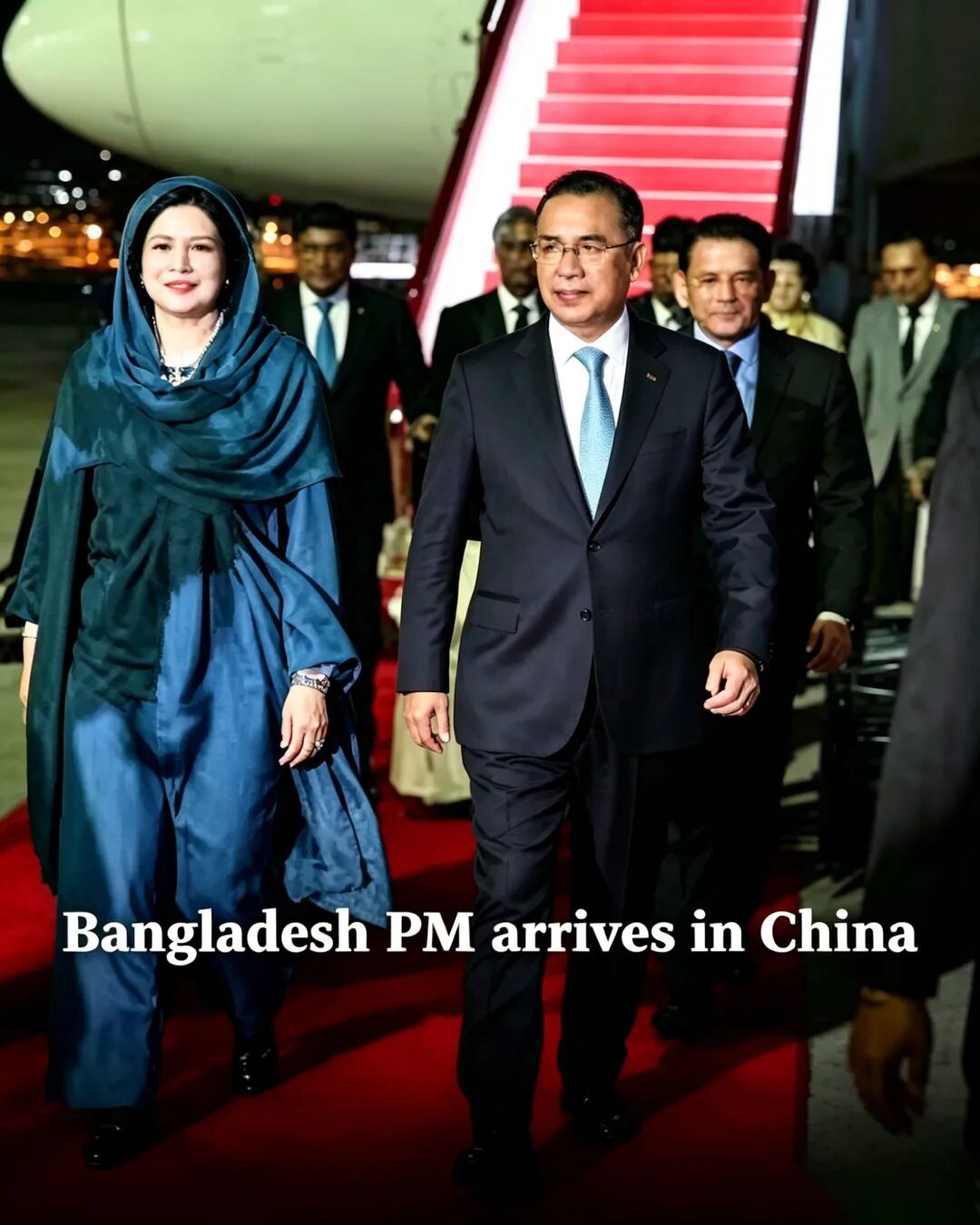
This is not a choice of non-engagement or risky engagement with the West, or a risky approach to China. Instead, it's the first milestone of the new "Bangladesh First Policy" which has now been initiated! It is a pragmatic doctrine that is a structural shift from regional historical connections to absolute economic independence and even geopolitical neutrality.
The Prime Minister's China trip can be interpreted in the context of the South Asian great power game. Dhaka's past foreign policy has been reactive and influenced by both India and the West. Rahman's strategic independence in selecting Beijing as his first major state bilateral meeting is evident. The “Bangladesh First Policy” will not consider Dhaka's engagements with the world from a Washington, Beijing or New Delhi point of view.
The ‘Bangladesh First’ doctrine is a logical evolution of national policies from the old, rigid, hard-line approach towards strategic autonomy, and it has a national interest perspective. The Prime Minister has been very busy over the past few years, pushing the image of Dhaka as only a pawn in the hands of the two great superpowers through his diplomatic efforts towards China. The Prime Minister's efforts to engage with China have highlighted this, as Dhaka would not like to be a pawn of the great powers. Instead, it views China as an important contributor to infrastructure and Foreign Direct Investment (FDI); India as an indispensable neighbor in terms of permanent geography and border security; and the United States as one of its strong partners in terms of security and an important export market. The essence of this multipolar balancing act is indeed a good way of converting geographic vulnerability into a sovereign strategic advantage.
Balance was an issue that was emphasized just prior to the trip. In Dhaka, the United States Ambassador to Bangladesh met with the Foreign Minister and reiterated that the United States' partnership with Bangladesh would be most beneficial in the long term. A less spirited government might have been a little panicked by the diplomat's comment as a warning against taking a pro-Beijing tilt. However, the Rahman government played a refined "third way" foreign policy. Dhaka's message to the United States is simple: It's worth maintaining relations with the United States for trading and export of apparel, but not at the cost of securing the best deal from China to meet the industry's needs and finance infrastructure. Dhaka has become a new great power in the Indo-Pacific region and is no longer just a battleground between the region's two powers.
China's visit is not ideology-driven; it is economic. Bangladesh is preparing for a deadline: it will exit the Least Developed Country (LDC) status in 2029. It's a double-edged sword when it comes to graduation. It is an indicator of human progress, but also the end of preferential trade opportunities, tariff-free access, and low-interest loans from around the world. There is a danger of Bangladesh becoming a middle-income country in the post-2029 era unless it receives Foreign Direct Investment (FDI), inputs of technology, and a huge industrial modernization. These can only be provided at scale by China.
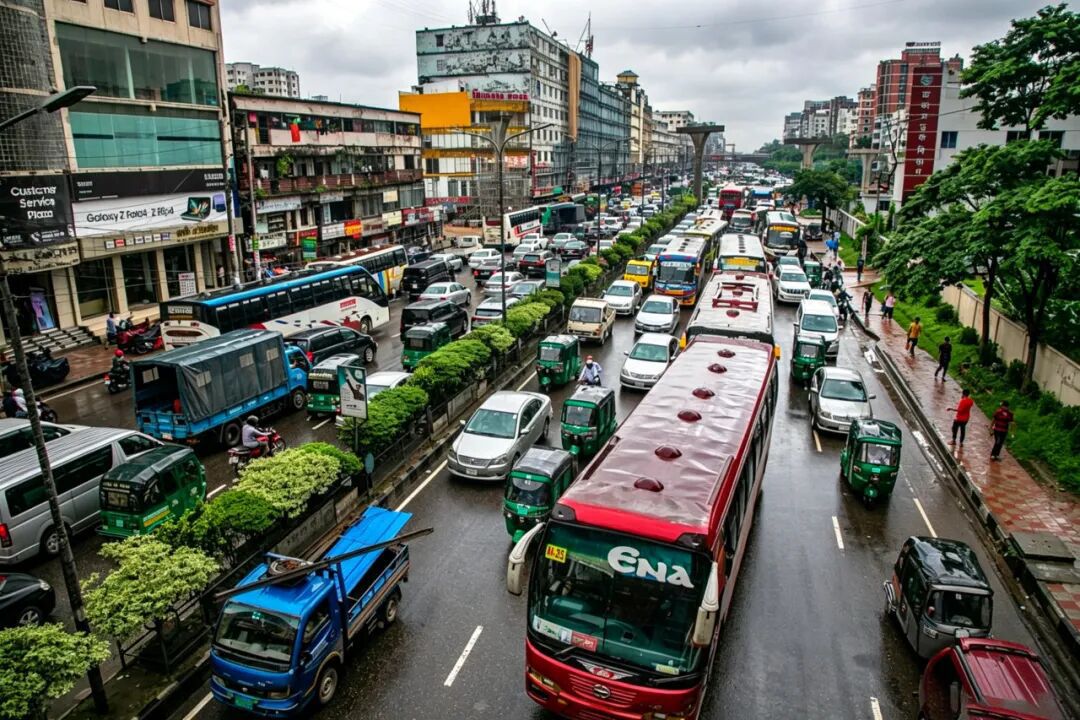
An urban view of Bangladesh
But when Bangladesh's foreign policy is articulated within the framework of managing the country's relationship with its key partners, China, the USA, and India, with immediate domestic issues as the fulcrum, it assumes a flexible shape. The looming LDC graduation in 2029 could turn into a ‘ticking bomb' if the prospect of preferential trade tariffs for LDCs is removed in 2035, and duty-free windows and technology transfers from Beijing become a reality rather than an option. Add to this the huge infrastructure backlog; the national grid and national ports are presently incapable of supporting the country's $1 trillion economy target, thus the need for multibillion-dollar financing from the Chinese for the power grid and the Mongla Port modernization. Last but not least, Bangladesh has to make a paradigm shift from basic clothing to high-value-added goods, which will be crucially dependent on the effective development of Chinese Economic and Industrial Zones (CEIZ), especially in Chattogram. Ultimately, the trip to China underscores the need to engage Beijing not for geopolitical purposes but for the structural benefits it offers for the country's survival.
The trip is a reminder of the Rahman government's willingness to do cold economic arithmetic rather than historical or geopolitical sentimentality. Beijing is viewed as a key "development friend", not a "development block," and one that has a short-term economic outlook. But the ‘Bangladesh First Policy' is pragmatic, as reflected in the specific provision negotiated during the Prime Minister's visit to Beijing. The Bangladeshi delegation did not make any general or symbolic statements; rather, it discussed three key issues crucial to a country's survival and development.
Dhaka needs offers of over $9 billion, with a large share spent on enhancing national power transmission networks and integrating renewable energy systems. Most importantly, modernization of Mongla Port is on the agenda. The work and investment from China will expand Mongla's facilities and make the port accessible to other sea trade routes, in addition to the congested port of Chattogram in Bangladesh.
The political significance of the visit could be the formal request for Chinese support for the Teesta River Comprehensive Management and Restoration Project, worth a billion dollars. Water-sharing talks with India on the Teesta have been deadlocked for more than a decade due to New Delhi's domestic political deadlock. No more diplomatic fiddling with the plight of the northern agricultural belt in Bangladesh. Dhaka's interest in the Teesta project shows that the city will make the effort to ensure the country's ecological and food security despite sensitivities in the area.
The journey is set to accelerate the construction of dedicated Chinese Economic and Industrial Zones, including the huge Chattogram zone. The objective is to attract direct investment from China by setting up manufacturing facilities in Bangladesh. It is helpful to build up domestic production and develop a supply chain to protect against potential post-LDC tariffs.
The first time Prime Minister Tarique Rahman travelled abroad is a sign of the nation's political maturation. The “Bangladesh First Policy” is nothing but an anti-India policy, or blindly welcoming China, or bowing down to America. It's a belief that's grounded in the gains the nation will receive.
The message Dhaka has conveyed to the global powers is quite clear: Bangladesh's relationship can't be based on historical credit, and its foreign policy can't be decided solely on geographic proximity. Mutual reciprocity, respect for sovereignty, and actual economic cooperation must accompany engagement. Through great power competition, Bangladesh is charting its own course towards a resilient and independent future with a focus on domestic development.
(The author Sujit Kumar Datta is a professor at the Department of International Relations, University of Chittagong, Bangladesh. He is also Director of Hong Kong Research Center for Asian Studies-Bangladesh Center).
