


Pinglu Canal changes Yunnan-ASEAN geoeconomic landscape


The map of sea access for China's southwestern region gained a new route on September 16. The Pinglu Canal — the first canal connecting rivers to the sea under national-level coordinated construction since the PRC’s founding — was officially opened to navigation.
This 134.2-kilometer canal, navigable by 5,000-tonne vessels, starts from Hengzhou in Nanning in the north, passes through Lingshan in Qinzhou southward, and runs directly to the Beibu Gulf. The canal completely breaks down the river-sea barrier between the Xijiang shipping trunk line and the Beibu Gulf seaport.
The project set four "world records": the strongest navigable capacity among canals of its kind, the fastest navigation speed among ship locks of its kind in the world, the highest drop of water-saving ship locks worldwide, and the largest scale of inland river water-saving ship locks.
The significance of the Pinglu Canal goes far beyond a single waterway — it is a strategic reshaping of the sea-access landscape of southwest China, a key link for deepening cooperation between China and ASEAN, and a historic opportunity for Yunnan to move from being an "inland province" to a "gateway for opening-up."
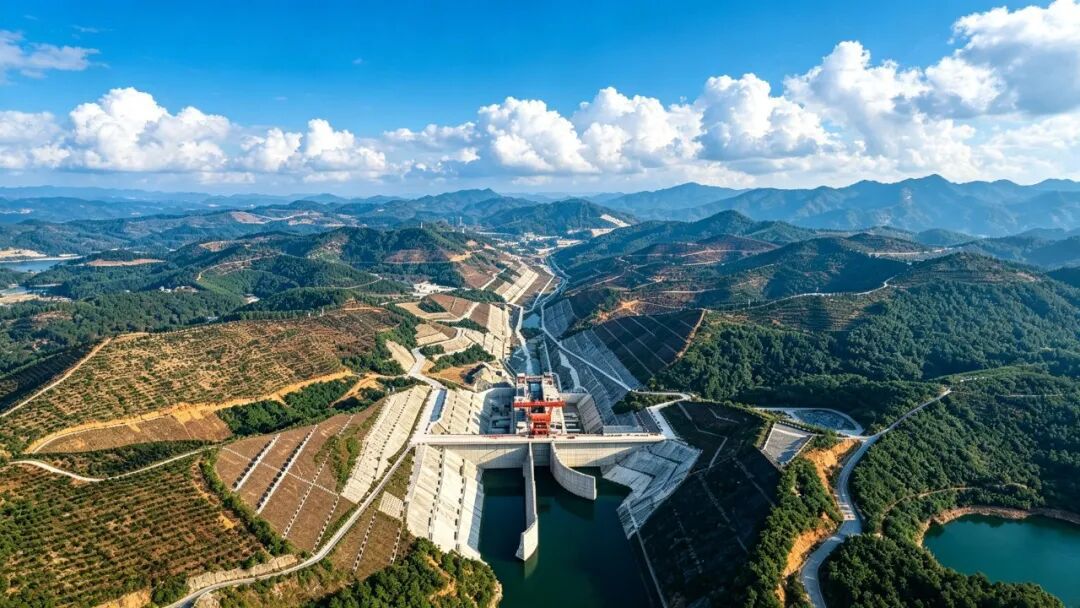
A view of the Pinglu Canal
A New Channel for China-ASEAN Connectivity
The idea of the Pinglu Canal can be traced back to Dr. Sun Yat-sen's book of "The General Plan of National Construction." After the canal opens to navigation, goods from China's southwestern region can shorten their inland river voyage by more than 560 kilometers compared with shipping via the Port of Guangzhou. With the logistics costs to drop by 18% to 30%, the canal will save about 5.2 billion yuan in transport costs annually.
The opening of the Pinglu Canal has opened up entirely new possibilities for deepening economic and trade cooperation between China and ASEAN, becoming a bond for building a closer China-ASEAN community with a shared future.
From the perspective of the logistics landscape, the canal reaches south directly to the massive ASEAN market of 670 million people and connects north to China's massive market of 1.4 billion people. Between these two major markets, there is now an efficient water transport corridor.
After the canal opens, materials from Guangxi and neighboring southwestern Chinese provinces can be shipped via the canal directly to ASEAN, and can continue southward to reach markets such as Australia and Africa. ASEAN's tropical fruits, rubber, minerals and forest products can first reach the Beibu Gulf by sea and then travel deep into China's southwestern interior along the canal, allowing ASEAN goods to enter China's vast inland consumer market more conveniently. At the same time, the Beibu Gulf Port has entered the ranks of major ports handling tens of millions of TEUs, with a route network covering major ports worldwide.
From the perspective of industrial coordination, the canal is spawning a new ecosystem of cross-border industrial cooperation. Southwest China and ASEAN countries can further the division of labor and collaboration in fields such as green energy, deep processing of non-ferrous metals, agricultural product processing, and equipment manufacturing.
In Guangxi’s Baise city, a green aluminum industry is being laid out along the Youjiang River, forming a full chain of "bauxite-alumina-electrolytic aluminum-deep aluminum processing". In southeast Yunnan’s Wenshan prefecture, green aluminum production capacity had reached 3.43 million tonnes by 2025. Once the Funing Port in Wenshan is completed, aluminum products can be shipped via the canal to the Beibu Gulf, breaking free from the traditional route of detouring through the Pearl River Delta.
At the same time, SAIC-GM-Wuling's KD auto parts have for the first time reached Nanning Port via the "Liuzhou-Pinglu Canal-Vietnam" route. This river-sea transport route is equally applicable to the export to ASEAN of mechanical and electrical products, aluminum materials, and other goods from other provinces, regions, and municipalities. The case of Lao potash fertilizer traveling via Vietnam's Vung Ang Port and the Pinglu Canal directly to inland Guangxi also shows that the canal is becoming a new channel for two-way logistics between China and ASEAN.
From the perspective of regional linkage, the canal also links up with the Hainan Free Trade Port. Goods from southwest China can be transshipped via the canal to Yangpu Port for export to ASEAN, and traders can rely on the departure port tax refund policy to accelerate capital recovery.
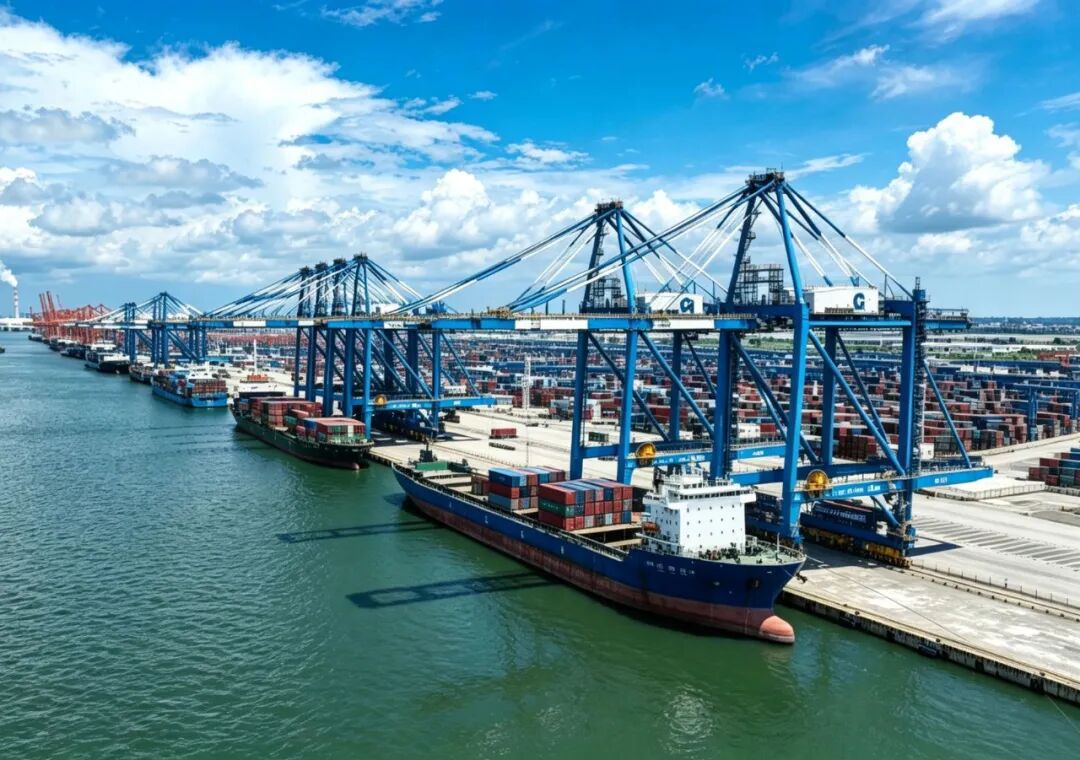
A Port in the Beibu Gulf, a trading hub between China and ASEAN
Yunnan Ready to Connect with Pinglu Canal
As the Yunnan port nearest to the Pinglu Canal, the Funing Port has seen its construction enter the sprint stage. The main hydraulic structure of the wharf has been fully completed, and the road that accesses the port is expected to be completed and put into operation in sync with the Pinglu Canal.
By then, Yunnan's bulk goods such as green aluminum, phosphorus chemicals, and fertilizers can be shipped via the canal to the Beibu Gulf, breaking free from the constraints of the traditional route of detouring through the Pearl River Delta. Yunnan's bulk commodities, represented by Wenshan green aluminum, will thus gain a high-volume and low-cost access to the sea.
Supporting the canal's navigation, construction of the Baise Water Conservancy Project is gaining speed, and it is expected to be ready for trial navigation in the first half of 2027. This project is the world's first navigation hub that combines water-saving ship lock, ship lift and auxiliary ship lock. Once completed, it will directly connect the Youjiang River to Pinglu Canal and Beibu Gulf Port. Yunnan enterprises are participating in the Baise project, contributing to the golden waterway for southwest China to access the sea.
Given the Canal, What Should Yunnan Focus On?
For a long time, a single sea-access channel and high logistics costs for bulk goods have constrained the transformation of Yunnan's resource advantages into opening-up competitiveness.
The Pinglu Canal has opened a brand-new route for Yunnan to access the sea. After completion and navigation of the Baise water project, Yunnan goods can travel from Funing Port in Wenshan through the Youjiang River, pass the Baise hub, enter the Pinglu Canal, and finally reach the Beibu Gulf directly.
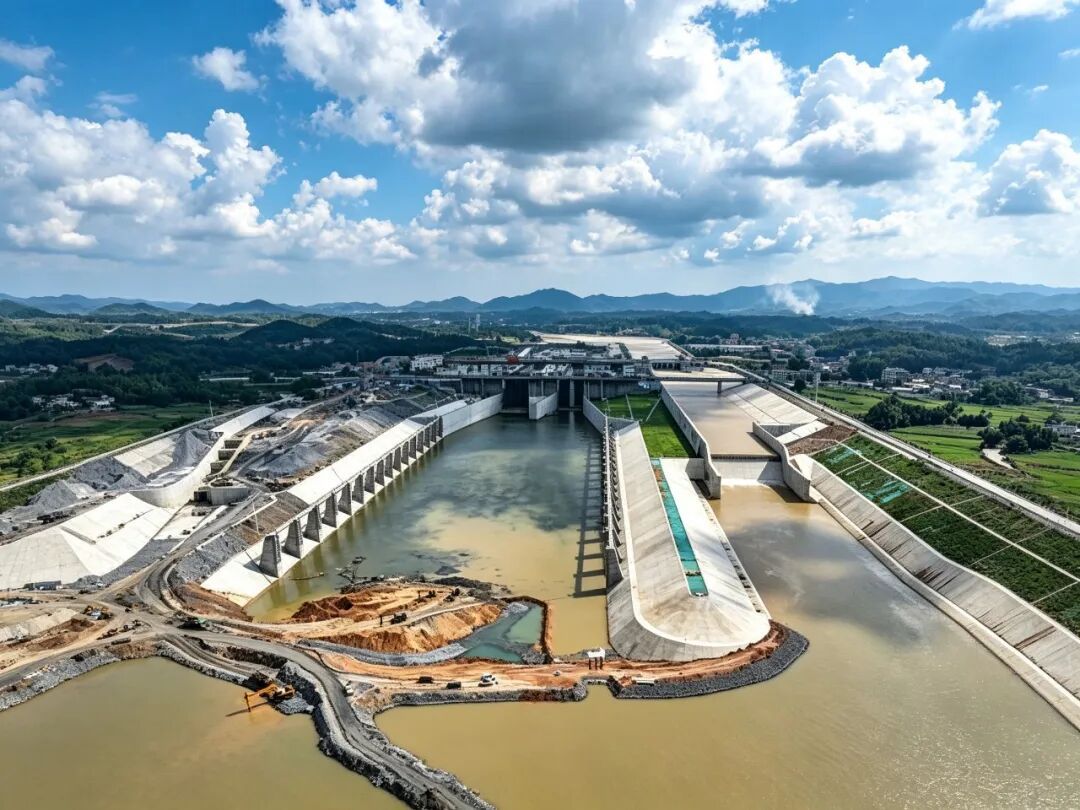
A view of the Pinglu Canal
This channel is the most convenient golden waterway for Yunnan goods to reach the sea. The waterway cuts 2,000 kilometers compared with shipping via the Yangtze River waterway through Shanghai Port, and it saves 536 kilometers compared with shipping via the Pearl River system through Guangzhou Port. It will greatly reduce the logistics costs of bulk goods.
The Pinglu Canal further consolidates Yunnan's unique position as a hub of the two oceans. Yunnan is the only province in China bordering Myanmar, Laos, and Vietnam simultaneously: Via Funing Port and the Pinglu Canal, the province connects eastward to the Pacific Ocean, and westward it uses the China-Myanmar economic corridor to reach the Indian Ocean. This "two-ocean" advantage continuously elevates Yunnan's strategic value in the Belt and Road cooperation and the New International Land-Sea Trade Corridor.
Whether Yunnan can truly transform this golden waterway into an opening advantage depends on three things: Whether Funing Port can achieve full operation as soon as possible, whether port-industry integration can shift from corridor economy to industrial economy, and whether the multimodal transport network can truly be efficiently built up.
Specifically, it is necessary for Yunnan to accelerate the construction of port-access roads and railway connectors, and open up a collection and distribution system that directly links key mining areas and industrial parks to the port area. Cultivating water-adapted industries like green aluminum, non-ferrous metals and highland agricultural products, the province needs to actively integrate into the Yunnan-Guizhou-Guangxi rail-water intermodal transport system.
Writing by Liu Jianwen (Researcher at the Guangxi Academy of Social Sciences) and Zheng Zhong (Associate Professor at Nanning University); Trans-editing by Wang Shixue and Han Chengyuan
