


UK prime minister under pressure to fix defense spending


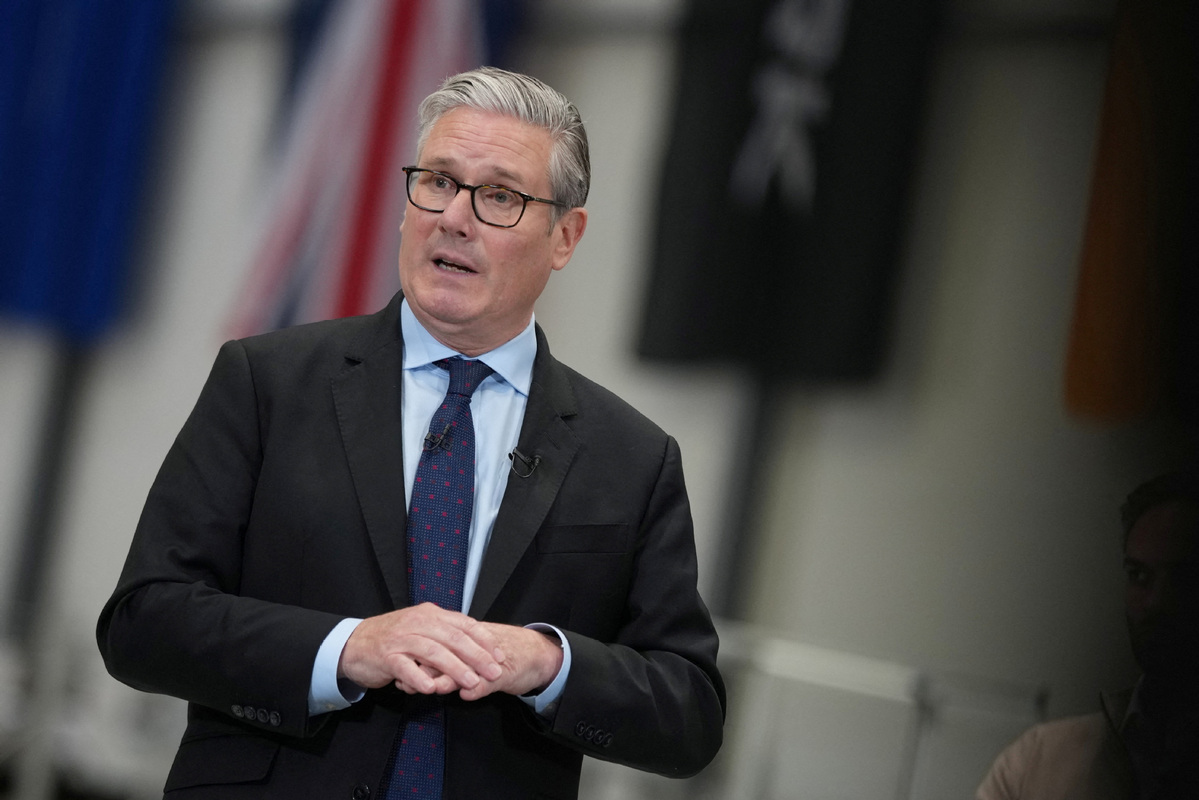
Spending by the United Kingdom government on net-zero policy could be cut as Prime Minister Keir Starmer looks to boost the country's defense budget ahead of July's summit in Turkiye of leaders of the NATO military alliance.
A year ago, a document known as the Strategic Defence Review was published, which laid the ground for the Defence Investment Plan, or DIP, which would set out how the country was going to pay for its security for the next decade.
The Financial Times newspaper reports that the long-delayed DIP will contain details of around 15 billion pounds ($20.04 billion) of investment, which is likely to be funded by cuts to other departmental budgets, rather than more government borrowing or tax rises.
It is understood all departments have been asked to find savings to pay for what the Ministry of Defence called "a generational increase in defense spending, ensuring no return to the hollowed-out armed forces of the past", saying that the DIP "will fix the outdated, overcommitted and underfunded program we inherited. We are working hard to finalize it".
Some departments, including education and healthcare, have pointed out that they are already subject to financial restrictions, and The Times newspaper reports that the energy department in particular is likely to be hit hard.
The geopolitical stakes could hardly be higher, with Starmer having recently said "it is no exaggeration to say that we're living in more dangerous and volatile times than at any time in my life".
But Siva Anandaciva, director of policy at the King's Fund, a think tank focusing on health and social care policy, told The Times that "while many people can understand the need to increase defense spending, this will potentially come at a cost to the quality and access of heathcare".
However, there is also a domestic angle, as Starmer is coming to the end of his second year as prime minister, having recently found his leadership of the governing Labour Party and of the country under extreme pressure from within.
Later this month, a by-election is taking place in a constituency in the north of England, where Labour's candidate is former government minister Andy Burnham, a prominent rival of Starmer.
He is not currently a member of Parliament, but if he wins the seat, Burnham has said he would enter any Labour Party leadership contest that may take place.
Starmer is reportedly keen to have the defense issue resolved, along with a list of other new policy announcements, before any challenge to his premiership is launched. He has already said he would resist any such moves.
To settle the defense funding issue ahead of the NATO summit would also be particularly significant in light of United States President Donald Trump's frequent calls for other member states to increase their military spending and to be less reliant on US security guarantees.
