


Yunnan maintains close economic ties with APEC members


The 33rd APEC Economic Leaders' Meeting is going on in Shenzhen, south China’s Guangdong, from November 18 to 19, under the theme "Building an Asia-Pacific Community to Promote Common Prosperity."
The distance from Shenzhen to Yunnan’s Kunming city is about 1,200 kilometers. On the map, Yunnan is not close to the venue of this year’s APEC meetings, but in economic and trade ties, Yunnan is very close to other APEC members.
According to statistics from Kunming Customs, Yunnan's imports and exports to other APEC economies reached 94.45 billion yuan in the first 10 months of this year, up 9.2 percent year on year. Data from the Yunnan Provincial Department of Commerce show that other APEC economies have become an important source of foreign investment utilized by Yunnan.
How exactly is Yunnan close to the APEC members? Outside the Shenzhen meeting venue, the answer may lie in the international trade of durian and coffee, as well as in the APEC business travel card.
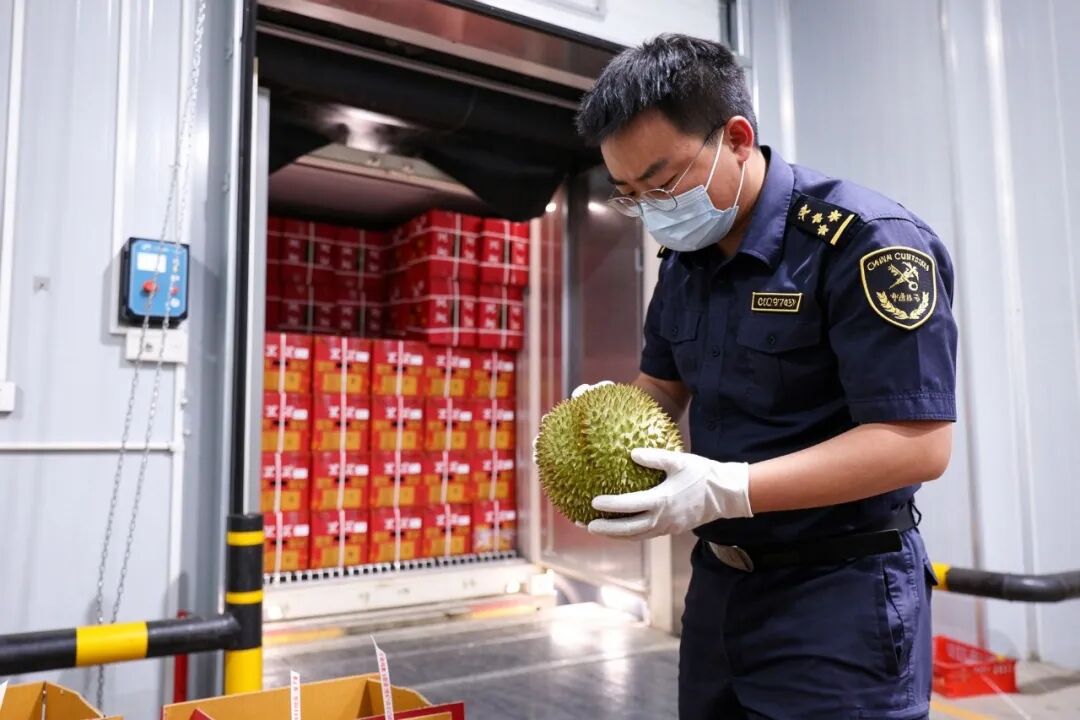
A Yunnan officer inspects durians imported from Thailand.
Durians in Thai Orchards Reach Kunming in 3 Days
Mohan in south Yunnan means a "salt well of wealth" in the Dai ethnic language. Today, the town near the China-Laos border has emerged as an important gateway for Southeast Asian fruits to enter China.
In the first eight months of 2026, the value of Southeast Asian tropical fruits such as durians, mangosteens, and longans imported via the Mohan gate on China-Laos Railway reached 5.26 billion yuan, up 12.3 percent year on year. As of October 7, the cumulative value of Southeast Asian tropical fruits imported via Mohan railway gate had exceeded 16 billion yuan.
Since the China-Laos Railway opened to traffic, Mohan has seen more than 25,000 international freight trains operated, and the trains have transported more than 20.77 million tons of imported and exported goods worth more than 100.4 billion yuan. The goods are traded among 19 countries and regions, covering more than 3,900 categories.
“Openness, innovation and cooperation” are being highlighted in the APEC's China Year 2026. In Yunnan, these three aspects are manifested in the fruit trade with Thailand.
Thanks to the China-Laos-Thailand cold-chain special train that was launched earlier this year, the Thai durians depart from Laem Chabang, Thailand, are firstly transshipped into Vientiane, Laos. Then, the durians enter China through the Mohan railway port, and directly reach Kunming and Chongqing. The fastest journey takes less than 3 days, with the cost 15 percent lower than road transport.
Behind the durian sweetness enjoyed by consumers is the smooth operation of trade, logistics, customs clearance, and cold-chain transport.
While importing durians, Yunnan also exports its fruits and produce to APEC members. This year, premium avocados from Menglian were exported to Malaysia and Thailand for the first time, fresh blueberries from Dali were exported to Singapore, and premium Arabica coffee from Menglian was exported to South Korea. Costs for enterprises have fallen, orders have increased, and ordinary consumers have more choices. In the first 10 months of this year, Kunming Customs issued 143,800 certificates of origin for exports to APEC economies, which will reduce about 466 million yuan of tariff for businesses.
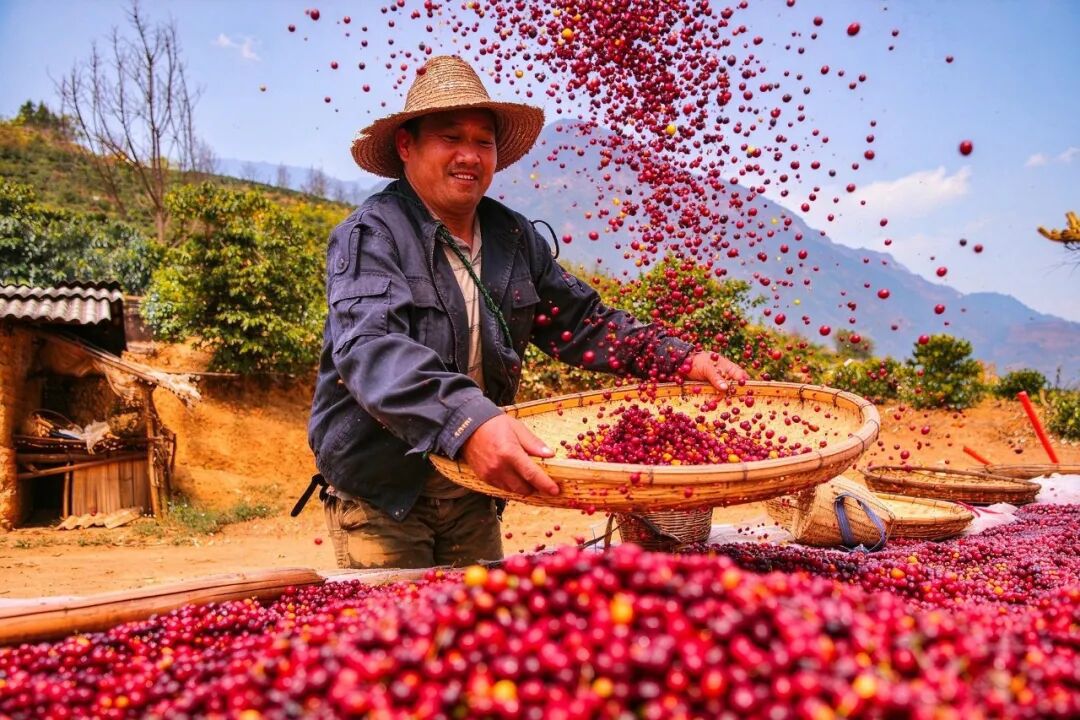
A Yunnan farmer dries up coffee fruits.
Coffee Brings Together Businessmen from Yunnan, Papua New Guinea
In April 2026, the China-Papua New Guinea Business Roundtable was held in Guangzhou. The head of Dali Fengzhidu Coffee Company held preliminary discussions with Papua New Guinean representatives on coffee industry chain coordination, mutual learning in technology, product import and export, talent training, and brand export.
Why can the business representatives from Yunnan and Papua New Guinea, which are more than 6,000 kilometers apart, sit at the same table? And how will they begin their partnership?
The answer lies in coffee. Yunnan accounts for more than 98 percent of China's coffee planting area and output, and the output value of the entire industry chain reached 99.5 billion yuan in 2025. Yunnan is strong in coffee processing, branding, and marketing. In Papua New Guinea, coffee is mostly grown under the shade of native trees, with food crops intercropped among the trees. Local people call it a "coffee garden," and Papua New Guinea is strong in flavor and cultivation.
One side has unique coffee flavor, and the other has the ability to bring the flavor to coffee drinkers. Complementarity is the starting point for cooperation between the two sides.
The contact has gone beyond the corporate level. In July 2026, Aiya Tambua, Assistant Speaker of the National Parliament of Papua New Guinea, came to Yunnan for the Fourth Seminar for Pacific Island Parliamentarians, and he inspected rural areas, industry parks and ecological gardens in Kunming and Yuxi.
From the coffee garden in Papua New Guinea to the coffee estates in Yunnan, the two places, 6,000 kilometers apart, are closely connected by coffee at different nodes of the industry chain.
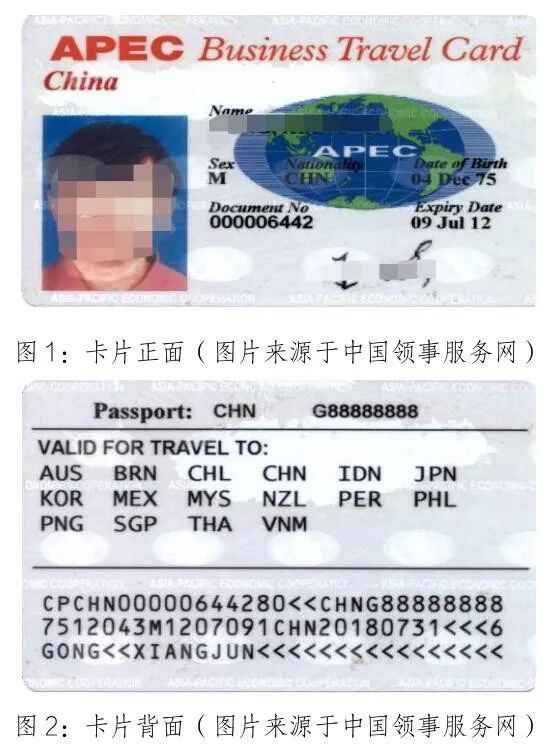
An APEC Business Travel Card
APEC Card Facilitates Yunnan Business Travels
The APEC Business Travel Card is a travel document under the APEC framework that provides business people with multilateral long-term visas and fast customs clearance. The card has the advantages of "one-stop application, five years of validity, visa-free access to 16 economies, and facilitated customs clearance."
As of September 2026, the Yunnan Provincial Foreign Affairs Office had processed the APEC cards for 590 persons form more than 200 enterprises across the province.
Shao Yunfang, administrative director of Yunnan Walvax Biotechnology Co., Ltd., said her company frequently attend overseas exhibitions and conduct business matchmaking and exchanges. Previously, the Visa requirements varied from country to country. Kunming didn’t house consulates of some APEC countries, so the business documents had to be sent to Beijing and Guangzhou. Transportation, accommodation and time costs were troublesome, but they were not the most anxiety-inducing. If the itinerary was finalized but the visa did not come out for a long time, and business opportunities could only be watched slipping away.
After the APEC Business Travel Card was implemented, one-stop application allows multiple entries over five years, eliminating the cumbersome process of repeated visa applications. In April this year, the Walvax company received an urgent business task in Latin America. Visa work that previously required two months of preparation was completed with the advantages of the business travel card, and the team successfully departed within 48 hours. "Market opportunities in the biopharmaceutical industry are fleeting. The APEC Business Travel Card helps us respond quickly to overseas business opportunities and move faster in international competition," said Shao.
Starting November 1, 2026, China will also extend the maximum stay for APEC Business Travel Card holders in China from 60 days to 90 days. What a card means is not only the facilitation of visa process, but also the reduction of decision-making cycle for enterprises in the face of fierce competition in the market.
Since APEC was founded, its economies have built on openness, inclusiveness, mutual benefit, and win-win cooperation to jointly achieve the Asia-Pacific Dream. The grand regional cooperation should ultimately be turned into perceptible convenience. The vitality of "miracles" and "dreams" lies in concrete cooperation and individual gains.
The APEC meeting period is not long, but the regional cooperation will be everlasting. The meeting venue is in Shenzhen, but the openness nature of APEC is also seen on the land of Yunnan.
Writing by Liu Ziyu and Han Chengyuan (Yunnan Daily); Trans-editing by Wang Shixue
