


Africa is redefining the travel experience


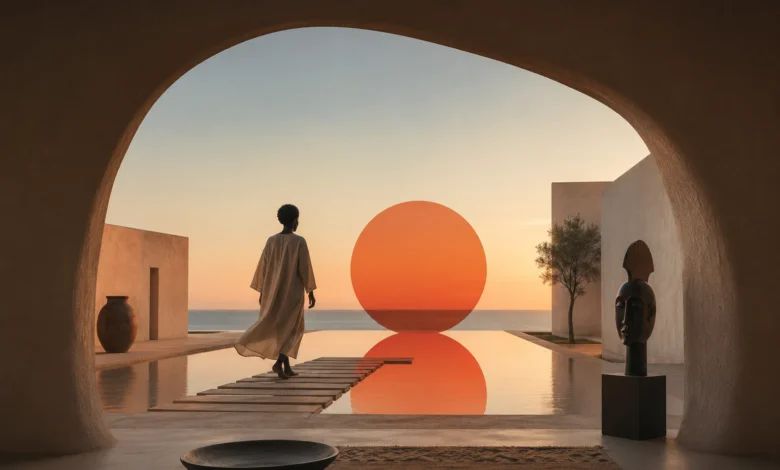
African tourism is undergoing a profound transformation. The latest data from the World Travel & Tourism Council (WTTC) points to a sector accelerating fast, but behind the economic performance lies a more structural shift: the continent is no longer just selling destinations, it is building experiences.
Growth above the global average
According to the WTTC, the sector generated $228 billion in economic contribution across Africa in 2025, or 7% of continental GDP, up 5% from the previous year. This growth outpaces both the African economy and the global economy. For 2026, the organisation forecasts a further rise to $241 billion, confirming the momentum behind African tourism.
The sector also supported 30.2 million jobs in 2025. That figure is expected to reach 31.5 million in 2026 before surpassing 40.9 million by 2036, making tourism one of the continent’s major engines of job creation.
These figures don’t only reflect the recovery of international travel. They reflect a deeper shift in what travellers expect.
Visitors are no longer just looking for a hotel, a beach or a spectacular landscape. They want to understand a place, meet its people, discover its know-how, taste its food and live an experience that couldn’t exist anywhere else.
In this new global tourism competition, Africa holds a strategic advantage: a cultural, historical and natural diversity that is hard to replicate.
Asked in June about Kenya’s tourism momentum, WTTC President & CEO Julia Simpson noted that the country brought together « everything today’s traveller is looking for. Nature, culture, authenticity, and hospitality. » An assessment that extends well beyond Kenya and captures the new ambition of many African destinations.
The challenge is therefore no longer just to increase arrival numbers, but to increase the value created by each stay.
When hospitality becomes a cultural narrative
This shift is especially visible in a new generation of projects that blur the lines between hospitality, heritage, gastronomy and artistic creation.
In Marrakech, Dar Society illustrates this transformation. The group doesn’t just develop places to stay, but a full cultural ecosystem built around the Moroccan art of living. Around Dar des Arts, a riad in the medina, sit a Museum of Culinary Arts devoted to Morocco’s gastronomic heritage, cooking workshops, immersive experiences, and MIDA, a concept of culinary residencies hosting international chefs who come to reinterpret the country’s culinary traditions.
The goal is clear: turn a tourist stay into a complete cultural experience, where tastes, gestures and know-how become so many doorways into the identity of a place.
This approach also shows up in Um Mami, conceived by Claus Meyer, co-founder of the Danish restaurant Noma. Set in Marrakech’s creative district of Sidi Ghanem, the venue combines a restaurant, a bakery, workshops and culinary training built around Moroccan produce. Gastronomy becomes a tool for cultural transmission.
This logic extends well beyond Morocco. In Egypt, Adrère Amellal, located in the Siwa oasis, offers a different vision of luxury by turning the desert into an immersive experience. Built with local materials, the site showcases traditional architecture, oasis produce, local cuisine and the discovery of an ancient Amazigh culture. The desert is no longer just a backdrop: it becomes a narrative.
In Ghana, initiatives such as Ankobra Beach Retreat are also part of this new generation of hospitality, combining accommodation, local gastronomy, environment and cultural heritage. In a country that has placed historical memory and diaspora ties at the heart of its tourism strategy since the 2019 Year of Return and Beyond the Return, travel becomes a tool of cultural reconnection.
Culture is also becoming a driver of urban appeal. In Cape Town, the Zeitz Museum of Contemporary Art Africa (Zeitz MOCAA), housed in a former grain silo redeveloped on the V&A Waterfront, has helped turn contemporary African art into a destination in its own right. The museum now draws visitors who come specifically to discover African creativity, strengthening the city’s international cultural positioning.
This logic also extends to nature-based experiences. In Rwanda, conservation tourism built around gorillas and lodges such as Bisate Lodge combines luxury, ecosystem restoration and the involvement of local communities. In Botswana, the low-density, high-end tourism model in the Okavango Delta prioritises environmental preservation while maximising the economic value generated per visitor.
From Marrakech to Cape Town, from Siwa to Kigali, a new tourism map of Africa is taking shape. It no longer rests solely on safaris, beaches or historical monuments, but on the ability to turn cultures, landscapes and know-how into unique experiences.
Africa is no longer just selling destinations: it is now exporting stories.
States are betting on premiumisation
This new vision is also shaping public strategy.
In Côte d’Ivoire, the Sublime Côte d’Ivoire strategy aims to durably reposition the country among Africa’s major destinations by developing an offering that combines beach tourism, culture, events, gastronomy and business tourism.
In June, Tourism and Leisure Minister Siandou Fofana announced that Côte d’Ivoire had welcomed 6.7 million visitors in 2025, generating 1.1 trillion CFA francs in tourism revenue. A momentum that reflects the country’s ambition to make tourism a major economic engine. At ITB China 2026, he reaffirmed « Côte d’Ivoire’s ambition to strengthen its position among the continent’s major tourism and leisure destinations and to promote an innovative, sustainable and deeply human offering. »
This ambition sums up a continent-wide trend. Tourism competitiveness is no longer measured solely by the number of available rooms or arrival volumes, but by a destination’s ability to offer a coherent and differentiated experience.
Investors are changing their outlook too
This premiumisation is also attracting new investment.
David Damiba, Managing Partner and Co-Chief Investment Officer of Kasada Capital Management, a platform specialising in African hospitality, recently said he had observed « effectively 20 years of evolution in investment across Africa in the hospitality sector » compressed into a much shorter timeframe.
Investors are now looking for more than real estate assets. They favour projects capable of offering a strong identity, a local anchor and a differentiated experience.
African groups are driving this shift. Mangalis Hotel Group, founded by Senegalese entrepreneur Yerim Habib Sow, has built several hotel brands adapted to different market segments while championing an African vision of hospitality. Azalaï Hotels, one of the sector’s oldest pan-African groups, has pursued the same logic for thirty years under founder Mossadeck Bally, who sums up his philosophy in a line that has become the group’s signature: « Because you are in Africa, you should feel Africa. » Other players illustrate this dynamic at a more regional scale, such as Bon Hotels in South Africa, led by Otto Stehlik, or Senegal’s Iroko group, founded by Georges Angama, while Onomo Hotels, born in 2009 with financial backing from African businessmen from its very first funding round, opened the way in Dakar before expanding to Abidjan and then Libreville.
So many distinct trajectories converging on the same conclusion: African hospitality is no longer just trying to catch up with international standards, it is writing its own version of them.
The first customer of African tourism is African
Another major finding from the WTTC report: the sector’s growth rests first and foremost on the continent’s own travellers.
According to the organisation, 61% of tourism spending in Africa comes from domestic tourism. This reality often remains less visible than statistics on international visitors.
Yet business travel, festivals, cultural events, family trips and the growth of regional tourism are fuelling rising domestic demand.
This customer base is a source of resilience and pushes operators to design experiences suited to African travellers as much as to international visitors.
Connectivity, visas and cooperation: the challenges remain
Africa’s tourism potential nonetheless remains constrained by several structural obstacles.
Air connectivity, visa facilitation and coordination between states remain major challenges. Travelling between two African capitals is often still more complicated and more expensive than a trip to Europe or the Middle East.
Progress made by several countries nonetheless shows that this transformation is under way.
Africa is building its own tourism signature
The fundamental shift may lie there.
African tourism is no longer defined solely by its exceptional landscapes or biodiversity. It is beginning to showcase what constitutes its hardest-to-copy advantage: its cuisines, its artists, its architecture, its traditions, its know-how and its stories.
In a global industry where travellers increasingly seek meaning, authenticity and emotion, this ability to turn a culture into an experience could become one of the continent’s leading competitive advantages.
The numbers show that growth is already there. The next challenge will be to turn this cultural wealth into sustainable economic value, through investment, infrastructure and public policies capable of making the African experience a global benchmark.
