


Is India a promoter or disruptor in BRICS cooperation?


The 18th BRICS Summit was held in New Delhi, India, from September 12 to 13, 2026. This year marks the 20th anniversary of BRICS cooperation and India's fourth time as chair.
For India, holding the summit and pushing all parties to adopt the Delhi Declaration was a rather formidable task. After the BRICS expansion in 2023, the international landscape has undergone dramatic changes, and "greater BRICS cooperation" faces new challenges. Under India's mediation, the declaration expressed a common position on the blockade of Cuba, the Middle East situation, a ceasefire in Gaza and others.
India also used the summit to elevate its own international influence. After Trump returned to power in 2025 and adjusted policies toward India, New Delhi was quite frustrated, and defeated in the short air battle with Pakistan, India turned to hosting diplomatic events to uplift its profile on the international stage.
India is a key member of BRICS, with its economy second only to China, and it was once an active promoter. However, with fundamental changes in its diplomacy and domestic politics in recent years, India has gradually become a negative factor in BRICS cooperation, and China-India bilateral issues have been brought into the multilateral platform. In BRICS cooperation, what role exactly does India play?
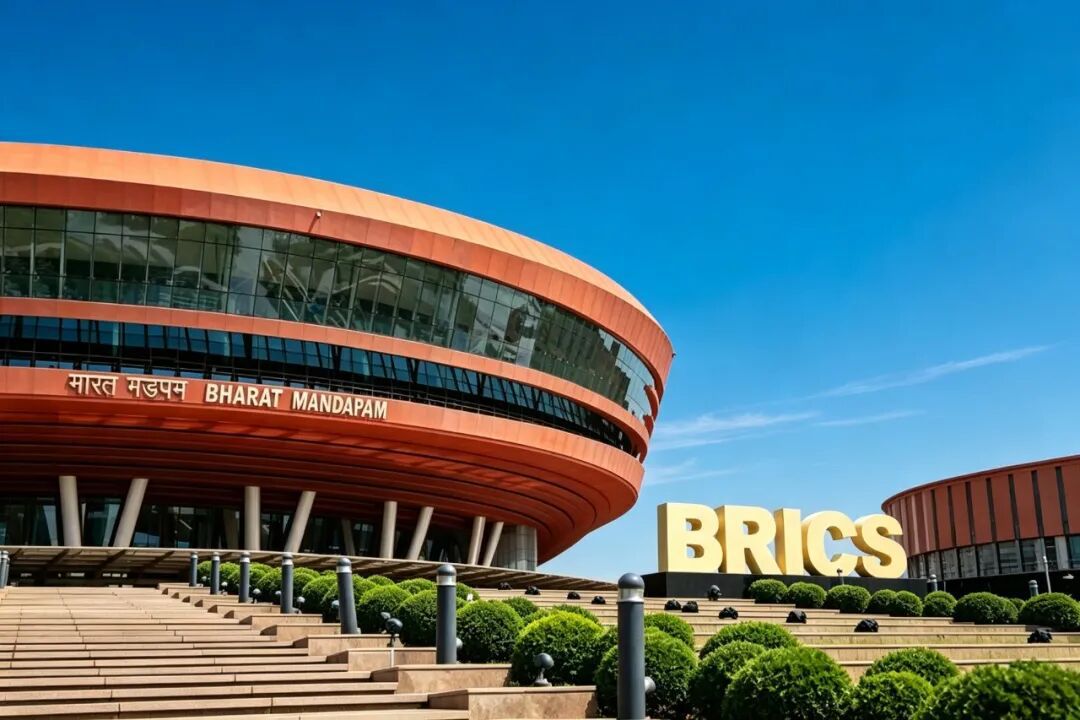
Meeting site for the 18th BRICS Summit in India
Starting from a Promoter
Goldman Sachs economist Jim O'Neill proposed the concept of BRIC in 2001, which facilitated the first foreign ministers' meeting of China, India, Russia, and Brazil during the UN General Assembly in New York in September 2006. The meeting was a prelude to the BRICS cooperation. Then in June 2009, the leaders of the four countries held their first summit in Yekaterinburg, Russia.
Back then, India hoped to revise the long Western-dominated international system and so worked with other BRIC countries to promote reform of the international system. This was a realistic choice for India to realize its great-power ambition. In particular, the United States vigorously pursued quantitative easing after the 2008 financial crisis, causing frequent turbulence in India's financial markets.
On issues such as climate change, India was under strong pressure from the US and the West, which made BRIC countries to recognize that they had opposing interests and positions to those of the US and Western countries. The BRIC cooperation provided India with a platform to jointly respond to Western pressure with other major developing countries.
At the same time, the BRIC cooperation mechanism recognized India as a major power with global influence, indirectly regarded India as the strongest emerging power in South Asia, and finally freed India from the India-Pakistan binary relationship in South Asia.
Therefore, India actively promoted the BRIC cooperative mechanism at the beginning. At the 2012 BRICS summit in New Delhi, India proposed the idea of establishing a multilateral financial institution among BRICS countries, which directly led to the birth of the New Development Bank (NDB) in 2014 and the Contingent Reserve Arrangement (CRA) in 2016.
At the strategic level, India favored pursuing international multipolarity even more, using the collective cooperation of BRICS countries to enhance its global bargaining power and balance the dominant position of the US and the West in the global system. On international development policy, India promoted efforts to help developing countries in financial infrastructure construction, and it also supported China-led initiatives such as the establishment of the Asian Infrastructure Investment Bank.
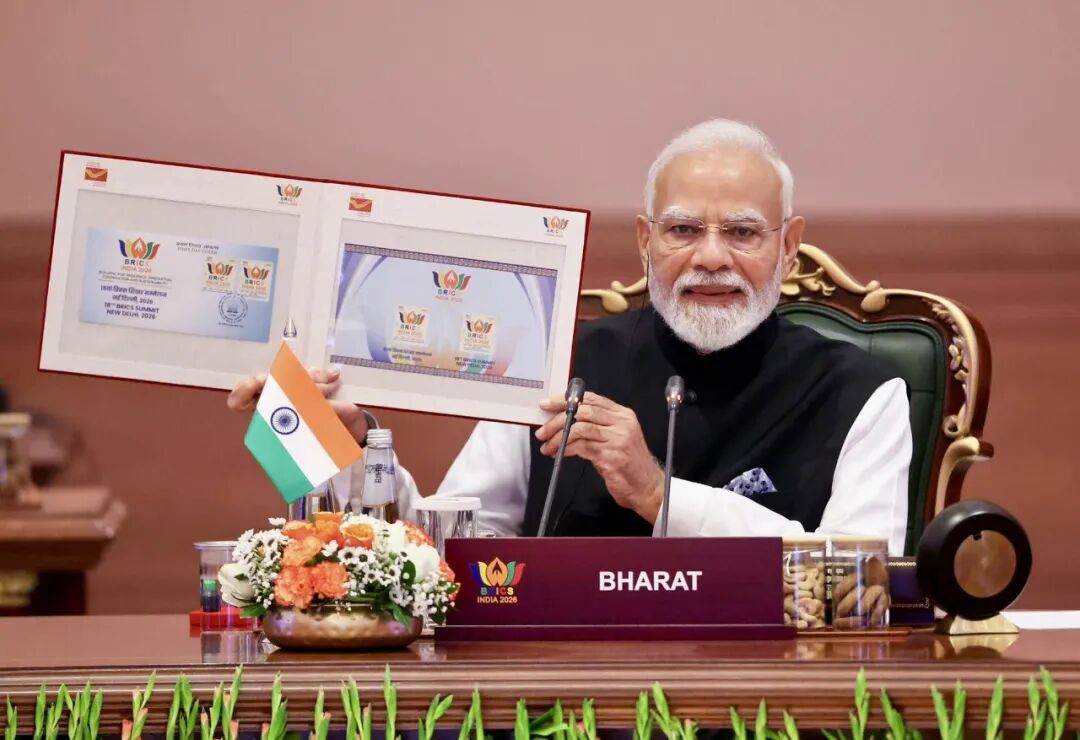
Indian PM Modi hosts the 18th BRICS Summit.
Origins of the Cold Period
Following more than a decade of BRICS cooperation, India has seen the domestic and international environments undergo fundamental changes.
After the BJP led by Modi came to power in 2014, India's right-wing forces dominated the political landscape in India, and the Indian diplomats gradually adopted a pro-US diplomatic line. Emphasizing more India's positions and interests related to the West, they downplayed India's interests as a developing country and weakened India's enthusiasm and momentum for BRICS cooperation.
During the outbreak of the COVID-19 pandemic in 2020, India cooperated with the United States in strategic containment against China. Later, the Galwan clash on the China-India border spurred India to significantly adjust its policy to China. India almost opposed everything China proposed on international multilateral platforms, and it even threatened to "confront" China in the SCO and BRICS cooperation.
Against this background, India's position on BRICS cooperation underwent an important change, beginning to claim that it would "obstruct" China's attempt to "control" BRICS cooperation. India strongly opposed the expansion of BRICS cooperation, worried that its own influence would be diluted. On the other hand, India also worried that once the expansion of BRICS cooperation was launched, it would inevitably face the possibility of Pakistan joining.
India's original attitude toward BRICS cooperation has changed. The country was more willing to play the role of a "guide" for the US and the West to influence Global South countries, and it preferred using the Global South to draw itself closer to the US and the West, rather than speaking for the interests of developing countries.
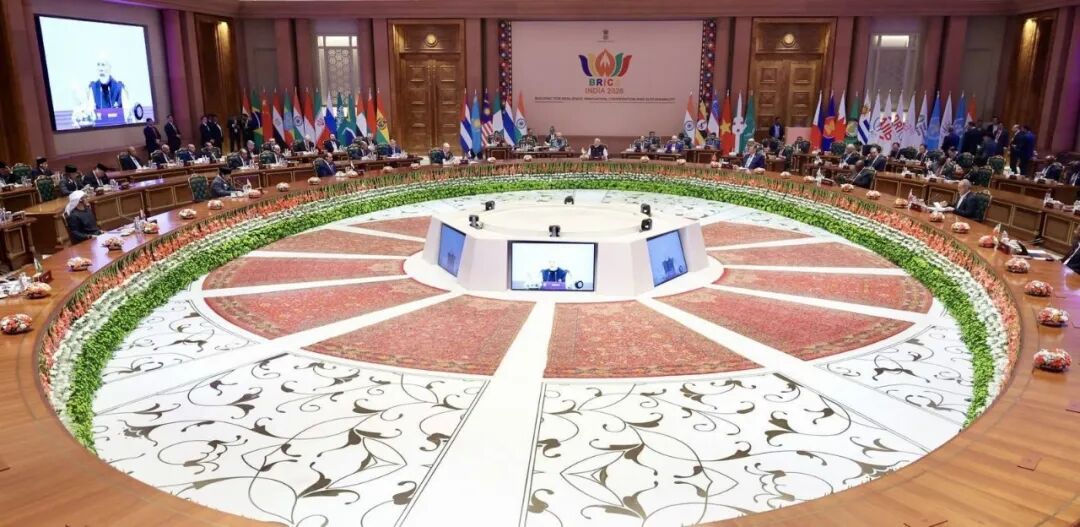
The 18th BRICS Summit in India
Behind the Seeming Zest
At the 2023 G20 Summit in New Delhi, India packaged itself as a leader of the Global South and actively aligned with the US and the West on the "Global South agenda," gaining strong support and applause from the US and Europe. New Delhi's international influence and status were unmatched for a time.
However, the good times did not last long. Trump's return to power changed policies toward India, and to make thing worse, New Delhi blindly supported Israel and kept a cold silence in the US-Israel-Iran war. All of these severely damaged New Delhi's international image in the Global South, and its international influence rapidly declined.
To make up for New Delhi's losses, India once again showed high enthusiasm for hosting the BRICS summit. However, this proved not to be easy. On the one hand, New Delhi had to advance the Global South agenda, discussing local currency settlement, energy cooperation, and global governance reform; on the other hand, it had to keep BRICS cooperation on a track of "non-Western but not anti-Western," remaining highly vigilant against possible Chinese dominance.
At the same time, India also had to guard against the agenda being hijacked by several geopolitical security hotspot issues regarding Ukraine, Iran and others. Fortunately, BRICS countries as a whole accepted the priority of unity, and ultimately adopted the Delhi Declaration.
However, India's strategic community does not care about such "decorum," and many voices opposing BRICS cooperation have emerged. Rajesh Rajagopalan, a professor at Jawaharlal Nehru University, stated in an article that India's goal in BRICS cooperation is to "wreck it," because if BRICS were truly effective, the biggest beneficiary would be China. Therefore, India's mission is to ensure that it becomes a useless talking shop.
Prominent Indian economist Surjit S. Bhalla echoed this view, arguing that for India to become a developed country, it should learn from South Korea, Poland, and Vietnam, not Russia, Brazil, and South Africa, so India should not associate with BRICS countries.
In summary, India's renewed enthusiasm for BRICS cooperation is not a true return to the Global South, but a strategic recalibration after setbacks in the external environment. For BRICS, the Indian "return" is somewhat helpful in strengthening the block’s nature as a Global South cooperation. In the future, India's role and influence in BRICS will depend on whether it can correctly understand its own national identity and allow the BRICS mechanism to lead the Global South cooperations.
Writing by Lin Minwang (Research Fellow and Vice Dean of the Institute of International Studies, Fudan University); Trans-editing by Wang Shixue and Han Chengyuan
