U.S. F-35 struck in combat marks major turn of Middle East war
At 2:50 a.m. on March 19, a U.S. military F-35 stealth fighter jet was struck by Iranian air-defense fire while conducting a mission over the central plateau of Iran. This marks the first time an F-35 has been hit by enemy fire in combat since the aircraft entered service.
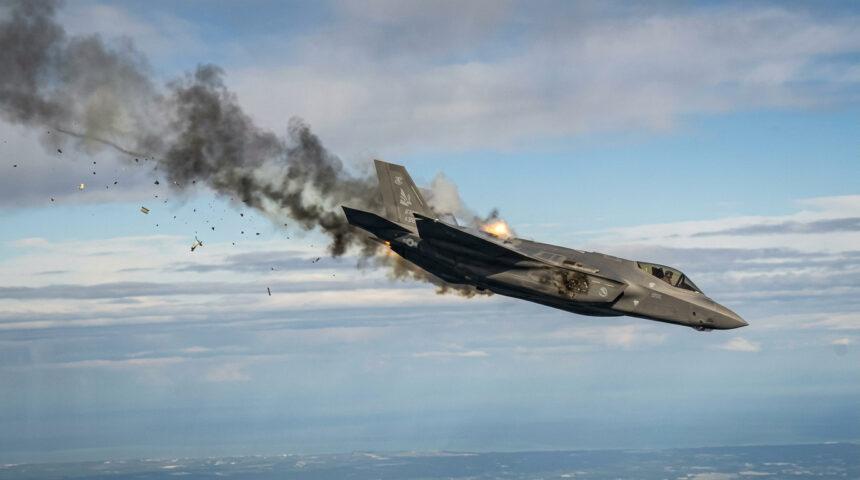
A U.S. military F-35 stealth fighter jet is struck by Iranian air-defenseon on March 19.
In its response, the U.S. side had to acknowledge that the fighter jet was hit, yet deliberately concealed the extent of the damage, downplaying its impact on the battlefield. In contrast, Iran's Islamic Revolutionary Guard Corps decisively released footage of the strike, shattering the invincibility myth of the fifth-generation stealth fighter.
This incident is symbolic: Iran's skies are no longer a realm that U.S. and Israeli warplanes can freely invade and roam with impunity. The situation since the onset of U.S.-Israeli strikes—relying on air superiority to indiscriminately bomb Iran—has been brought to an end with the downing of this F-35.
It further demonstrates to the world that Iran's recent series of precise, sustained strikes against U.S. military bases in the Middle East have turned the region into a graveyard for American high-end military hardware. The doctrines of "weaponry supremacy" and "technological hegemony" that the U.S. and Israel have clung to have been discredited.
Behind this feat lies Iran's long-developed mosaic-warfare doctrine and the its guerrilla tactics for homeland air defense. It represents a strategic and tactical victory for Iran. Abandoning traditional centralized air defense layouts, Iran chose not to compete directly with the U.S. and Israel in terms of equipment and technology. Instead, it divided its territory into numerous independent combat units, employing decentralized command and flexible operations.
This event is set to alter the trajectory of U.S. and Israeli military actions against Iran, plunging their war plans into a dilemma. Previously, the U.S. and Israel sought to swiftly cripple Iran with relentless airstrikes, leveraging their air superiority. Now, with the F-35's stealth deterrent effectively neutralized, the freedom of movement for U.S. military aircraft has been drastically curtailed, and their air superiority is undermined.
While Israel continues to vocally threaten military action, it has never dared to take the step of launching a ground offensive. Even as the U.S. reinforces its troop presence in the Middle East, it has never dared to set foot on Iranian soil.
The first combat hit on the F-35 signifies both a decline of U.S. military hegemony and a milestone in Iran's ability to overcome a stronger adversary. The Middle East has become a graveyard for American military hardware. Iran's asymmetric strategy and tactics—"We fight our war and you fight yours"—have locked down the critical vulnerabilities of U.S.-Israeli military adventurism. The aggressive actions launched by the U.S. and Israel, relying on military hegemony, are a doomed failure.