Bangladesh train accident results from chronic rail problem, Eid travel rush
The derailment of nine compartments of Bangladesh's Nil Sagar Express train on March 18, which injured over a hundred passengers, represents a concentrated outbreak of the country's long-standing railway problems under the immense pressure of the Eid holiday travel peak. The accident occurred in the Adamdighi area of Bogura district.
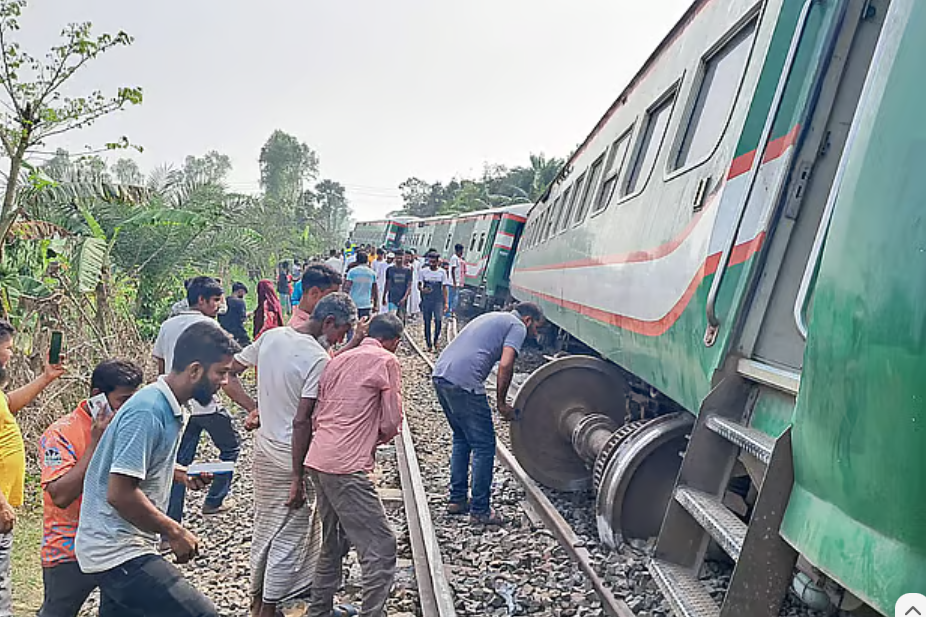
Nine compartments of the Nilsagar Express train have derailed in Adamdighi, Bogura, on Wednesday. Prothom Alo
Although official reports currently indicate no fatalities, the scale of over a hundred injuries and the severity of the nine-carriage derailment have once again sounded an alarm regarding the safety management of the nation's transportation infrastructure.
According to a preliminary investigation by Bangladesh Railway, track maintenance work was underway on the section at the time of the incident, with workers having duly placed red flag warnings. However, the Nil Sagar Express likely failed to brake in time, possibly due to a signal reception error or driver oversight. It plowed into the maintenance zone, causing multiple carriages to jump the tracks.
Late March coincides with the peak of the Muslim Eid exodus in Bangladesh, pushing railway capacity to its annual limit. Severe overloading of trains increased the risk of casualties during the derailment, with many of the injured being passengers who were thrown from the train roofs.
Much of Bangladesh's railway network dates back to the colonial era. Sleeper corrosion rates are as high as 40%, and the signaling system relies heavily on manual hand signals or outdated mechanical signals. A microsecond delay in dispatching communication can easily lead to disaster.
While the government has invested heavily in recent years in constructing new lines, such as the Padma Bridge Rail Link Project, funding allocated for the routine maintenance of existing tracks has long been squeezed. Local trains are often operated in a state of disrepair.
This derailment is not an isolated incident but a manifestation of the contradiction between aging infrastructure and explosive travel demand in developing countries of South Asian. Unless the safety management is upgraded, similar tragedies on Bangladesh's railway network may re-emerge.