Killing of Larijani may push Middle East to unpredictable, full-scale war
Iran's Supreme National Security Council confirmed that its secretary, Ali Larijani, was killed in an Israeli attack. This marks another "decapitation" strike against Iran's decision-making echelon, following the assassination of Khamenei. It not only directly weakens Iran's command center but could also trigger a chain reaction in the Middle East conflict, pushing the situation from "controlled confrontation" toward an "unpredictable full-scale conflict."
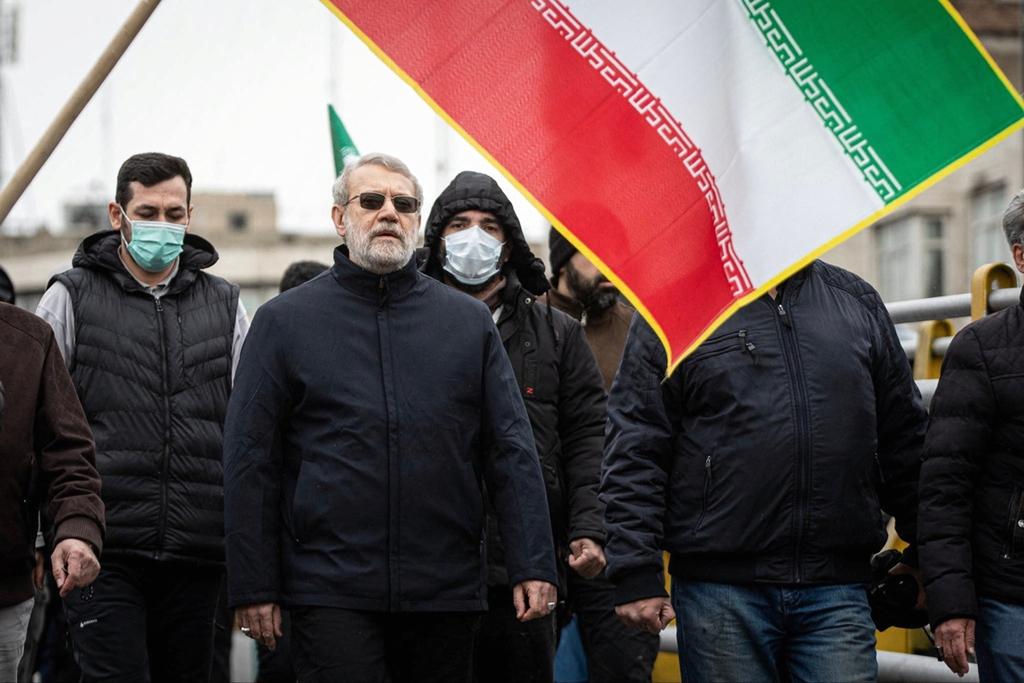
Iranian security chief Ali Larijani takes part in a pro-government rally in Tehran, Iran, March 13, 2026. [Photo/Agencies
Following Khamenei's assassination, Larijani, as the secretary of the Supreme National Security Council, was the de facto operator of Iran's wartime military actions and diplomatic mediation. His death has created a power vacuum at the highest decision-making level in Iran, leading to chaos in the chain of command and potentially affecting the coordination efficiency of military counterattacks in the short term.
Larijani was one of the few pragmatists in Iranian politics and played a key role in leading the negotiations for the Iran nuclear deal. He was able to coordinate between hardliners and moderates within Iran and served as an important bridge for communication between the international community and Iran. His death means that hardline forces within Iran will gain the upper hand, significantly reducing the space for diplomatic compromise and making future negotiations even more difficult.
Iranian officials have vowed revenge and launched a new round of "True Promise-4" operations. With Larijani, a coordinator who "knew where the bottom line was," gone, Iran's retaliatory actions may become more radical and unpredictable. Military forces such as the Revolutionary Guard may dominate decision-making, leading to further escalation of the conflict.
To compensate for its disadvantages on home soil, Iran may rely more heavily on its network of proxies (such as Hezbollah, the Houthis, etc.) to launch attacks across a broader region, attempting to spread the flames of war throughout the Middle East and increase the cost of war for the U.S. and Israel.
The "decapitation" strikes by the U.S. and Israel have broken the traditional rules of great power games. Such acts of "state terrorism" not only inflame nationalist sentiments within Iran but also unsettle other countries in the Middle East, sharply increasing uncertainty in regional security. The conflict in the Middle East is sliding toward a more chaotic and brutal full-scale war of attrition.