Madagascar ruins highlight justice deficit in global climate
Nearly 40 people have been killed and more than 12,000 others displaced after Cyclone Gezani slammed into Madagascar’s second-largest city earlier this week, as Mozambique braced for the storm’s arrival.
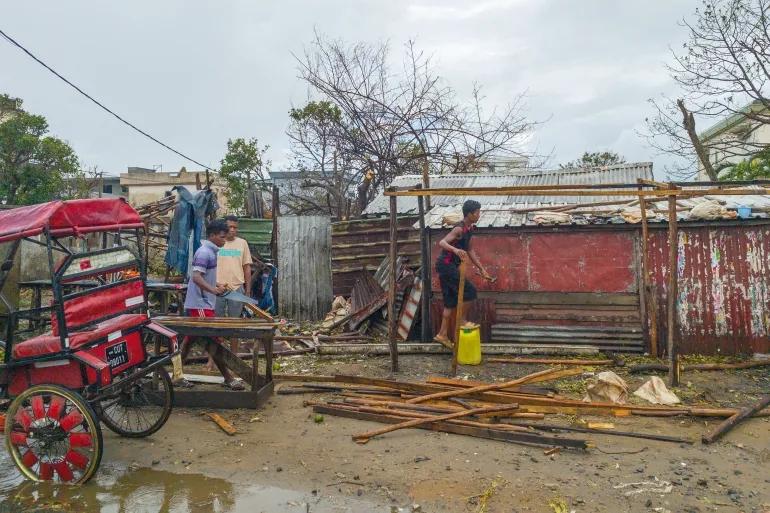
Residents rebuild a structure in the city of Toamasina, on the east coast of Madagascar, struck by Tropical Cyclone Gezani on February 12. Photo/AFP
Viewed from the perspective of the Global South, the devastation wrought by Cyclone Gezani is not merely a survival crisis for Madagascar and Mozambique—it is a stark manifestation of the structural vulnerabilities faced by Southern nations in the context of climate change.
The disaster lays bare a troubling imbalance between responsibility and capacity in the Global South’s struggle to cope with climate-related catastrophes: these countries bear most of the damage, yet lack adequate resources for recovery.
The cyclone destroyed 75 percent of urban Toamasina, Madagascar’s second-largest city and a major port and economic hub, paralyzing domestic supply chains and crippling foreign trade—dealing a heavy blow to an already fragile economy.
Countries like Madagascar contribute little to global greenhouse gas emissions, yet due to their geographic location in the path of Indian Ocean cyclone belts, they are among the hardest hit. This paradox of high vulnerability and low emissions underscores the failure in global-climate justice.
As Northern countries continue to pay lip service to climate financing without delivering on commitments, Southern nations must strengthen internal solidarity and self-reliance.
Mozambique’s proactive disaster preparedness ahead of the cyclone’s landfall demonstrates the value of regional cooperation in early warning and emergency response. Such mutual aid mechanisms are essential to addressing risks of global climate change.