Why is India being criticized?
Following the US-Israel military strike against Iran on February 28, the world's attention has been fixed on the US, Israel, Iran, and the Middle East. However, this conflict has also sent significant shockwaves through the neighboring South Asian region, with the Modi government's pro-US and Israel stance evoking widespread criticism within India.
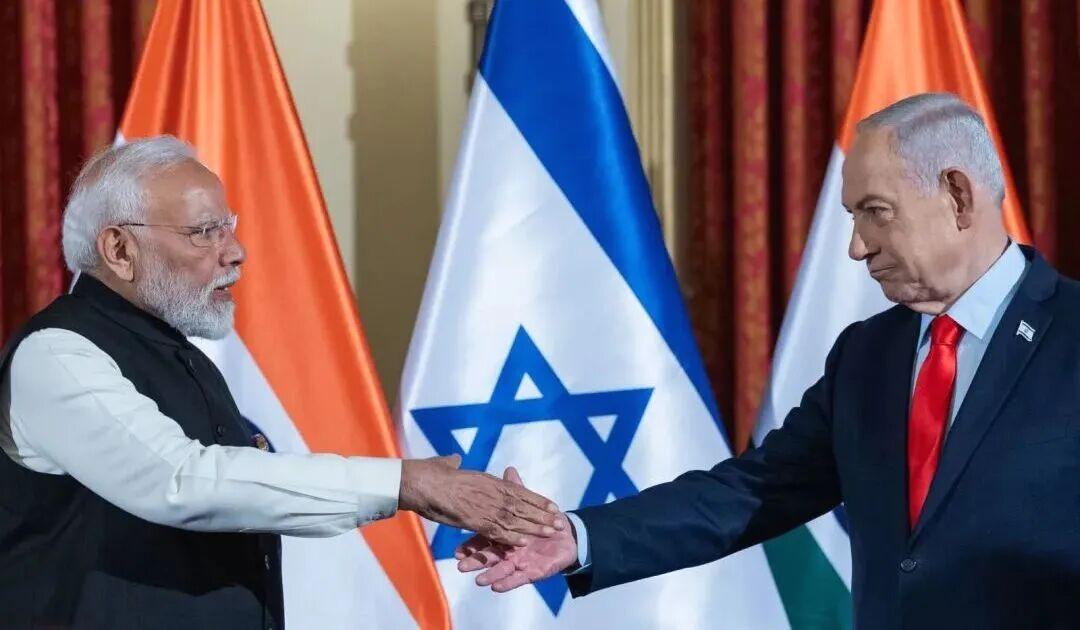
Modi shakes hands with Israeli PM.
First, Modi's Visit to Israel Timed as a "Grave Mistake"
Just as a US-Israel military action against Iran seemed imminent, Modi embarked on a visit to Israel on February 25. In Jerusalem, he emphasized India's "unwavering" support for Israel, even going so far as to describe the Israel-India relationship as that of a "fatherland" and a "motherland."
After the war broke out, India's opposition parties criticized the poor timing of Modi's visit, suggesting it amounted to tacit approval, support, or even coordination with Israel. Indian media later tried to argue that the timing might have resulted from faulty intelligence and misjudgment. However, the Indian government's subsequent actions could hardly be explained away by "misjudgment."
Second, India's "Apathetic" Response to US-Israel Attacks and the Death of Iran's Top Leader
Following the US-Israel military strikes on Iran, India's Ministry of External Affairs merely called for dialogue and de-escalation, refraining from directly naming or condemning the US and Israel, and the country offered no condolences or sympathy to Iran.
India refused to join the Shanghai Cooperation Organization's joint statement condemning the US and Israel. Moreover, Prime Minister Modi first called the leaders of Israel and Gulf nations, stating that India "stands firmly with the Gulf countries," which was essentially a veiled condemnation of Iran's collateral attacks on Gulf states. This act of taking sides was criticized by the Indian opposition as a "betrayal of India's values and principles," revealing the government's "moral cowardice."
Third, Government Silence on the IRIS Dena Incident Draws Criticism
On March 4, a US submarine sank the Iranian navy frigate IRIS Dena in the waters of the Indian Ocean. Notably, the Dena had just participated as a "guest" of the Indian Navy in the multinational "Milan 2026" exercise held in India and was attacked while returning home.
But the Indian government remained silent, neither issuing a statement to condemn the US nor expressing sorrow to Iran for its tragic naval vessel. India demonstrated a severe lack of empathy. On Indian social media, ordinary citizens criticized the government for "stabbing Iran in the back." "US forces killed our guests" became a trending hashtag.
Fourth, Actions of "Kowtowing" to the US Leave Indian Citizens without Any Sense of "Dignity and Honor"
The sinking of the IRIS Dena by the US military embarrassed some pro-US figures in India, as it seemed the US had not considered its "major defense partner's" sensitivities and dignity in the Indian Ocean, treating the Indian "backyard" as if it were nothing.
More disheartening for them were statements made at India's premier forum, the Raisina Dialogue, on March 5. US Deputy Secretary of State Christopher Landau bluntly told Indians that the US would not grant India the same economic advantages it once gave China. While the US hopes to cooperate with India to unlock its "infinite potential," India should understand that "we are not going to make the same mistake with India that we made with China 20 years ago."
In an interview with Fox Business News on March 6, US Treasury Secretary Bessent praised India for being very "obedient": Previously, it stopped buying Russian oil when told not to, and now, “to alleviate the temporary shortfall in global oil supplies, we have allowed them (India) to accept Russian oil.” The words shattered the self-esteem of Indians.
(The author Lin Minwang is a professor and vice-dean of the Institute of International Studies at Fudan University.)