From rapper to Nepali would-be PM: Who is Balen Shah?
Balendra Shah, popularly known as Balen Shah, first entered the public sphere not through politics but through music. Emerging from Kathmandu’s hip hop scene in the early 2010s, he built his identity as a rapper whose lyrics openly criticized Nepal’s political establishment. His songs frequently targeted corruption, weak governance, bureaucratic arrogance, and the widening distance between political leaders and ordinary citizens. At a time when public frustration with traditional parties was already rising, these messages resonated strongly with urban youth. Through music videos and social media circulation, Balen gradually became a recognizable voice of dissent among a younger generation that felt excluded from the country’s political structure.
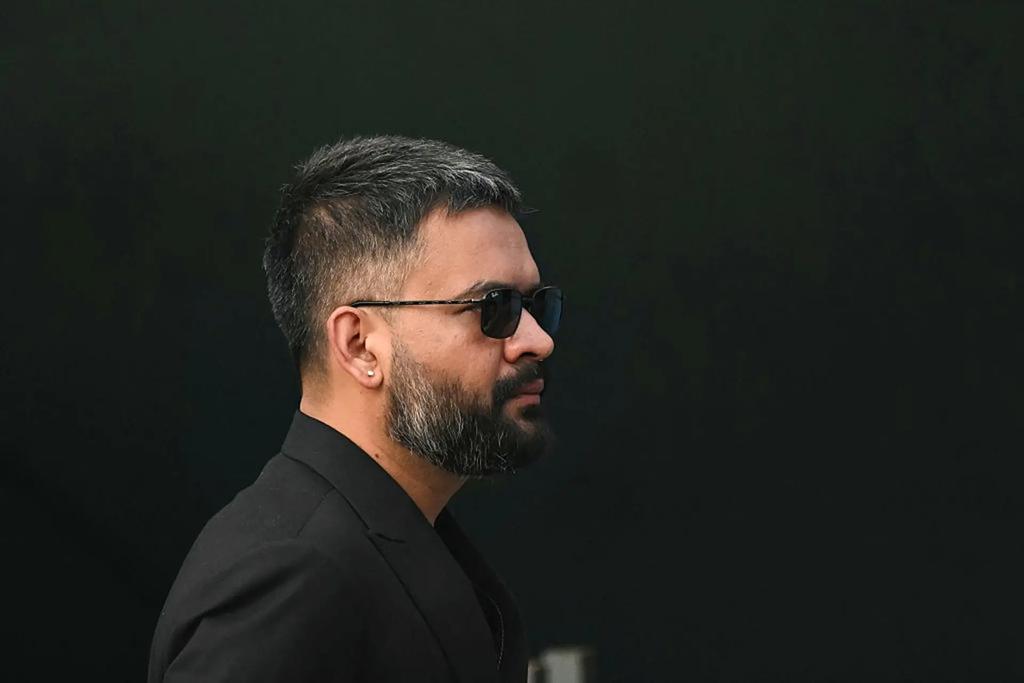
Rastriya Swatantra Party election candidate Balendra Shah arrives at a polling station to vote during Nepal's parliamentary election in Kathmandu on March 5, 2026. AFP
Unlike many artists who remain within cultural activism, Balen possessed a professional background that allowed him to frame himself as more than a protest figure. He studied civil and structural engineering and repeatedly emphasized technical competence, urban planning knowledge, and administrative efficiency. This combination of cultural rebellion and technocratic identity gave him a distinctive public image. He appeared as both an insider who understood the technical problems of urban governance and an outsider who had no loyalty to entrenched party hierarchies.
His transition from cultural critic to political actor occurred during the Kathmandu metropolitan mayoral election. Running as an independent candidate, he challenged candidates backed by powerful national parties. Kathmandu’s municipal politics had long been dominated by party machines and established political networks, yet Balen’s campaign relied largely on volunteer mobilization, social media outreach, and a narrative that framed him as a citizen candidate confronting a stagnant political system. The victory shocked Nepal’s political establishment and demonstrated the depth of public frustration with traditional parties.
Once in office, Balen adopted a direct and sometimes confrontational administrative approach. He focused on urban management issues such as illegal structures, municipal regulation, waste management, and bureaucratic discipline. His actions often triggered controversy and resistance from interest groups, but they also strengthened his reputation as a leader willing to challenge entrenched practices. In a political environment where decisive governance had become rare, these interventions helped transform him from a symbolic outsider into a visible administrator. By the time national political tensions intensified, Balen Shah had already evolved into one of the most recognizable political figures among Nepal’s younger electorate.
How Balen Shah is rising to power
Balen Shah’s dramatic rise toward the position of prime minister cannot be understood simply through personal popularity. It reflects a deeper crisis within Nepal’s political system that has been developing for years. Since the end of the monarchy and the establishment of the republican order, the country has struggled with repeated government changes, fragile coalition arrangements, and persistent internal rivalries among major political parties. Leadership within these parties has remained largely concentrated in aging figures who dominated the democratic movements of the 1990s and the post civil war transition. Over time, this continuity produced a perception that Nepal’s political system had become stagnant and disconnected from social change.
Economic frustrations intensified this sentiment. Slow growth, unemployment, and the continuous migration of young workers abroad created the impression that political elites were unable or unwilling to address structural problems. Among younger citizens in particular, trust in traditional parties such as the Nepali Congress, CPN UML, and the Maoist Centre gradually declined. A generational divide began to emerge between older leaders whose political legitimacy was rooted in past struggles and a younger population demanding performance based governance.
This tension eventually erupted into youth driven mobilizations that spread across urban centers. Organized largely through digital networks rather than party structures, these protests reflected deep anger toward corruption, administrative inefficiency, and what many participants described as a captured political system. The movement carried a distinctly generational character. Many participants belonged to a digitally connected Gen Z cohort that had grown up after the monarchy and the insurgency and therefore felt little emotional attachment to the narratives that still shaped traditional party politics.
Balen Shah did not initiate this movement, but he quickly became its most recognizable political symbol. His earlier career as a rapper who had spent years criticizing political corruption suddenly acquired new significance. For many young protesters, he represented a figure who had challenged the system long before entering formal politics. His mayoral victory had already demonstrated that it was possible to defeat established parties through alternative mobilization strategies. Balen skillfully positioned himself to capture the momentum of the youth uprising. The cultural credibility he had built through music combined with his administrative visibility as mayor allowed him to transform social discontent into political capital.
The fragile structure of Nepal’s party system amplified this process. Internal divisions weakened traditional parties and reduced their ability to respond effectively to the growing public anger. As the political crisis deepened, the national election effectively turned into a referendum on the old leadership. Balen Shah entered the parliamentary race aligned with the Rastriya Swatantra Party and directly challenged veteran political figures who had dominated Nepal’s politics for decades.
The electoral outcome reflected a powerful generational shift. Voters who had grown increasingly frustrated with coalition bargaining and leadership stagnation rallied behind a new political force promising transparency, institutional reform, and administrative efficiency. Balen himself defeated senior leaders, ex- prime Minister KP Oli, in parliamentary competition, symbolizing the broader rejection of the traditional political order.
Another dimension frequently debated in political circles concerns the role of external influence. Nepal’s geopolitical position between India and China has always attracted the strategic attention of global powers, including the United States. Western institutions and policy networks have long supported governance reform initiatives, civil society activism, and anti corruption campaigns within Nepal. The foreign actors directly engineered Balen Shah’s political rise, the broader international environment has often encouraged narratives of transparency, youth leadership, and institutional reform. Such narratives naturally strengthen outsider candidates who position themselves against entrenched political elites.The ecosystem of international democracy promotion indirectly contributed to the political environment that allowed figures like Balen Shah to flourish. Nepal’s internal political crisis created an opening large enough for a non traditional political figure to move rapidly from cultural activism to national leadership.
The journey from rapper to prime ministerial contender therefore, reflects a convergence of multiple forces. A prolonged loss of trust in traditional parties, the emergence of digitally mobilized youth politics, the fragmentation of established political organizations, and the broader geopolitical environment together produced a moment in which unconventional leadership became politically viable. Balen Shah’s ascent illustrates how cultural influence, administrative visibility, and generational anger can merge to reshape a country’s political landscape. Whether this transformation will produce lasting institutional reform or simply replace one elite with another remains uncertain. What is undeniable, however, is that his rise signals a profound shift in Nepal’s political imagination, where the boundaries between cultural activism and state power have become increasingly blurred.
New government and geopolitical question
Nepal is entering a new political phase, and the most pressing question dominating public debate concerns the direction the incoming government will take in managing relations with its two powerful neighbors, China and India. With the political transition now largely settled and the former Mayor of Kathmandu, Balendra Shah, is going to assume the office of Prime Minister, attention has shifted toward how his leadership will shape Nepal’s foreign policy orientation. Policymakers, analysts, and observers of Nepal’s external relations are increasingly focused on whether the new government will maintain the delicate balance that has traditionally defined Nepal’s diplomacy or whether it will tilt toward a particular geopolitical axis.
Much of the present concern stems from Balendra Shah’s conduct during his tenure as mayor of Kathmandu. Several episodes during that period were widely interpreted as reflecting an uncooperative or dismissive approach toward Chinese engagement. Even if these incidents are viewed individually as administrative or local matters, the cumulative perception has raised doubts among many analysts about whether a government led by Shah would prove comfortable or supportive for China. Those who hold this view argue that the mayoral record offers an early indicator of the policy instincts that might shape his national leadership.
Another dimension shaping this perception relates to the widely circulated belief that Shah’s political rise has occurred with substantial encouragement from Western actors, particularly the United States. A range of political commentators and analysts in Nepal have argued that Shah and the network surrounding him have maintained close alignment with Western strategic perspectives. The implication is that the policy direction of the new government may not be entirely autonomous. Instead, it may be influenced by strategic preferences originating in Western capitals. This factor reinforces the assumption that the incoming government may not adopt positions that China would regard as comfortable or cooperative.
Predicting how the new government will manage relations with India is considerably more complex. Unlike the debate surrounding China, there are fewer concrete indicators that clearly define the likely direction of policy toward India. One point that is frequently noted, however, concerns the close professional and intellectual connections that Swarnim Wagle, a senior figure in the Rastriya Swatantra Party, has maintained with Indian institutions and policy forums. His participation in several high level platforms in India has reinforced the perception that he enjoys strong and constructive relationships there. Despite this, the actual policy approach of Prime Minister Shah and the party’s chairman Rabi Lamichhane toward India remains uncertain.
One early development, however, has attracted attention. Following the election results, the Prime Minister of India, Narendra Modi, personally telephoned both Lamichhane and Shah to congratulate them on their political success and to express a willingness to work closely with Nepal in areas of mutual interest. This gesture was publicly acknowledged by the leaders themselves. Such diplomatic outreach suggests that India intends to engage constructively with the new leadership rather than adopt a confrontational stance. In light of this, it appears unlikely that the incoming government will immediately adopt policies that openly antagonize India.
India’s own strategic calculations regarding Nepal have also become more complicated. For many years India relied heavily on Madhesi political parties as instruments for advancing its interests in Nepal. These parties maintained close political and ideological links with New Delhi and often played a decisive role in shaping cross border political dynamics. In the new parliamentary configuration, however, the absence of these parties has significantly altered the political landscape. During the constitutional crisis of 2015, India expressed dissatisfaction with Nepal’s constitutional settlement and was widely accused of imposing an economic blockade. At that time India openly questioned the legitimacy of Nepal’s political decisions. In contrast, India has welcomed the outcome of the current election and has signaled readiness to cooperate with the new government.
A broader geopolitical interpretation is now emerging in Kathmandu. It is believed that the United States may attempt to conduct its strategic activities in Nepal in a manner that does not directly challenge Indian interests. By maintaining a cooperative understanding with India, Washington could pursue its objectives while minimizing friction with New Delhi. Yet this arrangement will not be entirely comfortable for India. While India has developed a strategic partnership with the United States in many areas, it cannot allow all aspects of regional policy to be shaped exclusively by American priorities. If a situation emerges in which Indian and American interests begin to diverge within Nepal, it could create a complex and potentially destabilizing environment.
India has a strong incentive to prevent the visible dominance of any external power in Nepal. The open border between the two countries creates a unique security environment in which developments inside Nepal have immediate implications for India’s internal stability. In addition, the growing presence of external actors in several neighboring countries has already raised concerns within Indian strategic circles. Indian policymakers recognize that if American influence becomes excessively dominant in Nepal, it could weaken India’s longstanding efforts to keep Nepal within its broader security perimeter.
Recent developments involving the United States have added another layer to the debate. Shortly after the election concluded, the American embassy issued a statement expressing readiness to work together with Nepal to promote prosperity and security. This formulation has generated considerable discussion within Nepal’s policy community. The inclusion of security alongside economic cooperation has prompted questions about Washington’s strategic intentions. While no definitive explanation has yet been offered, many analysts believe that the United States may renew its efforts to bring Nepal into the State Partnership Program. This initiative has been a subject of controversy in Nepal for several years, and earlier attempts to formalize the arrangement faced strong domestic resistance.
The possibility that Washington may now seek to revive such proposals has led to speculation that the new government could face intense diplomatic pressure. According to this interpretation, the United States may aim to maintain a closer strategic presence in Nepal while simultaneously expanding cooperation in various sectors. The cumulative effect would be to strengthen American influence across political, economic, and security domains.