Brazilian flood shows common challenge faced by Global South
Authorities in the state of Minas Gerais in southeastern Brazil have updated the death toll from recent floods to 46 people, after homes and towns were left covered in mud and debris.
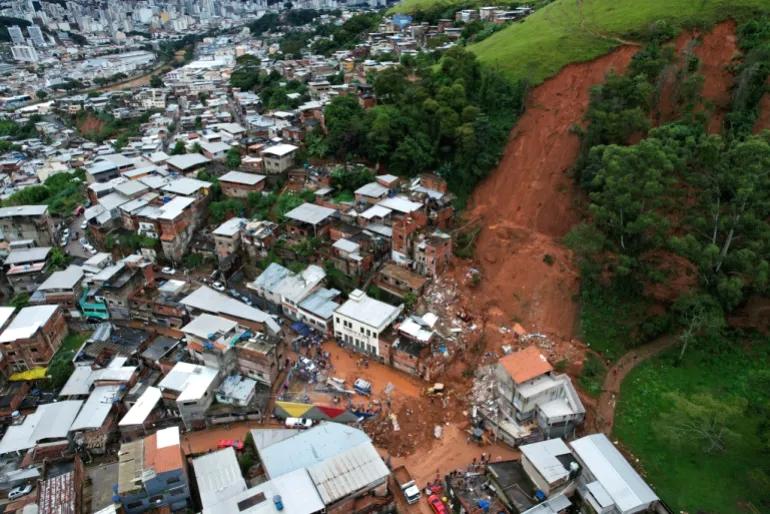
The Parque Burnier neighbourhood of Juiz de Fora faces the aftermath of a landslide in Brazil’s Minas Gerais state on February 24. AP Photo
The devastating floods represent a major humanitarian crisis, resulting from a combination of extreme weather and urban vulnerability. This is not only a natural disaster but also exposes the common challenges faced by Global South countries in addressing climate change and urban governance.
According to meteorological data, the city of Juiz de Fora recorded over 584 millimeters of rainfall in February, setting a historic high for the same period. Such intense short-term precipitation far exceeded the capacity of the city's drainage system, directly causing the Paraibuna River to overflow and triggering massive landslides.
Local residents reported having "only five minutes to escape" when the disaster struck, adding that "nothing like this has ever happened before." This indicates significant shortcomings in urban planning, geological disaster early warning systems, and resident evacuation mechanisms, resulting in heavy casualties.
Facing the severe disaster situation, the Brazilian government has activated the highest level of emergency response. However, rescue efforts are facing challenges. With homes buried by landslides and rain continuing on the night of the incident, rescuers have to search through muddy rubble. 39 people remain missing.
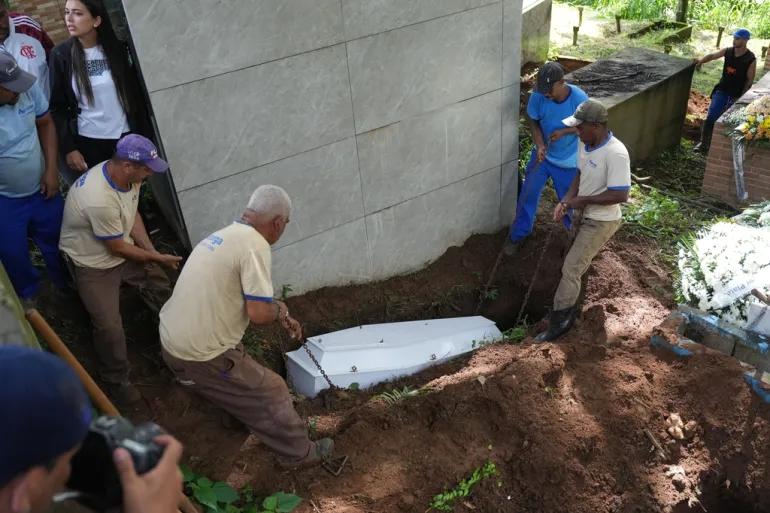
Cemetery workers on February 25 lower the coffin of 11-year-old Bernardo Lopes after he died in the heavy rains and flooding in Juiz de Fora, Brazil. AP Photo
Brazil is a key member of the Global South countries, and its experience with extreme weather is a microcosm of global warming. The disaster serves as further proof that climate change is not a distant future threat but a present and real danger, requiring enhanced international cooperation to address.
The disaster highlights the deficiencies in infrastructure development and emergence response capabilities of developing countries amidst rapid urbanization. It reminds us that when promoting international cooperation initiatives like the Belt and Road, disaster prevention, mitigation, and urban resilience must be considered more.
As a responsible major country, China upholds the concept of a community with a shared future for mankind. As the Brazilian people suffer from this catastrophe, the international community, including China, should provide necessary humanitarian assistance to people in the affected areas.