Top 10 News Stories on Lancang-Mekong Cooperation in 2025
The year 2025 marked the 80th anniversary of the victory in the World Anti-Fascist War as well as the 10th anniversary of the Lancang-Mekong Cooperation (LMC) mechanism.
Conceived and advanced through extensive consultation, joint contribution and shared benefits among countries along the Lancang-Mekong River, the LMC has evolved over the past decade from an emerging initiative into a well-established regional framework.
Throughout the period, the six LMC countries have maintained good-neighborly friendship, focused on development-oriented and pragmatic cooperation, and promoted inclusive, people-centered outcomes. Building on these efforts, they have piloted innovative initiatives across multiple sectors, steadily advancing the building of a community with a shared future.
The Center for Asia-Pacific under China International Communications Group (CICG Asia-Pacific), in collaboration with the Yunnan International Communication Center for South and Southeast Asia, joined leading media outlets from Cambodia, Laos, Myanmar, Thailand, and Vietnam in selecting the Top 10 News Stories on Lancang-Mekong Cooperation in 2025. These stories highlight the tangible cooperation achievements of the six LMC countries and aim to foster consensus for a shared, prosperous future in the region.
I. Head-of-State Diplomacy Leads the Way in Building a Community with a Shared Future with Neighboring Countries
In 2025, China continued to deepen strategic trust with the five Mekong countries, advancing cooperation through a framework characterized by leaders’ guidance, all-round cooperation and broad participation. The countries have worked together to shape a new vision for a community with a shared future with neighboring countries, which has been advanced through head-of-state diplomacy that now extends to all five Mekong partners.
In April 2025, Chinese President Xi Jinping paid state visits to Vietnam and Cambodia, holding talks and meetings with senior leaders including To Lam, general secretary of the Communist Party of Vietnam (CPV) Central Committee, and Cambodian King Norodom Sihamoni.
During the visits, China and Vietnam agreed to further deepen their comprehensive strategic cooperative partnership and accelerate the building of a China-Vietnam community with a shared future. China and Cambodia also agreed on jointly building an all-weather community with a shared future in the new era.

Xi Jinping, general secretary of the Communist Party of China Central Committee and Chinese president, shakes hands with To Lam, general secretary of the Communist Party of Vietnam (CPV) Central Committee, during their meeting at the CPV Central Committee headquarters in Hanoi, Vietnam, on April 14, 2025. (XINHUA)
In August and September, on the occasion of the Shanghai Cooperation Organization (SCO) Summit and the activities commemorating the 80th anniversary of the victory of the Chinese People’s War of Resistance Against Japanese Aggression and the World Anti‑Fascist War, President Xi held a series of meetings with leaders from the Mekong region, including King Norodom Sihamoni of Cambodia, Prime Minister of Cambodia Hun Manet, Thongloun Sisoulith, general secretary of the Lao People’s Revolutionary Party Central Committee and Lao president, Myanmar’s Acting President Min Aung Hlaing, and Vietnamese President Luong Cuong and Prime Minister Pham Minh Chinh. The leaders reached important consensus on deepening strategic cooperation, promoting regional peace and development, and accelerating the building of a community with a shared future.
In November 2025, President Xi met in Beijing with His Majesty King Maha Vajiralongkorn Phra Vajiraklaochaoyuhua of Thailand, who was on a state visit to China. During their meeting, the two leaders reached important consensus on advancing the building of a China‑Thailand community with a shared future over the next 50 years and jointly writing a new chapter in China‑Thailand friendship.
[Read More]
From April 8 to 9, 2025, the Central Conference on Work Related to Neighboring Countries was held in Beijing. President Xi Jinping, also general secretary of the Communist Party of China (CPC) Central Committee and chairman of the Central Military Commission, attended the conference and delivered an important speech.
The conference emphasized the need to follow the guidance of Xi Jinping Thought on Socialism with Chinese Characteristics for a New Era, focus on the central task of the CPC and the country, take into account both domestic and international imperatives, and coordinate the two top priorities of development and security. To jointly create a better future with neighboring countries, China will hold high the banner of a community with a shared future for humanity, act on the common vision of a peaceful, safe and secure, prosperous, beautiful and amicable home, foster an amicable, secure and prosperous neighborhood, follow the policy and principle featuring amity, sincerity, mutual benefit and inclusiveness as well as a shared future for humanity, take the Asian values of peace, cooperation, openness and inclusiveness as the fundamental guidance, use high-quality Belt and Road cooperation as the main platform, and pursue the Asian security model features sharing weal and woe, seeking common ground while shelving differences, and prioritizing dialogue and consultation as the strategic support.
In 2025, China and Mekong countries marked key diplomatic anniversaries with various activities celebrating the 50th anniversary of China-Thailand diplomatic ties and the “Golden Jubilee of China-Thailand Friendship,” as well as the 75th anniversaries of diplomatic relations between China and Myanmar and between China and Vietnam.
In January, President Xi Jinping exchanged congratulatory messages with General Secretary of the Communist Party of Vietnam Central Committee To Lam and President Luong Cuong of Vietnam on the 75th anniversary of China-Vietnam diplomatic relations, reaffirming the commitment to move forward together on the new journey of socialist modernization, advance the building of a China-Vietnam community with a shared future of strategic significance, better benefit the two peoples, and contribute to the revitalization of world socialism as well as to human development and progress.
In June, President Xi Jinping and Myanmar’s leader Min Aung Hlaing exchanged congratulatory messages on the occasion of the 75th anniversary of the establishment of diplomatic relations between China and Myanmar. Xi emphasized advancing high-quality Belt and Road cooperation at a faster pace, jointly implement the Global Development Initiative, the Global Security Initiative and the Global Civilization Initiative, and continuously push for solid progress in building a China-Myanmar community with a shared future.
Chinese Premier Li Qiang met with Prime Minister of Vietnam Pham Minh Chinh, who was in north China's Tianjin Municipality for the 2025 Summer Davos. Li noted that China is willing to continue to implement the outcomes of President Xi's visit to Vietnam, and refine the grand blueprint for the development of China-Vietnam relations drawn up by the top leaders of the two parties into a “construction drawing” for the modernization of the two countries, and transform it into a “real picture” for building a community with a shared future for China and Vietnam, bringing more benefits to the people of the two countries.
II. 10th Lancang-Mekong Cooperation Foreign Ministers’ Meeting Is a Resounding Success
On August 15, the 10th Lancang-Mekong Cooperation Foreign Ministers’ Meeting, themed “Golden Decade: Staying Committed to Building a Better Community through Solidarity,” was successfully held in Anning, Yunnan Province.
Member of the Political Bureau of the CPC Central Committee and Foreign Minister Wang Yi, co-chaired the meeting with then Thai Foreign Minister Maris Sangiampongsa, Cambodian Deputy Prime Minister and Foreign Minister Prak Sokhonn, Minister of Foreign Affairs of the Lao PDR Thongsavanh Phomvihane, Myanmar’s Union Minister for Foreign Affairs U Than Swe, and Vietnamese Deputy Prime Minister and Foreign Minister Bui Thanh Son attended the meeting.
Wang Yi stated that standing at a new starting point, the six countries will strive to build an “LMC 2.0” characterized by unity and cooperation, openness and win-win outcomes, green innovation, and peace and tranquility, jointly opening a new golden decade of LMC and accelerating the building of a Lancang-Mekong community with a shared future of peace and prosperity.
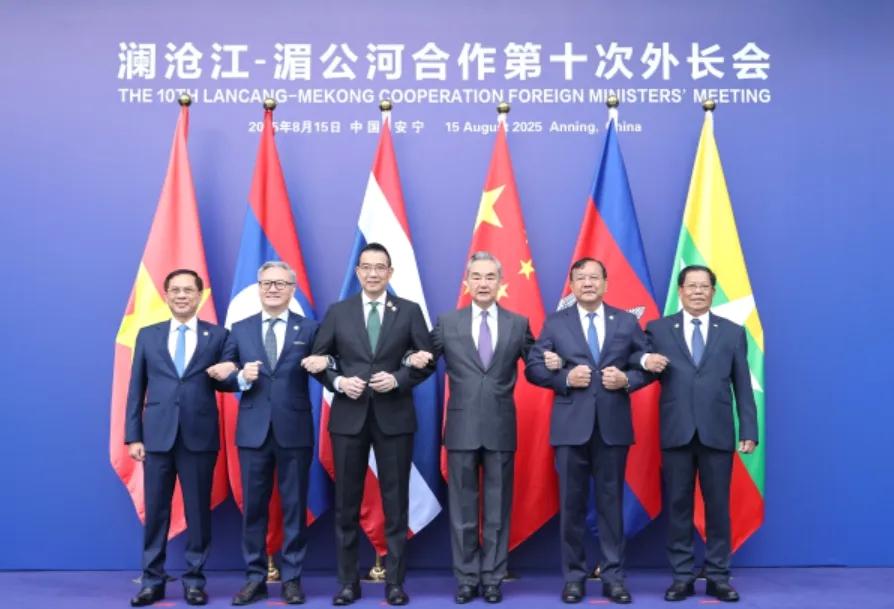
The 10th Lancang-Mekong Cooperation Foreign Ministers’ Meeting was held in Anning, southwest China’s Yunnan Province, on August 15, 2025. (FMPRC.GOV.CN)
All parties attending the meeting spoke highly of the LMC over the past decade and the Mekong countries appreciated China’s commitment to good-neighborliness and its leading role in promoting cooperation. Given the complex and challenging international situation, they agreed that the LMC countries should closely cooperate in all fields, adhere to multilateralism, maintain free trade, combat cross-border crimes, and jointly meet challenges to maintain regional peace, stability and prosperity.
The meeting adopted three key documents: the 2024 Progress Report on the Five-Year Plan of Action, the 2025 LMC Special Fund Project List, and the 2025 Joint Research Report by the Global Center for Mekong Studies on Security Cooperation under the LMC.
[Read More]
A decade ago, the first LancangMekong Cooperation Foreign Ministers’ Meeting was held in Yunnan, China, where the six countries jointly sowed the seeds of cooperation. Ten years on, the LancangMekong Cooperation has grown into a towering tree, and the tangible achievements it has delivered are evident to all.
Over the past decade, the six countries have promoted the LMC culture featuring equality, sincerity, mutual assistance and kinship, acted in the Lancang-Mekong spirit of “development first, equal consultation, pragmatism and efficiency, and openness and inclusiveness,” and advanced cooperation in the three major pillars and five priority areas, creating the Lancang-Mekong speed featuring progress and results delivered daily, monthly and annually.
Over the past decade, China and the five Mekong countries have continuously deepened their strategic mutual trust, and have all been committed to building bilateral communities with a shared future. China and the five Mekong countries have clarified the overarching goal of building a Lancang-Mekong community with a shared future, and have become good neighbors, friends, and partners who trust each other.
The six Lancang-Mekong countries, as a natural community with a shared future, have gained invaluable experience from a decade of cooperation. In the face of multiple international and regional challenges, the key to the robust growth of the LMC lies in adherence to four principles: first, uphold good-neighborliness, friendship and a shared future; second, focus on development and pragmatic cooperation; third, ensure benefits for the people and remain open and inclusive; fourth, pursue innovation as the driving force and implement pilot projects.
After 10 years of efforts, LMC has entered a fast lane of comprehensive development and become one of the most dynamic and promising regional cooperation mechanisms. Standing at a new starting point, the six countries will strive to build an “LMC 2.0” characterized by unity and cooperation, openness and win-win outcomes, green innovation, and peace and tranquility, jointly opening a new golden decade of LMC and accelerating the building of a Lancang-Mekong community with a shared future of peace and prosperity.
III. The Lancang-Mekong Ministerial Meeting on Law Enforcement and Security Cooperation Convenes
On September 15, a LancangMekong ministerial meeting on law enforcement and security cooperation was successfully held in Beijing. The meeting was chaired by Chinese State Councilor and Minister of Public Security Wang Xiaohong, who also delivered the keynote speech. Heads of law enforcement and security authorities from Cambodia, Laos, Myanmar, Vietnam and other countries led delegations to attend the meeting.
Wang noted that China is willing to implement the Global Security Initiative and the Global Governance Initiative, improve the framework for regional security governance, crack down on transnational crimes such as telecom and online fraud, and fully support the development of the Lancang-Mekong Integrated Law Enforcement and Security Cooperation Center.
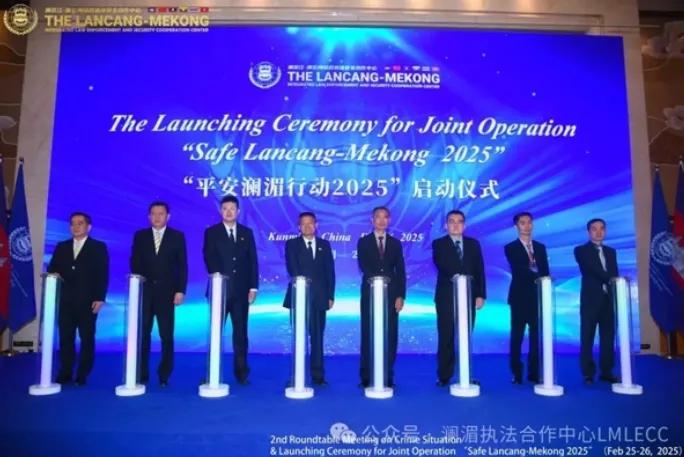
Launch ceremony for Joint Operation “Safe Lancang-Mekong 2025.” (LMLECC)
He stressed the need to jointly enhance law enforcement capabilities, promote security through cooperation and ensure development through security, and work together to build a peaceful, tranquil, prosperous, beautiful, amicable and harmonious home and advance the construction of a Lancang-Mekong community with a shared future. The participating countries said they would actively implement the outcomes of the meeting and further advance law enforcement and security cooperation in the Lancang-Mekong region.
The meeting adopted the Joint Statement on Deepening Cooperation in Combating Transnational Crimes and the Joint Statement on Deepening Joint Patrol and Law Enforcement Cooperation along the Mekong River.
[Read More]
From February 25 to 26, 2025, the Lancang-Mekong Integrated Law Enforcement and Security Cooperation Center (LMLECC) convened the 2nd Lancang-Mekong Roundtable Meeting on Crime Situation in Kunming, Yunnan. During the meeting, representatives from the law enforcement agencies of China, Myanmar, Cambodia, Laos, Thailand, and Vietnam jointly launched and implemented the Joint Operation “Safe Lancang-Mekong 2025.
On November 14, a ministerial meeting on joint action against telecom and online fraud among China, Cambodia, Laos, Myanmar, Thailand, and Vietnam was held in Kunming, Yunnan. Officials from the six countries engaged in in-depth discussions on further strengthening cooperation to combat transnational telecom and online fraud and reached a series of consensus on joint action against such crimes.
On December 15, police task forces from China, Myanmar, and Thailand carried out their first joint operation in Myawaddy’s KK Park and Yatai New City and other large gambling and fraud parks, and 952 Chinese suspects of involvement in telecom and online fraud were extradited back to China. Thanks to the combined efforts of the three countries throughout the year, more than 7,600 Chinese suspects in Myanmar’s Myawaddy area have been repatriated to China. A total of 494 buildings in the KK Park area linked to fraud activities have been demolished, and the Yatai New City fraud hub has been completely cleared.
On December 29, the 160th joint patrol and law enforcement operation by China, Laos, Myanmar, and Thailand along the Mekong River concluded. The four countries deployed a combined force of over 170 law enforcement personnel and six patrol vessels, covering a total distance of more than 730 kilometers during the operation.
IV. Wuhan Joint Recommendations of the Fourth Lancang-Mekong Water Resources Cooperation Forum Released
From September 24 to 25, 2025, the Fourth LancangMekong Water Resources Cooperation Forum was held in Wuhan, Hubei Province. The forum, centered on the theme “Water Security for Sustainable Socio-economic Development in the Lancang-Mekong Region,” provided a platform for participants to engage in extensive and in-depth discussions on safeguarding the fundamental right to safe drinking water for all, water-saving irrigation and food security, building a climate-resilient flood and drought disaster management system, enhancing capacity building, and promoting mutual learning and youth engagement.
The forum facilitated comprehensive experience sharing and released the Wuhan Joint Recommendations of the Fourth Lancang-Mekong Water Resources Cooperation Forum.
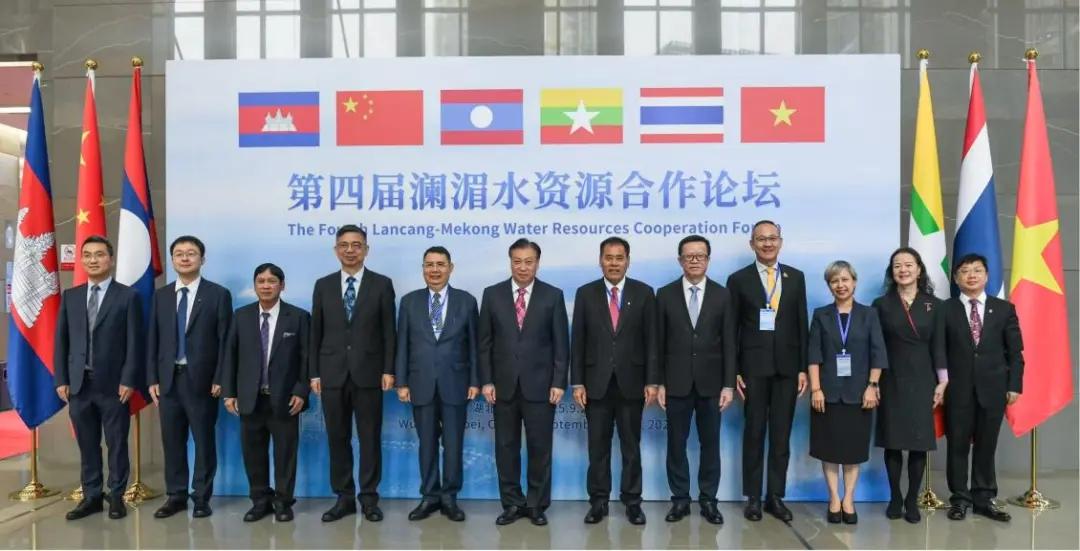
The Fourth Lancang-Mekong Water Resources Cooperation Forum was held on September 24-25, 2025. (FOHB.GOV.CN)
[Read More]
Lancang-Mekong Cooperation is committed to jointly building and safeguarding a green homeland.
On August 14, 2025, an ecological protection exchange initiative for the Lancang River basin was launched in Zaduo County, Yushu Tibetan Autonomous Prefecture, Qinghai Province. Representatives from cities and counties along the river in Xizang, Qinghai, and Yunnan jointly formed a cross-regional volunteer team for Lancang River protection.
In June, the “Green Lancang-Mekong Initiative: Collaborative Capacity Building for Green Industry Transformation and Pollution Prevention and Control” event was held in Shanghai. Officials from environmental authorities of Lancang-Mekong countries, along with representatives from international organizations and research institutions, engaged in on-site exchanges on topics including coordinated governance of regional environmental quality and climate change, solid waste treatment and resource recycling, and the development of green industries.
An international seminar on haze pollution control in northern Thailand was held in Chiang Mai, Thailand. Representatives from China, Thailand, Myanmar, Laos, and other countries conducted in-depth discussions on approaches to haze control, policy and regulatory frameworks, technological applications, public participation, and international cooperation.
The Foreign Economic Cooperation Center of China’s Ministry of Agriculture and Rural Affairs, together with the Jiangsu Academy of Agricultural Sciences, launched a pilot program on the comprehensive utilization of crop straw in Thailand to enhance local capacity in straw recycling and reuse.
Meanwhile, the Lancang-Mekong International Training Course on Conservation of Fisheries Resources and Upgrading Aquaculture Technology was held in Yunnan, deepening cooperation in fisheries and environmental protection, aquaculture technologies, and integrated industrial development.
In Cambodia, an LMC project titled “Enhancing Cooperation to Support the Implementation and Operation of the Soan Orchid Research and Conservation Center” was officially launched by the Ministry of Environment, contributing to biodiversity conservation efforts in the country.
V. 2nd Senior Officials’ Meeting on the Lancang-Mekong Cooperation Innovation Corridor Development Convenes
The Second Senior Officials’ Meeting on the Lancang-Mekong Cooperation Innovation Corridor Development was held in Phnom Penh, Cambodia, on December 2, 2025. Participants exchanged views on technology empowerment and innovation-driven development, agreeing to strengthen cooperation, deepen sci-tech and people-to-people exchanges, and expand practical, mutually beneficial collaboration to support a closer Lancang-Mekong community with a shared future.
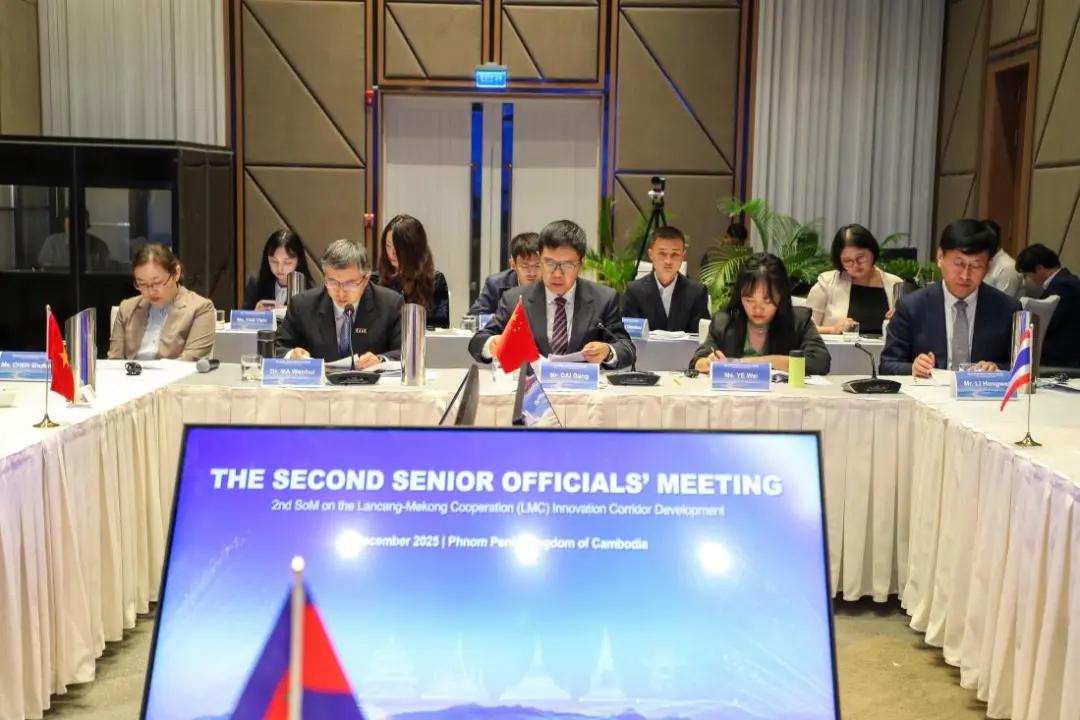
The Second Senior Officials’ Meeting on the Lancang-Mekong Cooperation Innovation Corridor Development is held in Phnom Penh, Cambodia, on December 2, 2025. (YUNNAN UNIVERSITY)
[Read More]
In 2025, the six countries advanced the development of the Lancang-Mekong Innovation Corridor, further leveraging scientific and technological innovation to support cooperation across all areas of regional collaboration.
Digital innovation drives cooperation. On November 11, at the Second Seminar on the Lancang-Mekong Cooperation Innovation Corridor Development, representatives from the six countries engaged in in-depth discussions on improving mechanisms for cross-border scientific and technological cooperation, removing barriers to the international flow of innovation resources, enhancing the localization and application of technological achievements, and cultivating multidisciplinary, internationally oriented scientific talent. The meeting concluded with the adoption of an initiative of sci-tech cooperation on cross-border data flow among Lancang-Mekong countries.
The Second Seminar on the Lancang-Mekong Cooperation Innovation Corridor Development kicks off in Kunming, Yunnan Province, on November 11, 2025. (YUNNAN PROVINCIAL ACADEMY OF SCIENCE AND TECHNOLOGY)
The 2025 Tengchong Scientists Forum, focused on digital and AI-driven innovation in traditional medicine, sustainable development, and green engineering, providing intellectual support for cooperation among the six Lancang-Mekong countries.
In 2025, China-Thailand cooperation in the new energy vehicle sector deepened, with jointly produced vehicles expanding into European and other international markets, while both countries explored innovative models for cultivating specialized talent.
In December, the inaugural Lancang-Mekong Countries Science and Technology Innovation Competition kicked off simultaneously in Yunnan and Shanghai, China, and Bangkok, Thailand. The preliminary round invited cutting-edge innovation projects from universities, research institutes, and enterprises across the six Lancang-Mekong countries, focusing on key regional industries such as biomedicine, modern agriculture, new materials, AI, and green sustainable development. The competition aims to bring together regional innovation talent, deepen scientific and technological cooperation, and promote the application of research outcomes to shape a new future for regional development.
The Chinese Academy of Tropical Agricultural Sciences inaugurated its Overseas Tropical Agricultural Science and Technology Center in Cambodia, established an international joint laboratory for agricultural product quality and safety in Laos, and signed memoranda of understanding with institutions including Kasetsart University in Thailand, supporting the development of tropical crop industries such as rubber and bananas in the Lancang-Mekong countries.
The pilot project for Lancang-Mekong subregional (Laos) rice green yield enhancement, implemented by Guangxi authorities, achieved a 47.4 percent increase in rice yield per unit. Guangxi-Vietnam cooperative initiatives, including smart aquaculture and modern pig farming systems, have been successfully implemented and promoted locally. In Cambodia, Guangxi-assisted poverty reduction projects, such as intelligent vegetable greenhouses, have helped farmers increase average annual household incomes by over 3,000 yuan.
VI. Trade Between China and Mekong Countries Hits US$500 Billion
According to statistics from the General Administration of Customs of China, the trade volume between China and the five Mekong countries reached US$500.9 billion in 2025, setting a new historical record, accounting for half of the total import and export volume between China and ASEAN in 2025. China’s trade with Mekong countries has increased by more than 150 percent as compared with the level when the LMC mechanism was launched.
Against the backdrop of global geopolitical tensions and the rise of trade protectionism, the LMC has continuously injected new vitality into economic and trade exchanges among the countries in the basin. China has remained the largest trading partner of Cambodia, Myanmar, Thailand, and Vietnam, and the second largest trading partner of Laos, for many years in a row. Among them, Vietnam has become China’s fourth-largest trading partner. Within the framework of the LMC mechanism, platforms such as the Lancang-Mekong Business Forum and the Lancang-Mekong Cooperation Summit for Agriculture, Agricultural Materials, Economy and Trade have effectively enhanced trade connectivity among relevant countries. The China-Laos Railway and the “Golden Waterway” of Lancang-Mekong River have significantly promoted regional trade.
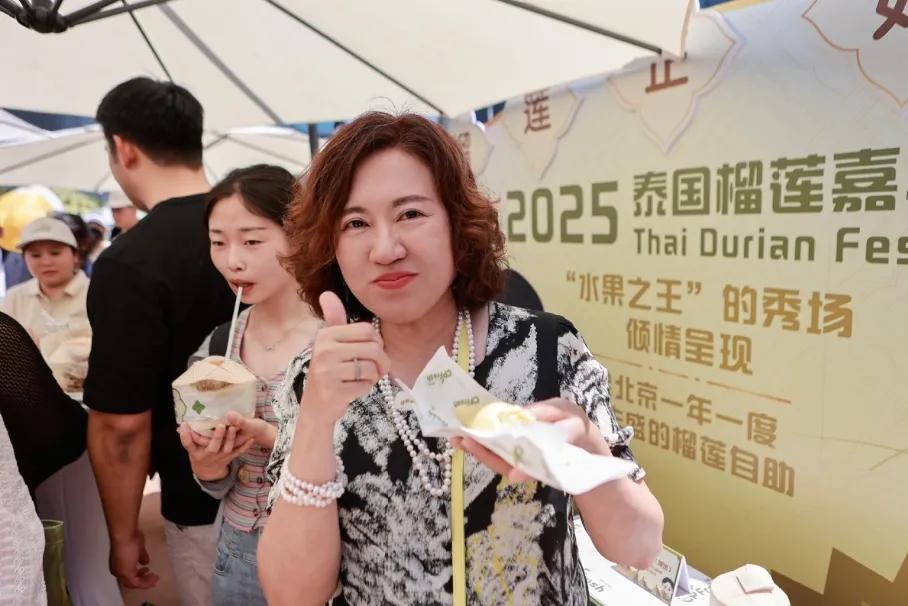
A customer samples durian at the launch ceremony of the 2025 Thailand Durian Carnival and China-Thailand Fruit Week in Beijing on June 21, 2025. The event also featured a China-Thailand fruit flash sale market showcasing a variety of Chinese and Thai fruits and products, alongside cultural displays from both countries, attracting more than 1,000 visitors. (CHINA DAILY)
[Read More]
China has remained Vietnam’s largest trading partner for over 20 consecutive years, while Vietnam is China’s largest trading partner in ASEAN. The bilateral trade volume between China and Vietnam has exceeded US$200 billion for five consecutive years, reaching US$296.14 billion in 2025, an increase of 13.7 percent year on year.
China has remained Thailand’s largest trading partner for over a decade, as the country’s largest export market for agricultural products and fruits. In 2025, the bilateral trade volume between China and Thailand reached US$153.26 billion, an increase of 14.4 percent year on year.
China has been Cambodia’s largest source of foreign investment and largest trading partner for many consecutive years. The bilateral trade volume has increased nearly fourfold over the last decade, reaching US$22.28 billion in 2025, an increase of 25 percent year on year.
China has been Myanmar’s largest trading partner for many consecutive years. In 2025, the bilateral trade volume exceeded US$19.39 billion, an increase of 19.1 percent year on year.
China is the largest investor and second largest trading partner of Laos. In 2025, the bilateral trade volume reached US$9.82 billion, an increase of 19.3 percent year on year.
Within the framework of the LMC mechanism, economic and trade platforms such as the Lancang-Mekong Business Forum and the Lancang-Mekong Fruit Festival have effectively served the economic development of the Lancang-Mekong region. Construction of the China-Vietnam Border Agricultural Science and Technology Corridor is in full swing, and the pilot smart durian orchard project in Thailand is advancing steadily, creating more favorable conditions for trade in the Lancang-Mekong region.
On November 8, 2025, the 2025 Lancang-Mekong Cooperation Summit for Agriculture, Agricultural Materials, Economy and Trade was held in Shanghai. Themed on “boosting economic and trade cooperation and exchange in agriculture and agricultural materials between the Lancang-Mekong and Central Asia regions,” the event marked the first in-depth exchange on economic and trade cooperation in agriculture and agricultural materials between the two regions. It not only expanded the space of Lancang-Mekong Cooperation, but also contributed wisdom and strength to the sustainable development of agriculture and food security in the Lancang-Mekong and Central Asia regions.
Guanlei Port in Xishuangbanna Dai Autonomous Prefecture, Yunnan Province, serves as the first entry point into China via the Lancang-Mekong River for traffic from Myanmar, Laos, Thailand, Cambodia, and Vietnam. Since its official opening in December 2024, the port has leveraged its strategic location on a “golden waterway connecting six countries” to accelerate cross-border passenger and freight flow, injecting new vitality into Lancang-Mekong Cooperation. As of December 2025, the cargo throughput of the port exceeded 260,000 tons and the value of goods exceeded 2.6 billion yuan, an increase of more than 70 percent and 124 percent respectively year on year. Meanwhile, the variety of goods has increased to over 2,100, and the number of inbound and outbound passengers has exceeded 34,000, further expanding its reach to nine countries and regions including Laos, Thailand, and Vietnam.
VII. Construction Breaks Ground on First Section of Lao Cai-Hanoi-Hai Phong Railway in Vietnam
On December 19, the groundbreaking ceremony for the first section of the Lao Cai-Hanoi-Hai Phong standard-gauge railway project took place in Lao Cai Province, northern Vietnam.
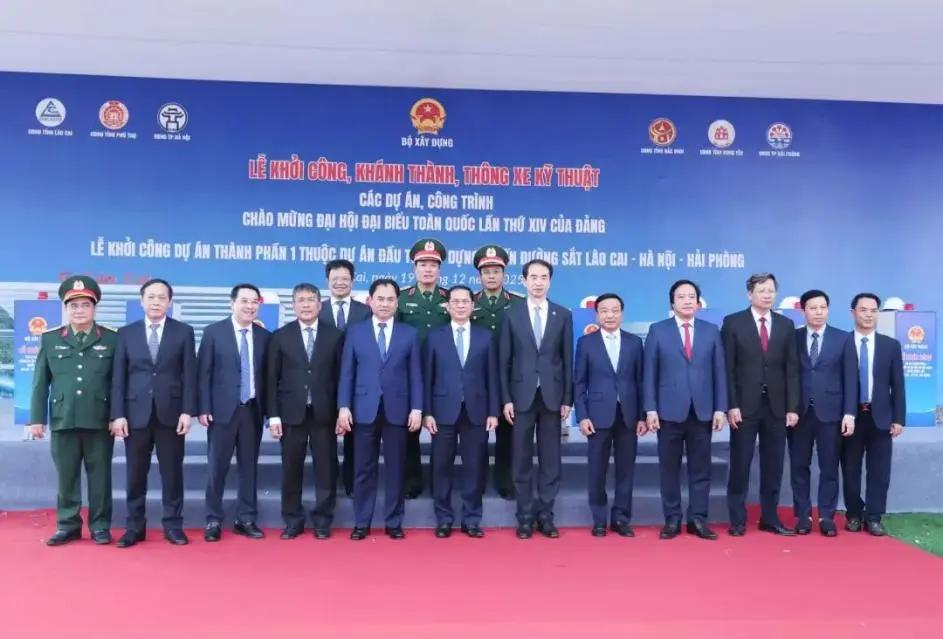
Group photo of the guests at the groundbreaking ceremony for the first section of the Lao Cai-Hanoi-Hai Phong standard-gauge railway project in Lao Cai Province, December 19, 2025.(EMBASSY OF CHINA IN VIETNAM)
The main line of the Lao Cai-Hanoi-Hai Phong standard-gauge railway stretches over 390 kilometers. Upon completion, it will facilitate connectivity between northern Vietnam and southwestern China. The designed speed is 160 km/h for the main section from Lao Cai New Station to Hai Phong South Station, 120 km/h for the Hanoi City section, and 80 km/h for the remaining sections. The first phase of the project mainly involves construction of infrastructure including station squares along the route. The implementation of the project will significantly enhance cross-border transportation capacity, reduce logistics costs, bring new growth momentum to the regions along the route, and further improve the Lancang-Mekong connectivity network.
[Read More]
Connectivity is the artery of Lancang-Mekong Cooperation. The China-Laos Railway marked its fourth anniversary of operation on December 2, 2025, having transported more than 62.5 million passengers and 72.5 million tons of cargo. The multi-modal freight train connecting China, Laos, Thailand and Cambodia of the “Lancang-Mekong Express plus” services and other innovative products and business models have continuously enhanced the impact of the “golden corridor.” And China and Laos have signed an intergovernmental agreement on the “Juxtaposed Border Control” arrangements for the China-Laos Railway.
On February 27, 2025, the Shuolong (China)-Ly Van (Vietnam) Border Gate was officially inaugurated, effectively promoting cooperation between the two countries in multiple fields such as economy and trade, tourism, and culture.
On March 31, construction began on the Ba Sa (China)-Bat Xat (Vietnam) road bridge across the Hongher River in Hekou County, Honghe Hani and Yi Autonomous Prefecture, Yunnan Province, and Bat Xat County, Lao Cai Province, Vietnam. Located in the border area between China’s Hekou County and Vietnam’s Lao Cai City and Bat Xat County, the project is an important infrastructure project supporting the Hekou (China)-Lao Cai (Vietnam) Cross-Border Economic Cooperation Zone.
In April, construction of National Highway 71C and upgrading of National Highways 31, 33, and 41 in Cambodia, which were undertaken by Chinese companies, were completed for traffic, which has significantly enhanced the quality and service capacity of Cambodia’s highways, improved its highway network, strengthened regional connectivity, and boosted tourism and economic development.
In 2025, China’s C909 aircraft entered the markets of Laos and Vietnam, connecting China with the Mekong countries even closer with a “golden bridge in the air.”
VIII. Mekong Children’s Heart Care Project Officially Launches
On August 30, 2025, the Mekong Children’s Heart Care Project was officially launched in Phnom Penh, the capital of Cambodia. The project, funded and implemented by China, aims to screen at least 50,000 children in Cambodia and Laos and provide the necessary treatment and surgical opportunities for at least 70 children with congenital heart disease.
For years, the six Lancang-Mekong countries have consistently carried out healthcare cooperation, demonstrating mutual care and support. From 2018 to 2024, the “Love Heart Journey” initiative, implemented by Fuwai Hospital of the Chinese Academy of Medical Sciences, provided guidance for the Yunnan Fuwai Cardiovascular Hospital to sign memoranda of understanding on cooperation with Cambodia, Myanmar, Laos, and other countries, organized Chinese medical experts to conduct screening for 85,403 children in the three countries, and arranged for 128 children with congenital heart disease to receive free treatment in China.
[Read More]
In 2025, China worked with the five Mekong countries to further deepen practical cooperation in healthcare, emergency response, and people’s livelihood, bringing tangible benefits and warmth to the people of the countries.
The “Lancang-Mekong Sweet Spring” project continued to be implemented in 2025, providing reference for Cambodia, Laos and Myanmar, and other countries with China’s experience in rural drinking water safety.
The “small yet smart” projects, such as the micro-grid power and water supply system in Ganser Village, Myanmar, have met the most pressing needs of the local people for electricity and water while boosting local industries.
In August 2025, the “Genius Mom Friendship Workshop” officially opened in Vientiane, alongside a women’s intangible cultural heritage skills training program, building a platform for mutual learning and exchange between the women of China and Laos and enhancing the employment and entrepreneurship capabilities of Lao women.
The “Lancang-Mekong Book Fragrance” charity program was implemented in Cambodia, Laos, and other countries. And the third “Lancang-Mekong Book House” in Cambodia was completed at the Preak Leap Primary School in Phnom Penh, which would help the children increase their knowledge and broaden their horizons.
The GX Foundation, in collaboration with the Ministry of Health of Laos, successfully completed its Cataract Blindness Elimination Program in Laos. Since its official launch in September 2022, the program has provided ophthalmic examinations for over 6,500 Lao citizens and completed 5,768 cataract surgeries, earning widespread praise from the local population.
The “Mother’s Smile Action” charity medical clinic in Laos took place at the Mahosot General Hospital in Vientiane, which was built with Chinese assistance. The event brought together high-quality medical resources from both China and Laos, offering hopes for a “new life with smiles” to local children with cleft lip and palate.
On March 28, 2025, Myanmar was struck by a massive 7.9-magnitude earthquake. China, together with Cambodia, Laos, Thailand, Vietnam, immediately extended a helping hand by sending rescue teams or providing material assistance to support Myanmar in earthquake relief, post-disaster reconstruction, and epidemic prevention and control efforts, demonstrating the responsibility and friendship of mutual support and assistance.
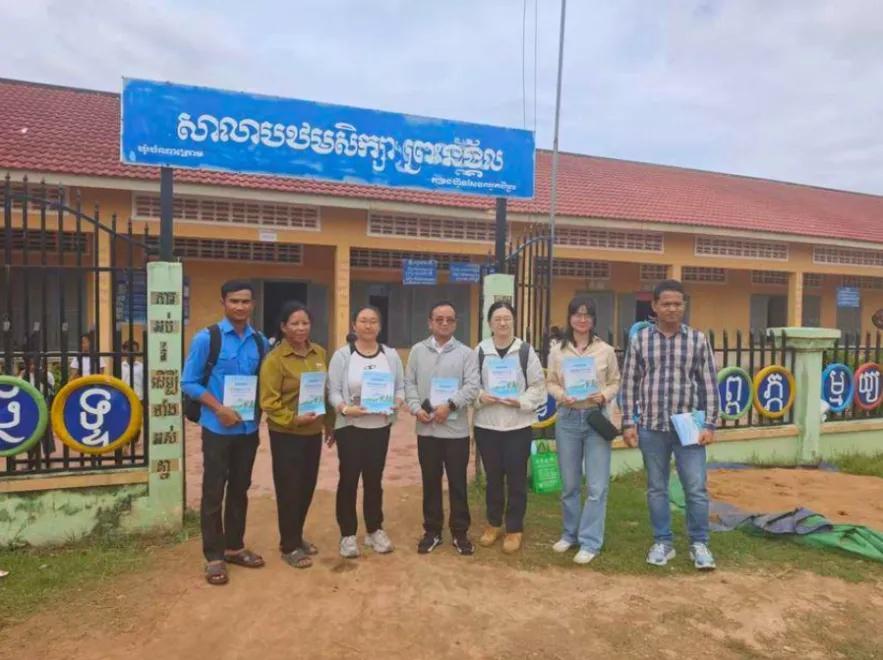
From November 17 to 20, 2025, professional and technical personnel from the Yangtze River Scientific Research Institute participated in the implementation of the second phase of the “Lancang-Mekong Sweet Spring” project in Cambodia. (HUBEI DAILY)
IX. Research Center for Lancang-Mekong Youth Astronomical Sciences Opens
On March 18, 2025, the Research Center for Lancang-Mekong Youth Astronomical Sciences was inaugurated at Fudan University in Shanghai, and the inaugural training camp of the Lancang-Mekong youth astronomical sciences research program officially opened.
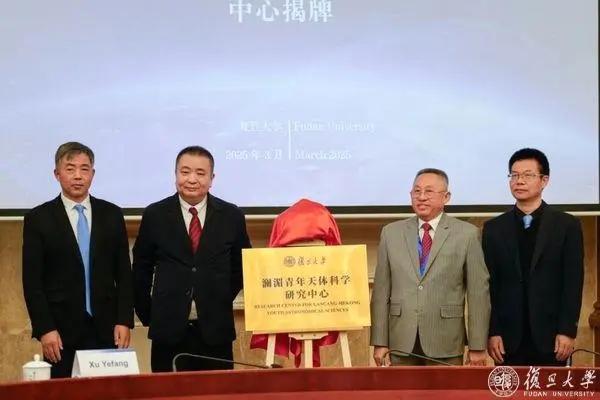
Inauguration of the Research Center for Lancang-Mekong Youth Astronomical Sciences at Fudan University. (FUDAN UNIVERSITY)
Leveraging Fudan University’s expertise in nuclear physics, astrophysics, and other fields, the Research Center for Lancang-Mekong Youth Astronomical Sciences aims to facilitate cross-border collaboration in astronomical sciences and the cultivation of young talent with an international perspective, building a bridge for academic exchange and cooperation among young scientists from the six Lancang-Mekong countries. The inaugural training camp attracted nearly 30 young scholars from 10 universities in the six Lancang-Mekong countries.
[Read More]
In 2025, the people-to-people and cultural exchanges and cooperation among the six Lancang-Mekong countries delivered more solid outcomes, writing a new chapter of people-to-people connectivity.
The Spring Festival serial celebration activities with the theme of “One River, One Family” took place in Laos and Thailand, respectively, contributing to the building of the China-Laos and China-Thailand communities with a shared future.
Artists perform during the “A Trip of Songs and Love” Spring Festival cultural event aboard a passenger train on the China-Laos Railway on January 14, 2025. The event was the first “cross-border Spring Festival Gala” held along the railway, as well as the inaugural celebration of the Spring Festival serial activities with the theme of “One River, One Family” in Laos and Thailand. (YUNNAN DAILY)
Qinghai Province launched the 2025 “Lancang-Mekong Journey” interview and exchange activity themed “nourished by the same river and renewing the friendship of Lancang-Mekong countries,” organizing journalists to visit Thailand and Laos. Through on-site visits and in-depth exchanges, the participants gained a deeper understanding of the achievements of Lancang-Mekong Cooperation and the beauty of cultural integration within the river basin.
Events such as the 2025 Lancang-Mekong Audio-Visual Week and the 7th Lancang-Mekong International Film Week attracted representatives from the six Lancang-Mekong countries to engage in dialogues on cultural exchange and mutual learning of civilizations.
With a rich array of content such as short videos, photography exhibitions, and the Lancang-Mekong Youth Exchange Camp, a series of celebration activities, including the 2025 Lancang-Mekong Week event themed “Tea and Travel in Harmony, Joy Along the Lancang-Mekong,” and the 2025 Lancang-Mekong Week event themed “Colorful Lancang-Mekong, Gathering in Sichuan,” have built a bridge for mutual understanding among the six Lancang-Mekong countries.
Youth bear the responsibility of shaping the future of Lancang-Mekong Cooperation. The 2025 Training Program for Future LMC Diplomats was successfully held in Dalian, Haikou, and other cities to forge a sense of the Lancang-Mekong family in the hearts of more young people.
In September, during the 2025 Lancang-Mekong Young Entrepreneurs Camp themed “Youthful Lancang-Mekong, Intelligent Innovation for a Shared Future,” the Lancang-Mekong Young Entrepreneurs Project Cooperation Database and Workshop, initiated by China and jointly participated by Cambodia, Laos, Myanmar, Thailand, and Vietnam, was officially established.
The “Upward Strength · My Story of China-Thailand Kinship” story sharing session was held to deepen the awareness among young people of the concept that “China and Thailand are one family.”
The Lancang-Mekong Youth Tourism Ambassador Exchange Program adopted a “Lancang-Mekong + Tourism + Youth” model to foster a new platform for dialogue and exchanges among the young people of different countries.
X. 2025 Lancang-Mekong Local Government Cooperation Forum Delivers Major Results
On November 19, the 2025 Forum on Lancang-Mekong Local Government Cooperation and Dialogue Between Historic and Cultural Cities of Lancang-Mekong Countries was held successfully in Dali, Yunnan Province. Around 200 representatives from the six Lancang-Mekong countries engaged in dialogue and exchanges on topics such as global governance, ecological civilization, and the protection of historical and cultural heritage, fully demonstrating the vitality of people-to-people cooperation in the Lancang-Mekong region. The participants agreed that local governments of all countries should give full play to their respective advantages to participate in the LMC in their own ways. All parties should deepen exchange and cooperation, strengthen economic and trade ties and continuously improve cooperation in agriculture, tourism, ports, media, sister cities, cultural heritage protection, and other fields to make new contributions to a community with a shared future for the Lancang-Mekong countries.
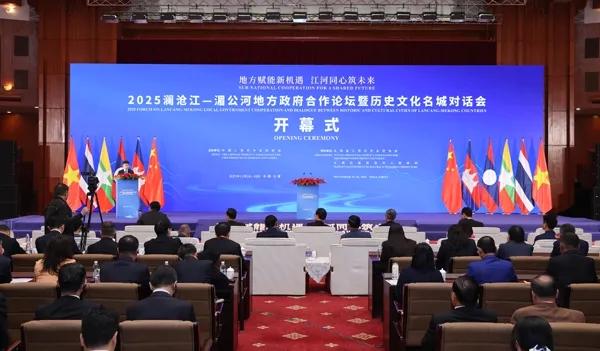
Opening ceremony of the 2025 Forum on Lancang-Mekong Local Government Cooperation and Dialogue Between Historic and Cultural Cities of Lancang-Mekong Countries in Dali, Yunnan Province. (LMC CHINA SECRETARIAT)
[Read More]
In 2025, the Lancang-Mekong local government cooperation flourished, injecting new impetus into regional development.
Yunnan Province, at the forefront of Lancang-Mekong Cooperation, has leveraged its own features and advantages to collaborate with the five Mekong countries, adding brilliance to the “golden cooperation platform.” In the first seven months of 2025, the import and export value between Yunnan and the Mekong countries increased by 6.3 percent year on year. By the end of 2025, Yunnan had established 47 pairs of international sister cities with the five Mekong countries and 34 pairs of border friendly villages with Laos, Myanmar, and Vietnam.
Guangxi has established a comprehensive agricultural science and technology cooperation system with the Mekong countries. It has established several agricultural cooperation demonstration zones and experimental stations for superior crop varieties in the Mekong countries. It has introduced more than 220 varieties of high-quality and suitable crops to Laos and Cambodia for the demonstration and promotion on thousands of hectares of farmland. Meanwhile, the autonomous region has achieved fruitful results with the implementation of multiple smart agriculture cooperation projects with Vietnam.
In recent years, Zunyi City, Guizhou Province, has increasingly deepened its economic and trade cooperation with Thailand. Specialty products from Zunyi, such as Baijiu (Chinese liquor), guitar, pepper, and tea, have entered the Thai market continuously. The 2025 China Zunyi Culture and Tourism Promotion Event took place in Bangkok, Thailand, aiming to promote resource sharing, two-way tourist flow, and scenic spot promotion between Zunyi and Thailand.
Qinghai Province has strengthened its cooperation with Laos in geological exploration, potassium salt mine management, and environmental protection. Meanwhile, it has actively promoted bilateral cooperation in in diversified agricultural cultivation, supporting the planting of hundreds of hectares of cassava and sisal.
On November 3, the opening ceremony of the 2025 Yellow River-Mekong River Exchange Week & ASEAN SMEs’ Shandong Tour for Cooperation and Development took place in Dezhou, Shandong Province. At this event, the Yellow River-Mekong River Dialogue Secretariat was inaugurated, the “Yellow River-Mekong River Dialogue Dezhou Initiative” was released, a memorandum of understanding was signed on the establishment of friendly cooperative relations between Dezhou City and the Banteay Meanchey Province of Cambodia, and the Thailand Corner of the Thai Language and Cultural Exchange Center was inaugurated.
From November 12 to 16, the 2025 China (Hainan)-Cambodia Tropical Agricultural Technology Training Course was held in Phnom Penh. The training program focused on Cambodia’s agricultural development needs and the complementary advantages in geographical environment and agricultural resources between Hainan and Cambodia, centering on two key professional modules: rice and banana cultivation.
In December, Chongqing, in collaboration with Haikou, Chengdu, Xi’an, Hangzhou, Shenzhen, Guang’an, and other cities, promoted Lancang-Mekong tourism at the 2025 China International Travel Mart to expand the cross-border tourism market together.